
PEVA là một loại thermoplastic linh hoạt, không chứa clo, thường được cung cấp dưới dạng màng trong, mờ, có màu hoặc có hoa văn. Trong sản xuất túi, nó thường được sử dụng cho các bọc áo, túi mỹ phẩm, túi lưu trữ, bao bì bảo vệ và các sản phẩm khác cần khả năng kháng ẩm, độ lưu hương thấp và màng nhựa mềm.
Nó thường được quảng bá như một lựa chọn an toàn hơn hoặc thân thiện với môi trường hơn so với PVC. Mô tả đó một phần là đúng, nhưng cần có ngữ cảnh. PEVA không chứa clo như trong PVC và thường không phụ thuộc vào các chất tạo độ dẻo phthalate. Tuy nhiên, nó vẫn là một vật liệu tổng hợp, có nguồn gốc từ dầu mỏ, và độ an toàn, khả năng tái chế và tính phù hợp của nó phụ thuộc vào công thức chính xác và mục đích sử dụng.
Đối với các nhà phát triển sản phẩm và người mua, những câu hỏi thực tiễn không chỉ dừng lại ở việc PEVA có “an toàn” hay “thân thiện với môi trường” hay không. Bạn cũng cần cân nhắc:
- Độ dày và công thức của màng
- Sản phẩm hoàn thiện có được may hay hàn nhiệt không
- Các yêu cầu về in ấn, màu sắc và hoàn thiện bề mặt
- Thị trường mục tiêu và các yêu cầu kiểm tra áp dụng
- Sản phẩm có tiếp xúc với thực phẩm, đồ dùng của trẻ em hoặc các nội dung nhạy cảm không
- Vật liệu sẽ hoạt động như thế nào trong quá trình lưu trữ, vận chuyển và sử dụng lặp lại
Hướng dẫn này giải thích vật liệu từ cả góc độ kỹ thuật và nguồn cung.
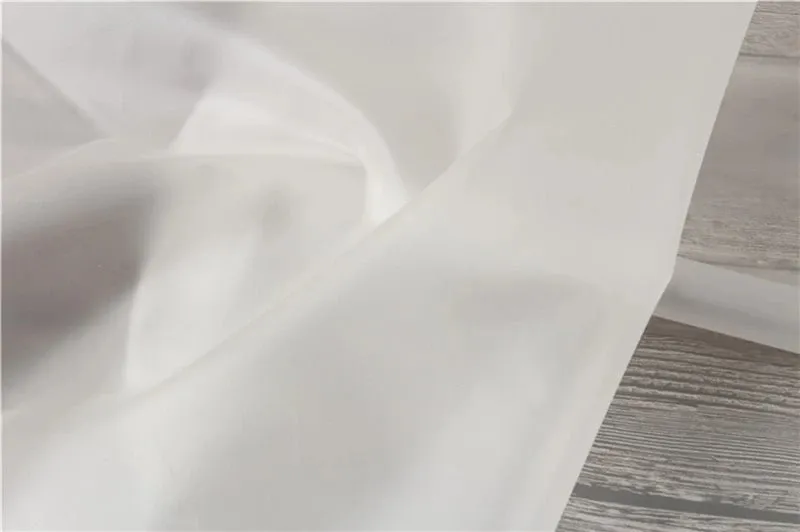
What Does PEVA Stand For?
PEVA thường đề cập đến poly(ethylene-vinyl acetate), một loại copolymer được tạo thành từ etylene và vinyl acetate.
Vật liệu chứa hai thành phần chính:
- Ethylene, cung cấp sức mạnh, khả năng chống ẩm và khả năng xử lý
- Vinyl acetate, tăng độ mềm mại, linh hoạt, độ trong suốt và hiệu suất ở nhiệt độ thấp
Nội dung vinyl acetate có thể thay đổi đáng kể. Một tỷ lệ vinyl acetate cao hơn thường tạo ra một vật liệu mềm mại hơn và linh hoạt hơn, trong khi tỷ lệ thấp hơn dẫn đến một màng cứng hơn với hành vi giống như polyethylene.
Các khoảng sau đây hữu ích làm tài liệu tham khảo nguồn, mặc dù hiệu suất thực tế thay đổi theo cấp độ nhựa, phụ gia, phương pháp sản xuất và độ dày của màng.
| Nội dung Vinyl Acetate ước chừng | Hành vi vật liệu chung | Các ứng dụng có thể có |
|---|---|---|
| Phạm vi thấp hơn | Vững chắc hơn, mạnh mẽ hơn và giống polyethylene hơn | Màng và bọc bảo vệ |
| Phạm vi trung bình | Balanced flexibility and durability | Túi áo và màng linh hoạt đa dụng |
| Phạm vi cao hơn | Mềm hơn, đàn hồi hơn và thường trong suốt hơn | Túi mỹ phẩm và bao bì linh hoạt |
Buyers should not select PEVA solely by vinyl acetate percentage. A supplier’s technical data sheet, finished-film sample, thickness specification, and intended application are usually more useful for product development.
PEVA có giống với EVA không?
The terminology is not always consistent across industries.
Chemically, EVA means ethylene-vinyl acetate, while PEVA is often used as another name for poly(ethylene-vinyl acetate). Technical databases may treat PEVA and EVA as names for the same general copolymer family.
In commercial bag and household-product sourcing, however, suppliers often use the terms differently:
- EVA commonly refers to thicker sheets, foam, molded components, padding, or rubber-like materials.
- PEVA commonly refers to thin, flexible, chlorine-free films used for shower curtains, garment bags, table covers, packaging, and pouches.
Therefore, the name alone does not provide enough information to compare two materials.
When requesting a quotation or approving a sample, buyers should confirm:
- Film or foam form
- Thickness
- Transparency
- Surface finish
- Flexibility
- Additives
- Printing compatibility
- Intended end use
- Required test standards
This is more reliable than assuming that every supplier uses “EVA” and “PEVA” in exactly the same way.
Is PEVA a Fabric or Plastic?
PEVA is technically a plastic, although thin PEVA film can feel and behave like a flexible fabric.
For bag applications, PEVA is usually supplied in rolls of soft film. Depending on its thickness and formulation, it can be:
- Folded
- Cut
- Sewn
- Heat-sealed
- Laminated with another substrate
- Printed after suitable surface treatment
This is why terms such as “PEVA fabric” or “PEVA cloth” are common in commercial product descriptions. They describe the material’s flexible, fabric-like form rather than its chemical classification.
For product design, PEVA provides several useful characteristics:
- The film itself resists water penetration
- It can be produced in clear, frosted, matte, colored, or embossed finishes
- It is lighter than many coated textiles
- It can provide visibility without leaving the contents exposed
- It can be used alone or combined with non-woven fabric, polyester, or other materials
However, a PEVA film and a finished PEVA bag should not automatically be treated as equally waterproof. The zipper, stitching holes, heat-sealed seams, binding, and construction method all affect the water resistance of the final product.
How Is PEVA Material Manufactured?
Understanding the production process helps buyers evaluate film consistency, printing performance, seam strength, and supplier capability.
Chuẩn bị nhựa và phụ gia
PEVA film production normally begins with a selected grade of ethylene-vinyl acetate copolymer resin. Depending on the required performance, the resin may be compounded with:
- Pigments
- UV stabilizers
- Processing aids
- Anti-static additives
- Slip agents
- Other application-specific additives
The exact formulation affects clarity, odor, flexibility, aging behavior, print adhesion, and cost.
Bag factories do not necessarily manufacture the polymer or extrude the film themselves. Many purchase finished PEVA rolls from specialized film suppliers and then handle printing, cutting, sewing, sealing, inspection, and assembly.
Buyers should therefore clarify whether the supplier controls film extrusion in-house or works with an approved material partner.
Ép màng và cán
The prepared resin is melted and formed into a continuous film. Processing temperatures and machine settings vary according to the resin grade and equipment.
During film production, the manufacturer controls:
- Thickness
- Width
- Transparency
- Surface texture
- Màu sắc
- Flexibility
- Roll consistency
PEVA used for bags may range from thin economy film to much heavier material. A general commercial range is approximately 0.06 mm to 0.30 mm, but the appropriate thickness depends on the product structure and expected use.
Thickness alone does not determine durability. Material formulation, seam construction, zipper quality, reinforcement, and product dimensions also matter.
Post-Processing
Depending on the product, PEVA film may receive additional processing such as:
- Corona treatment to improve ink adhesion
- Embossing or frosting
- Lamination with non-woven fabric or another substrate
- Screen printing or heat-transfer decoration
- Die-cutting
- Sewing
- Heat sealing
- Other compatible seam-welding processes
Not every PEVA formulation works equally well with every printing or sealing method. The production method should be tested on the selected film before bulk manufacturing.
Key Properties of PEVA Material
The following table provides a practical overview. Exact values vary by resin grade, additives, thickness, and testing method, so buyers should request a technical data sheet when numerical performance is important.
| Property | Typical PEVA Performance | Tại sao điều này quan trọng |
|---|---|---|
| Moisture resistance | Excellent at the film level | Helps protect contents from splashes, humidity, and dust |
| Flexibility | Cao | Suitable for foldable covers, pouches, and portable products |
| Odor | Usually low | Useful for indoor storage, retail packaging, and personal products |
| Transparency | Adjustable | Available in clear, translucent, frosted, colored, and opaque options |
| Tear and tensile strength | Moderate and formulation-dependent | Suitable for many light- and medium-duty products |
| Cold-temperature performance | Generally better than rigid vinyl materials | Reduces the risk of brittleness during cold storage or transport |
| Heat resistance | Limited | Requires testing for hot environments, sterilization, or direct contact with hot contents |
| UV stability | Formulation-dependent | Outdoor use may require stabilizers and aging tests |
| Trọng lượng | Relatively light | Can reduce product and shipping weight |
| Printability | Good after suitable treatment | Supports logos, patterns, care information, and branding |
PEVA is most effective when its properties match the product structure. A thin film may work well for a lightweight garment cover but may puncture easily when used for sharp or heavy contents.
PEVA so với PVC: Tại sao người mua so sánh chúng
PEVA is frequently compared with PVC because both materials can be produced as soft, waterproof films for bags, shower curtains, packaging, and protective covers.
The main chemical difference is chlorine.
PVC contains chlorine in its polymer structure. Flexible PVC may also use plasticizers to achieve the required softness. PEVA does not contain chlorine in the same way and normally obtains flexibility from its copolymer structure rather than requiring the same plasticizer system.
This does not mean that every PVC product is unsafe or that every PEVA formulation is automatically suitable for every application. It means PEVA can reduce some of the material and compliance concerns associated with flexible PVC.
| Yếu tố | PEVA | PVC |
|---|---|---|
| Chlorine in polymer | No | Yes |
| Flexibility | Inherent to the copolymer formulation | Often adjusted with plasticizers |
| Odor | Usually low | May have a stronger odor depending on formulation |
| Transparency | Clear to opaque | Clear to opaque |
| Moisture resistance | Excellent at film level | Excellent at film level |
| Heat resistance | Limited | Formulation-dependent |
| Recycling access | Limited | Also limited in many locations |
| Cost | Often slightly higher | Often lower |
| Buyer perception | Commonly positioned as a reduced-harm alternative | May face stricter buyer requirements in sensitive applications |
PEVA does not contribute chlorine from the polymer itself during disposal. However, the environmental impact of any product still depends on additives, manufacturing energy, service life, waste collection, and the broader waste stream.
For international orders, buyers should evaluate the exact formulation rather than relying only on the material name.
PEVA có an toàn không? Toxicity and Health Considerations
The practical answer is:
PEVA is generally considered suitable for many everyday products, but safety must be evaluated according to the exact formulation and intended use.
Tại sao PEVA thường được coi là an toàn hơn PVC
PEVA has several characteristics that make it attractive for household products, packaging, and bags:
- It does not contain chlorine in the same way as PVC.
- Phthalate plasticizers are generally not required to make it flexible.
- Properly formulated PEVA normally has a low odor.
- It may produce fewer odor and VOC concerns than some flexible PVC formulations.
- It is widely used in shower curtains, covers, pouches, and protective packaging.
Điều mà người mua nên thực tế về
PEVA should not automatically be described as completely non-toxic.
It is still a synthetic polymer, and commercial formulations may contain pigments, stabilizers, processing aids, and other additives. Their suitability depends on the application and target market.
Buyers should be especially careful when the product involves:
- Direct food contact
- Baby products
- Children’s products
- Medical use
- Repeated contact with skin or personal-care items
- High temperatures
- Restricted-substance requirements from a retailer or brand
PEVA is not automatically food-grade simply because the material is chlorine-free or low-odor. For direct food contact, the selected formulation and finished product must meet the relevant requirements for the intended conditions of use.
The U.S. FDA lists certain ethylene-vinyl acetate copolymers for specified food-packaging applications, but this does not mean that every commercial PEVA film automatically complies. Buyers must verify the exact resin, additives, migration requirements, and intended application.
PEVA có thân thiện với môi trường không?
PEVA is often marketed as eco-friendly because it avoids chlorine and some of the additives associated with flexible PVC. A more accurate description is that PEVA can be a reduced-harm alternative to PVC, rather than a completely sustainable material.
| Sustainability Factor | PEVA Reality |
|---|---|
| Raw material source | Usually petroleum-derived |
| Chlorine content | Does not contain the chlorine found in PVC |
| Use-phase odor | Generally low |
| Độ bền | Suitable for reusable products when properly specified |
| Biodegradability | Does not readily biodegrade under normal conditions |
| Recyclability | Technically possible for some formulations, but collection infrastructure is limited |
| End of life | Frequently disposed of through landfill or incineration |
| Overall position | An improvement for some applications, but not a complete solution to plastic waste |
A longer usable life may reduce replacement frequency, but reusability should be supported by appropriate thickness, seam strength, closures, and product design.
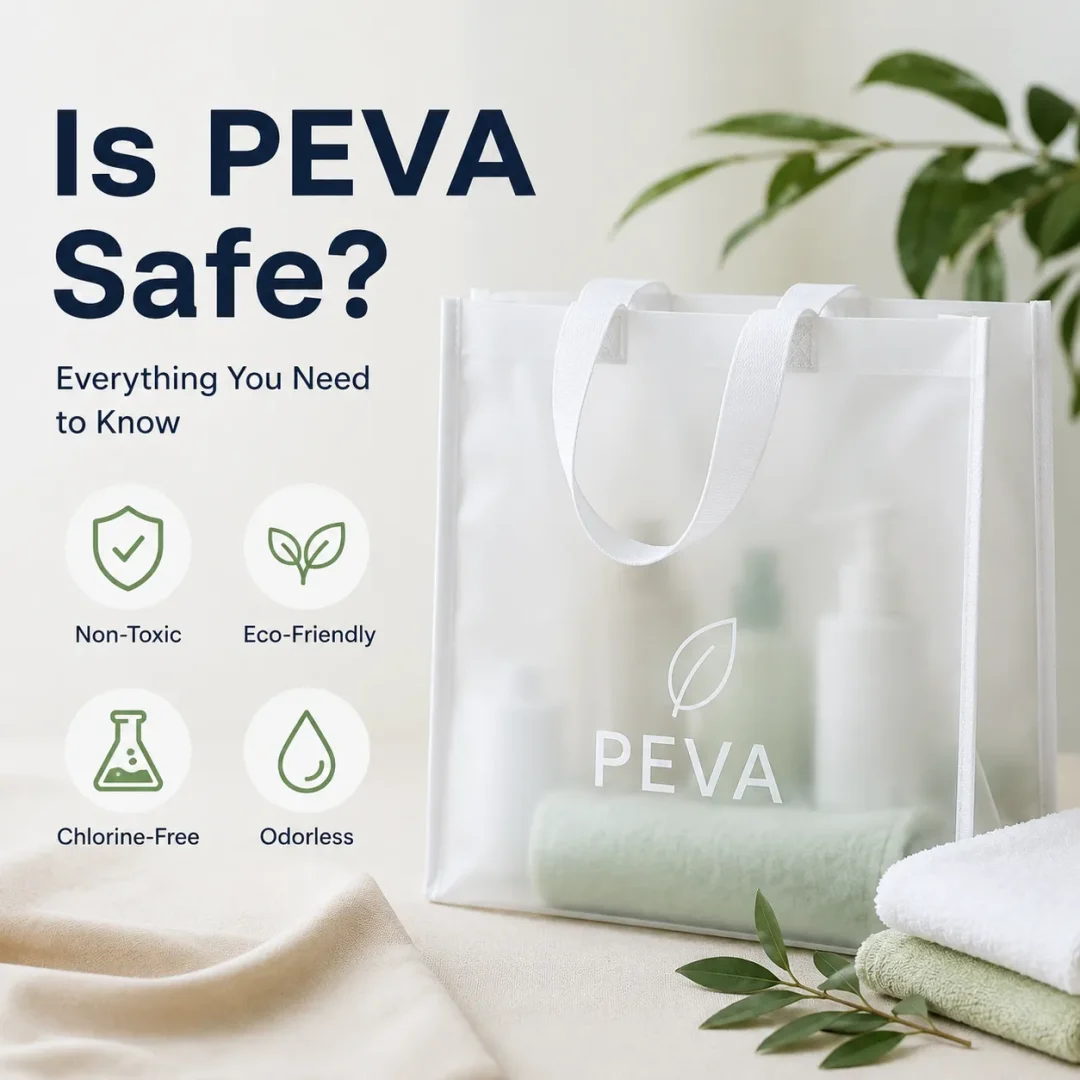
Brands should avoid claims such as:
- 100% eco-friendly
- Completely biodegradable
- Fully recyclable everywhere
- Chemical-free
- Completely non-toxic
More defensible descriptions include:
- Chlorine-free
- PVC-free, when verified
- Low-odor
- Reusable
- Reduced-harm alternative to PVC
- Tested to the buyer’s specified restricted-substance requirements
When renewable or recycled content is the main priority, materials such as recycled polyester, organic cotton, or hemp may be more suitable. However, they do not provide the same combination of transparency and moisture resistance unless coatings or laminations are added.
Applications of PEVA Material
PEVA is used across household, retail, packaging, travel, and storage products.
Garment Bags and Clothing Protection
PEVA garment bags can provide:
- Clear or frosted visibility
- Protection against dust and incidental moisture
- Lightweight construction
- Low bulk for shipping and storage
- Printable surfaces for branding and care information
For retail, dry-cleaning, uniforms, bridalwear, and wardrobe storage, the required film thickness should reflect the garment weight and expected number of uses.
Thin PEVA is suitable for light covers, while larger suit bags, wedding-gown bags, or reusable travel covers may need thicker film, reinforced handles, stronger zippers, or fabric panels.
Rèm tắm và sản phẩm phòng tắm
PEVA is commonly used for shower-curtain liners because it is flexible, water-resistant, easy to wipe clean, and normally lower in odor than many traditional vinyl curtains.
The humid environment makes formulation, seam quality, cleaning instructions, and mildew-control practices important.
Cosmetic and Travel Bags
Clear or frosted PEVA can be used for:
- Cosmetic zipper pouches
- Toiletry organizers
- Travel wash bags
- Gift sets
- Retail beauty packaging
- Small wet-item pouches
A clear material can help users identify contents, but airline or security compliance depends on the bag dimensions, capacity, and applicable travel rules—not on PEVA alone.
Promotional and Retail Packaging
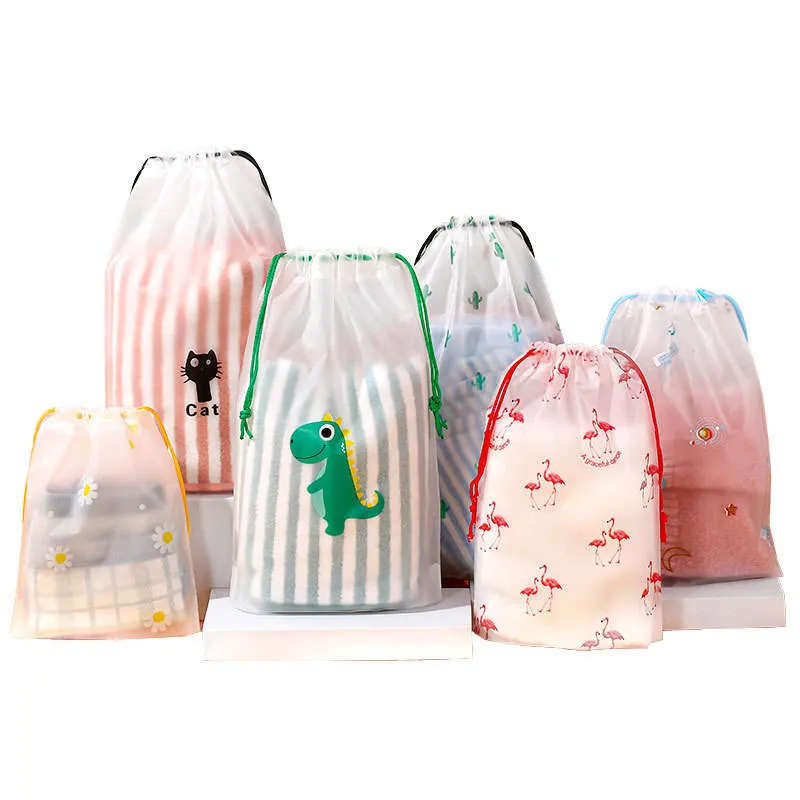
PEVA can be customized for:
- Gift-with-purchase pouches
- Product presentation bags
- Quà tặng tại triển lãm thương mại
- Branded storage organizers
- Reusable promotional packaging
- Clear retail packs
For printed packaging, ink adhesion should be tested on the selected surface treatment before mass production.
Các bọc và tổ chức bảo vệ

Other applications include:
- Table covers
- Furniture covers
- Mattress protectors
- Household storage bags
- Bedding organizers
- Dust covers
- Moisture-resistant packaging
For heavy or sharp contents, PEVA may need reinforcement, lamination, or an alternative material with better puncture resistance.
PEVA in Custom Manufacturing: What Buyers Need to Know
For custom PEVA products, quality depends on more than the material name.
Tùy chọn tùy chỉnh
Common options include:
- Thickness: approximately 0.06 mm to 0.30 mm for many bag applications
- Finish: clear, frosted, matte, glossy, textured, or embossed
- Màu sắc: transparent, translucent, opaque, or Pantone-matched where technically feasible
- Printing: screen printing, heat transfer, and other compatible methods
- Construction: sewn, bound, heat-sealed, laminated, or combined-material structures
- Closures: zippers, snaps, drawstrings, hook-and-loop tape, or sealed edges
- Reinforcement: webbing handles, fabric binding, reinforced corners, or additional panels
Thicker film generally costs more, but it does not automatically guarantee a stronger finished bag. Large dimensions, heavy contents, sharp objects, weak seams, and poorly attached handles can still cause failure.
Số lượng đặt hàng tối thiểu
For custom production, a common starting point is approximately 1,000 units per design, although the actual MOQ depends on:
- Film color
- Thickness
- Printing method
- Product dimensions
- Loại đóng
- Whether custom tooling is required
- Whether stock film can be used
- Packaging requirements
Lower quantities may be possible with stock material and simple printing, but the unit price normally increases because setup, printing, cutting, and machine-adjustment costs are distributed across fewer pieces.
Quality Control Checklist
When evaluating a PEVA sample or production order, check:
- Độ dày vật liệu
Measure several points rather than relying on one reading. - Thickness consistency
Confirm that the agreed tolerance is written into the specification. - Odor
A strong or unusual chemical odor may indicate formulation, storage, or processing issues. - Seam strength
Sewn and sealed seams should be tested according to the expected load and use. - Water resistance
Test the finished product, not only the raw film. Pay attention to zippers, stitching holes, corners, and bindings. - Puncture and tear resistance
Thin PEVA can be damaged by sharp contents or concentrated loads. - Print adhesion
Printed areas should be checked for scratching, peeling, blocking, and color transfer. - Clarity and surface consistency
Look for haze variation, wrinkles, black spots, uneven embossing, and roll marks. - Độ đồng nhất về màu sắc
Compare production against an approved sample or agreed tolerance. - Aging behavior
If the product will be stored for long periods or used outdoors, consider heat, UV, folding, and yellowing tests.
Target Markets and Compliance
Testing requirements should be defined according to the product category, target market, buyer requirements, and intended use.
Depending on the project, buyers may request:
- REACH restricted-substance screening for EU markets
- Applicable U.S. requirements for children’s products
- California Proposition 65 assessment
- Food-contact testing for the intended use
- Phthalate screening
- Heavy-metal testing
- Colorfastness and print-adhesion testing
- Retailer-specific restricted substance lists
- Material safety documentation
Compliance should not be assumed from a general statement such as “PEVA is safe.” The supplier should test the specified material and finished product against the standards required for that order.
Limitations of PEVA Material
PEVA is useful, but it is not suitable for every project.
Its main limitations include:
- It is not readily biodegradable under normal disposal conditions.
- Recycling access is limited in many markets.
- Thin films can be punctured by sharp objects.
- It is less suitable than canvas, nylon, or heavy coated textiles for demanding loads.
- Heat resistance is limited and formulation-dependent.
- Long-term UV exposure may cause discoloration or brittleness without suitable stabilization.
- Sewn PEVA products may allow water to enter through needle holes.
- Clear and glossy surfaces may show scratches, wrinkles, or handling marks.
- Raw-material costs may be affected by petrochemical price changes.
These limitations should be considered during material selection rather than after a sample has already been produced.
Khi nào nên chọn PEVA—và khi nào không nên
PEVA là sự lựa chọn tốt khi:
- Moisture and dust protection are important
- You need a clear or frosted product
- Low odor is important for indoor use
- The product must remain lightweight and foldable
- You need a chlorine-free alternative to PVC
- The expected load is light or moderate
- The design requires printing or product visibility
- Cost must remain below many premium TPU or coated-textile constructions
Hãy xem xét một vật liệu khác khi:
- Heavy-duty load capacity is required
- The product will contain sharp tools or components
- High-temperature exposure is expected
- Outdoor UV exposure will be prolonged
- Natural, biodegradable, or recycled content is the primary brand requirement
- Direct food contact is required without a verified compliant formulation
- A premium textile appearance is more important than transparency
- The bag must remain waterproof at heavily stitched seams
Possible alternatives include TPU, coated polyester, nylon, canvas, RPET, non-woven fabric, or laminated textiles, depending on the performance requirements.
Câu Hỏi Thường Gặp
Vật liệu PEVA được làm từ gì?
PEVA is generally a copolymer of ethylene and vinyl acetate. Commercial film may also contain pigments, stabilizers, processing aids, and other additives selected for the intended application.
PEVA là nhựa hay vải?
Chemically, PEVA is a plastic. When manufactured as a thin, flexible film, it can feel and behave like fabric, which is why it is sometimes sold as “PEVA fabric.”
Is PEVA safe for everyday use?
Properly formulated PEVA is commonly used for garment bags, shower curtains, storage covers, cosmetic pouches, and packaging. Sensitive applications still require verification of the exact formulation and applicable test requirements.
PEVA có độc hại không?
It is more accurate to describe PEVA as chlorine-free and generally low-odor rather than universally “non-toxic.” Finished formulations can contain additives, so safety claims should be supported by appropriate testing.
Is PEVA waterproof?
The PEVA film itself provides excellent resistance to water penetration. However, the finished bag may not be fully waterproof if it has sewn seams, needle holes, non-waterproof zippers, bindings, or unsealed openings.
Is PEVA better than PVC?
PEVA is often preferred when buyers want a chlorine-free, lower-odor material that does not normally require phthalate plasticizers for flexibility. PVC may still offer advantages in cost, clarity, or certain performance requirements. The better material depends on the application and compliance needs.
Can PEVA be recycled?
Some PEVA formulations are technically recyclable, but they are not widely accepted by municipal recycling systems. Local collection and processing availability should be verified before making recyclability claims.
PEVA có phân hủy sinh học không?
PEVA does not readily biodegrade under normal environmental or composting conditions.
PEVA có an toàn cho thực phẩm không?
Not automatically. Food-contact suitability depends on the resin, additives, finished construction, type of food, contact time, temperature, and applicable regulations. Buyers should specify food-contact requirements before material selection.
Một sản phẩm PEVA có thời gian sử dụng lâu không?
There is no universal service-life figure. Durability depends on film thickness, formulation, seam construction, folding frequency, load, heat, UV exposure, cleaning method, and storage conditions.
Kết luận
PEVA is a practical material for products that require flexibility, low odor, transparency, and moisture resistance. It is widely used for garment bags, cosmetic pouches, shower curtains, protective covers, storage organizers, and promotional packaging.
Its main advantage over PVC is not that it is perfectly sustainable or completely risk-free. Rather, it provides a chlorine-free, generally low-odor option that can reduce some of the material concerns associated with flexible PVC.
For buyers, the material name is only the starting point. A successful PEVA product also depends on:
- The selected film grade and thickness
- Additive and testing requirements
- Printing compatibility
- Seam and zipper construction
- Expected load and service environment
- Target-market compliance
- Finished-product quality control
Before confirming bulk production, buyers should approve the actual film, construction sample, printed result, and required test standards. This provides a more reliable basis for sourcing than general claims such as “eco-friendly,” “non-toxic,” or “fully waterproof.”
Tài liệu tham khảo kỹ thuật
- PubChem: Poly(ethylene-co-vinyl acetate)
- U.S. FDA Food Contact Substances Inventory
- U.S. FDA: Packaging Materials Listed in 21 CFR 179.45
Material formulations and regulatory requirements vary by product and market. Technical data and compliance documentation should be verified for each specific order.

 Vietnamese
 English
 French
 German
 Japanese
 Arabic
 Thai
 Russian
 Spanish
 Portuguese