
A Tyvek® bag is a bag made from Tyvek®, a nonwoven sheet material produced from high-density polyethylene (HDPE). It combines very low weight with high tear resistance, water repellence, and a distinctive paper-like or fabric-like surface — which is why it has moved from construction and medical packaging into retail, promotional, and travel bags.
If you are sourcing custom bags, Tyvek is a genuinely different option from paper, cotton, and polypropylene nonwoven. But the material name tells you very little about the bag you will receive. Tyvek is not one specification. It comes in hard structure and soft structure families, each with its own style numbers, and those styles behave, print, fold, and seal differently.
This guide covers what Tyvek is, how the grade system works, what the published specifications actually say, what the material cannot do, and what a factory needs from you in order to quote a Tyvek bag accurately.
Quick answer. For a crisp, self-supporting bag with sharp print, choose a hard structure (Type 10) style such as 1073D or 1056D. For a soft, foldable, fabric-like bag, choose a soft structure (Type 14 or 16) style such as 1443R. The two families are not grades of quality — they are the result of two different bonding processes.
1. What Is Tyvek®? The Material Behind the Bag
Tyvek is made from high-density polyethylene (HDPE). DuPont describes it as “a family of tough, durable sheet products made from high-density polyethylene (HDPE)”, in which “continuous, fine, HDPE fibers are spun into a sheet, then bonded with heat and pressure to interconnect the fibers.”[1]
Three points follow from that description, and all three matter commercially:
- It is synthetic, not cellulose. There is no wood pulp in it, unlike kraft or recycled paper. DuPont states no binders are used in the sheet.[2]
- It is not a woven textile. The fibres are laid and bonded, not interlaced on a loom. This is why it has no grain direction and does not fray like a woven fabric.
- It is a nonwoven made of plastic. The base polymer is polyethylene — the same polymer family as the #2 HDPE stream.
DuPont states that the sheet is “100% synthetic”, that the fibre diameter is in the range of 0.5–10 µm, and that Type 10 material has a density of approximately 0.38 g/cc — roughly half that of paper.[3][4] That density figure is the technical reason a Tyvek bag feels almost weightless for its strength.
A trademark note before we go further. Tyvek® is a registered trademark of DuPont de Nemours, Inc. The material is produced by DuPont; bags are converted from it by manufacturers such as INITI Packing. This guide is published by a bag manufacturer and is not sponsored by or endorsed by DuPont. When you specify a project, state the style number you want — that is the only reliable way to describe the material. If you are comparing Tyvek against other paper-based, look-alike substrates, see our note on the difference between DuPont paper and washed kraft paper.
2. Why Tyvek Looks Like Paper but Does Not Behave Like It
The most common misconception in this category is that Tyvek is “stronger paper”. It is not a paper variant at all — it is a plastic nonwoven that happens to look like paper in some styles.
Sources: DuPont product literature for the Tyvek column (see §7 for the full spec set); general industry characteristics for the paper and fabric columns.
Two rows in that table are worth pausing on, because they are widely misquoted:
- “Breathable” does not mean airy. DuPont states that “compared with most textile fabrics, the air permeability of Types 10 and 14 is low”, while moisture-vapour transmission is “much higher than that of plastic films and similar to that of coated papers.”[4] Tyvek manages humidity; it does not ventilate like cotton canvas. If you need high airflow, that is what the pin-perforated Type 16 styles are for — and they trade barrier performance for it.
- “Water-repellent” is not “waterproof”. DuPont’s own product page headings use water-repellent, not waterproof.[2] A finished bag’s water performance is then governed by its seams, handles, closures, and zips — not by the sheet alone. We return to this in §10.
The commercial conclusion: specify Tyvek because of the combination — paper-like appearance, non-paper durability, and a moisture behaviour that neither paper nor plain nonwoven matches. Do not specify it because it looks like paper.
3. Hard Structure vs Soft Structure: The Decision That Changes Everything
This is the single most important distinction in the material, and it is the one most supplier content skips.
DuPont is explicit that the difference comes from the bonding process, not from a quality tier: “Depending on the bonding process, Tyvek® has paper-like styles (hard structure) or textile-like styles (soft structure).”[1]
- Hard structure = Type 10. It is area-bonded — “a smooth, stiff nondirectional paper-like substrate with good printability in both sheet and roll form.”[4] DuPont adds that hard structure is “paper-like, smooth and stiff”, is stronger and smoother than soft structure, “can also hold water and can maintain a three-dimensional shape when folded or sewn (dead-folded)”.[1]
- Soft structure = Type 14 and Type 16. These are point-bonded with an embossed pattern, giving “a fabric-like flexible substrate with good printability and tear resistance.”[4] DuPont describes Type 14 as “soft, fabric-like and drapeable”, used where “barrier, durability and breathability are required.”[1]
Sources: DuPont Tyvek® product page and DuPont Tyvek® Product Handbook (see §7 for citations).
Two practical consequences for a bag programme:
- A hard structure bag can be built to stand up on a counter, the way a premium paper shopping bag does. A soft structure bag will not — it collapses and folds, which is often exactly what a reusable tote or a travel organiser needs.
- The same “Tyvek bag” brief can produce two visibly different products. That is why the buyer-side question “why do two Tyvek bags feel so different?” is common, and why the style number should be written into your specification sheet, not left to the factory’s discretion.
4. How to Read a Tyvek® Style Number
Style numbers look arbitrary but they are not. The DuPont numbering convention is documented and consistent.[1][4]
The letter suffix then tells you how the surface has been treated. This is the part almost nobody explains, yet it directly affects printing performance and static behaviour:
Why the suffix matters commercially: corona treatment raises the surface tension of the sheet to 40–42 dynes/cm², which is what allows ink to wet and bond to the surface reliably.[4] An untreated “B” style is not the right substrate for a branded bag; a “D” or “R” style is. If a specification sheet lists a style number with no suffix, the printing result is a lottery.
When you ask for a Tyvek® bag, quote the full style code — 1073D, not “1073”; 1443R, not “1443”. It changes what the factory orders, and it changes what you receive. Our own custom Tyvek® bags programme works from these codes, and we recommend the grade against your load and softness requirements rather than defaulting to one stock material.
5. Which Tyvek® Styles Are Used for Bags?
DuPont publishes two short lists of styles used in design and consumer applications.[1]
Beyond those lists, DuPont’s Tyvek® Product Handbook also discusses 1073B, 1079, 1085D, 1058D, 1059B, 8740D and 1422A, and it names 1622E as an example of a Type 16 style.[4]
Three honest notes that most supplier pages omit:
- The lists are selective, not exhaustive. DuPont states that it also works with converters worldwide to offer converted Tyvek® products, so the absence of a style from the consumer list does not mean the style does not exist. It means it is not part of that particular published set.
- 1622E is Type 16. DuPont’s handbook classifies Type 16 as a soft, point-bonded, pin-perforated family, and states that Type 16 styles “are used in disposable, general-purpose industrial garments, bags and packaging” — the phrase bags and packaging is DuPont’s own wording.[4] Note, however, that 1622E does not appear on DuPont’s published Soft Structure Styles list, which covers Type 14 only. Do not treat the two as interchangeable.
- Some style numbers circulate online that DuPont does not publish. Codes such as 1016, 1020 and HomeWrap appear in forum discussion as “hard structure Tyvek” but are absent from DuPont’s published product and consumer lists. Treat them as community shorthand rather than as a specification you can order by name, and confirm availability before designing around them.
Which structure for which bag?
The mapping below is a starting point based on the structure definitions in §3, not a fixed rule. The correct grade for a given bag is confirmed at sampling against load, folding behaviour, print coverage, and sealing method.
For structure-led projects, the two grades most often quoted are 1073D and 1056D (hard) and 1443R (soft) — the same three codes we name on our custom Tyvek® bags page when describing how grade is recommended. Where a bag needs hard structure in the body and a soft hand at the handle or opening, the two can be combined in one construction — that is a design decision to raise early, not a limitation.
6. What the Published Specifications Actually Say
Most content about Tyvek performance consists of adjectives. Here is what is actually documented, with the source type stated for every number, because the difference between a DuPont figure and a distributor’s figure matters when you are qualifying a material.
6.1 Material properties published by DuPont
All values in this table are from DuPont’s Tyvek® Product Handbook, or from DuPont’s Tyvek® product pages for the structural definitions.[1][2][4]
6.2 Basis weight and thickness reported by distributors
DuPont does not publish a per-style basis-weight and thickness table for these grades in its consumer material. Two European distributors do publish figures, which are useful as an indication only:
Source type: distributor-published figures, not DuPont values. They are internally consistent and directionally useful for comparing styles, but they should not be written into a purchase specification as a DuPont guarantee. If a project depends on an exact basis weight or calliper, ask your factory to measure the actual lot during sampling.
6.3 What is not published anywhere
Being straight about this matters more than filling the table.
If your project needs a numeric stiffness or puncture figure — for example, to qualify a bag against a retail-drop standard — the workable route is to ask for it to be measured on the actual style and lot you intend to order. That is a normal sampling request, and it is a far better basis for a specification than a number transcribed from an unrelated page.
7. Printing on a Tyvek® Bag
Tyvek accepts most common decoration processes. DuPont states that “most traditional and digital printing techniques, including UV inkjet, latex and letterpress printing processes can be used”, and that both hard and soft structure are “printable, sewable and glueable”.[1][2]
Rather than repeat the general comparison of screen printing, heat transfer, and digital printing — that is covered in our guides to how the logo printing method is chosen, screen printing on tote bags and the five printing methods used for non-woven bags — here are the four points that are specific to Tyvek as a substrate.
1. Surface treatment decides ink adhesion. As set out in §4, corona-treated styles reach 40–42 dynes/cm² surface tension. Untreated styles do not, and this is the most common hidden cause of poor print durability on a Tyvek bag.
2. Some styles are documented as single-sided only. DuPont’s Product Handbook states that “Styles 8740D and 1085D are recommended for two-sided printing”, while “Styles 1058D and 1073D are recommended only for single-sided printing.”[4] If your design prints on both faces of the bag, this limitation alone can force a different grade — so raise it before artwork is finalised.
3. A small number of styles are reported as unsuitable for printing. Community documentation identifies 1020 and 1016 as “not suitable for printing”.[5] These codes are not on DuPont’s published style lists, so treat the report as a caution rather than a specification: if a style is proposed for a printed bag, ask for a print trial on that exact style.
4. Plan print coverage against stiffness. A large, full-surface print on a soft structure style will feel and behave differently from the same artwork on a hard structure style, because the base sheet flexes. On hard structure, full coverage and fine detail both hold well; on soft structure, artwork should be designed to work with a substrate that drapes.
What to send with an enquiry: number of colours, logo dimensions, print area, whether both faces are printed, spot or full coverage, and the minimum line weight in your artwork. Those five items let a factory confirm the grade and the process together, instead of quoting a process that the chosen style cannot carry.
8. Sealing and Construction: Where a Tyvek® Bag Fails First
A common assumption is that because the sheet is strong, the bag is strong. In practice, a finished bag fails at its seams, handle attachments, and closures far more often than in the body panel.
DuPont states that “sewing, gluing and, to a limited extent, ultrasonic seaming and heat sealing, may be used in fabricating these styles.”[1][4] That sentence contains the whole construction decision:
Two construction notes follow:
- The process window is documented and narrow. Converting guidance states that web tension should not exceed 0.75 lb/in (1.4 N/cm) and sheet temperature should not exceed 175 °F (79 °C).[4] Style 1073D tolerates 1.5 lb/lineal in (2.6 N/cm) at room temperature, but at 225 °F (107 °C) tension above 0.6 lb/lineal in (1.1 N/cm) causes permanent deformation.[4] This is why heat-sealing a Tyvek bag is a process-controlled operation rather than a bench task.
- Reinforcement belongs where the load is. Community experience with Tyvek structures is consistent on this point: the sheet resists tearing but “will get holes”, and it “requires serious reinforcement at tie-outs”.[6] In bag terms, that means handle attachment points, the top opening, and any drawcord channel should be reinforced by design.
If you are weighing handles and closures, the relevant general guides are handle types and attachment and bag closure types. For a Tyvek bag specifically, the question to put to the factory is: which seam method will you use at the body, and which at the handle attachment — and is either of them heat-sealed or welded rather than stitched? One sentence in the quotation, and the construction is no longer ambiguous.
9. Water Resistance: What a Tyvek® Bag Can and Cannot Do
This is the claim most often overstated in this category — including on commercial product pages — so it is worth stating precisely.
What is documented. DuPont describes the material as water-repellent and states that spunbonded olefin is “equally strong wet or dry”, while moisture-vapour transmission is higher than plastic films and comparable to coated papers.[2][4] Hard structure is additionally described as able to “hold water” — meaning the sheet can contain it, not that a finished bag is a sealed vessel.[1]
What that means for a finished bag. Water resistance is a property of the whole product, and the whole product includes seams, handles, closures, zips, and any lamination or lining:
- A stitched construction introduces needle perforations along every seam. Water does not need to cross the sheet; it crosses the stitch line.
- A welded or heat-sealed construction is continuous, which keeps the seam as water-resistant as the panel.
- Open tops, drawcords, zips, and unsealed handle slots are openings by definition.
- A laminate or coating changes the surface behaviour entirely — and changes the recycling picture as well (§12).
Where the “waterproof” claim comes from, and why to avoid it. Third-party user guidance notes that “even hard structure Tyvek is classified only as water-resistant when water exposure is constant, according to the official Tyvek user’s manual”, and experienced users summarise it as “not waterproof but highly water resistant”.[7][8] That matches DuPont’s own choice of the word water-repellent.
The practical position for a buyer: a well-constructed Tyvek bag handles rain, splashes, condensation, and damp storage well — that is a real advantage over paper. It is not a dry bag, a cooler, or a waterproof vessel. If your product claims “waterproof” on-pack, expect the first reviewer who submerges the bag to prove you wrong, and expect the claim to be unenforceable. Our own product pages describe the material as water-resistant for exactly this reason; if any specification you receive says “waterproof” with no qualification, ask which seam method and which test standard support it.
If moisture protection is the primary requirement, the correct engineering answer is usually to combine a hydrophobic panel with a sealed or welded construction, or to move to a purpose-built liner — not to upgrade the sheet.
10. Is Tyvek® a Plastic, a Paper or a Fabric?
This is a real and frequently asked buyer question, and it has a clean answer.
The reason this matters commercially is claims discipline. Tyvek is a plastic material with a paper-like appearance. Describing it as “a paper bag” in a product listing creates a compliance problem in markets with single-use plastic restrictions, and describing it as “biodegradable” is simply inaccurate. The defensible description is: a recyclable, reusable nonwoven made from HDPE.
11. Tyvek® vs Paper vs Non-Woven PP vs Cotton
No material wins everywhere. The useful question is not “which is best” but “which constraints does my programme actually have”.
General characteristics only. Performance of any finished bag depends on the base specification, GSM, seam construction, handle attachment, and reinforcement. For deeper material comparisons, see non-woven tote bags vs cotton tote bags, woven vs non-woven polypropylene and the tote bag material guide.
Choose Tyvek® when your programme needs:
- A paper-like or technical aesthetic that a plain nonwoven cannot deliver
- Moisture tolerance materially better than paper, without a plastic-film look
- A very low empty-bag weight — useful for air freight and for bulk storage
- Flat-packing and reusability with a surface that does not crease and crack like coated paper
- A substrate that takes a clean, sharp print at fine detail
Choose another material when your programme needs:
- Very heavy load carrying, where a woven or heavy canvas construction is more appropriate
- Genuine waterproof performance or a fully sealed vessel
- A natural-fibre, biodegradable story
- The absolute lowest cost per unit for a single-use application
- A traditional textile hand feel and drape
A hybrid is often the best answer, and it is common in practice: a Tyvek body for the surface and moisture behaviour, with a canvas lining or woven webbing handles for structure and load. That is the construction used on our custom Tyvek® tote bags, and it exists precisely because neither material alone covers the full brief.
12. Sustainability: Which Claims You Can Defend
Sustainability language about Tyvek needs care, because the honest position is more nuanced than either the marketing or the criticism suggests.
What is documented
- Tyvek is made from HDPE. DuPont states that “products made of 100% Tyvek® material can be recycled at facilities that recycle flexible HDPE materials”.[2]
- Tyvek is a durable, reusable material, and reusability is where most of the environmental benefit sits — a bag that survives a hundred uses displaces a hundred single-use bags.
- DuPont states that its Tyvek reusable-bag material is made without plasticizers and without chemicals restricted under RoHS and REACH.[9]
What is not true, or not safely claimable
- It is not biodegradable or compostable. It is a synthetic polymer. Do not describe it as a biodegradable alternative to paper or natural-fibre bags — our own product documentation states this plainly, and it is the correct position.
- Curbside recycling is not assured. Tyvek is recyclable in principle, but it is not accepted in most curbside programmes and generally requires a dedicated flexible-plastic stream. Availability varies entirely by locality.[10]
- Extra components can void the recyclability of the whole bag. A laminated coating, a mixed-fibre lining, a metal zip, or a cotton handle changes the material stream. A mono-material construction preserves the option; a mixed construction may not.
A claim checklist
One question buyers reasonably raise. Some users have asked whether Tyvek styles are coated with PFAS, out of concern for food-contact applications.[11] DuPont’s position on its reusable-bag material is that it is made without plasticizers and without RoHS/REACH-restricted chemicals.[9] If your application involves food contact or a specific regulatory market, the right step is to request the compliance documentation for the exact style code you intend to order, rather than relying on forum discussion in either direction. For adjacent sustainability questions, see whether recycled content is genuinely eco-friendly.
13. Where Tyvek® Bags and Pouches Are Actually Used
It is easy to list plausible applications. It is more useful to separate the ones with documented commercial use from the ones that are merely imaginable.
Where we found no direct evidence, and therefore make no claim: hotel amenity programmes, airline amenity kits, and cosmetics gifting are frequently listed as Tyvek applications in general marketing copy. In this research, no verifiable source was found showing hotels or airlines buying Tyvek bags at programme level; the amenity-kit sources reviewed cite recycled kraft paper and recycled fabrics instead. That does not mean the application is impossible — it means it is unproven, and a bag buyer should not plan around it.
What this list means commercially: Tyvek’s strongest documented footholds are (a) archival and protective applications where acid-free, non-abrasive and moisture-tolerant behaviour matters, (b) brand retail programmes where the surface aesthetic carries the message, and (c) regulated protective packaging. Those are the segments where the material’s cost is easiest to justify.
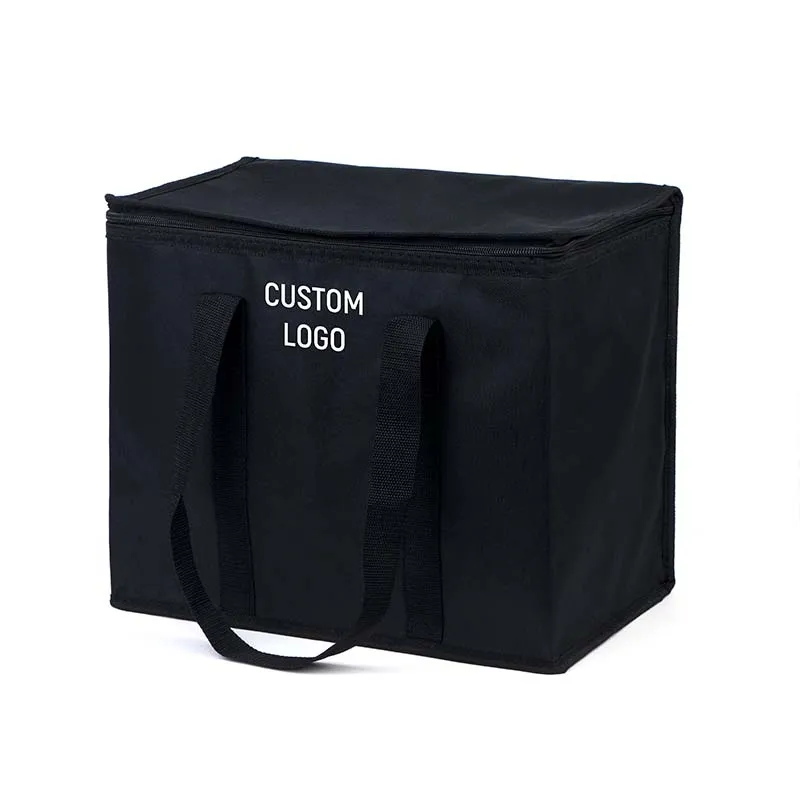
Among our own Tyvek® programmes, the most common project types are custom Tyvek® tote bags for retail and promo, Tyvek paper tote lunch bags, a washable Tyvek kraft paper bag, and a Tyvek cooler bag — each of which uses a different structure choice, which is the point of §3.
14. What Tyvek® Feels and Behaves Like in Real Use
The manufacturer’s specification sheet will not tell you how the material behaves in the customer’s hand after a month. Owner and maker communities do, and this is where a buyer can avoid genuine surprises. Everything in this section is community-reported experience, not a DuPont or manufacturer statement.[5][6][7][8][11]
The practical value of this section is in the specification conversation. A buyer who asks “which seam method, which style code, and what shrinkage allowance did you allow?” removes three of the most common sources of mismatch between a sample and a bulk order.
15. How to Specify a Custom Tyvek® Bag
Most enquiries we receive are missing at least two of the inputs below. Supplying them turns a two-week clarification round into a same-week quotation.
On our own standard terms: for custom Tyvek® bag programmes we work from MOQ 200 pcs, with production typically 15–30 days and samples available before the bulk order. Those are our published figures for these programmes and they are stated here so you can plan against them; they are confirmed per project once the specification is fixed. Our Tyvek® programmes are documented at custom Tyvek® bags and custom Tyvek® tote bags.
For related planning questions, see how MOQ is calculated for a bag programme, what actually drives the unit price, how to verify a bag manufacturer and HS codes for bags if you are calculating landed cost.
16. Five Mistakes Buyers Make With Tyvek® Bags
1. Specifying “Tyvek” and stopping there. The material name does not describe the bag. Two quotes for “a Tyvek bag” can describe a rigid, paper-like product and a soft, foldable textile-like product. Put the structure family — or the style code — in the brief.
2. Treating soft structure as a downgrade. Soft structure is not a cheaper or lesser version of hard structure; it is a different bonding process for a different job. A tote bag made from hard structure will be stiff where you wanted it to drape.
3. Assuming the finished bag is waterproof. The sheet is water-repellent. The bag is only as water-resistant as its weakest seam, and stitched seams are perforated by definition. Market the claim you can defend.
4. Ignoring single-sided printing limits. Some styles are documented as recommended for single-sided printing only, and some style codes circulate that are reported as unsuitable for printing altogether. Confirm printability against the exact style before artwork is finalised.
5. Buying on basis weight alone. Basis weight does not tell you stiffness, surface treatment, printability, or seam behaviour. The relevant specifiers are the structure family, the style code including suffix, and the construction. Weight is one input, not the answer.
A sixth, less obvious one: asking for “authentic DuPont material” without a style code. Authenticity of material and suitability of grade are two separate questions. Confirm the code.
17. Frequently Asked Questions
Are Tyvek bags waterproof?
Tyvek itself is water-repellent rather than waterproof, and the finished bag should not be described as waterproof. Seams, handle attachments, closures and zips all affect water resistance — a stitched seam is perforated by the needle and lets water through the stitch line, while a welded or heat-sealed seam is continuous. A well-made Tyvek bag handles rain, splashes and damp conditions far better than paper, but it is not a dry bag and should not be marketed as one.
Is Tyvek a plastic or a fabric?
It is a plastic. Tyvek is a nonwoven made from high-density polyethylene (HDPE) fibres — a spunbonded olefin. It is not paper, because it contains no cellulose and no binders, and it is not a woven textile, because the fibres are bonded rather than interlaced. Some styles simply look and feel paper-like.
What is the difference between hard Tyvek and soft Tyvek?
The difference comes from the bonding process, not from quality. Hard structure is Type 10, an area-bonded sheet that is paper-like, smooth and stiff, and can be dead-folded to hold a three-dimensional shape. Soft structure covers Type 14 and Type 16, which are point-bonded with an embossed pattern and are soft, fabric-like and drapeable. Hard structure is stronger and smoother; soft structure flexes and packs down.
What grade of Tyvek is used for bags?
DuPont publishes two lists of styles used in design and consumer applications: hard structure styles 1025D, 1056D, 1057D, 1070D, 1073D and 1082D; and soft structure styles 1443R, 1442R, 1473R and 1460C. Type 16 styles such as 1622E are documented as being used in bags and packaging. The right choice depends on whether the bag must stand up or fold flat, and on the printing requirement.
What do the D, B, R and E suffixes mean?
They describe surface treatment, which affects printing and static behaviour. On Type 10 (hard), D means antistatic plus corona treatment, and B means untreated with maximum barrier performance. On Type 14 (soft), R means corona plus antistatic treatment and A means antistatic only. E appears on Type 16 styles such as 1622E. Corona treatment raises surface tension to 40–42 dynes/cm², which is what makes ink adhere reliably — so never specify a style number without its suffix.
Can all Tyvek styles be printed?
Most can, and DuPont states that both hard and soft structure are printable, sewable and glueable. But there are documented limits: DuPont’s own guidance recommends 8740D and 1085D for two-sided printing, and specifies 1058D and 1073D for single-sided printing only. Some untreated styles are not intended for branding. Always confirm printability against the exact style code, ideally with a print trial on the actual material.
Are Tyvek bags stronger than paper bags?
In tear and puncture terms, generally yes — Tyvek resists tearing far better than conventional paper, and it is “equally strong wet or dry”, so it does not lose strength when damp the way paper does. The strength of a finished bag still depends on its construction. A sewn seam, an unreinforced handle attachment or a thin panel can fail before the material does.
Can Tyvek bags be recycled?
Yes, where the right collection stream exists. DuPont states that products made of 100% Tyvek material can be recycled at facilities that recycle flexible HDPE materials. In practice, Tyvek is not accepted in most curbside programmes and usually needs a dedicated flexible-plastic stream, so availability depends on your location. A mono-material construction preserves recyclability; a laminated coating or mixed lining may prevent it. Tyvek is recyclable but it is not biodegradable or compostable.
Can Tyvek bags be washed?
They can, and community practice is specific about how: cold water, delicate cycle, no detergent, and air-dry rather than tumble-dry. Washing is also how hard structure is softened into a more fabric-like hand feel. The catch is shrinkage — users report allowing roughly 3–5% in panel dimensions if the bag will be washed. If your bag is printed, test the wash behaviour on the exact style before promoting washability as a feature.
How durable are Tyvek bags compared with cotton or canvas?
A Tyvek bag is much lighter than a comparable cotton or canvas bag, and it resists tearing well. Cotton and canvas generally tolerate heavier continuous loads and repeated washing better, while Tyvek’s advantage is weight, moisture tolerance, and a distinctive surface. For travel, promotional, and retail applications the trade is usually favourable; for heavy daily hauling, a textile construction is the safer choice.
What is the MOQ for custom Tyvek bags?
For our custom Tyvek bag programmes, MOQ starts at 200 pcs, with production typically running 15–30 days and samples available before the bulk order. MOQ is confirmed once the specification is fixed, because the specification — structure, printing, handles, closures — determines the material setup and the printing setup. Read more on how MOQ is calculated for a bag programme.
What do you need from me to quote a Tyvek bag?
Six things get you a usable quotation: the bag type and application; the dimensions including gusset or base depth; the structure you want, or the use case so we can propose one; the printing requirement including colours and whether both faces print; the expected load and reuse intensity; and the quantity with destination. If you have a style code, send it. If not, describe how the bag should feel and we will recommend the grade — that is how our custom Tyvek® bags process works.
18. The Short Version
A Tyvek® bag is a bag made from a spunbonded HDPE nonwoven that looks like paper or fabric depending on how it was bonded. The single most useful thing a buyer can learn about the material is that the bonding process, not quality, splits it into two families — hard structure (Type 10, area-bonded, stiff and paper-like) and soft structure (Type 14 and 16, point-bonded, soft and drapeable). The style number and its suffix then tell you the surface treatment, and the surface treatment determines whether your print stays on.
Specify in this order: structure first, style code second, printing and seam method third, then dimensions, load and quantity. Ask which seam method is used at the body and at the handle attachment, because that is where the bag will fail first and where its water performance is actually decided. And describe the material as water-repellent and recyclable — not waterproof and not biodegradable — because those are the claims that hold up.
If you are sourcing custom Tyvek® bags, send us your bag dimensions, intended application, printing requirement, target quantity and destination. We will propose the structure and style code, confirm the construction, and return a quotation with a sampling plan. Send us your bag specification or review our custom Tyvek® bags programme.


 English
 French
 German
 Japanese
 Arabic
 Thai
 Vietnamese
 Russian
 Spanish
 Portuguese