
Quick Answer
Pocket design is the single most underrated factor in custom canvas tote bag development. A well-designed pocket system transforms a simple carry-all into a functional organizational tool — one that buyers are willing to pay 30–50% more for. Conversely, poorly planned pockets create manufacturing bottlenecks, increase defect rates, and frustrate end users.
The optimal pocket design for your canvas tote depends on three interconnected dimensions:
- Pocket Position — Where the pocket sits on the bag body (interior, exterior front, back, side, hidden). Position determines accessibility, security, and visual balance.
- Pocket Construction — How the pocket is built (slip, patch, zipper, gusset, welt, pleated). Construction dictates capacity, durability, and production cost.
- Intended Application — What the bag will carry and who will use it. A teacher’s tote demands different pocket logic than a gym tote or a promotional giveaway bag.
The best pocket design is not the one with the most features. It is the one that balances functionality, manufacturing efficiency, and unit cost for its specific end use. This guide covers every layer of that decision — from paper pattern to production line.
Chapter 1 — Why Pocket Design Matters
1.1 How Pockets Improve Usability
A canvas tote without pockets is a single-compartment container. Users dump everything in, then spend time digging. Pockets convert unstructured space into organized zones — quick-access for a phone, secure storage for a passport, dedicated slots for a water bottle.
In product testing, bags with 3–5 thoughtfully placed pockets consistently outperform single-compartment designs in user satisfaction surveys. The reason is behavioral: people do not carry fewer items when given fewer pockets; they carry the same items in a less organized way. Pockets reduce the cognitive load of managing loose objects.
1.2 How Pockets Increase Perceived Product Value
Two identical 12 oz canvas totes, same dimensions, same GSM. One has a zipper pocket and two slip pockets. The other has no internal organization. In retail settings, the pocketed version commands 30–50% higher pricing — and outsells the basic version.
This is not purely about material cost. A zipper pocket adds roughly 0.40–1.20 in production cost, yet the perceived value increase is 5–10x that amount. Pockets signal intentional design. They tell the buyer that someone thought about how the bag would actually be used.
1.3 How Pockets Influence Retail Pricing
1.4 How Pockets Affect Manufacturing Complexity
Every pocket added to a design introduces:
- 1–3 additional pattern pieces per pocket
- 2–5 extra sewing operations (edge finishing, attachment, topstitching, reinforcement)
- 2–4 additional QC checkpoints (pocket alignment, opening width, stitching integrity)
- Increased fabric consumption — pocket pieces and linings add material waste
A tote with zero pockets may take 12–15 minutes to sew. Adding a zipper pocket, two slip pockets, and a bottle pocket can push sewing time to 22–28 minutes — nearly double the labor cost.
1.5 Why Manufacturers Discuss Pocket Design Before Sampling
Experienced bag manufacturers always review pocket specifications before cutting the first sample. The reason is simple: pocket design decisions made at the sketch stage ripple through every downstream step. A pocket placed too close to the bag opening complicates top-edge binding. A pocket specified with the wrong seam allowance creates puckering. A zipper pocket positioned across a seam line requires pattern splitting.
Smart factories flag these issues during the technical review phase, saving clients 1–2 sampling rounds and 7–14 days in development lead time.
1.6 Pocket Design Decision Flow
Product Purpose
      |
      v
 Items to Carry
      |
      v
 Pocket Position  ─── 6 options: Interior, Exterior Front, Back, Side, Hidden, Combination
      |
      v
Pocket Construction  ─── 10 styles: Slip, Patch, Divider, Zipper, Mesh, Elastic, Flap, Gusset, Pleated, Welt
      |
      v
Pocket Dimensions  ─── Width × Depth × Opening clearance
      |
      v
Material Selection  ─── Body canvas, lining fabric, interlining, hardware
      |
      v
   Prototype
      |
      v
  Fit Test & Revision
      |
      v
 Mass Production
Chapter 2 — Pocket Position Guide
Pocket position is the first design decision. It determines who sees the pocket, how easily it is accessed, and how it affects the bag’s silhouette.
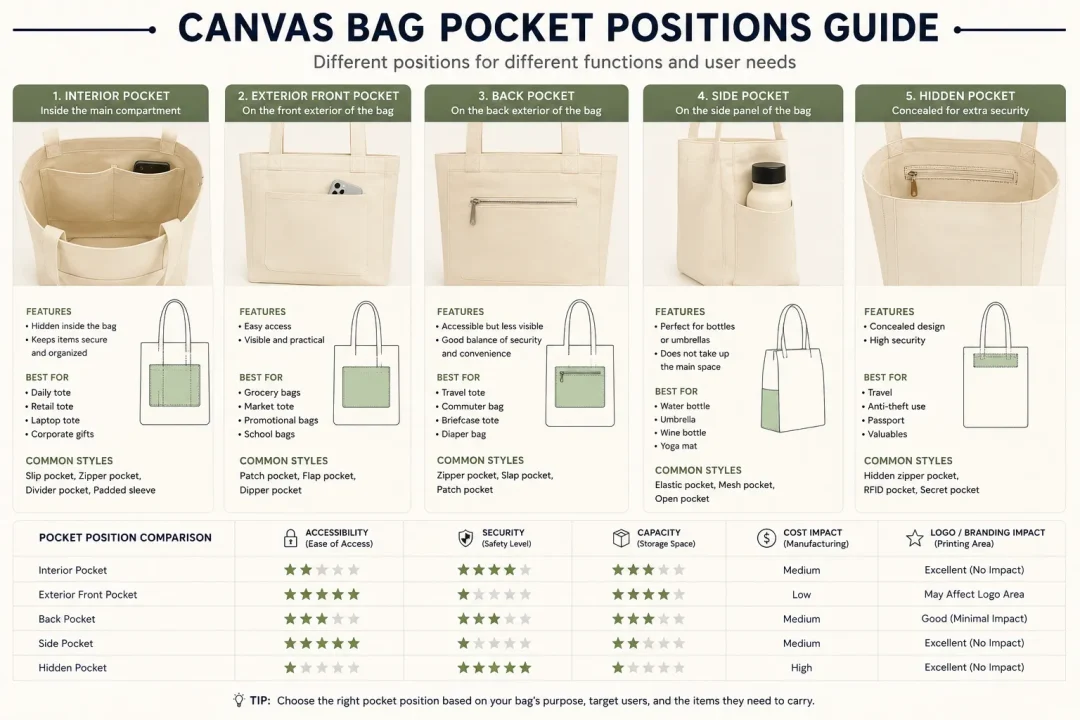
2.1 Interior Pocket
Suitable Products: All canvas tote categories — shopping totes, laptop totes, diaper bags, travel bags, promotional bags.
Ưu điểm:
- Inherent security — contents are not visible or accessible from outside
- Does not interfere with exterior branding or printing area
- Can be added without changing the bag’s external appearance
- Ideal for valuables: wallet, phone, passport, keys
Limitations:
- Requires opening the bag to access — slower retrieval
- Adds interior bulk, potentially reducing main compartment capacity
- More difficult to inspect during QC (interior visibility)
Common Construction: Single slip pocket, double slip pocket, zipper pocket, or combination panel. Interior pockets are typically attached to the lining or directly to the bag body before final assembly.
Factory Tips:
- For unlined canvas totes, interior pockets should use a folded-top edge finish with double-needle stitching to prevent fraying
- Interior zipper pockets require a minimum 15 mm seam allowance around the zipper opening for clean installation
- Position interior pockets at least 40 mm below the bag opening to avoid interference with top-edge binding or hem
Illustration Notes: Interior pocket attached to front panel lining, positioned 40–60 mm below bag opening, with zipper opening centered horizontally.
2.2 Exterior Front Pocket
Suitable Products: Everyday totes, teacher bags, market totes, promotional bags.
Ưu điểm:
- Fastest access — no need to open the main compartment
- Adds visual design element and perceived functionality
- Can serve as a secondary branding surface
- Excellent for frequently accessed items: phone, transit card, shopping list
Limitations:
- Exposes contents — lower security
- Can disrupt front-panel printing or embroidery area
- Adds bulk to the bag’s exterior profile
- Requires careful placement to maintain visual balance
Common Construction: Patch pocket, zipper pocket, or flap pocket. Most commonly attached to the lower two-thirds of the front panel.
Factory Tips:
- Front pocket top edge should sit at least 60–80 mm below the bag opening to maintain clean proportions
- If the front panel carries a logo print, position the pocket below or above the print area — never overlapping
- Use matching or contrasting thread for topstitching as a design feature
- Front patch pockets on 12 oz+ canvas should include bartack reinforcement at corners
2.3 Back Pocket
Suitable Products: Laptop totes, travel totes, commuter bags, business totes.
Ưu điểm:
- Discreet — out of sight when bag is worn against the body
- Excellent for flat items: documents, tablets, magazines, boarding passes
- Does not interfere with front branding or visual design
- Popular in business-oriented bags for quick-access document storage
Limitations:
- Inaccessible while wearing the bag
- Can cause discomfort if overstuffed (pressing against the body)
- Less visible to the user — items may be forgotten
Why Business Bags Increasingly Favor Back Pockets: The rise of the “mobile office” has made back pockets a standard feature on professional canvas totes and briefcases. A back pocket allows commuters to slide in a tablet, file folder, or newspaper without opening the main compartment. For airport travelers, it doubles as a quick-access slot for boarding passes and passports. From a design perspective, it keeps the bag’s front face clean for branding while adding genuine utility.
Common Construction: Slip pocket (most common), zipper pocket, or welt pocket for premium models.
Factory Tips:
- Back pocket openings should face upward — never sideways — to prevent items from sliding out when the bag is set down
- For laptop totes, a back pocket with a magnetic snap closure provides security without adding zipper friction
- Back pockets on heavy canvas (16 oz+) benefit from a turned-edge finish rather than raw-edge folding, as the edge rubs against the user’s clothing
2.4 Side Pocket
Suitable Products: Gym totes, picnic totes, travel totes, diaper bags, wine totes.
Ưu điểm:
- Dedicated storage for cylindrical items: water bottles, umbrellas, wine bottles
- Keeps liquids separate from main compartment contents
- Does not reduce main compartment capacity
- Can be designed with elastic or drawcord for secure retention
Limitations:
- Increases bag width — may not fit narrow storage spaces
- Side pockets on both sides double material and labor
- Bottle pockets without elastic or gusset have poor retention
- Wet items (umbrellas) may need waterproof lining
Applications by Item:
- Bottle Pocket: Cylindrical, 8–9 cm diameter, elasticized opening, optional gusset for expansion
- Umbrella Pocket: Narrower (5–6 cm diameter), taller (22–26 cm), preferably with drainage eyelet
- Wine Pocket: Insulated or padded, 9–10 cm diameter, secure closure (snap or drawcord)
- Yoga Mat Strap: Not a pocket per se, but a side-mounted adjustable strap system with buckle closure
Common Construction: Patch pocket with elastic opening, gusset pocket, or drawcord pocket.
Factory Tips:
- Side pockets on both sides should be mirror-symmetrical in construction — asymmetric side pockets look like a manufacturing defect
- Bottle pockets on heavy canvas need bottom bartacks to support the weight of a full 750 ml bottle
- For insulated side pockets, specify the insulation layer during cutting stage — retrofitting adds 30% to labor time
2.5 Hidden Pocket
Suitable Products: Travel totes, security-conscious designs, passport bags, premium business totes.
Ưu điểm:
- Maximum security — concealed from casual observation
- Ideal for passports, cash, credit cards, and travel documents
- Premium feature that differentiates luxury canvas totes
- Does not affect external design or branding
Limitations:
- Slower access — user must know where the pocket is
- Increases pattern complexity — hidden pockets require precise placement
- Not suitable for bulky items
- Higher QC scrutiny — hidden pockets with misaligned zippers are difficult to repair
Hidden Pocket Variants:
- RFID Pocket: Lined with RFID-blocking fabric (typically nickel-copper woven mesh sandwiched between fabric layers). Essential for travel bags in markets where contactless card skimming is a concern. Adds approximately 0.80–2.00 in material cost per pocket.
- Passport Pocket: Sized precisely for international passports (11 × 16 cm interior dimension). Usually built as a slip pocket with a snap or zipper closure, positioned inside the back panel or within a hidden compartment.
- Secret Pocket: Fully concealed — typically sewn into the bag’s bottom panel seam or behind the interior lining. Accessible only by reaching into a discrete opening. Popular in anti-theft travel totes and high-end custom designs.
Common Construction: Zipper pocket (most common for hidden), welt pocket with zipper, or flap pocket with magnetic closure.
Factory Tips:
- RFID pocket lining must cover all six sides of the pocket interior — partial coverage defeats the shielding function
- Hidden zipper pockets require a zipper guard flap to prevent the metal zipper pull from scratching contents
- Secret pocket seam integration must be planned during pattern development — retrofitting a secret pocket after sampling nearly always fails
2.6 Pocket Position Comparison
[Continued in Part 2 — Chapter 3: Pocket Construction Guide]
Chapter 3 — Pocket Construction Guide
Pocket construction is where manufacturing expertise meets design intent. The same canvas bag with a slip pocket versus a gusset pocket will have entirely different functionality, cost structure, and production timeline. Below are the 10 pocket construction styles every canvas bag buyer should understand.
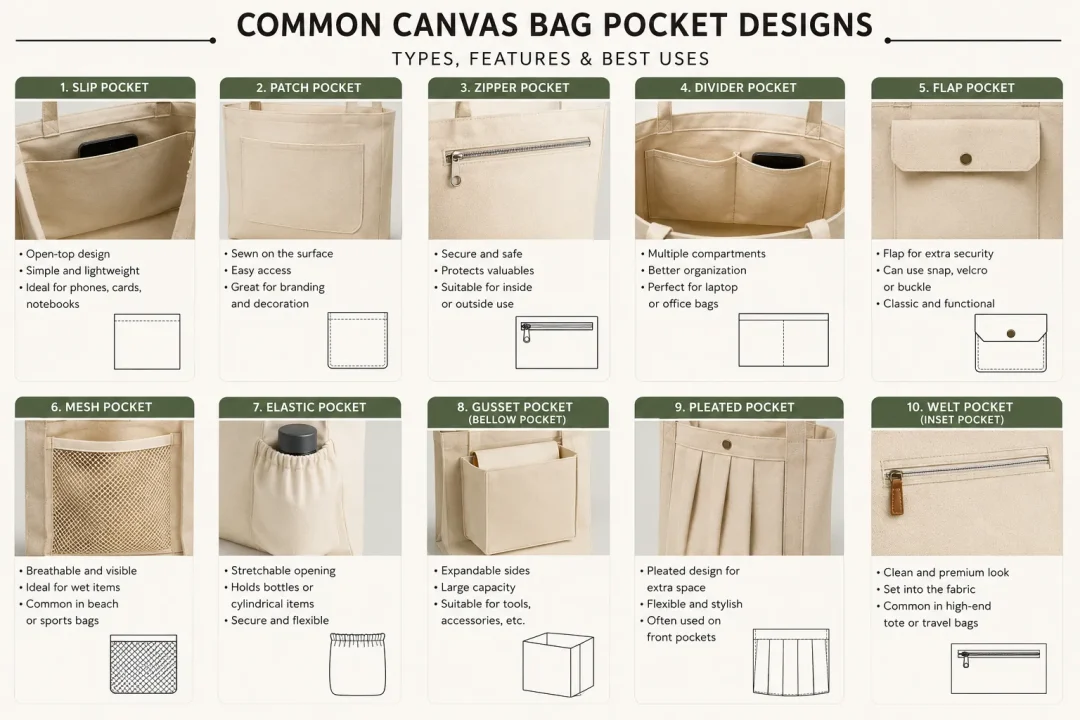
3.1 Slip Pocket
Definition: A single-layer pocket formed by attaching a fabric panel to the bag body on three sides, leaving the top edge open. The simplest pocket construction in bag manufacturing.
Ưu điểm:
- Fastest to produce — 1 pattern piece, 1–2 sewing operations
- Lowest material cost — no zipper, no lining, minimal fabric
- Clean, flat profile — does not add bulk to the bag
- Ideal for thin, flat items: documents, cards, phones
Disadvantages:
- No closure — items can fall out if bag tips over
- Limited capacity — no expansion capability
- Contents visible from above — lower security
- Fabric edges require finishing to prevent fraying on unlined canvas
Typical Position: Interior front or back panel, exterior back panel.
Best Applications: Promotional totes, lightweight market bags, interior phone/document pockets on any canvas tote.
Manufacturing Notes:
- Top edge of a slip pocket on unlined canvas must be folded twice (double-fold hem) and double-needle stitched to prevent fraying
- For lined bags, slip pockets can be turned-edge finished for a cleaner look
- Recommended seam allowance: 10 mm on sides and bottom, 25 mm on top fold-down
3.2 Patch Pocket
Definition: A pocket applied to the exterior surface of the bag, stitched on three or four sides. Often includes topstitching as a visible design element. Fundamentally similar to a slip pocket but placed on the outside.
Ưu điểm:
- High visibility — adds perceived functionality at a glance
- Can serve as a decorative design element with contrast stitching
- Easy to add late in the design process — minimal pattern restructuring
- Excellent canvas for embroidery or secondary logo placement
Disadvantages:
- Fully exposed — zero security
- Adds visual bulk to the bag’s silhouette
- Top edge stitching is visible and must be clean — no room for error
- Requires reinforcement at corners to prevent tearing under load
Typical Position: Exterior front panel, exterior back panel.
Best Applications: Everyday totes, teacher bags, market totes, promotional bags where visible organization is a selling point.
Manufacturing Notes:
- All four corners of a patch pocket on canvas 10 oz+ should include bartacks (8–10 mm, 12–16 stitches) or box stitches
- Top edge of exterior patch pockets should use a 20 mm double-fold hem for visual weight
- For patch pockets carrying heavy items, add a layer of interlining between the pocket fabric and bag body
3.3 Divider Pocket
Definition: A pocket subdivided into two or more compartments by vertical stitching lines. Effectively creates multiple narrow pockets from a single fabric panel.
Ưu điểm:
- Organizes small items without adding separate pocket pieces
- Cost-efficient — one pattern piece delivers 2–4 compartments
- Excellent for pens, utensils, tools, makeup brushes
- Clean, tailored appearance on interior panels
Disadvantages:
- Each divider reduces individual compartment width — not suitable for wide items
- Divider stitching must be perfectly parallel — miscut stitching is immediately visible
- Items in adjacent compartments can interfere with each other
- Limited depth — divider pockets work best for short-to-medium items
Typical Position: Interior front panel, interior organizational panels.
Best Applications: Teacher totes (pen slots), craft totes (tool slots), diaper totes (bottle and wipe organization), makeup bags.
Manufacturing Notes:
- Divider stitching lines should be spaced at minimum 25 mm apart for functional compartments. Narrower spacing is decorative, not functional.
- Each divider line requires a back-stitch at both ends to prevent seam unraveling
- The fabric panel for a divider pocket should be cut 10–15 mm wider than the finished width to account for take-up from stitching lines
3.4 Zipper Pocket
Definition: A pocket with a zipper closure across its opening. The zipper is installed between the pocket panel and the bag body (or between two pocket panels). The most common security pocket in canvas bag design.
Ưu điểm:
- Full closure — contents are secured against falling out
- Perceived value — zipper pockets signal quality to buyers
- Versatile — works in interior, exterior, back, and hidden positions
- Protects contents from dust, moisture, and accidental exposure
Disadvantages:
- Higher material cost — zipper, zipper pull, plus additional fabric for zipper guard
- More complex construction — zipper installation adds 2–4 sewing operations
- Zipper failure is one of the most common warranty claims on canvas bags
- Requires precise cutting — zipper opening misalignment is difficult to correct
Typical Position: Interior (most common), exterior front, back panel, hidden.
Best Applications: Any canvas tote where secure storage is needed — laptop totes, travel bags, diaper bags, premium everyday totes.
Manufacturing Notes:
- Zipper length should be 25–30 mm longer than the finished opening to allow for end tab installation
- A zipper guard flap (10–15 mm fabric extension beyond zipper teeth) prevents the metal pull from catching on contents
- Always specify whether the zipper tape is exposed (visible stitching) or concealed (tunnel installation) — this affects the cutting dimensions
- YKK #5 nylon coil is the industry standard for canvas tote zipper pockets; #3 is acceptable for interior pockets only
3.5 Mesh Pocket
Definition: A pocket constructed with mesh fabric (typically polyester or nylon netting) instead of solid canvas or twill. Contents are visible through the pocket wall.
Ưu điểm:
- Instant content visibility — user can see what is inside without opening
- Lightweight — mesh adds negligible weight to the bag
- Breathable — ideal for damp items (gym clothes, swimwear)
- Stretch properties — some mesh fabrics provide natural give without elastic
Disadvantages:
- Zero privacy — contents are fully visible to everyone
- Lower durability — mesh can snag, tear, or develop holes faster than solid fabric
- Limited structure — mesh pockets sag under weight without rigid backing
- Not suitable for small items — pens and keys can poke through mesh openings
Typical Position: Interior side panels, interior front panel, exterior side pocket (less common).
Best Applications: Gym totes, swim bags, beach totes, diaper bags (for wet items), laundry bags.
Manufacturing Notes:
- Mesh must be edge-bound with fabric tape or folded under binding — raw mesh edges fray aggressively
- For interior mesh pockets on canvas totes, use mesh with hole size 2–4 mm — larger holes catch on zipper pulls and keys
- Mesh pockets holding weight should have a solid fabric bottom panel to prevent stretching and tearing
- Polyester mesh is preferred over nylon mesh for UV resistance in bags used outdoors
3.6 Elastic Pocket
Definition: A pocket where the opening is gathered or tensioned by elastic material (elastic band, elastic cord, or elastic webbing). The elastic creates a self-adjusting opening that grips contents.
Ưu điểm:
- Active retention — elastic grips cylindrical items (bottles, umbrellas) without needing a zipper or snap
- Self-adjusting — a single elastic pocket accommodates variable item sizes
- Low-profile when empty — elastic lies flat against the bag body
- Good for items that need quick one-handed access
Disadvantages:
- Elastic degrades over time — typically 2–3 years of regular use before losing tension
- Not secure — determined shaking can dislodge items
- Elastic casing adds a sewing step and potential failure point
- Temperature-sensitive — elastic loses elasticity faster in hot climates
Typical Position: Exterior side (bottle/umbrella), interior side panels.
Best Applications: Gym totes (water bottle), travel totes (umbrella, water bottle), diaper bags (baby bottle), picnic totes.
Manufacturing Notes:
- Use flat elastic 15–20 mm wide for exterior pockets — round cord elastic is insufficient for bottle retention
- Elastic casing should be 3–5 mm wider than the elastic strip to allow free movement
- Always bartack elastic ends to the bag body — a single straight stitch will pull out under repeated tension
- For OEM orders, specify elastic material: polyester elastic lasts 2–3× longer than rubber elastic in outdoor use
3.7 Flap Pocket
Definition: A pocket with a fabric flap that covers and protects the opening. The flap may close with a snap, magnetic snap, hook-and-loop, or simply hang over the pocket opening.
Ưu điểm:
- Superior protection — flap shields contents from rain, dust, and prying eyes
- Classic aesthetic — flap pockets convey a traditional, premium look
- Can incorporate hardware as a design feature (metal snap, magnetic closure)
- Suitable for irregularly shaped items that do not fit neatly into zipper pockets
Disadvantages:
- Slower access — two motions required (lift flap, then reach in)
- Higher material cost — flap adds fabric, hardware, and sewing operations
- Flap alignment is critical — a misaligned flap looks sloppy and is difficult to fix
- Magnetic snaps can interfere with credit cards and phones if placed near interior pockets
Typical Position: Exterior front (most common), exterior back, exterior side.
Best Applications: Premium everyday totes, travel bags, messenger-style canvas bags, outdoor/military-inspired designs.
Manufacturing Notes:
- Flap must extend at minimum 15 mm beyond the pocket opening on all sides to provide adequate coverage
- Magnetic snap back-plate must be padded or covered with a fabric patch to prevent scratching contents
- For heavy canvas (14 oz+), flap corners should be rounded (not square) — square corners curl upward after repeated use
- Flap pocket with hook-and-loop closure loses its crisp look faster than snap closure — recommend snap for premium bags
3.8 Gusset Pocket
Definition: A pocket with an expandable side or bottom panel (the gusset), allowing the pocket to expand outward when filled. The most functional pocket for holding bulky three-dimensional items.
Ưu điểm:
- True 3D storage — gusset pockets hold volume, not just flat items
- Expands when needed, lies relatively flat when empty
- Excellent for bottles, lunch containers, baby items, shoes
- Professional appearance when properly constructed
Disadvantages:
- Most complex pocket construction — gussets require precise cutting and assembly
- Higher material usage — gusset adds a separate pattern piece
- More labor — gusset assembly adds 3–5 sewing operations per pocket
- Gusset seams are high-stress points — must be reinforced
Typical Position: Exterior side (bottle/umbrella), interior compartment dividers, exterior front.
Best Applications: Diaper totes, gym totes, lunch totes, travel bags, any application requiring bulky-item storage.
Manufacturing Notes:
- Gusset width determines expansion capacity: 30–40 mm gusset for general use, 50–70 mm gusset for bulky items
- Gusset bottom corners must be box-stitched or bartacked — this is the first failure point under load
- For side gusset pockets on heavy canvas, use the same fabric weight as the bag body for durability
- Gusset pocket pattern must include seam notches at both ends of the fold line — without notches, alignment during sewing becomes guesswork
3.9 Pleated Pocket (Factory Signature Feature)
Definition: A pocket with pre-formed folds (pleats) that allow the pocket body to expand outward. Unlike a gusset pocket — which uses a separate side panel — a pleated pocket achieves expansion through folded fabric within a single piece.
Ưu điểm:
- Greater expansion than a flat patch pocket — ideal for bulky or irregular items
- Cleaner appearance than elastic — pleats maintain a tailored look even when expanded
- Can be designed as inverted pleats (folds inward) or box pleats (folds outward) for different visual effects
- Single-piece construction — simpler pattern than a gusset pocket, fewer seam lines
Disadvantages:
- Pleats require precise pressing and topstitching — inconsistent pleats look amateur
- Fabric bulk at pleat folds can cause needle deflection during topstitching
- Not self-closing — expanded pleats stay open unless combined with a flap or snap
- Less common in mass-market bags — some production lines are unfamiliar with the technique
Typical Position: Exterior front, exterior side (tool loops and cargo pockets).
Best Applications: Work totes, tool bags, cargo-style canvas totes, oversized market bags, firewood carriers.
Why We Included This: While less common than gusset pockets on standard canvas totes, pleated pockets appear on workwear-inspired and utility-focused designs. They demonstrate a factory’s ability to handle precision folding and pressing — a skill that separates experienced manufacturers from basic cut-and-sew operations. Competitors rarely discuss pleated construction, making this a content differentiation opportunity.
Manufacturing Notes:
- Pleat depth should be 15–25 mm per fold for functional expansion — deeper pleats add bulk without proportional capacity gain
- Pleat folds must be pre-pressed with a creasing machine or industrial iron before sewing — attempting to fold during stitching produces uneven results
- Topstitching along pleat edges should use a compensating foot to handle the fabric thickness transition
3.10 Welt Pocket (Premium Factory Capability)
Definition: A pocket with a bound, slit-style opening finished with one or two narrow fabric strips (welts). The pocket bag sits behind the opening, invisible from the outside. This is the construction used on suit jackets and premium leather bags.
Ưu điểm:
- Highest-quality appearance — welt pockets are associated with luxury tailoring
- Minimal visual impact — the pocket body is hidden behind the bag panel
- Can be combined with a zipper for a concealed secure pocket
- Demonstrates advanced manufacturing capability — fewer than 20% of canvas bag factories can execute clean welt pockets
Disadvantages:
- Most complex pocket construction — requires high operator skill level
- Higher defect rate — welt misalignment, uneven lip width, and fabric puckering are common issues
- Higher cost — welt pockets add 5–8 minutes of sewing time per pocket
- Not suitable for very heavy canvas (16 oz+) without specialized pressing equipment
Typical Position: Exterior back panel, interior premium compartments, front panel (less common on totes).
Best Applications: Premium business totes, luxury canvas briefcases, high-end travel bags, executive gift bags.
Why We Included This: Welt pockets are the hallmark of premium bag manufacturing. While most canvas tote suppliers offer only patch and zipper pockets, a factory that can deliver clean welt pockets demonstrates advanced technical capability. This is a strong differentiator for B2B buyers seeking premium OEM partners, and it is a topic almost entirely absent from competitor content.
Manufacturing Notes:
- Welt width must be consistent within 0.5 mm tolerance across the entire opening — this requires a specialized welt folder attachment on the sewing machine
- The welt fabric should be cut on the bias (45° angle) to prevent fraying and allow the fabric to curve cleanly around the opening ends
- Welt pocket bags should be constructed from a lighter fabric (6–8 oz cotton twill) than the bag body to reduce bulk
- Zipper welt pockets require a zipper shield behind the welt to prevent the zipper tape from being visible
3.11 Pocket Construction Comparison Table
Chapter 4 — Pocket Construction Details
This chapter covers the manufacturing details that separate professional-grade pockets from amateur work. Most competitors do not cover these topics — this is where factory expertise becomes visible content.
4.1 Pocket Edge Finishing
The top edge of any canvas pocket is a stress point. Without proper finishing, it frays, curls, and degrades the bag’s appearance within months.
Factory Recommendations:
- Single fold is acceptable only for 4–6 oz promotional bags with a short expected lifespan
- Double fold is the standard for commercial-grade canvas totes (8–16 oz)
- Binding should use twill tape or self-fabric bias binding — grosgrain ribbon is too stiff for pocket edges and cracks over time
- Turned edge is the gold standard but requires lining — not applicable to single-layer unlined canvas
4.2 Pocket Reinforcement
Reinforcement prevents pocket failure at stress points. Without reinforcement, pocket corners tear within months of regular use.
Rivet Reinforcement (Factory Note): Rivets are the strongest reinforcement method available but are less common on standard canvas totes. They are appropriate for:
- Heavy-duty canvas tote (16–24 oz) carrying tools or firewood
- Bags expected to bear more than 5 kg regularly
- Heritage/industrial aesthetic designs where visible metal hardware is a design feature
Rivet installation requires a pneumatic rivet press — manual hammer-set rivets have inconsistent compression and higher failure rates. Each rivet point must be backed with a fabric or leather washer to prevent the rivet from pulling through the canvas over time.
4.3 Pocket Opening Treatment
The pocket opening is the interface between the user and the pocket. The treatment determines how items enter, stay, and are retrieved.
Drawcord Opening (Factory Note): Drawcord openings are underutilized in mainstream canvas tote design despite being highly functional. They are ideal for:
- Outdoor and adventure-style totes — the cinched top provides full closure without a zipper
- Stuff sacks and storage bags — quick open/close with one pull
- Gym and sports totes — secure closure for loose items
Drawcord casing should be 15–20 mm wide, with the cord channel centered. Use round polyester cord (4–6 mm diameter) with spring-loaded cord locks — flat cord binds in the casing and is frustrating for end users.
4.4 Pocket Lining
When to Use Pocket Lining:
- The bag body fabric is unlined canvas — pocket lining prevents contents from rubbing against raw canvas fibers
- The pocket holds items that need scratch protection — phones, sunglasses, tablets
- The pocket fabric is different from the bag body and needs a clean interior finish
- The pocket is a welt or zipper style where the interior construction would otherwise be visible
When NOT to Use Pocket Lining:
- The entire bag is already fully lined — interior pockets can use the body lining as their back wall
- The pocket is a patch style on an unlined exterior — lining adds unnecessary bulk and cost
- The bag is a promotional or budget item where every material cost reduction matters
- The pocket is mesh — mesh pockets are intentionally see-through and do not benefit from lining
4.5 Interlining (Pocket Structure)
Interlining gives a pocket structure — it determines whether the pocket holds its shape or collapses when empty.
Factory Recommendations:
- Nonwoven interlining (30 gsm) is the default for most canvas tote interior pockets — it adds structure without stiffness
- Foam interlining must be stitch-bonded to the pocket panel before assembly — loose foam shifts during sewing
- PE board is NOT recommended for pockets — it cracks at fold lines and makes the bag uncomfortable against the body. Reserve PE board for bag bottom panels only
- Felt interlining should be cut 3–5 mm smaller than the pocket panel on all sides to reduce bulk at seam lines
4.6 Pocket Seam Allowance
Seam allowance is the fabric margin between the stitch line and the raw edge. Incorrect seam allowance is the number one cause of crooked, puckered, or misaligned pockets.
Why Pockets End Up Crooked: Most pocket alignment issues trace back to seam allowance errors. When the pocket panel’s seam allowance is inconsistent (cut unevenly), the operator must either:
- Follow the uneven edge — resulting in a crooked pocket
- Correct by eye — resulting in inconsistent placement across production units
Neither is acceptable for commercial production.
Recommended Seam Allowances by Application:
Critical Rule: Seam allowance must be consistent across ALL pocket pieces within a single design. Mixing 10 mm on one pocket and 15 mm on another creates alignment errors during assembly and forces operators to adjust on the fly — the single largest source of production inconsistency.
[Continued in Part 3 — Chapter 5: Pocket Size & Ergonomic Guidelines]
Chapter 5 — Pocket Size & Ergonomic Guidelines
Pocket dimensions are not arbitrary. A pocket that is 10 mm too narrow will not fit the intended item. A pocket that is 20 mm too deep becomes a black hole where items disappear. This chapter provides standardized sizing recommendations and ergonomic design principles grounded in product development practice.
5.1 Recommended Pocket Sizes
5.2 Ergonomic Design Principles
Pocket Opening Width: The minimum opening width for one-hand access is 70 mm — narrower than this and the user must use two hands to insert or retrieve items. For smartphone pockets, 100–110 mm is the sweet spot: wide enough for easy insertion, narrow enough to prevent the phone from rotating sideways.
Reach Distance: On a standard 38–42 cm deep canvas tote, interior pockets placed below 300 mm from the bag opening become difficult to reach without bending over or setting the bag down. Critical-access pockets (phone, keys, transit card) should sit within 150–200 mm of the bag opening.
Pocket Depth: Deep pockets (200 mm+) are good for security but frustrating for retrieval. As a rule, the pocket depth should not exceed 1.5× the height of the shortest item it is expected to hold. A pocket designed for a 140 mm smartphone should not exceed 210 mm depth — deeper than that and the user must fish for their phone.
One-Hand Access: Design pockets so the most-used items are retrievable with one hand. This means:
- The pocket opening should face the user when the bag is worn or held normally
- The pocket should have enough structure (interlining or rigid backing) that it does not collapse when empty
- Zipper pulls should be large enough to grip — a #5 YKK zipper with a 25 mm pull tab is the minimum for one-hand operation
Weight Distribution: Pockets holding heavy items (full water bottles, laptops, multiple tools) should be positioned low and close to the bag’s center of gravity. High-mounted heavy pockets make the bag top-heavy — it tips over when set down. Side-mounted heavy pockets on one side only create uneven wear on shoulder straps.
Accessibility Mapping: Map pocket positions to frequency of access:
- Every few minutes: phone pocket, key hook — topmost interior or quick-access exterior
- A few times per day: wallet, transit card — secure but accessible interior
- Once or twice per day: laptop, tablet, documents — dedicated padded compartments
- Rarely needed: emergency supplies, backup items — bottom interior or hidden pockets
Chapter 6 — Pocket Compatibility Matrix
Not every pocket construction works in every position. The matrix below maps compatibility, identifies the strongest combinations, and flags combinations that cause production problems.
6.1 Position × Construction Compatibility
Legend: ★★★ = Optimal | ★★☆ = Functional | ★☆☆ = Possible but not ideal | ☆☆☆ = Not recommended
6.2 Best Combinations
- Interior Front + Zipper Pocket: The gold standard for secure interior organization. Used in 80%+ of premium canvas totes.
- Exterior Front + Patch Pocket: Fastest-access exterior storage with minimal manufacturing complexity. The workhorse of everyday tote design.
- Exterior Back + Welt Pocket: The premium document pocket. Clean, professional, and demonstrates manufacturing capability.
- Side + Gusset Pocket: The only construction that properly holds water bottles and umbrellas. Elastic alone is insufficient for heavy bottles.
- Hidden + Zipper Pocket: Maximum security for passports, cash, and cards. RFID lining can be added at minimal incremental cost.
6.3 Combinations to Avoid
- Interior + Flap Pocket: The flap obstructs interior access and adds bulk in the worst possible location. Never use.
- Exterior Front + Welt Pocket on unlined totes: The welt construction exposes the interior pocket bag through the opening — looks unfinished.
- Side + Slip Pocket: Offers zero retention for cylindrical items. A bottle will fall out as soon as the bag tilts.
- Hidden + Mesh Pocket: Defeats the purpose — a hidden pocket that reveals its contents. Contradiction in terms.
- Exterior Front + Divider on promotional bags: Dividers add sewing time with minimal functional return on budget bags where the user does not expect detailed organization.
6.4 Why Some Combinations Rarely Appear
Flap pockets are almost exclusively exterior because a flap on an interior pocket is ergonomically nonsensical — it creates a multi-step retrieval process inside an already-enclosed space. Gusset and pleated pockets are rare on interior panels because the main compartment walls constrain their expansion. Welt pockets are uncommon on side panels because side panels are narrow and do not provide enough fabric width for a clean welt installation.
Chapter 7 — Best Pocket Designs by Application
Every tote application has an optimal pocket configuration. Below are factory-recommended designs for 13 common canvas tote categories, based on real production experience and end-user feedback.
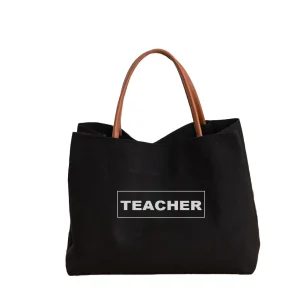
7.1 Teacher Tote
Teachers carry a unique mix: lesson plans, grading materials, personal items, and sometimes a laptop.
- Pocket Position: Interior front panel (divider + zipper), exterior front (patch), side (bottle)
- Pocket Construction: Interior: divider pocket (pen slots) + zipper pocket (valuables). Exterior: patch pocket (quick-access papers). Side: gusset pocket with elastic (water bottle).
- Recommended Fabric Weight: 12–14 oz canvas body
- Suggested Accessories: Metal zipper (#5 YKK), magnetic snap on exterior patch pocket
- Factory Recommendation: The divider pocket should have 5–7 pen slots at 25 mm spacing. Add a key hook (D-ring with swivel snap) on the interior side seam.
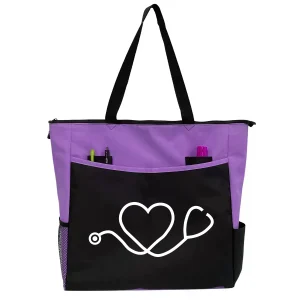
7.2 Medical Tote
Healthcare professionals need quick access, easy cleaning, and secure storage for personal items.
- Pocket Position: Interior (zipper + slip), exterior back (zipper), side (bottle)
- Pocket Construction: Interior: zipper pocket (personal valuables, medication) + slip pocket (documents). Exterior back: zipper pocket (stethoscope case, reference cards). Side: elastic pocket (water bottle).
- Recommended Fabric Weight: 10–12 oz canvas with antimicrobial coating or washable finish
- Suggested Accessories: Nylon coil zipper (YKK #5, rust-resistant), D-ring for badge reel
- Factory Recommendation: All interior seams should be bound or French-seamed — medical bags are washed frequently and raw edges will fray. Consider a wipe-clean interior lining (PVC or TPU).
7.3 Library Tote
Designed for book transport — the pocket system needs to handle weight and protect paperbacks.
- Pocket Position: Exterior front (patch), interior (slip), side (none — books fill the full width)
- Pocket Construction: Exterior: large patch pocket (library card, reading list, bookmark). Interior: slip pocket (phone, glasses case).
- Recommended Fabric Weight: 14–16 oz heavyweight canvas — books are dense
- Suggested Accessories: Reinforced bottom panel with PE board insert, cross-stitched handle attachments
- Factory Recommendation: Do not add side pockets on a library tote — books use the full bag width and side pockets create uneven pressure on book spines. Bottom panel should be double-layer canvas with interlining for structural support.
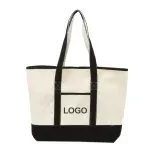
7.4 Craft Tote
Crafters carry yarn, needles, scissors, patterns, and multiple small tools.
- Pocket Position: Interior (divider + mesh + zipper), exterior front (patch), side (gusset)
- Pocket Construction: Interior: divider pocket (needles, hooks, scissors in individual sleeves) + mesh pocket (yarn ball visibility) + zipper pocket (notions). Exterior: large patch pocket (pattern sheets). Side: gusset pocket (project in progress).
- Recommended Fabric Weight: 12–14 oz canvas body, 8 oz cotton twill interior lining
- Suggested Accessories: Magnetic snap on exterior pocket, internal key hook, reinforced bottom with plastic feet
- Factory Recommendation: Divider sleeves for craft tools should be 30–35 mm wide (wider than pen sleeves). Add a pin cushion strip (felt strip sewn to interior panel) — this is a low-cost feature that crafters rave about.
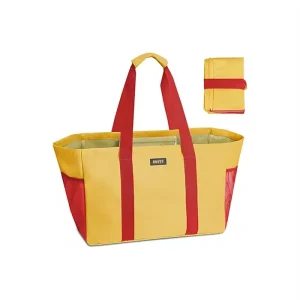
7.5 Picnic Tote
Food and drink transport requires insulation, leak containment, and easy cleaning.
- Pocket Position: Exterior front (patch), side (bottle/wine), interior (none — insulated main compartment)
- Pocket Construction: Exterior: patch pocket with flap (napkins, utensils). Side: insulated gusset pocket (wine bottle) + elastic pocket (water bottle).
- Recommended Fabric Weight: 10–12 oz canvas exterior, PEVA or aluminum foil insulation lining
- Suggested Accessories: Metal snap on flap, plastic buckle for bag closure, D-ring for bottle opener attachment
- Factory Recommendation: Exterior pockets on picnic totes should NOT be insulated — the insulation layer adds bulk and sewing complexity to pockets that hold dry items. Keep insulation in the main compartment only. Side wine pocket should include a removable divider to convert from one 750 ml bottle to two 330 ml cans.
7.6 Pet Tote
Pet carriers need ventilation, leash management, treat storage, and waste bag access.
- Pocket Position: Exterior front (patch + zipper), side (mesh), exterior back (slip)
- Pocket Construction: Exterior front: patch pocket (treats, quick access) + zipper pocket (waste bags, wipes). Side: mesh pocket (ventilation doubles as storage). Exterior back: slip pocket (documents, vaccination records).
- Recommended Fabric Weight: 14–16 oz canvas body with waterproof bottom panel
- Suggested Accessories: D-ring for leash attachment, snap hook, ventilated mesh panels (not just pockets)
- Factory Recommendation: The waste bag dispenser pocket should include a grommet or slit for dispensing bags without opening the pocket. Treat pocket should be lined with wipe-clean fabric (PVC or TPU) — canvas absorbs oils and odors from pet treats.

7.7 Wine Tote
Specialized for bottle transport — requires secure bottle retention and protection.
- Pocket Position: Side (bottle, primary function), exterior front (small patch)
- Pocket Construction: Side: insulated gusset pocket with snap-closure flap (wine bottle). Exterior front: small patch or slip pocket (corkscrew, wine charm card).
- Recommended Fabric Weight: 12–14 oz canvas, 3–5 mm foam insulation in side pockets
- Suggested Accessories: Metal snap, D-ring for corkscrew attachment, removable bottle divider
- Factory Recommendation: Side bottle pockets must have a padded bottom — a bottle dropped into an unpadded pocket can break. Include a removable padded divider for 2-bottle wine totes. The divider should be attached with hook-and-loop strips so it can be reconfigured or removed.

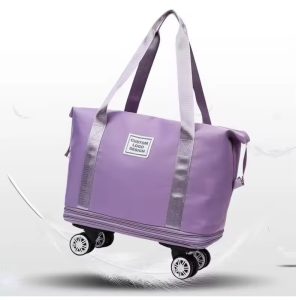
7.8 Túi Tote Du Lịch
The most demanding application — needs to handle documents, electronics, toiletries, and clothing.
- Pocket Position: Interior (multiple), exterior back (zipper or welt), hidden (RFID), side (bottle)
- Pocket Construction: Interior: zipper pocket (passport, cash) + slip pocket (boarding pass) + divider pocket (pens, cables). Exterior back: zipper or welt pocket (documents, magazine). Hidden: RFID zipper pocket (credit cards, passport backup). Side: gusset pocket with elastic (water bottle).
- Recommended Fabric Weight: 12–14 oz canvas body, 210D polyester interior lining
- Suggested Accessories: YKK #5 zippers throughout, magnetic snap on back pocket, RFID lining in hidden pocket, luggage handle pass-through sleeve on back panel
- Factory Recommendation: The luggage pass-through sleeve (trolley sleeve) is NOT a pocket — it is a fabric tunnel sewn to the back panel. It must be reinforced with bartacks at both ends and should accommodate handle widths up to 150 mm. The RFID pocket must be clearly labeled with a small woven tag — travelers need to know which pocket is shielded.
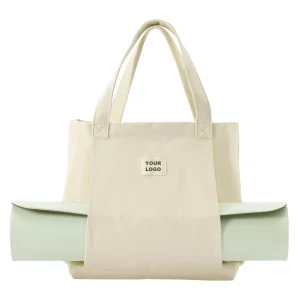
7.9 Gym Tote
Needs to separate clean/dry items from sweaty gear, and hold a water bottle and shoes.
- Pocket Position: Interior (mesh + zipper), side (bottle + shoe), exterior front (small patch)
- Pocket Construction: Interior: mesh pocket (wet items, swimwear — allows airflow) + zipper pocket (phone, wallet, keys). Side: elastic gusset pocket (water bottle) + ventilated shoe compartment. Exterior: small patch pocket (gym card, hair tie).
- Recommended Fabric Weight: 10–12 oz canvas with ventilation eyelets or mesh panels
- Suggested Accessories: Nylon zipper (YKK #5), drawcord on shoe compartment, D-ring for towel clip
- Factory Recommendation: The shoe compartment should be separated from the main interior by a zippered divider panel — sweaty shoes next to clean clothes is the number one gym bag complaint. Add ventilation eyelets (8–10 mm brass eyelets, 4–6 per side) to the shoe compartment for airflow.
7.10 Diaper Tote
The most organization-intensive tote category. Parents need instant access to wipes, bottles, diapers, and changing supplies — often one-handed while holding a baby.
- Pocket Position: Interior (multiple divider + zipper), exterior front (insulated bottle), side (bottle), exterior back (slip)
- Pocket Construction: Interior: divider pocket (diapers, creams, wipes organized vertically) + zipper pocket (phone, keys, pacifier) + mesh pocket (wet items). Exterior front: insulated zipper pocket (baby bottle — temperature retention). Side: elastic gusset pocket (parent water bottle). Exterior back: slip pocket (changing pad).
- Recommended Fabric Weight: 12–14 oz canvas body, waterproof PEVA or TPU interior lining for easy wipe-down
- Suggested Accessories: YKK #5 zippers, magnetic snap on exterior pockets, stroller clips (2× metal carabiner clips on exterior D-rings), removable changing pad (included as separate item)
- Factory Recommendation: The changing pad pocket (exterior back) must be large enough to hold a folded pad — minimum 30 × 45 cm interior dimension. Stroller clips should be attached via reinforced webbing loops, not directly to the canvas — canvas tears at the attachment point under the weight of a loaded diaper bag. Insulated bottle pocket should use 3–5 mm closed-cell foam between the outer canvas and PEVA lining.
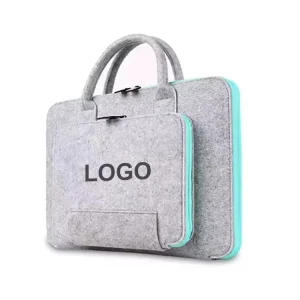
7.11 Laptop Tote
The professional’s daily carry — needs secure, padded electronics storage plus professional organization.
- Pocket Position: Interior (padded laptop sleeve + zipper + divider), exterior back (slip), side (bottle)
- Pocket Construction: Interior: padded laptop sleeve (foam-lined slip pocket with Velcro or elastic retention strap) + zipper pocket (charger, cables, mouse) + divider pocket (pens, business cards, USB drives). Exterior back: slip pocket (documents, tablet). Side: elastic gusset pocket (water bottle or umbrella).
- Recommended Fabric Weight: 14–16 oz canvas body, 210D polyester lining, 3–5 mm EVA foam in laptop sleeve
- Suggested Accessories: YKK #8 metal zipper on main compartment (larger teeth = more durable under laptop weight), magnetic snap on back slip pocket, metal feet on bag bottom (4× brass or zinc alloy feet), padded shoulder strap with swivel clips
- Factory Recommendation: The laptop sleeve must be suspended — the bottom of the sleeve should sit 15–20 mm above the bag bottom seam. A sleeve that rests directly on the bottom means the laptop hits the ground every time the bag is set down. The retention strap (elastic or hook-and-loop) should run horizontally across the sleeve opening, not vertically — horizontal retention prevents the laptop from sliding out when the bag tips, while vertical retention does not.
7.12 Market Tote
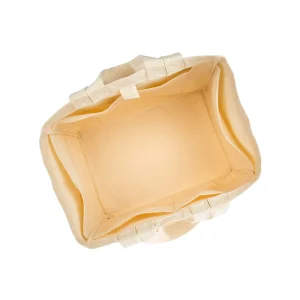
The classic open-top shopping tote — minimal organization, maximum capacity, maximum branding area.
- Pocket Position: Interior (single zipper), exterior front (none — reserved for branding)
- Pocket Construction: Interior: single zipper pocket (phone, wallet, keys — the essentials). Exterior: no pockets — the entire front panel is the printing canvas.
- Recommended Fabric Weight: 10–12 oz canvas for everyday use, 14–16 oz for heavy grocery loads
- Suggested Accessories: YKK #5 zipper on interior pocket, reinforced bottom panel
- Factory Recommendation: The interior zipper pocket should be placed on the back interior panel, positioned 40–50 mm below the bag opening. This keeps it accessible without interfering with the bag’s open-top loading function. On promotional market totes, skip the zipper entirely and use a simple interior slip pocket — the cost savings of $0.30–0.50 per unit adds up over 5,000+ unit orders.
7.13 Promotional Tote
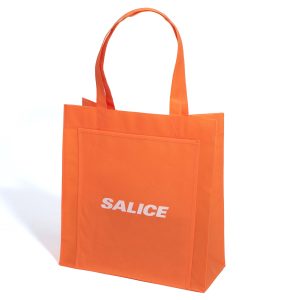
Designed for maximum branding impact at minimum unit cost. Functionality is secondary to print area and cost efficiency.
- Pocket Position: Interior (single slip — optional), exterior (none — full panel for printing)
- Pocket Construction: If included: single interior slip pocket with double-fold hem finish. No zipper, no divider, no reinforcement beyond the fold hem.
- Recommended Fabric Weight: 6–10 oz lightweight canvas — keeps material cost and shipping weight low
- Suggested Accessories: Minimal — possibly a single D-ring or key hook if the budget allows. No zippers, no snaps, no magnetic closures.
- Factory Recommendation: The promotional tote sweet spot is zero-to-one interior slip pocket. Adding more pockets on a budget bag creates a quality perception problem — cheap zippers fail, cheap snaps rust, and the bag looks worse than if it had no pockets at all. Focus the entire budget on print quality (screen printing or heat transfer) and fabric hand-feel. A 6 oz canvas tote that feels soft and prints cleanly will outperform a 10 oz tote with a sticky zipper every time.
[Continued in Part 4 — Chapter 8: How Pocket Design Affects Manufacturing]
Chapter 8 — How Pocket Design Affects Manufacturing
This chapter translates pocket design decisions into production reality. Every feature added to a pocket has a measurable impact on manufacturing cost, timeline, and quality control requirements.
8.1 Pocket Cost Comparison
Costs are approximate per-pocket estimates for medium-volume (1,000–5,000 unit) production runs. Material costs vary with fabric selection and hardware specifications.
8.2 Manufacturing Impact Factors
Pocket Piece Count: Each pocket style requires a specific number of pattern pieces:
- Slip pocket: 1 piece
- Patch pocket: 1 piece
- Zipper pocket: 2–3 pieces (pocket panel, zipper guard, optional lining)
- Gusset pocket: 3–5 pieces (front, back, gusset strip, optional lining)
- Welt pocket: 4–6 pieces (outer welt, inner welt, pocket bag front, pocket bag back, optional zipper shield)
More pieces = longer cutting time, more fabric waste, and more opportunities for cutting errors.
Sewing Operations per Pocket:
- Slip/patch pocket: 1–3 operations (edge finish, attachment, optional topstitch)
- Zipper pocket: 5–8 operations (zipper installation, guard attachment, edge finishing, pocket bag assembly, topstitching, attachment)
- Gusset pocket: 8–12 operations (edge finishing ×3 pieces, gusset-to-front assembly, gusset-to-back assembly, reinforcement stitching, attachment)
- Welt pocket: 10–16 operations (welt preparation, welt installation, pocket bag assembly, zipper installation, edge binding, attachment)
Each sewing operation represents 30–90 seconds of skilled labor. A bag with 4 pockets averaging 8 operations each adds 16–48 minutes to production time versus a pocket-free bag.
Labor Time Impact: A standard 12 oz canvas tote with zero pockets takes approximately 10–14 minutes to sew. Adding:
- 1 interior zipper pocket: +3–5 minutes
- 2 interior slip pockets: +2–3 minutes
- 1 exterior patch pocket: +2–3 minutes
- 1 side gusset bottle pocket: +4–6 minutes
- 1 back welt zipper pocket: +6–10 minutes
A fully featured tote with all five can take 27–41 minutes — roughly 3× the base sewing time.
QC Points per Pocket: Each pocket adds specific quality control checkpoints:
- Slip/patch: 2 points (alignment, stitching integrity)
- Zipper: 4 points (alignment, zipper function ×3 cycles, stitching, zipper guard position)
- Gusset: 5 points (alignment, gusset symmetry, bottom reinforcement, stitching, expansion test)
- Welt: 6 points (welt width consistency, lip alignment, zipper function, pocket bag stitching, overall appearance, opening size verification)
Sampling Time: Each additional pocket style in the design adds approximately:
- 1 day for pattern adjustment
- 1–2 prototypes for fit verification
- 2–3 days added to the sampling timeline
A complex design with 5+ different pocket styles may require 3 sampling rounds instead of the standard 2.
Material Waste: Pocket pieces are small relative to bag body panels, but they contribute disproportionately to fabric waste. Small pattern pieces cannot be nested as efficiently as large panels during cutting. Expect 5–8% additional fabric waste per pocket style, with gusset and welt pockets generating the most off-cut waste.
Automation Difficulty: Most pocket construction operations require manual dexterity — handling small pieces, installing zippers, forming welts. These are among the last operations to be automated in bag manufacturing. A design with 6+ slip pockets can be partially automated; a design with welt and gusset pockets relies almost entirely on skilled hand-sewing.
Lead Time Impact: A 500-unit order of a no-pocket tote can ship in 15–20 days. The same bag with a full pocket system (zipper + divider + gusset + welt) may require 30–45 days. The difference comes from cutting time, operator allocation (fewer operators can execute complex pockets), and increased QC inspection time.
MOQ Impact: Factories typically set higher MOQs for designs with complex pocket systems:
- No pockets or simple slip pockets: 300–500 units MOQ
- Zipper + patch pockets: 500–1,000 units MOQ
- Gusset + welt pockets: 1,000–2,000 units MOQ
The reason is setup cost amortization — the pattern development, operator training, and QC protocol creation for complex pockets must be spread across enough units to be economical.
8.3 Cost Drivers Summary
The three largest cost drivers in pocket manufacturing, in descending order:
- Labor time — Every additional sewing operation adds direct labor cost. Complex pockets (welt, gusset, pleated) can double the bag’s sewing time.
- Material cost — Zippers, hardware, interlining, and specialized fabrics (RFID, insulation) add per-unit material cost. YKK zippers alone can add $0.50–1.50 per pocket.
- Defect rate and rework — Complex pockets have higher defect rates. Each defective pocket that requires rework consumes 2–3× the original sewing time and may require replacing damaged fabric pieces.
Chapter 9 — Common Pocket Design Mistakes
These are the pocket design errors we see most frequently in client samples and production reviews. Each includes the root cause and the factory solution.
9.1 Pocket Covers Logo
Vấn đề: The exterior pocket is positioned directly over the front-panel logo print area, obscuring the brand mark.
Why It Happens: Designers place the pocket for aesthetic balance without checking against the print template. On smaller bags (under 30 cm wide), the pocket and logo naturally compete for the same central real estate.
Factory Solution: During the technical review phase, overlay the pocket placement template onto the print template. If overlap exceeds 20%, move the pocket down by 40–60 mm or reduce the pocket width. For promotional bags, design the pocket around the logo — either above it (slip pocket as a header) or below it (patch pocket as a footer element).
9.2 Pocket Too Deep
Vấn đề: The pocket extends to within 15–20 mm of the bag bottom, making it nearly impossible to retrieve small items without emptying the bag.
Why It Happens: Designers maximize pocket dimensions on the specification sheet without considering real-world usability.
Factory Solution: Cap interior pocket depth at 60–70% of the bag’s total interior height. For a 400 mm deep bag, the deepest interior pocket should not exceed 240–280 mm. If deeper storage is needed, use a zipper pocket — the zipper closure prevents items from sinking to unreachable depths.
9.3 Wrong Pocket Size
Vấn đề: The pocket is sized for a “generic” item rather than the actual item the end user will carry. A “phone pocket” that does not fit modern plus-sized smartphones, or a “bottle pocket” that fits a 330 ml can but not a 750 ml bottle.
Why It Happens: Pocket dimensions are copied from existing designs without verifying against current market product dimensions.
Factory Solution: Measure the largest commercially available version of the target item. For phones, measure the iPhone Pro Max and Galaxy Ultra dimensions. For bottles, measure a 750 ml Nalgene or similar wide-mouth bottle. Add clearance (10–15 mm per dimension) for ease of insertion. Build a physical pocket mockup and test with the actual item before approving the sample.
9.4 Weak Reinforcement
Vấn đề: Pocket corners tear or stitching fails within months of use, especially on exterior pockets carrying weight.
Why It Happens: Single-stitch attachment without bartacks at stress points. Common on budget bags where operators skip reinforcement to save time.
Factory Solution: All four corners of every exterior pocket on 10 oz+ canvas must have bartacks (minimum 12 stitches, 8 mm length) or box stitches. Zipper pocket ends must have bartacks on both sides of the zipper tape. This is non-negotiable for commercial-grade bags.
9.5 Wrong Fabric Weight
Vấn đề: The pocket fabric is too light or too heavy for its intended use. A 6 oz pocket panel on a 16 oz bag body tears at the attachment seam. A 16 oz pocket panel on a 6 oz promotional tote adds unnecessary cost and bulk.
Why It Happens: The pocket fabric is specified as “same as body” without evaluating whether the body fabric weight is appropriate for pocket function.
Factory Solution: Match pocket fabric weight to pocket function, not automatically to the bag body:
- Interior slip pockets: 6–8 oz cotton twill or the bag lining fabric (lighter than body)
- Exterior patch pockets: Same as body fabric (8–16 oz depending on bag)
- Gusset bottle pockets: Same as body fabric for durability
- Welt pockets: 8–10 oz canvas or twill (lighter to allow clean folding)
- Zipper pocket bags: 6–8 oz polyester or cotton — lighter fabric reduces bulk around the zipper
9.6 Wrong Zipper Selection
Vấn đề: The zipper gauge is inappropriate for the pocket’s function. A #3 zipper on an exterior pocket fails within months. A #8 metal zipper on an interior slip pocket adds unnecessary cost and weight.
Why It Happens: Zippers are selected by cost or availability rather than functional requirements.
Factory Solution:
- #3 nylon coil: Interior light-use pockets only (cards, receipts)
- #5 nylon coil: Standard interior zipper pockets, exterior light-use pockets — the workhorse zipper
- #5 metal (YKK or equivalent): Exterior zipper pockets, high-use openings, premium visual finish
- #8 metal: Main compartment closures, laptop compartments, any zipper bearing load
9.7 No Bottom Reinforcement
Vấn đề: The pocket bottom sags or tears after carrying heavy items. Most common on side bottle pockets and gusset pockets.
Why It Happens: The pocket bottom is sewn with a single straight stitch line, which concentrates stress on the thread rather than distributing it across fabric overlap.
Factory Solution: Pocket bottoms on any pocket designed to carry more than 200 g (bottles, books, tools) must have:
- Double-stitched bottom seam (two parallel stitch lines 3–5 mm apart)
- Bartacks or box stitches at both bottom corners
- For gusset pockets, the gusset-to-body seam must be topstitched flat (fell seam) rather than left as a raw seam
9.8 Poor Pocket Placement
Vấn đề: The pocket is placed where it interferes with bag function — too close to the opening (interferes with binding), too close to the side seam (hard to reach inside), or at an angle that does not match how the bag is carried.
Why It Happens: Pocket placement is decided visually on a flat pattern without considering the bag in its carried position.
Factory Solution: Review pocket placement with the bag in its intended carrying position — held by handles, worn on shoulder, or worn cross-body. A pocket that looks centered on a flat pattern may be awkward to reach when the bag hangs at hip level. Use the placement guidelines in the bonus section below.
9.9 Ignoring User Habits
Vấn đề: The pocket design contradicts how people actually use bags. Examples: a phone pocket on the left interior panel for right-handed users, a zipper pocket facing the user’s body (inaccessible while wearing), a bottle pocket with a snap closure (requires two hands — frustrating when carrying items).
Why It Happens: Design decisions are made in isolation without user testing or behavioral consideration.
Factory Solution: Map the user journey for the target customer. A diaper bag user often has one hand occupied with a baby — all critical pockets must be one-hand operable. A commuter holding a coffee needs a phone pocket accessible with the free hand. Build a sample, hand it to someone matching the target demographic, and observe where they instinctively reach.
9.10 Too Many Compartments
Vấn đề: The bag has 8+ pockets, making the interior feel cluttered, adding weight, and creating decision paralysis (“where did I put my keys?”).
Why It Happens: The “more features = better product” fallacy. Designers add pockets to the spec sheet as feature bullets without considering the cumulative effect.
Factory Solution: The sweet spot for most canvas totes is 3–5 pockets:
- 1 secure pocket (zipper or flap) for valuables
- 1–2 slip pockets for quick access
- 1 specialized pocket (bottle, laptop sleeve, or divider) depending on application
Beyond 6 pockets, each additional pocket provides diminishing user value while adding measurable manufacturing cost. If a client requests 8+ pockets, recommend consolidating into divider panels or modular removable pouches instead.
Chapter 10 — Pocket Design Checklist
Use this checklist during the product development phase. Every item should be confirmed before sample approval and again before mass production.
Pre-Sampling Checklist
Pocket Position:
- All pocket positions verified against print/embroidery area
- Pocket-to-opening clearance: minimum 40 mm
- Pocket-to-side-seam clearance: minimum 20 mm
- Interior pockets do not interfere with main compartment loading
Pocket Style:
- Construction style selected for each pocket (slip/patch/zipper/etc.)
- Compatibility verified (position × style)
- Style matches intended application and user needs
Pocket Size:
- Dimensions verified against target items with clearance
- Depth does not exceed 1.5× item height
- Opening width accommodates intended items with one-hand access
Opening Style:
- Opening treatment selected (elastic/binding/zipper/flap/snap/etc.)
- Opening accessibility tested with target items
- Closure hardware specified if applicable
Reinforcement:
- Reinforcement type specified for all exterior pockets
- Heavy-load pockets have bartacks or box stitches at corners
- Zipper ends reinforced on both sides
Lining:
- Pocket lining decision made (needed / not needed)
- Lining fabric specified and compatible with intended contents
- RFID shielding specified if required
Hardware:
- Zipper type and gauge selected
- Snap/magnetic closure type specified
- All hardware finish (nickel, brass, antique, black) specified
- Hardware brand and model noted (YKK, generic equivalent)
Printing Area:
- Logo placement verified against pocket positions
- No pocket covers more than 20% of primary print area
- Secondary branding areas identified (pocket embroidery, label placement)
Pre-Production Checklist
- Sample approved by client
- Pattern pieces finalized with seam allowances
- Pocket cutting template verified for fabric yield
- QC checkpoints documented per pocket style
- Operator training completed for complex pockets (welt, gusset)
- Mass production ready
Bonus Section A — Pocket Placement Dimensions
This section provides the precise dimensional guidelines our factory uses for pocket placement. These numbers eliminate guesswork during pattern development.
Standard Clearance Measurements
Why “Edge-to-Edge” Design Fails
Clients occasionally request pockets placed flush against the bag opening or side seam — “edge-to-edge” design. This is problematic for three reasons:
Binding interference: If the pocket attaches at the bag opening, the binding or hem that finishes the bag opening must sew through the pocket panel, creating a bulky 4–6 layer seam that is difficult to keep straight.
Seam allowance conflict: A pocket placed at 0 mm from the side seam shares the same seam allowance as the bag body assembly. When the side seam is sewn, the pocket gets caught in the seam — either the pocket is sewn shut at the edge, or the operator must stop short, creating an inconsistent finish.
Usability barrier: A pocket opening that aligns exactly with the bag opening is difficult to access — the user’s hand must navigate past the bag’s top edge, then down into a pocket that starts at the same plane. A 40 mm offset creates a natural “shelf” that guides the hand into the pocket.
Bonus Section B — Pocket Pattern Development
Understanding the pattern development process helps buyers communicate more effectively with manufacturers and reduces sampling misunderstandings.
Pattern Development Flow
Design Sketch (client provides)
      |
      v
Technical Drawing (factory creates dimensioned drawing)
      |
      v
Pattern Making (paper pattern with seam allowances)
      |
      v
Sample Cutting (cut fabric from pattern)
      |
      v
Sample Sewing (assemble first prototype)
      |
      v Fit Test (test with intended items, check dimensions)
      |
      v
Pattern Revision (adjust dimensions, seam allowances, placement)
      |
      v
Second Sample (if revisions were significant)
      |
      v
Pattern Finalization (lock dimensions for bulk production)
      |
      v
Grading (create size variants if multiple sizes needed)
      |
      v
Bulk Production
Key Pattern Details Clients Should Know
Seam notches: Every pocket pattern piece should include alignment notches — small cuts in the pattern edge that the operator uses to align pieces during sewing. Without notches, pocket alignment relies on operator eye-measurement, which varies by ±3–5 mm between operators.
Grain line marking: The fabric grain direction arrow must be marked on every pocket pattern piece. A pocket cut off-grain will twist, pucker, or hang crookedly on the finished bag.
Pattern numbering: Each pocket piece should be numbered and labeled (e.g., “P3-Interior Zipper Pocket Front”). This prevents mix-ups when a design has 6–8 pocket pieces that look similar but differ by 5–10 mm in one dimension.
Sample vs. production patterns: The sample pattern and production pattern serve different purposes. The sample pattern prioritizes precision — one piece, perfectly cut. The production pattern must be optimized for fabric yield and cutting speed while maintaining acceptable dimensional tolerance (±2 mm for pockets).
Bonus Section C — Pocket Material Selection
The material chosen for the pocket affects more than just cost — it determines durability, hand-feel, and end-user perception.
Material Selection Decision Framework:
- Does the pocket need water resistance? → PVC/TPU or insulated lining
- Is the pocket exterior and visible? → Same canvas as body or matched twill
- Is the pocket interior and weight-sensitive? → Lighter canvas or twill
- Is the product marketed as eco-friendly? → RPET or organic cotton
- Does the pocket need breathability? → Mesh or unlined
Bonus Section D — Pocket Hardware Guide
Hardware selection affects both pocket function and the bag’s overall quality perception. Below are the standard hardware options for canvas tote pockets.
Hardware Quality Indicators
- YKK branding on zipper slider — indicates genuine YKK. Counterfeit YKK zippers exist; purchase from authorized distributors.
- Magnetic snap pull strength consistency — test 10 random units from a batch. Pull force should vary by less than 15%.
- D-ring weld quality — the weld point should be smooth and continuous. Pitted or incomplete welds fail under load.
- Plastic buckle mold lines — minimal flash (excess plastic at the mold seam) indicates a quality mold. Rough, sharp mold lines indicate cheap tooling.
Bonus Section E — Pocket Design Trends (2025–2026)
The canvas tote market is evolving beyond the basic open-top carry-all. These six trends are shaping pocket design for the next two years.
1. Hidden Organization
The “no visible pockets” aesthetic is gaining traction in premium canvas totes. All organization is concealed behind clean exterior panels — interior only, welt pockets for external access. This trend favors welt and hidden zipper construction and creates an opportunity for factories that can execute these advanced techniques at scale.
2. Bottle-First Tote Designs
Rather than adding a bottle pocket as an afterthought, new designs start with the bottle pocket as a defining feature. These bags feature dual insulated side pockets with dedicated bottle compartments, waterproof PEVA lining, and magnetic flap closures. The bottle pocket becomes a selling point, not just a feature bullet.
3. Modular Removable Pouches
Instead of fixed interior pockets, modular designs use detachable pouches that clip into the bag interior via snap hooks, D-rings, or hook-and-loop strips. Users can reconfigure their organization or remove pouches to use independently (e.g., a detachable makeup pouch that doubles as a clutch). This adds 3–5 hardware attachment points per pouch but significantly increases perceived value.
4. RFID Security Pockets
With contactless payment fraud awareness rising, RFID-blocking pockets are transitioning from a niche travel feature to a mainstream expectation. The trend is moving from single RFID pockets to fully lined RFID compartments with clear labeling. Nickel-copper woven fabric remains the standard shielding material, but new laminated RFID-blocking fabrics are entering the market at lower cost.
5. Multi-Device Organization
The modern professional carries a laptop, tablet, and phone — sometimes two phones. Dedicated, padded compartments for each device, with cable-routing channels between them, are replacing the single “laptop sleeve” approach. This requires precise pocket sizing (one size does not fit all devices) and thoughtful placement to avoid making the bag feel like a gadget case.
6. Sustainable Pocket Materials
RPET (recycled polyester) mesh, organic cotton twill pocket bags, and再生 cotton canvas pocket panels are becoming standard in eco-conscious product lines. The trend extends to hardware — recycled zinc alloy snaps and YKK’s Natulon recycled zipper tape series. For brands marketing sustainability, material origin stories for pocket components are as important as the bag body material story.
Kết luận
Pocket design is where product engineering meets user psychology. A well-designed pocket system does not happen by accident — it requires deliberate decisions at every layer: position, construction, dimensions, materials, and reinforcement.
For B2B buyers developing custom canvas totes, the pocket specification is one of the highest-leverage documents in the product development process. Getting it right means a bag that delights users and generates repeat orders. Getting it wrong means warranty claims, poor reviews, and redesign costs.
Use this guide as your pocket design reference throughout your product development cycle. If you are working with our factory, share your pocket requirements during the initial inquiry phase — our technical team reviews pocket specifications before any material is cut, catching issues that save sampling rounds and production time.
Ready to discuss your canvas tote pocket design? Contact our OEM/ODM team with your initial requirements, and we will provide a technical review and quotation within 48 hours.

 Vietnamese
 English
 French
 German
 Japanese
 Arabic
 Thai
 Russian
 Spanish
 Portuguese