
A GRS certificate sent over email proves nothing on its own. In packaging procurement, certificate fraud is a documented problem — suppliers share expired documents, display scope certificates that belong to other facilities, or present legitimate-looking files that have never been officially issued by an accredited certification body. This guide walks you through the exact steps to verify any GRS certificate before it influences a sourcing decision.
The process is not complicated, but it requires knowing which documents to ask for, what each document actually proves, and how to cross-check them against official sources. Most buyers stop too early — they receive a scope certificate, see the GRS logo, and assume the job is done. That assumption has cost brands real money in audit failures, retailer delistings, and compliance incidents.
Step 0: Understand the Two Types of GRS Certificates
Before you can verify anything, you need to understand the difference between the two documents in the GRS system. They are commonly confused, and confusing them is the single most common mistake buyers make.
Scope Certificate (SC)
The scope certificate is a facility-level document. It certifies that a specific factory or processing facility has been audited by an accredited certification body and is qualified to handle, process, and sell GRS-certified materials. It lists the facility name, location, the certification body that issued it, the recycled material types it covers, and the processing activities it is certified for.
Think of the scope certificate as a driver’s license. It proves the supplier is authorized to operate within the GRS system. It does not prove that your specific order contains GRS-certified material.
Scope certificates are valid for one year and must be renewed through an annual audit. They are the same document regardless of which buyer is asking, which is why suppliers share them readily.
Transaction Certificate (TC)
The transaction certificate is a shipment-specific document. It is issued by the same accredited certification body every time GRS-certified goods change hands between two parties. It names both the seller and the buyer, describes the specific products and quantities in the shipment, confirms the recycled material type and percentage, and is tied to a particular order.
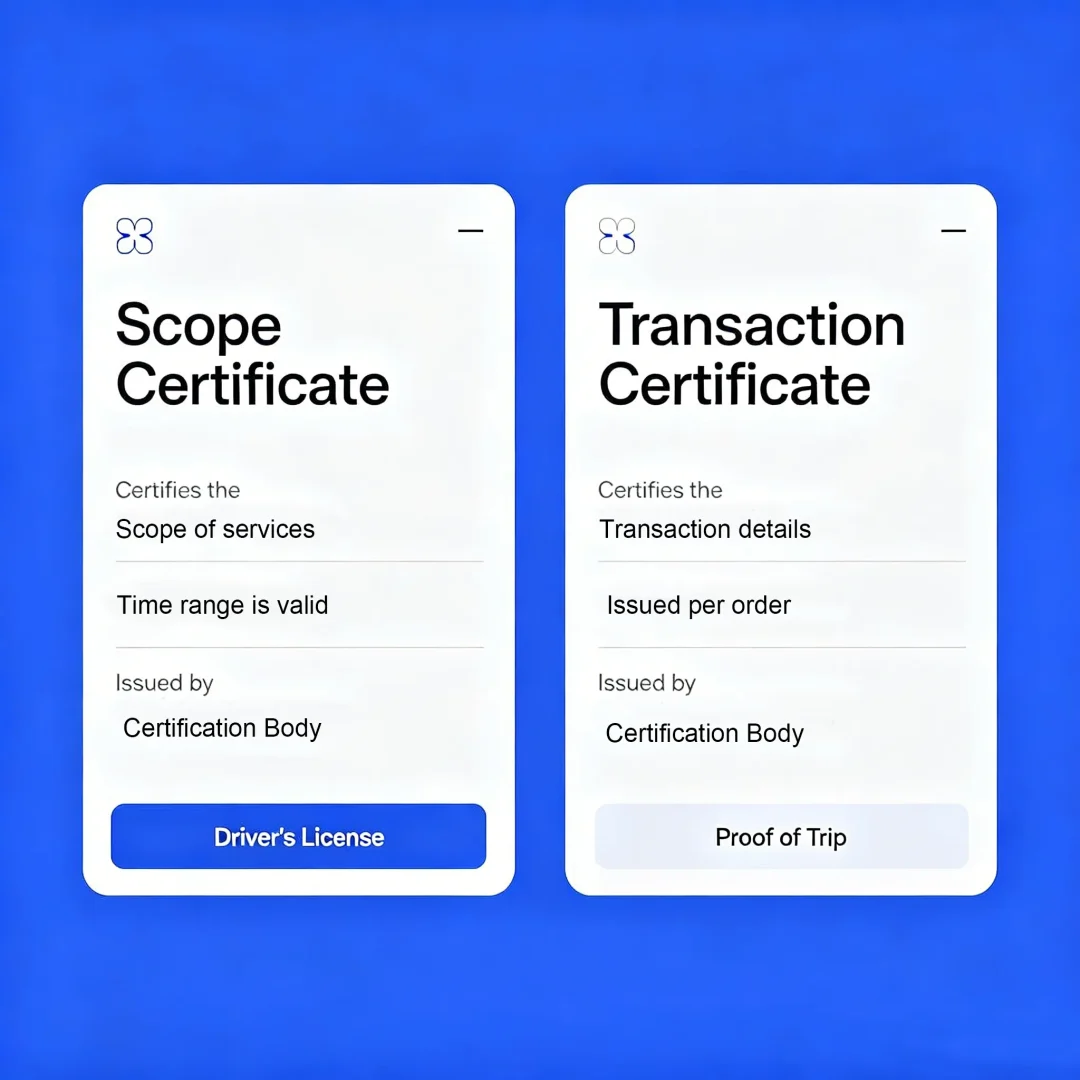
The TC is what actually proves that the product you are buying is GRS-certified. Without a TC for your order, you have no verified proof that the specific goods you received contain the claimed recycled content — regardless of what the scope certificate says.
A valid TC can only be issued by the certification body, not by the supplier. If a supplier offers to “issue” a TC themselves, that is an immediate red flag.
Step 1: Request Both Documents from Your Supplier
Start by explicitly requesting both the scope certificate and the transaction certificate for your order. Many suppliers will send the scope certificate without prompting and wait to see if you ask for the TC. Ask for both upfront, and be specific:
- The scope certificate for the facility producing your order
- The transaction certificate issued for your specific shipment, naming your company as the buyer
If a supplier is unable or unwilling to provide a transaction certificate for your order, do not accept vague explanations. A supplier who holds a valid GRS scope certificate and is producing GRS-certified goods for you should have no difficulty obtaining a TC from their certification body. Reluctance to provide one is a significant red flag.
Also confirm the TC is not a translated or informal version. The official transaction certificate must be published in English. Unofficial translated versions may be provided but must be clearly identified as for informational purposes only — a non-English version should not be digitally signed. If you receive a signed document in a language other than English presented as the official certificate, request the original English version.
Step 2: Read the Scope Certificate Carefully Before Going to the Database
Before verifying anything online, read the scope certificate document itself for these fields:
Supplier name and site address. Confirm that the name and address on the certificate exactly match the facility you are sourcing from. This is one of the most common forms of certificate misuse — a factory group shares a scope certificate belonging to one of its facilities across orders being produced at a different, uncertified facility.
Certification body name and license code. The issuing certification body must be listed on the certificate. Major accredited bodies include Control Union (license codes starting with “CU”), Intertek (“ITS”), TÜV SÜD, SGS, SCS Global Services, and Ecocert, among others. An unrecognized or unlisted certification body is a red flag.
Certificate validity dates. Scope certificates are valid for one year. Check the expiry date. A certificate that expired six months ago is not valid, regardless of how official it looks. Many fraudulent certificates in circulation are real documents from a previous year that have been repurposed without renewal.
Certified product scope and processing activities. The certificate lists the specific materials and processing steps the facility is certified for. If you are sourcing rPET packaging bags and the scope certificate only covers recycled cotton yarn, the certificate does not cover your order. Match the listed scope against what you are actually buying.
GRS version. The current operative standard is GRS 4.0. Certificates referencing earlier versions may reflect outdated audits.
Step 3: Verify the Scope Certificate in the Textile Exchange Database
Scope certificates can be authenticated through Textile Exchange’s “Find a Certified Company” list, which serves as the single source of truth for all scope certificates.
Go to: textileexchange.org/find-certified-company
Search by the supplier’s company name or by the certification number from the scope certificate. The database is publicly accessible and free to use.
In the results, confirm the following:
- The company name and location match exactly what is on the certificate you received
- The certificate status shows as currently valid, not expired or suspended
- The certified scope (materials and processing activities) covers what you are sourcing
If the supplier does not appear in the database, or appears but with a different scope than what the certificate claims, contact the certification body listed on the certificate directly before proceeding. It is possible — though uncommon — that the database has a brief lag after a fresh renewal, but any legitimate supplier should be able to resolve this quickly with documentation from their certification body.
If you cannot find the company at all and the certification body cannot confirm the certificate, treat the document as potentially fraudulent and do not rely on it for any compliance claims.
Step 4: Verify the Transaction Certificate
Transaction certificates issued after October 1, 2022 can be authenticated through Textile Exchange’s “Authenticate a Transaction” page, which is the single source of truth for all valid transaction certificates.
Go to: textileexchange.org/certificate-authentication
Enter the TC number from the document. The TC number format typically follows the pattern: [CB code]-[Standard]-[sequential number], for example “CU-GRS-000123” for a certificate issued by Control Union.
Confirm the following fields match the document you received:
- Seller (Box 3): Should be your supplier
- Buyer (Box 7): Should be your company
- Consignee (Box 8): The facility receiving the goods — confirm this matches your receiving address or warehouse
- Products and quantities (Box 10): Match against your purchase order
- Recycled material type and percentage (Box 14): Confirm the material type (e.g., post-consumer rPET) and recycled content percentage match what you were sold
- Shipment date: The TC must be issued on or after the scope certificate issuance date, and must correspond to your actual order shipment
If the TC number does not appear in the Textile Exchange database, the document may predate October 2022 (in which case, contact the certification body directly for authentication) or it may not be a legitimately issued certificate. Do not assume absence from the database means the document is invalid — verify with the certification body before drawing conclusions.
Step 5: Cross-Check the TC Against the Certification Body Directly
Even after database verification, it is good practice on high-value orders or new supplier relationships to contact the certification body named on the TC directly and ask them to confirm:
- The TC number is valid and was issued by them
- The seller, buyer, product description, and quantities on the document match their records
- The scope certificate covering this transaction is currently active
Contact details for all Textile Exchange-licensed certification bodies are publicly available at: textileexchange.org/certification-body-listing
This step takes one email and typically receives a response within 24–48 hours. For a new supplier relationship or a first order, it is a reasonable step that eliminates the last remaining uncertainty.
Step 6: Verify the Full Chain of Custody
A valid TC and SC from your direct supplier is necessary but may not be sufficient, depending on how you intend to use the GRS claim.
Every facility in the supply chain — from the recycler to the final product manufacturer — must hold its own GRS scope certificate. If any single link in the chain is uncertified, the final product cannot carry the GRS label.
In practice, this means:
- Your packaging manufacturer must hold a valid SC and issue you a TC
- Their material supplier (e.g., the rPET film extruder) must also hold a valid SC
- The recycler who processed the post-consumer material must also be within the certified chain
You do not need to independently verify every tier of the chain yourself — your direct supplier’s TC certifies that the materials they used came from a certified upstream source. However, if you have any reason to doubt the upstream chain, you can ask your supplier for the TCs they received from their own material suppliers. A legitimate GRS-certified supplier will have these on file.
Red Flags: When to Stop and Ask Questions
The following situations warrant immediate follow-up before any GRS-based claims are made or any compliance documentation is finalized:
The supplier offers a TC with their own letterhead or stamp. TCs can only be issued by accredited certification bodies, not by suppliers. A document that looks like a TC but is produced by the supplier is not a valid TC.
The scope certificate covers a different facility than where your order is being produced. Factory groups sometimes share certificates across sites. Each production site must hold its own SC.
The price is significantly lower than market rates for GRS-certified material. GRS certification involves audit costs, stricter process requirements, and typically higher raw material costs. Pricing that is comparable to uncertified material on GRS-claimed orders is a commercial red flag.
The supplier is evasive about providing the TC number before shipment. A TC should be issued at the time goods change hands. If a supplier cannot provide a TC number or delays issuing one without explanation, investigate before accepting delivery.
The certified scope on the SC does not match your product. If you are buying rPET bags and the SC lists only recycled paper, the certificate is irrelevant to your order.
The certificate version or issuing body is unfamiliar. Cross-check all certification bodies against the Textile Exchange licensed CB list. Unrecognized bodies are not authorized to issue GRS certificates.
Summary Checklist
Use this at the start of any new GRS supplier relationship, and repeat the database checks annually when your supplier renews their scope certificate:
- Received scope certificate from supplier
- Supplier name and site address match the facility producing your order
- Scope covers the specific material and processing steps for your product
- Certificate is currently valid (check expiry date)
- Verified in Textile Exchange “Find a Certified Company” database
- Received transaction certificate for your specific order
- TC names your company as buyer and correct facility as consignee
- Product, quantity, and recycled content percentage match your PO
- TC authenticated at Textile Exchange “Authenticate a Transaction” page
- Certification body confirmed (directly, for new or high-value relationships)
If you are sourcing GRS-certified packaging and want to understand exactly what documentation to expect at each stage of the process, the initipacking team can walk you through it. Contact us directly.



 Spanish
 English
 French
 German
 Japanese
 Arabic
 Thai
 Vietnamese
 Russian
 Portuguese