
If you’re looking to add your logo, design, or personal touch to reusable bags, you may be wondering: should you choose monogramming or embroidery?
While these two customization methods are often used interchangeably, they are not the same. Understanding their differences will help you make the best decision for your business or personal needs.
What Is Monogramming?
Monogramming is the art of creating a design using initials, letters, or symbols, often representing a person, brand, or organization. Traditionally, monograms consist of two or three interwoven initials, but modern monograms can include full names, logos, or decorative symbols.
Monogramming can be applied using various techniques, including embroidery, printing, heat transfer, or even engraving, depending on the material. This versatility makes it a popular choice for branding, luxury packaging, and personalized gifts.
How Monogramming Works
Monogramming is achieved using several customization methods:
Embroidery — Stitching letters onto fabric for a durable and textured finish. This is the most premium and long-lasting option.
Heat Transfer Vinyl (HTV) — Applying heat-pressed vinyl letters, ideal for polyester and synthetic fabrics where direct embroidery is difficult.
Screen Printing — Printing monogrammed letters in bulk, best for promotional tote bags where cost efficiency matters.
Debossing / Embossing — Pressing monograms into leather or faux leather for a tactile, premium look.
Foil-Stamped Monogram — A metallic finish applied via heat and foil, often seen on gift packaging, laminated paper bags, and high-end promotional merchandise.
Monograms are a simple yet effective way to elevate a brand, whether on a reusable shopping bag, a promotional giveaway, or corporate merchandise.

What Is Embroidery?
Embroidery is a decorative technique that uses needle and thread to create stitched patterns, logos, or lettering on fabric. Unlike monogramming, which focuses on initials or symbols, embroidery is a broader term encompassing various artistic designs.
Embroidery is highly durable, making it an excellent choice for long-term branding. It withstands multiple washes and heavy use, ensuring that logos or designs remain vibrant over time. This technique is widely used in corporate branding, promotional merchandise, and custom apparel.
How Embroidery Works
Embroidery involves three core steps:
- Digitization — Converting a logo or design into a stitch file format (.DST, .PES, or similar) that the embroidery machine can read.
- Machine Stitching — Embroidery machines stitch the design onto fabric using high-quality threads, following the digitized path precisely.
- Finishing Touches — Excess backing material is trimmed, and the embroidered area is inspected and cleaned to ensure a polished final product.
Embroidery provides a high-end appearance, making it ideal for businesses looking to add a premium feel to their custom reusable bags.
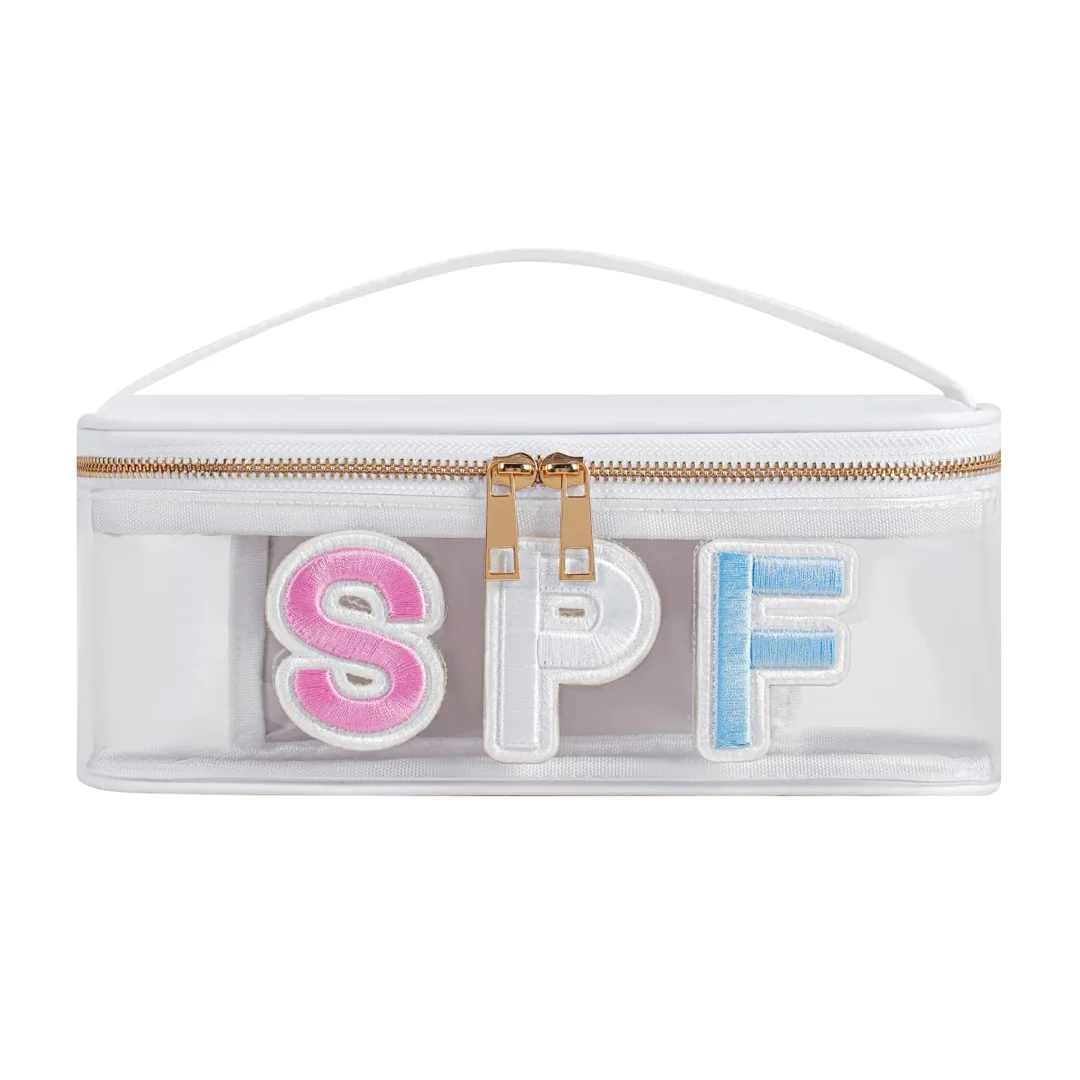
Is a Monogram the Same as Embroidery?
No — monogramming and embroidery are not the same, although they often overlap.
Many people confuse these terms because monograms are frequently created using embroidery, making them seem identical. Businesses also tend to use the terms interchangeably in marketing, which further blurs the distinction. Both methods are widely used for branding, corporate gifts, and custom apparel, reinforcing their association.
The clearest way to understand the relationship: embroidery is the broader category — it covers all needle-and-thread decoration on fabric. Monogramming is more specific — it refers to designs built around letters, initials, or symbols. All embroidered monograms are embroidery, but not all embroidery is monogramming.
It’s also worth noting that a monogram doesn’t have to be embroidered at all. It can be printed, heat-transferred, foil-stamped, or debossed — which is why the two terms describe overlapping but distinct concepts.
Differences
1. Definition & Application
Monogramming is the art of creating a design involving initials, names, or symbols that represent personal identity or a brand. It can be applied using different techniques — embroidery, printing, or engraving — and appears on various materials including fabric, leather, and metal.
Embroidery is a stitching technique that creates designs using thread. It always involves threadwork, unlike monogramming, which can be printed or engraved. Embroidery is primarily used on fabric-based items like apparel, bags, and uniforms.
2. Thread Usage & Design Complexity
Monogram embroidery typically uses a single thread color to stitch initials or short phrases. It has a practical character limit of around 10 letters for readability, and works best with contrasting thread colors to enhance visibility.
Full embroidery allows for multiple thread colors to replicate logos or intricate patterns. It is suitable for detailed, multi-colored designs like corporate logos or decorative artwork, and is widely used on uniforms, blazers, and promotional items.
3. Durability & Longevity
The durability of monogramming depends on the method used. Printed monograms may fade over time with washing and UV exposure, while embroidered monograms offer significantly better longevity.
Embroidery is extremely durable by nature. The stitched construction can withstand frequent washing and heavy daily use, and maintains vibrant colors over time — making it ideal for professional wear and long-term brand merchandise.
| Característica | Monogramming | Embroidery |
|---|---|---|
| Definition | A design featuring initials or symbols | A stitching technique for various designs |
| Application | Can be embroidered, printed, or engraved | Always uses stitching on fabric |
| Mejor para | Initials, names, and simple logos | Detailed logos, images, and patterns |
| Durabilidad | Varies based on the technique used | Extremely durable and long-lasting |
Similarities
Both monogramming and embroidery serve as effective methods for customization, and they frequently overlap in application. Key similarities include:
- Both are used for branding and personalization across a wide range of industries.
- Both can be applied to reusable bags (cotton, canvas, or jute), apparel, and accessories.
- When a monogram is stitched onto fabric, monogramming becomes a form of embroidery — the two are not mutually exclusive.
How to Choose Between Embroidery and Monogramming for Your Custom Bags
Choosing the right customization method depends on your brand’s aesthetic, budget, and purpose. Below are the key factors to help you decide.
1. Consider Your Branding Needs
Monogram Embroidery is the best choice for a simple, elegant design featuring initials or a short name. It’s ideal for luxury branding, personalized corporate gifts, and premium product lines where subtlety is part of the appeal.
Full Embroidery is the right choice for logos, intricate patterns, and multi-colored designs. If strong brand visibility and professional finish are priorities, embroidery delivers the impact that monogramming cannot.
Printed Monogram offers a modern and versatile look, often used for promotional tote bags or event giveaways where cost-effective branding is the primary goal.
Debossed Monogram creates a high-end, tactile branding effect — pressing your mark into the surface rather than stitching it. This is best suited for leather or faux leather bags where a premium, understated finish is desired.
Foil-Stamped Monogram adds a metallic sheen that catches the eye. It’s a stylish option for gift packaging, laminated paper bags, or any premium promotional bag where a luxury presentation matters.
2. Think About the Material of Your Bags
The fabric of your bag plays a significant role in determining which customization method will work best. Not every technique is compatible with every material.
| Bag Material | Best Customization Method |
|---|---|
| Cotton Canvas | Monogram Embroidery or Full Embroidery |
| Jute | Embroidery (coarse texture supports strong, structured stitching) |
| Poliéster | Heat Transfer Monogram (smooth surface, not ideal for direct embroidery) |
| Leather / Faux Leather | Embossed Monogram (premium tactile finish) |
| Nylon | Heat Transfer Monogram or Embroidery (depending on fabric weight) |
| PP Non-Woven | Screen Printing or Heat Transfer Monogram |
| PET Non-Woven | Screen Printing or Heat Transfer Monogram |
| Laminated Paper Bags | Foil-Stamped Monogram (luxury, high-end presentation) |
| Coated Fabric Bags | Foil-Stamped Monogram or Screen Printing |
3. Compare Costs and Bulk Order Suitability
Monogram Embroidery is cost-effective for bulk orders, especially for simple initials or names in a single thread color. Low stitch counts and minimal setup requirements keep per-unit costs manageable even at moderate quantities.
Full Embroidery offers greater durability and branding impact, making it ideal for corporate gifts, uniforms, and premium promotional items. However, it carries higher costs for large, multi-colored designs due to increased stitch counts and longer machine time.
Heat Transfer or Printed Monograms are the most budget-friendly option for large-quantity promotional giveaways where longevity is less critical than cost per unit.
One factor that buyers often overlook is the digitizing fee. Before any embroidered design can be produced — whether a monogram or a full logo — the artwork must be converted into a machine-readable stitch file. This is a one-time setup cost, and once the file is created, it can be reused for every reorder without additional charges. When briefing a supplier, always confirm that your digitized file will be stored and made available for future orders.
Fabric Compatibility Deep Dive — What Buyers Often Miss
The material comparison table above gives you a starting point, but there are two technical factors worth understanding in more depth before finalizing your order.
Why Fabric Weight Matters for Stitch Density
Fabric weight directly affects how well an embroidered design holds its shape. Lightweight fabrics — thin nylon, light polyester, or delicate canvas — can pucker, distort, or shift when dense stitching is applied. Heavier materials like 12oz canvas, denim, or structured jute handle complex, stitch-dense designs without these problems.
As a practical rule: the more complex and dense your embroidery design, the heavier the fabric needs to be. Before confirming an embroidered design for a bag order, share the fabric weight (in gsm or oz) with your supplier so they can advise on stitch density and design sizing.
Stabilizer and Backing — What Buyers Should Know
Machine embroidery requires a stabilizer — a backing material placed behind the fabric during stitching to prevent distortion and keep the design aligned. There are three main types:
Cut-away stabilizer remains permanently attached after stitching. It provides the strongest support and is typically used on stretchy or unstable fabrics.
Tear-away stabilizer is removed after stitching by tearing it away from the back of the design. It leaves a clean finish and is common on stable woven fabrics like canvas and cotton.
Wash-away stabilizer dissolves in water and is used mainly for delicate applications or freestanding embroidery.
The choice of stabilizer affects the final feel and weight of the embroidered area. You don’t need to specify this in your order brief — your supplier will select the appropriate type — but understanding the options helps you evaluate finished samples more accurately and communicate quality expectations clearly.
Cost Structure Breakdown
| Monogram Embroidery | Full Embroidery | Printed Monogram | |
|---|---|---|---|
| Stitch count | 3,000–8,000 | 10,000–50,000+ | N/A |
| Digitizing fee | Low or none | One-time setup fee | None |
| Color options | 1–2 colors | Unlimited (multi-color) | Full color (print) |
| Unit cost | Bajo | Higher | Lowest |
| Lead time | 2–3 business days | 5–7 business days+ | Fastest |
| Wash durability | Excelente | Excelente | Fair |
| Best for | Gifts, initials, luxury branding | Logos, brand promo, retail | High-volume giveaways |
How to Brief Your Supplier — A Practical Checklist
When requesting a custom embroidery or monogram order, the quality of your brief directly affects the accuracy of your samples and the smoothness of production. Before contacting a supplier, prepare the following:
- Design file — AI, PDF, or high-resolution PNG; vector format preferred
- Target embroidery size — width × height in cm or inches
- Color specifications — Pantone numbers or thread color codes (e.g., Madeira, Isacord)
- Fabric details — material type and weight (gsm or oz)
- Placement position — center front, bottom-left corner, handle tape, etc.
- Order quantity and required delivery date
- Confirm digitizing file ownership — ask whether the file will be stored for future reorders
- Sample approval process — clarify whether a physical pre-production sample is required before bulk production begins
Providing this information upfront reduces back-and-forth, shortens sampling time, and minimizes the risk of production errors.
Conclusión
Both monogramming and embroidery offer unique benefits, but the best choice depends on your design, material, and budget.
If you need a minimalist and elegant touch — such as initials on cotton tote bags for a luxury brand — monogram embroidery is the right call. If you’re customizing corporate giveaway bags with a detailed multi-color logo, full embroidery will provide a more professional and durable result. For large-volume promotional campaigns where cost is the primary constraint, printed or heat-transfer monograms offer the most practical solution.
Most brands end up using both techniques across different product lines — and that’s entirely the right approach. The key is matching the method to the job.
If you’re looking for high-quality custom reusable bags with embroidery or monogramming, contact us today. We’ll help you choose the right technique for your order and handle everything from sampling to bulk production.
Preguntas frecuentes
Why do artists use monograms?
Artists use monograms as a personal signature or brand mark on their work. A monogram helps authenticate and identify their creations in a compact, visually distinctive way — much like a logo functions for a business.
Is CHANEL a monogram?
Yes. CHANEL’s interlocking CC logo is a form of monogram, built from the two initials of the brand’s founder, Coco Chanel. When a brand’s initials are stylized and repeated as a graphic pattern, it crosses into monogram territory — even when applied at scale across fabric and accessories.
Is LV a monogram?
Yes. Louis Vuitton’s LV pattern features interlocked letters combined with floral motifs, making it one of the most recognized luxury monograms in the world. The design has been applied to canvas, leather, and embroidered goods since the late 19th century.
What is monogramming embroidery?
Monogramming embroidery is the process of stitching initials or symbols onto fabric using embroidery techniques. It combines the concept of monogramming — a letter-based design — with the execution method of embroidery. Common applications include towels, uniforms, tote bags, and corporate gifts.
Why do people like monograms?
Monograms add a personalized, stylish, and premium feel to everyday objects. For consumers, they signal ownership and individuality. For brands, they communicate identity with a degree of elegance that printed logos sometimes lack. They’re also well-suited to gifting — a monogrammed item feels considered and special in a way that generic branding does not.
What is the difference between digitizing and monogramming?
Digitizing and monogramming refer to different things entirely. Digitizing is a technical process — it converts a design file into a stitch path that an embroidery machine can follow. Monogramming is a design concept — it refers to using letters or initials as the basis of a decorative mark. Digitizing is required any time you embroider a design, whether it’s a monogram, a logo, or an illustration. One is the tool; the other is the design style.

 Spanish
 English
 French
 German
 Japanese
 Arabic
 Thai
 Vietnamese
 Russian
 Portuguese