
A neoprene bag is a bag made primarily from a flexible rubber foam material, commonly bonded to fabric on one or both sides. The foam gives the bag its thickness, softness and cushioning, while the fabric surface contributes colour, texture and a surface for decoration.
You may recognise this material from a soft laptop sleeve, a lunch tote or a beach bag with a slightly spongy feel. These products share a material concept, but they do not necessarily share the same construction or performance. An open tote, a fitted bottle carrier and a zipped protective sleeve solve different problems.
Understanding a neoprene bag therefore means looking at both the material and the finished design. This guide explains what it is made of, its main characteristics, the bag types it is used for and the details that matter when choosing or developing one.
What Are Neoprene Bags Made Of?
What Is Neoprene?
Neoprene is a synthetic rubber, chemically known as polychloroprene or chloroprene rubber. The US National Library of Medicine defines neoprene as a synthetic rubber made by the polymerisation of chloroprene.
It is not a fibre name like cotton, polyester or nylon. In a typical fabric-faced neoprene bag, the rubber foam is the core, while polyester or nylon may form the textile surface. Both can be present in the same panel and perform different jobs.
The association with wetsuits is useful for recognising the material, but it does not tell you the exact specification of a bag. Wetsuits and bags can require different thicknesses, surfaces and material formulations.
Commercial terminology also needs care. Suppliers may offer CR, SBR or blends under a broad “neoprene” product category. CR refers to chloroprene rubber; SBR is styrene-butadiene rubber, a different synthetic rubber that can be used in similar foam products. CR/SBR blends are sometimes called SCR. These labels should be clarified with the supplier rather than treated as interchangeable chemistry or a universal quality ranking.
How Neoprene Material Is Used in Bags
Many neoprene bags use a composite sheet consisting of rubber foam bonded to a knitted or other textile face. Fabric may cover one side or both sides, depending on the construction.
The foam commonly has a closed-cell structure: small enclosed gas cells contribute to its cushioning and insulating behaviour. The fabric faces give the panel a more usable surface for handling, sewing and decoration. Their fibre, texture and finish affect how the bag looks and feels.
For understanding the finished product, it helps to separate four components. These are not four literal material layers: seams and hardware are parts of the bag assembly.
| Component | Its role | What to check |
|---|---|---|
| Foam core | Contributes thickness, flexibility, cushioning and insulation | Declared rubber composition, thickness and relevant physical properties |
| Fabric faces | Provide surface feel, colour and decoration characteristics | Fibre, texture and whether one or both sides are covered |
| Lamination bond | Holds the fabric and foam together | Bond quality after flexing and the intended cleaning process |
| Bag construction | Determines fit, access, support and carrying performance | Seams, edges, handles, base, lining and closures |
A fabric-faced interior may be sufficient for a simple sleeve or pouch. A separate lining can still be useful for pockets, a different interior finish or easier cleaning. It is a design choice rather than a requirement for every neoprene bag.
Why the Fabric Surface Matters
Two bags can have a similar foam core and still feel very different in the hand. A smooth jersey, a brushed surface and a more textured fabric each change the user’s first impression. Surface construction also affects how readily the material stretches, where abrasion becomes visible and how a printed design appears.
For a protective sleeve, the inside face deserves as much attention as the outside. A surface that looks attractive on the shelf may not be suitable for repeated contact with an electronic device. Internal seam allowances, labels and zipper parts also need checking. The foam can provide padding while an unsuitable interior detail still causes rubbing.
For a printed tote, the face is the surface the customer sees. Its colour, fibre composition, texture and finish influence decoration choices. An artwork approval made on one face fabric should not automatically cover a different face fabric introduced during production, even if both panels have the same quoted thickness.
Fabric colour and foam colour are separate decisions. A navy textile face can cover a black foam core. At exposed edges or perforations, the core may remain visible. Matching the foam colour to the face therefore changes the visual result, and availability should be checked before committing to an exposed-edge design.
Single-Sided and Double-Sided Lamination
Single-sided lamination means fabric covers one face of the foam. Double-sided lamination means fabric covers both. Neither description tells you the full quality of the panel: you still need to know the faces, core and bond.
An exposed foam surface may be acceptable in a particular component, especially if it sits against another layer. In a bag with an accessible interior, however, it changes the feel and appearance. A lining can cover that surface, but then the lining becomes another part of the design to specify and inspect.
The practical question is what the user will touch and see. For a pouch, check both the opening and the inside. For a tote, check the upper edge, pocket interiors and bottom. These are places where a product photograph may reveal little about the actual construction.
The Bond Between Fabric and Foam
Lamination is the connection between two materials, so it needs to tolerate the movement expected in use. When a panel bends, stretches or is cleaned, the face and core must continue to work together. Fabric lifting, bubbles or local separation are reasons to investigate the bond rather than simply call the whole material poor quality.
Adhesive formulation and processing conditions can affect this connection. A buyer does not need to prescribe an adhesive recipe for every simple bag, but the supplier should know which bond system was used for the approved sample and whether it suits the intended care process.
Descriptions such as water-based or solvent-reduced provide information about an adhesive system, but they do not independently prove low odour, strong bonding or a particular environmental result. Evaluate the finished laminate and retain the material reference. Changing an adhesive or treatment while keeping the same face and foam can still change the product.
Neoprene Material Options: CR, SBR and Blends
Material names are useful when they identify an actual composition. They become less useful when they are used only as price labels. In bag sourcing, CR, SBR and SCR may appear on quotations, swatch cards or supplier descriptions, so understanding their meaning helps avoid misunderstandings.
| Supplier term | What it describes | What needs confirmation |
|---|---|---|
| CR | Chloroprene rubber, the polymer associated with neoprene | Exact compound or product code, foam properties and finished laminate |
| SBR | Styrene-butadiene rubber, a different synthetic rubber used in similar foam applications | Whether the supplied bag is SBR-based rather than chloroprene-based |
| SCR or CR/SBR blend | A supplier description commonly used for a blend | Actual declared composition and the supplier’s meaning of the abbreviation |
CR: Chloroprene Rubber
CR is relevant when the brief specifically requires chloroprene rubber or when its particular properties suit the intended exposure. It should not be selected solely because a supplier calls it premium. The compound, foam construction and the rest of the bag still determine whether it meets the project.
A material suitable for one exposure does not automatically make the finished bag suitable for every outdoor application. Sunlight can affect the fabric colour; salt water can affect metal accessories; handles and seams can fail independently of the core. Material selection should therefore be paired with construction review.
SBR: A Related Foam Option, Not the Same Polymer
SBR-based foam can be offered for products with a similar soft, cushioned appearance. It is worth considering when its properties fit the use and commercial brief, but it should be declared accurately. The fact that two materials look similar does not make them chemically identical.
A comparison should use the actual available compounds rather than a broad claim that one family is always better. In its published material information, SEDO Chemicals distinguishes CR and SBR products by parameters including hardness, compression behaviour, resilience and density. The useful lesson is to compare identifiable materials with measurable properties, not rely on the category name alone.
Blends: Ask What the Label Means
A blend can be developed to balance several requirements, but the word blend does not define that balance. Two supplier codes may refer to different proportions and formulations. If the abbreviation SCR is used, ask for the declared composition and a reference to the material actually supplied.
For a simple everyday pouch, a finished sample may answer most practical questions. For a product whose sales claim depends on ageing, flexibility or exposure resistance, more material information and appropriate testing may be necessary. The level of detail should follow the product requirement rather than expand into a technical checklist without a purpose.
There is no universal rule that every promotional bag should use SBR, every retail bag a blend and every outdoor bag CR. Those are commercial suggestions sometimes made by suppliers, not fixed standards. Select the material that meets the brief, verify the sample and keep the composition consistent through production.
What Are the Main Characteristics of a Neoprene Bag?
Softness and Cushioning
The characteristic padded feel comes from the foam core. This can make the material useful where a soft barrier is needed around an item or where the bag touches the user’s body.
For example, a laptop sleeve can cushion minor everyday contact inside a backpack, and a bottle carrier can reduce direct contact between the bottle and surrounding objects. Neither example means that the product is automatically drop-proof. Protection also depends on fit, thickness, corners, closures and the severity of an impact.
Flexibility and Stretch
Neoprene panels can bend and may stretch, although the degree of stretch depends on the foam and fabric combination. A fitted sleeve can use this flexibility to sit closely around an item, while a tote can provide a softer carrying experience.
Flexibility does not mean rigidity. A soft tote may sag when loaded unless its base, handles and panel construction provide enough support. A bag that stands upright in an empty product photograph may behave differently when filled.
Water Resistance
A closed-cell rubber foam can resist water penetration through its body, but this does not make every finished neoprene bag waterproof. The textile faces can become wet, and water can enter through openings, needle holes, zippers or other construction details.
An ordinary sewn tote should not be assumed to protect contents during immersion or hold wet items without leaking. Perforated and open-weave designs create additional openings. If a product needs to keep water in or out, assess the complete construction under the intended conditions.
Insulating Properties
Gas cells in the foam slow heat transfer, which helps explain the use of this material in lunch bags and bottle carriers. Yamamoto’s material information describes the relationship between its closed-cell rubber structure and thermal insulation.
The finished bag’s performance still depends on its thickness, opening, closure, lining and the conditions of use. A small bottle sleeve and a fully enclosed lunch bag should not be given the same performance claim merely because both use neoprene. Any advertised duration needs evidence for the particular finished product.
How Thickness, Density and Fabric Affect a Neoprene Bag
Thickness is easy to see on a swatch card, but it describes only one part of the material. Two panels of equal thickness can differ in weight, softness, compression response and surface stiffness. These differences explain why buying by millimetres alone can produce a result that feels unlike the approved sample.
Core Thickness and Total Thickness Are Different Measurements
A thickness figure may refer to the foam before lamination or to the complete fabric-faced sheet. Ask which one is being quoted. Do not assume that every supplier uses the same convention.
For illustration, two quotations could both say 3 mm while one measures the rubber core and the other measures the whole composite. That is a hypothetical example of an ambiguity, not a recommended thickness. Once fabric and bonding layers are included, the two constructions may no longer be equivalent.
Foam is compressible, so the measuring method also matters. The pressure applied by a measuring instrument can influence the reading. A sensible comparison uses an agreed method on representative areas of material, with a suitable tolerance. Measuring across a bulky seam and measuring an unsewn panel answer different questions.
Thickness Has Several Jobs
In a protective sleeve, thickness contributes to the space available for cushioning. In a tote, it affects the panel’s feel and body. In a lunch carrier, it is one factor in the insulating construction. In each case, thickness also influences bulk, finished dimensions and processing.
Increasing it can create trade-offs. A thicker sleeve may take more room inside another bag. A thicker tote panel may require changes to the corners and seam allowances. A padded lunch bag may become less convenient to fold. The best choice follows the intended use and sample behaviour rather than the largest available number.
For this reason, a product-type chart should not be treated as an instruction to use one fixed thickness. A compact bottle sleeve and a padded bottle gift carrier may need different constructions despite belonging to the same category. Start with the contents, carrying method and performance goal, then select the panel.
Density Is Not the Same as Hardness
Density describes mass relative to volume. Hardness and compression behaviour describe how the material responds to force. These can be related, but they are not interchangeable measures and should not be reduced to the adjective high-density.
For a buyer, the relevant question is what needs to change. If a bag feels too heavy, look at finished weight and material mass. If a sleeve compresses too easily, examine its compression response and protective design. If a tote feels too floppy, inspect the fabric faces, panel shape and base as well as the foam. One material change may help one problem while worsening another.
Surface Fabric and Reinforcement Also Create Body
The face fabrics restrain and support the foam differently depending on their construction. A less extensible face can change the feel of a stretchy core. A lining, reinforced top edge or removable bottom board can change the shape of a bag without changing the core thickness.
When developing a sample, change one major variable at a time where practical. If the foam, face, lining and base all change together, it becomes difficult to understand why the second sample behaves differently. A clear material record helps a factory reproduce the version you actually approved.
| Parameter | The question it answers | A useful check |
|---|---|---|
| Core composition | What rubber system is being supplied? | Material declaration and identifiable supplier reference |
| Core or composite thickness | How thick is the agreed panel? | Measurement basis, method and tolerance |
| Density and compression behaviour | How much does it weigh and how does it respond under pressure? | Relevant material data and sample evaluation |
| Fabric faces | What controls the visible surface and part of the stretch? | Fibre, texture, colour and surface construction |
| Finished dimensions and weight | Does the complete bag fit the brief? | Measurement with the actual design and accessories |
| Support and load-bearing details | Will it carry the intended contents? | Loaded sample, handles, seams and base |
These checks are most useful when they resolve a specific requirement. A simple pouch does not need every possible laboratory measurement. A bag sold on a protective or insulating claim may need evidence beyond hand feel and appearance.
Common Types of Neoprene Bags and Their Uses
The same material can become a large carryall, a fitted protective sleeve or a compact pouch. The important connection is between the material’s characteristics and the job the bag needs to perform.
Neoprene Tote Bags
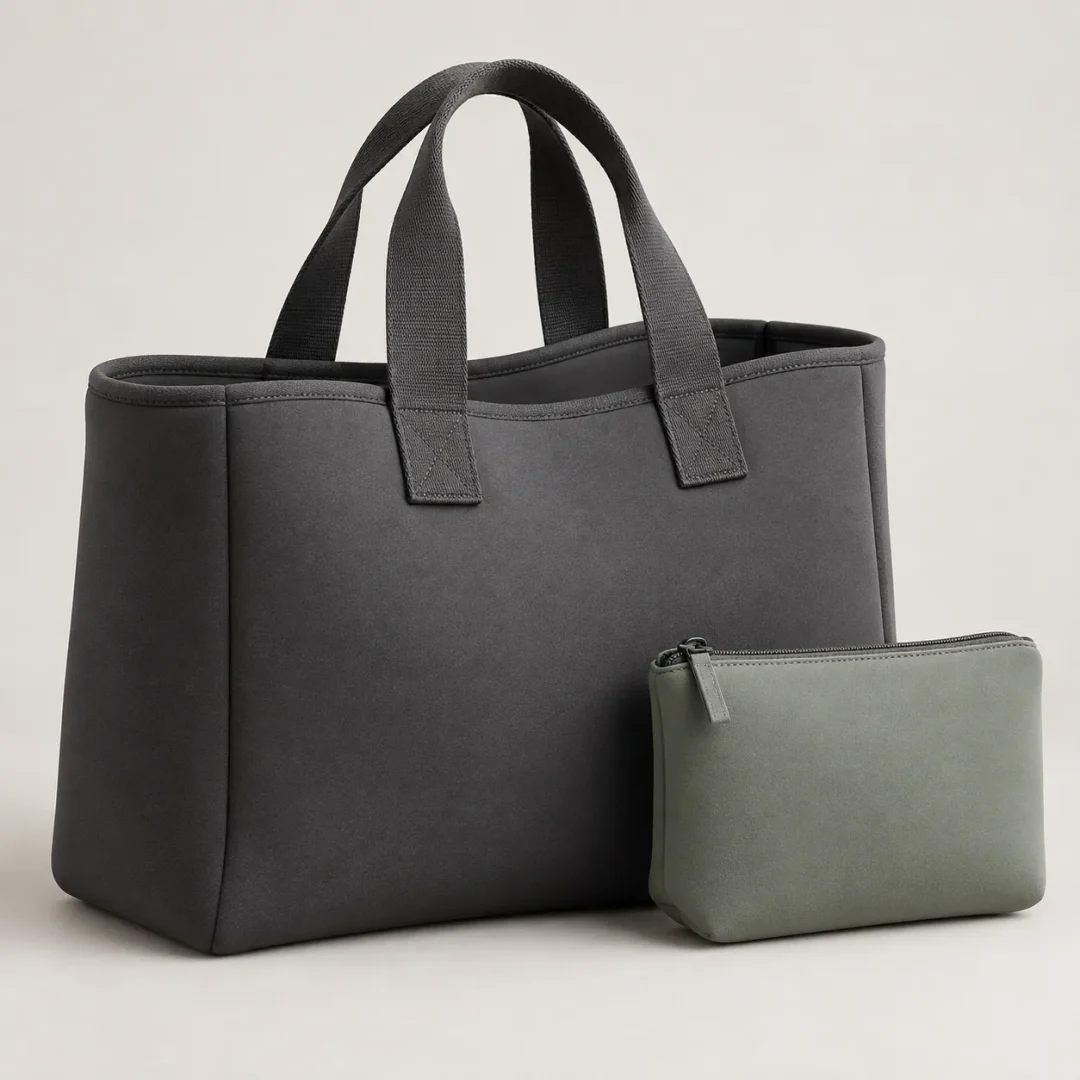
Neoprene tote bags typically have a roomy main compartment and two handles. Designs can include an open top, zipper, snap closure, internal pocket or removable pouch.
They are used for everyday carrying, shopping, casual commuting and branded merchandise. Their soft body gives them a different feel from a rigid bag, while the fabric face allows a range of colours and surface designs.
For a tote, the main question is how the whole bag carries a load. Handle attachment, seam reinforcement, base shape and optional bottom support matter as much as the foam. A thicker panel alone does not establish a safe carrying capacity.
A useful tote sample should be checked with a representative mix of contents, not only evenly distributed weights. A laptop, bottle and smaller items place different demands on the base and side panels. Check whether the opening remains convenient and whether the handles are comfortable when the bag is full. For a branded programme, also consider where the logo sits after the bag changes shape under load.
Neoprene Beach Bags

Beach bags generally prioritise space for towels, clothing and personal items. A wide opening, comfortable handles and accessible pockets can make them easier to use at the beach or pool.
Solid and perforated neoprene designs serve different needs. A solid panel provides more continuous coverage; holes or an open structure allow sand and water to pass through, depending on the design, but also expose the contents.
A beach bag should not automatically be treated as a wet bag. Damp swimwear, loose sand and items that need to stay dry may require separate compartments or pouches. The choice should follow what the user intends to carry rather than the material’s general reputation for water resistance.
For beach use, compare pocket access, handle length and cleaning requirements. A large bag can become inconvenient if small valuables disappear into its main compartment. An internal pouch or zipped pocket may help with organisation, although neither should be assumed waterproof without its own suitable construction. Check how the material and accessories should be cleaned after contact with sand or salt water.
Neoprene Lunch Bags
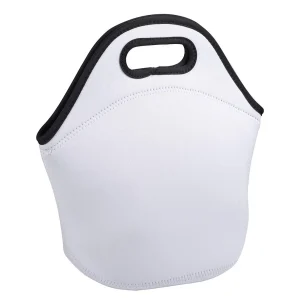
Neoprene lunch bags are usually shaped around food containers and drinks, with handles and a closure that helps enclose the contents. The flexible body can accommodate different container shapes within its usable dimensions.
The foam’s insulating properties are relevant here, but convenience also depends on opening width, stability and the ability to clean spills. Check whether the interior is fabric-faced or lined, and how easily corners can be reached during cleaning.
For a custom lunch bag, specify the container dimensions before selecting the pattern. If insulation is a selling point, evaluate the complete sample under defined conditions. A carrying bag for packaged food also differs from a surface intended for direct contact with unpackaged food; material requirements should reflect the actual use.
A practical sample check includes the actual container, utensils and any intended ice pack. The bag should close without excessive stretching or pressure on the seams. Consider whether it needs to sit upright and whether the user can reach the interior for cleaning. Insulation and hygiene are separate questions: a bag can slow temperature change while still needing suitable food containers and prompt cleaning after spills.
Neoprene Laptop and Tablet Sleeves
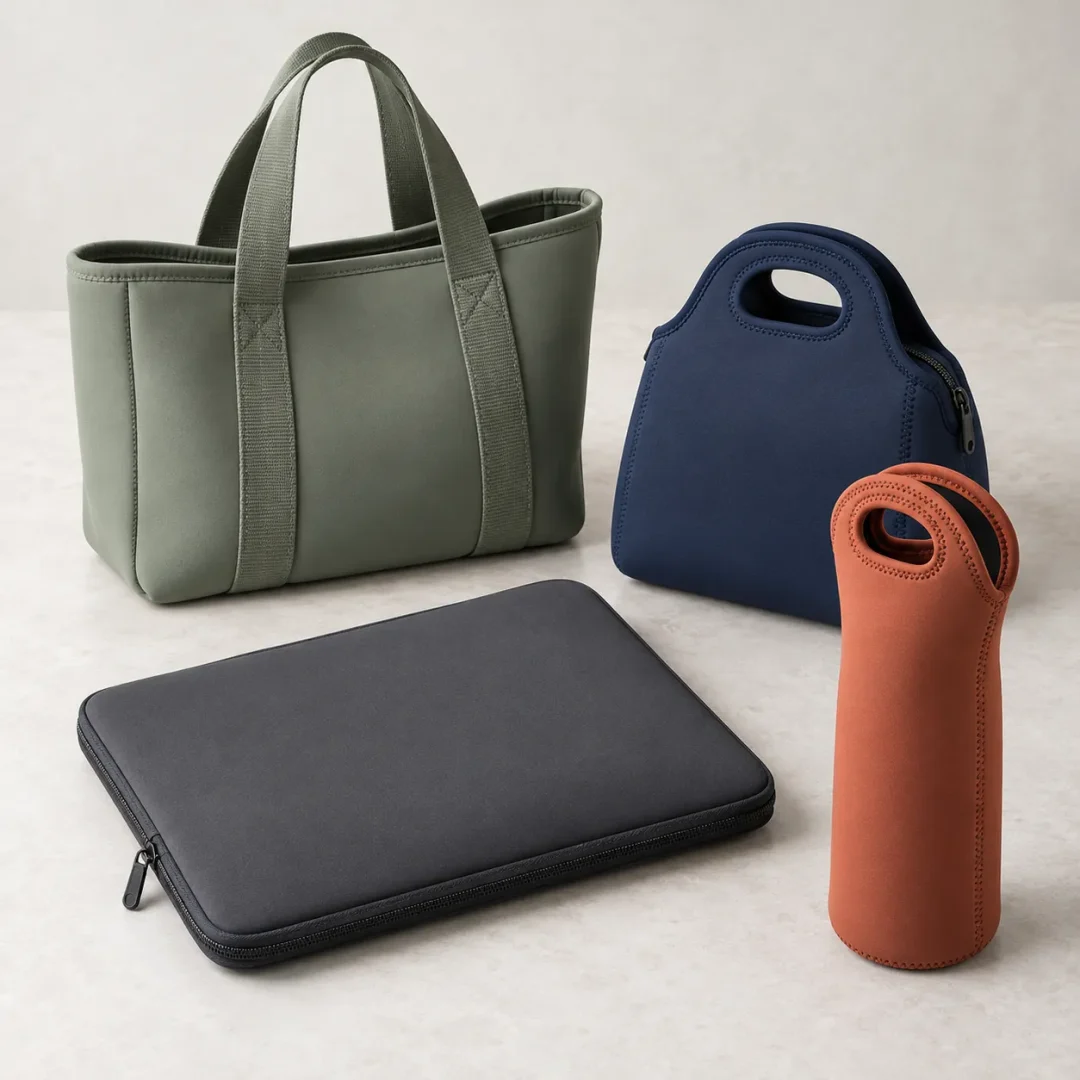
Laptop and tablet sleeves use neoprene as a close-fitting, soft enclosure. They are often carried inside a backpack, tote or travel bag rather than functioning as a complete carrying bag on their own.
The material can provide light cushioning and a soft contact surface, but correct fit is essential. Too much space allows the device to move; an overly tight sleeve can make insertion difficult or place pressure on corners.
Check the actual device dimensions rather than relying only on a screen-size label. The zipper, internal seams and any hard components should be positioned so they do not rub against the device. Additional corner protection may be needed if the intended use involves more demanding impact exposure.
Accessories also need a place in the design. A charger pressed against the device in a tight sleeve may undermine an otherwise well-fitted protective layout. If storage is required, an external or separate compartment can be more appropriate than simply making the sleeve looser. For a custom project, confirm the fit across the actual device models intended for the product rather than assuming identical dimensions within one screen-size category.
Neoprene Cosmetic Bags and Pouches

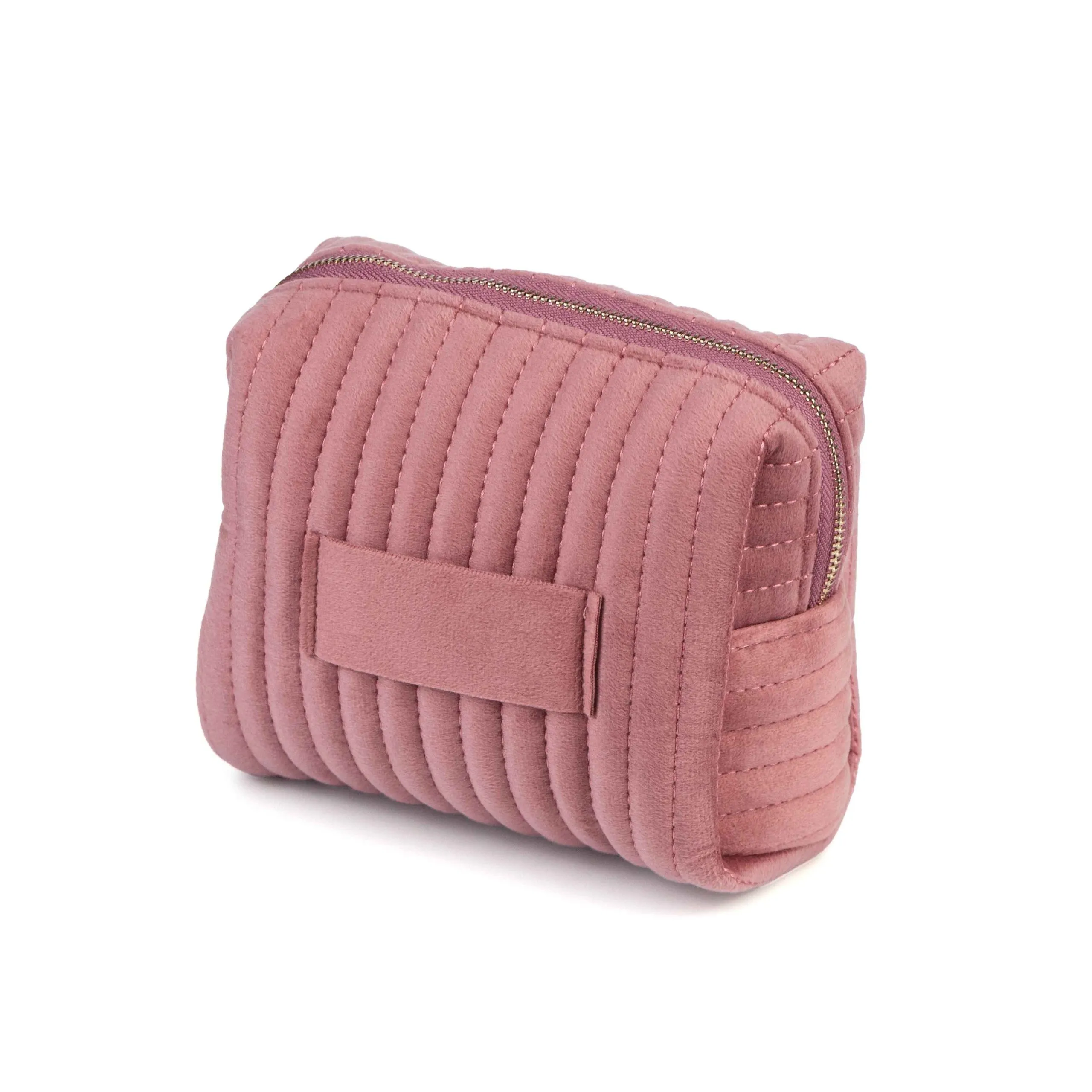
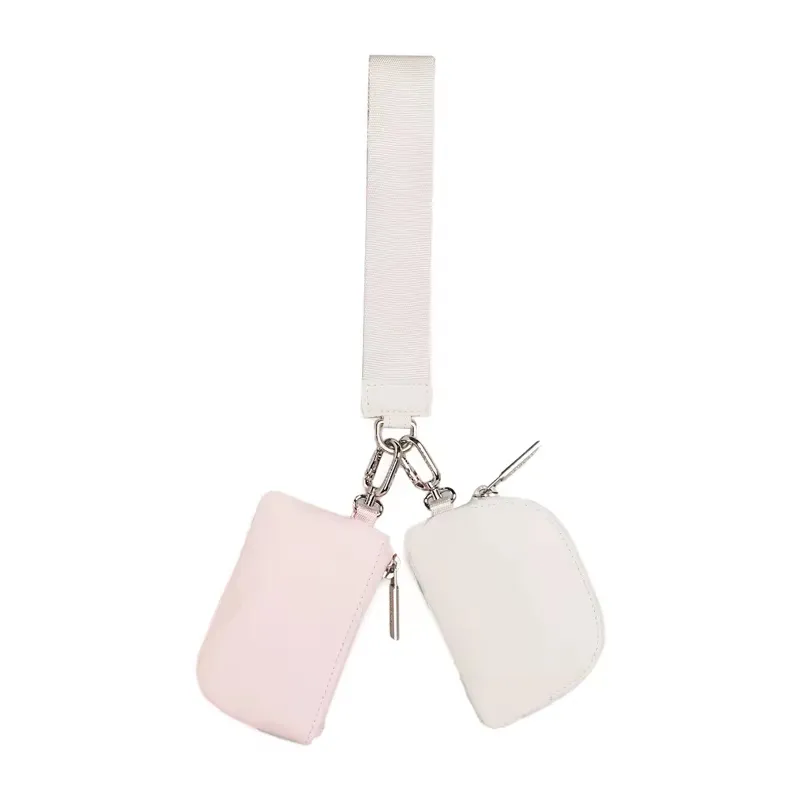
Small neoprene pouches can organise cosmetics, toiletries, cables and other personal items. Their softer body can be convenient inside luggage, and a zipper opening keeps small items together.
The best layout depends on the contents. A wide opening helps users see what is inside, while pockets or removable sections can separate smaller items. For toiletries, the interior should be practical to inspect and clean after spills.
Do not assume the material makes the pouch leakproof. A spill can reach stitching or the zipper, and fabric faces may absorb liquid or show stains. If leak containment is a key requirement, the lining and complete assembly need to be designed for it.
Small pouches are also useful for coordinating a bag collection. A matching cosmetic pouch can organise a larger tote, while a cable pouch serves a different set of contents. The outer material can remain consistent, but the opening, lining and proportions should follow the application. A narrow zipper opening may look neat while making it difficult to remove a wide item or clean the inside.
Neoprene Bottle and Wine Carriers
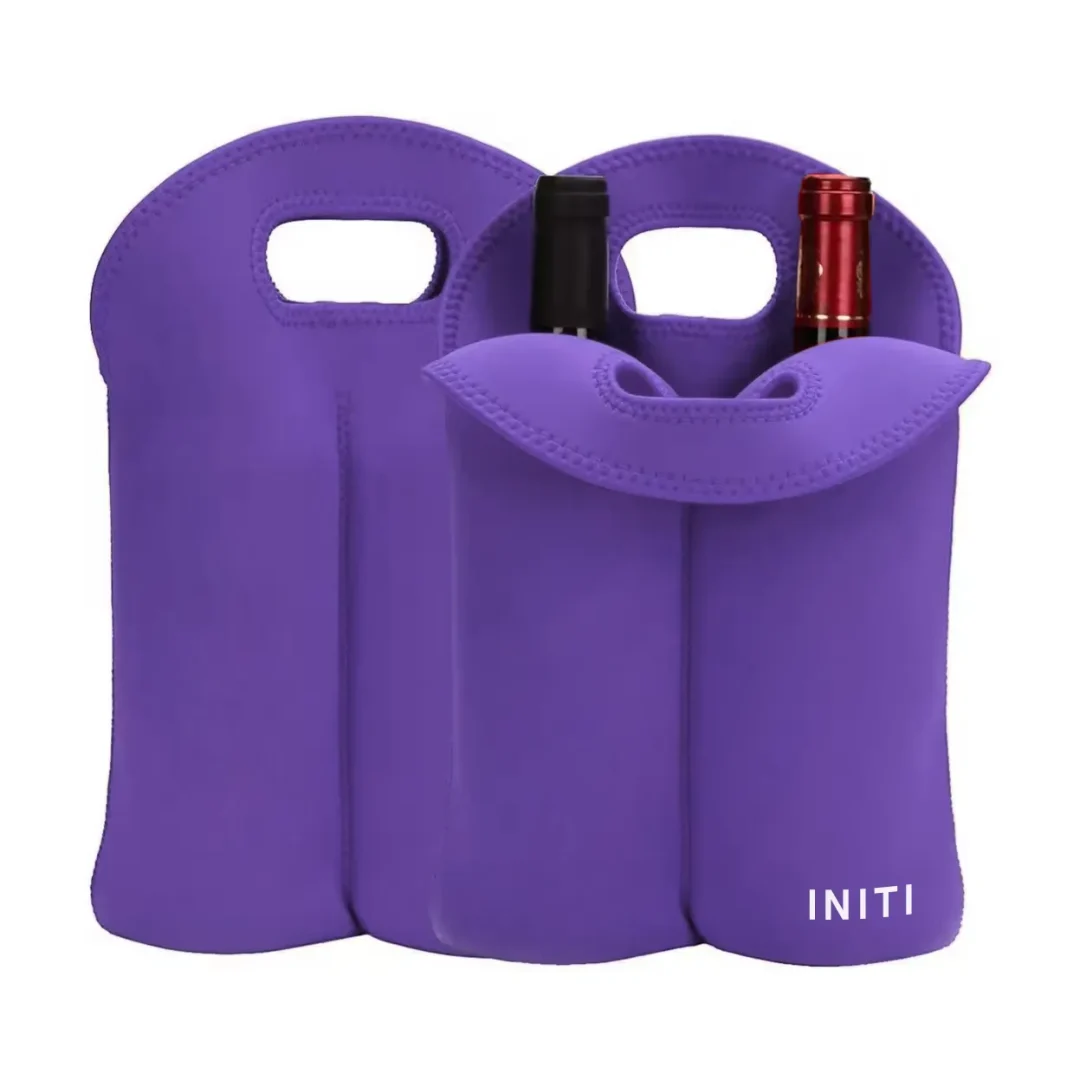
Bottle carriers are designed around a cylinder or a group of bottles. Options include fitted sleeves, single-bottle bags with handles and multi-bottle carriers with separators.
Neoprene can provide a soft contact layer, some cushioning and thermal buffering. These features make it relevant to daily carrying, picnics, gift packaging and promotional products.
Fit, bottom support and handle construction are especially important. In a multi-bottle carrier, dividers help prevent bottles from knocking together. Cushioning should not be presented as a guarantee against breakage; carrying performance needs to be checked with the intended bottle size and weight.
For gift or promotional use, check presentation with the intended bottle inserted. Bottle necks, shoulders and bases vary, so a carrier that fits one bottle may distort around another. If the bag will be reused beyond its first presentation, the closure and carrying comfort matter as well as the logo. A single-bottle sleeve without a handle and a multi-bottle carry bag should be treated as different products during development.
Why Do Neoprene Bags Look Different?
Bag type and construction describe different things. “Tote” or “lunch bag” tells you the product’s format; “solid,” “perforated” or “woven” describes how its body is formed.
Solid-Panel Neoprene Bags
These bags use continuous panels cut from a sheet and joined into the desired shape. They are common in sleeves, lunch bags and pouches, and can also be used for totes.
The apparent smoothness comes largely from the textile face. Different face fabrics, prints, seams and edge finishes can make bags with similar foam cores look quite different.
Perforated Neoprene Bags
Perforated designs have holes cut through the material. The pattern creates a distinctive appearance and changes the coverage provided by the panel.
Hole size, placement and lining affect what can pass through the bag. A perforated design should be assessed on its own terms rather than given the same water-protection description as a continuous panel.
Woven Neoprene Bags
Woven neoprene bags are formed by interlacing strips rather than using only continuous panels. Here, “woven” describes the strip construction of the bag body; it does not mean that the rubber foam itself is a woven fibre fabric.
The gaps, flexibility and interior finish depend on the weaving pattern and any lining or inner pouch. A tightly woven tote and an open weave can have different practical requirements even when both are sold as neoprene bags.
Are Neoprene Bags Waterproof?
The most useful answer distinguishes the foam, the panel and the finished bag. A material may resist water through its body while its fabric surface becomes wet. A continuous panel can behave differently from a panel that has been sewn, perforated or assembled around a zipper.
For ordinary shopping or commuting, a bag may only need to cope with incidental splashes. For use around a pool, the brief may include wet hands and damp towels. A product intended to keep electronics dry during prolonged rain faces a different requirement. Immersion is a further step and should never be inferred from a water-resistant description.
Where Water Can Enter
Consider the entire route into the bag: the top opening, zipper ends, panel joins, handle attachment points, decorative stitching, exposed edges and any intentional holes. Water protection is only as useful as the complete design under the specified exposure.
Stitching can create entry paths, but a particular seam name does not automatically establish a waterproof result. Bonding, tape, sealants or other construction measures need to be compatible with the actual materials. The closure also has to support the intended claim. Improving one panel join does not compensate for an open top.
How to Describe the Claim Clearly
| Intended exposure | What to examine | What the material name cannot establish |
|---|---|---|
| Incidental splashes | Surface wetting, exposed edges and openings | That every item inside stays dry |
| Rain during carrying | Panel joins, closure, orientation and duration | Protection under unlimited rain exposure |
| Wet contents inside | Lining, seams, opening and leakage routes | That a beach bag is a leakproof wet bag |
| Immersion or water pressure | Complete sealed design and an appropriate finished-product test | That closed-cell foam alone makes a waterproof bag |
This table describes questions to evaluate, not automatic performance levels. Even two bags with the same material and seam style can differ because of their pattern, attachment details or closure.
If water protection will appear in a product description, agree on the intended exposure and the supporting check before production. The wording should describe what the actual bag can do. A sample that survives a brief splash does not support a submersion claim, and a panel result should not be presented as a complete bag result.
What Are the Limitations of Neoprene Bags?
Thickness Can Add Bulk
A foam panel occupies more space than a thin textile panel of the same area. This can be helpful for padding but less convenient when compact storage or packing volume is the priority.
Some bags flatten easily, while others include a firm base, thick binding or substantial hardware. Flexibility should therefore not be confused with the ability to fold into a very small pouch. Likewise, neoprene should not be described as lighter than every alternative without comparing complete products.
Soft Material Still Needs Structural Support
Large loads place stress on handles, seams and the base. A soft sheet does not replace careful construction at these points.
For heavier contents, the design may need reinforcement or a different material combination. Evaluate the finished sample with a representative load rather than using thickness as the only indicator of strength.
Moisture and Care Need Attention
An enclosed bag holding damp items needs time to dry. Water resistance does not prevent moisture from remaining on the textile surface or inside the bag.
Wear can also affect several components. The face fabric may pill or fade; the bond can separate; seams and closures can wear. These are possibilities to check, rather than a fixed sequence of failure or a guaranteed service life.
New materials may have an odour, but smell alone cannot identify its source, prove safety or establish that a product is acceptable. A strong or persistent odour should be discussed with the supplier. For bulk orders, check the finished sample and agree on expectations before production instead of assuming that ventilation will solve every case.
Reusability Does Not Automatically Mean Sustainability
A neoprene bag can be designed for repeated use, but that does not make it biodegradable or readily recyclable. Bonded rubber, fabrics, adhesives and accessories can complicate recovery.
Environmental claims should describe something specific and verifiable. If a supplier offers recycled content or an alternative formulation, confirm which component the claim concerns and what evidence supports it. Avoid extending a claim about one fabric face to the entire bag.
How Is a Neoprene Bag Made?
Many solid-panel bags follow a sequence of material preparation, cutting, decoration, sewing, assembly and inspection. The order varies with the design. A strip-woven tote uses a different body-forming process, while a simple sleeve has fewer operations than a lined multi-pocket bag.
Understanding the process helps explain why a material sample and a finished bag are different approval stages. A swatch may feel right, but cutting, heat, stitching and attachments all introduce conditions that the loose material has not experienced.
Material Preparation and Lamination
The factory selects a foam sheet or buys a prepared laminate that matches the brief. If fabric bonding is part of its process, the faces, core and adhesive system need to be controlled together. Prepared material is then checked for colour, surface condition, thickness and obvious bonding defects.
Colour approval should distinguish face fabric from foam and accessories. Binding tape, webbing and zippers may look different from the main face because they use different substrates and finishes. Agree on acceptable matching instead of assuming that a shared colour name produces an identical appearance.
If the bag includes perforations or exposed strips, the cut cross-section becomes visible. Foam colour and clean cutting therefore become part of the finished appearance, not just hidden material decisions.
Pattern Development and Cutting
A pattern converts the required usable space into panels, seam allowances and construction details. Thickness affects the way a panel turns around corners and the room taken up by a seam. This is especially relevant to fitted sleeves and compact pouches.
Panels can be cut using appropriate dies, blades or other suitable equipment. The method should produce the required shape without damaging the edges or laminate. The presence of a particular machine does not, on its own, establish better quality; the result on the actual material matters.
Cutting accuracy is also different from foam thickness accuracy. A pattern dimension, a finished external dimension and a material thickness each need their own measurement basis. Keeping them separate makes sample comments clearer and prevents a tolerance intended for one field from being applied to another.
Printing and Decoration
Decoration may happen on material before cutting, on cut panels or on a finished product, depending on access and the selected process. All-over graphics often need planning for panel position and seams. A logo placed on a finished bag needs a surface that can be supported during application.
Any heat-based process must be checked for effects on the foam, bond and surface. The printed area should be reviewed for colour, registration, texture and flexibility. A visually successful first print is not enough if the panel later distorts or the decoration cracks during normal use.
An approved sample should use the intended material and artwork scale. A tiny test on a separate swatch may not represent a large graphic across a bending panel. Recording the material and process helps keep the bulk result consistent.
Sewing and Edge Finishing
Panels are joined using seams suitable for the material thickness, pattern and load. Stitch type, thread, tension and seam allowance all influence the result. More stitching is not automatically stronger: closely spaced needle holes can create a weak line in some constructions.
Edges may be bound, enclosed or intentionally left exposed. Binding can cover a cut cross-section and provide a clean finish, but its width and stiffness influence appearance. An exposed edge may be part of the design; it should be evaluated for abrasion, separation and comfort rather than assumed to fail or assumed to need no checking.
Corners and the transition from panel to handle deserve particular attention. A seam that is neat along a straight side can become bulky at a turn. Prototype review is the stage to adjust these details before they repeat across a production run.
Handles, Closures, Linings and Support
The factory adds the parts that make the bag useful: handles or straps, zippers or snaps, internal pockets, linings and any base support. The order depends on which areas remain accessible during assembly.
For a tote, handle loads must be transferred into the body through an appropriate attachment. For a wine carrier, bottom support and bottle separation affect carrying. For a sleeve, zipper placement and interior seams affect device contact. These details are specific to the product and cannot be inferred from a neoprene material card.
Hardware should be checked in use, not only visually. Open and close the loaded sample, check whether the zipper catches material and confirm that pockets are accessible. A part that operates well when the bag is empty may be awkward under load.
Final Inspection and Packing
Final inspection compares the finished product with the approved reference: dimensions, colour, artwork, construction, function and overall appearance. Where a performance claim is important, the relevant check needs to be included in the agreed quality plan.
Packing also deserves attention. A soft bag may be flattened, but tight folding or heavy compression can leave marks or strain accessories. Check the bag after representative packing and unpacking, especially when appearance on arrival matters for retail or gifting.
There is no single inspection level or numerical test result that belongs to all neoprene bags. The quality plan should reflect the product, order and intended market. A handle test, a panel abrasion test and a thermal test establish different things; none can stand in for the others.
What Should You Look for When Choosing a Neoprene Bag?
Match the Size and Opening to the Contents
Start with the items the bag must carry. A lunch bag needs to accept the intended container through its opening; a laptop sleeve needs usable internal dimensions; a bottle carrier needs the right fit and bottom support.
Consider the closure, handle drop, pockets and carrying method alongside overall dimensions. These details often determine usability more directly than the material name.
Check the Material and Construction
Material thickness is worth checking, but first establish what the measurement means. A quoted figure may refer to the foam core or the complete laminated sheet. Compare the same measurement basis and, for custom production, agree on a suitable method and tolerance.
There is no single correct thickness for all totes, sleeves or lunch bags. More thickness can change padding, volume, weight and sewing behaviour; it does not automatically improve every aspect of the product.
For a custom or wholesale project, a concise sample checklist is useful:
- Confirm the rubber composition, fabric faces and agreed thickness.
- Check the dimensions and fit with the intended contents.
- Inspect seams, edge finishing, handles, base and closure operation.
- Look for fabric lifting, surface defects or unwanted changes after the intended care process.
- Verify any carrying, water-resistance or insulation claim on the finished design.
Keep the approved construction consistent between sample and production. A similar-looking face fabric or foam replacement can change the feel, printing result or performance.
Consider Branding and Care Requirements
Decoration needs to suit the actual surface. Screen printing, transfers or sublimation may be options for particular constructions, but artwork, fabric composition and processing conditions affect the outcome. Sublimation generally requires a suitable polyester face; heat-based processes need checking on the complete laminate.
Approve the logo or pattern on the intended production material. Review clarity, colour, flexibility and appearance after appropriate handling or care. Embroidery also needs a trial because needle penetration, backing and tension can affect a foam panel.
Care requirements should fit the intended user. A daily lunch bag and an occasional gift carrier may face very different cleaning demands. Agree on guidance for the complete bag, including its lining, print and accessories.
Cleaning, Odour and Long-Term Wear
A care instruction should be written for the complete bag. The foam, fabric faces, bond, print, lining and accessories can respond differently to washing and drying. A method suitable for one design may damage another, even when both products are called neoprene bags.
Start with the Product’s Care Instructions
Check the care label or ask the manufacturer for guidance. Do not infer machine washability from the material name. When cleaning is permitted, remove loose contents and deal with surface debris before washing so that dirt is not worked into seams or accessories.
For a small mark, an approved local cleaning method may avoid unnecessary wetting of the whole bag. Test a discreet area when the care guidance recommends it, and be especially careful around printed decoration. Avoid bleach, strong solvents and aggressive stain treatments unless the instructions specifically allow them.
When the bag can be washed, use the stated water temperature and handling method. Avoid twisting or forcing a foam panel into a tight shape. If an instruction is missing, obtain guidance before proceeding rather than treat a generic internet tip as approval for that particular product.
Drying and Storage
Let the bag dry completely before storing it. Open pockets and compartments as appropriate so that moisture does not remain hidden. Use the drying position recommended for the design; a supported or flat position may suit some bags better than hanging them under their own wet weight.
Direct heat, tumble drying and prolonged hot storage can affect materials or shape, so they should not be used without product-specific approval. Keep the bag away from unnecessary crushing when it is stored. A removable base or inner pouch may need separate attention.
A lunch bag that has held a spill requires more than wiping the visible exterior. Inspect the inside, seams and corners. A beach bag used with damp clothing should also be emptied and aired after use rather than left closed inside luggage.
What a New-Bag Smell Can and Cannot Tell You
Odour can vary with the foam, bonding materials, textile finishes, accessories and storage conditions. It is not possible to identify the source or assess the product’s chemical characteristics by smell alone.
A mild smell after unpacking may lessen with appropriate airing, but there is no universal time by which every bag should become odour-free. A persistent smell should not automatically be blamed on the adhesive, and airing should not be presented as a guaranteed solution.
For a custom order, inspect the finished sample under representative conditions and discuss any concern before the bulk run. The way the sample was stored and packed can matter. If low odour is an important product requirement, agree on a practical assessment and ask what material and process controls support it.
What to Watch for During Use
The service life of a neoprene bag is affected by use, material combination, construction and care. It is misleading to assign a fixed life to the finished bag from the reputation of one rubber polymer.
| Visible change | Possible area to investigate | Practical response |
|---|---|---|
| Pilling or surface fuzz | Fabric face and repeated rubbing | Review the contact area and suitable surface construction |
| Fading or colour transfer | Fabric colour, finish and exposure | Check the intended conditions and relevant colourfastness |
| Fabric lifting or bubbles | Lamination bond or damage during use and care | Compare with the approved material and investigate the bond |
| Persistent flattened areas | Foam compression behaviour and storage | Review loading, packing and material suitability |
| Torn seams or loose handles | Load paths, stitching and reinforcement | Check the construction against the intended contents |
| Sticking zipper or damaged hardware | Component quality, fit and strain | Review the accessory and how it functions when loaded |
The table is a guide to investigation, not a diagnosis from appearance alone. A fabric bubble, for example, can have more than one cause. The useful response is to compare the actual product, use and care history rather than assume that every defect has the same source.
How to Brief a Custom Neoprene Bag Project
For a custom or wholesale order, the goal is to describe a product that the supplier can quote and reproduce. That does not require every technical detail at the first contact. It does require a clear intended use and a record of the material and construction eventually approved.
Begin with the Product, Not a Material Adjective
“High-quality neoprene tote” leaves many decisions open. A more useful brief explains what will be carried, how much usable space is needed, how the bag will close and how it will be used. Reference images can clarify appearance, but they do not replace dimensions or construction details.
If the bag must fit a particular container or device, provide its dimensions and the desired clearance. If it is intended for bottles, provide bottle shape and weight. If it will be used as a retail gift, describe the presentation and packing expectations. These facts help the supplier propose a relevant construction.
Material requirements can then be developed with samples. You may begin with a preferred feel and appearance rather than a complete technical code. Before approving production, however, the supplier’s chosen core, faces and other important components should be identifiable.
What to Include in a Request for Quotation
| Brief item | Why it matters |
|---|---|
| Bag type and intended contents | Establishes the fit, load and useful structure |
| Finished dimensions, opening and handle drop | Makes capacity and carrying expectations clear |
| Reference design and closure | Clarifies access, assembly and appearance |
| Declared core and face materials | Prevents visually similar materials being treated as identical |
| Thickness basis and sample feel | Makes material comparison more meaningful |
| Lining, pockets, base and reinforcement | Defines features not visible in a simple exterior image |
| Colours and artwork | Separates fabric, foam, accessories and decoration decisions |
| Performance and care requirements | Identifies what must be demonstrated on the finished product |
| Quantity by design or colour | Helps the supplier assess material and production requirements |
| Packing and delivery requirements | Defines the presentation and handling needed for the order |
An early quotation can contain assumptions. Ask the supplier to identify the important ones rather than expect an exact price from an incomplete description. Once sampling resolves the design, update the brief so that the quotation and approved sample describe the same product.
Use the Sample to Resolve Real Decisions
Sample approval should go beyond whether the bag looks attractive. Fill it with the intended contents, carry it in the expected way and operate its closure. Check the internal space, not only the external dimensions.
For a tote, examine how the base and handles behave under the expected load. For a laptop sleeve, check insertion, corner fit and contact with the zipper. For a lunch bag, check container access and the intended cleaning method. The application determines the useful evaluation.
Record the accepted material, colour, artwork, construction and any agreed tolerances. If a sample changes, identify what changed. A revised handle length can affect carrying comfort; a new fabric face can affect print appearance; a new foam can change weight and feel. Treat these as product decisions rather than undocumented substitutions.
Choose Evidence That Matches the Claim
A material data sheet helps identify a sheet. A finished dimensional record establishes the size of the bag. A handle attachment test investigates a load point. A thermal evaluation describes performance under its stated conditions. These documents are useful, but they answer different questions.
If a product will carry an insulation or water-protection claim, check the complete design under conditions relevant to that claim. If the brief involves a special material or target-market requirement, ask for evidence that applies to the actual supplied components and product, rather than accepting a certificate name with no clear connection.
Avoid copying numerical limits from another product simply because the material name matches. A compact pouch and a large bottle carrier do not need identical acceptance criteria. Requirements should follow the design and its use.
What Changes the Cost?
The price of a neoprene bag is influenced by more than foam thickness. Core composition, face fabrics, colour choices, usable material yield, panel count, seams, accessories, decoration and packing can all affect the quotation.
| Design decision | How it can affect the project |
|---|---|
| Core and face selection | Changes material cost, feel and processing requirements |
| Size and panel layout | Changes material consumption and cutting yield |
| Thickness and support | Can change sewing, turning and reinforcement needs |
| Pockets, lining and closure | Adds components and assembly operations |
| Perforation or strip weaving | Changes the body-making process and finishing |
| Artwork and decoration | Adds preparation, application and approval requirements |
| Special performance requirements | Can require different construction and evaluation |
| Quantity, colour split and packing | Changes material ordering and production planning |
These are cost drivers, not universal price increments. A simpler bag may use a more expensive material; a lower-cost panel may need additional support. Ask for quotations on comparable complete designs rather than rank suppliers by a material label or a thickness figure.
Sampling and production time also depend on the project. Stock materials, custom colours, artwork approval and accessory availability influence the schedule. Confirm the supplier’s current plan for the agreed design instead of using a generic industry lead time as a delivery promise.
Frequently Asked Questions
Can You Wash a Neoprene Bag?
Many can be cleaned, but the method depends on the finished product. Follow the care label rather than assuming every bag can be machine washed. When no instruction is available, ask the manufacturer before soaking or machine washing. Cleaning needs to account for the print, lamination, lining and hardware as well as the foam.
Can a Neoprene Bag Be Folded?
Some soft designs can be flattened for storage. Thick panels, rigid bases and accessories may limit folding. Avoid assuming that a bag designed to lie flat is also intended for repeated tight folding.
Are All Neoprene Bags Made from the Same Material?
No. Rubber composition, foam properties, fabric faces and lamination can vary. Some products sold in broad neoprene categories use SBR or blends rather than pure chloroprene rubber. Ask for the declared composition when the distinction matters to your project.
Can Neoprene Bags Be Printed or Customized?
Yes, many designs can be customised in size, colour, structure and branding. The decoration method should suit the exact face fabric and laminated panel. Confirm the finished result through sampling rather than selecting a method from the material name alone.
Is Neoprene the Same as Rubber?
Neoprene is a type of synthetic rubber. It is not the same as natural rubber, and it is not a separate category outside the rubber family. A neoprene bag also usually includes fabric and other components, so it is more informative to describe its complete construction than simply call it a rubber bag.
Why Does a New Neoprene Bag Smell?
An odour may come from the foam, lamination, finishes or other components. Its source cannot be established from smell alone. Follow the supplier’s guidance and raise a strong or persistent odour with them; do not assume it will disappear or that it proves a particular material defect.
Conclusion
A neoprene bag combines a rubber foam material with a design suited to its intended contents. Its softness, flexibility, cushioning and insulating characteristics help explain its use in totes, beach bags, lunch carriers, protective sleeves and small pouches.
The material name is only the starting point. To choose a useful product, look at the fabric faces, thickness, opening, seams, support and care requirements together. For custom production, a well-defined finished sample gives a clearer basis for decisions than a list of general material advantages.
 English
 French
 German
 Japanese
 Arabic
 Thai
 Vietnamese
 Russian
 Spanish
 Portuguese