
1. What Is a Mesh Bag?
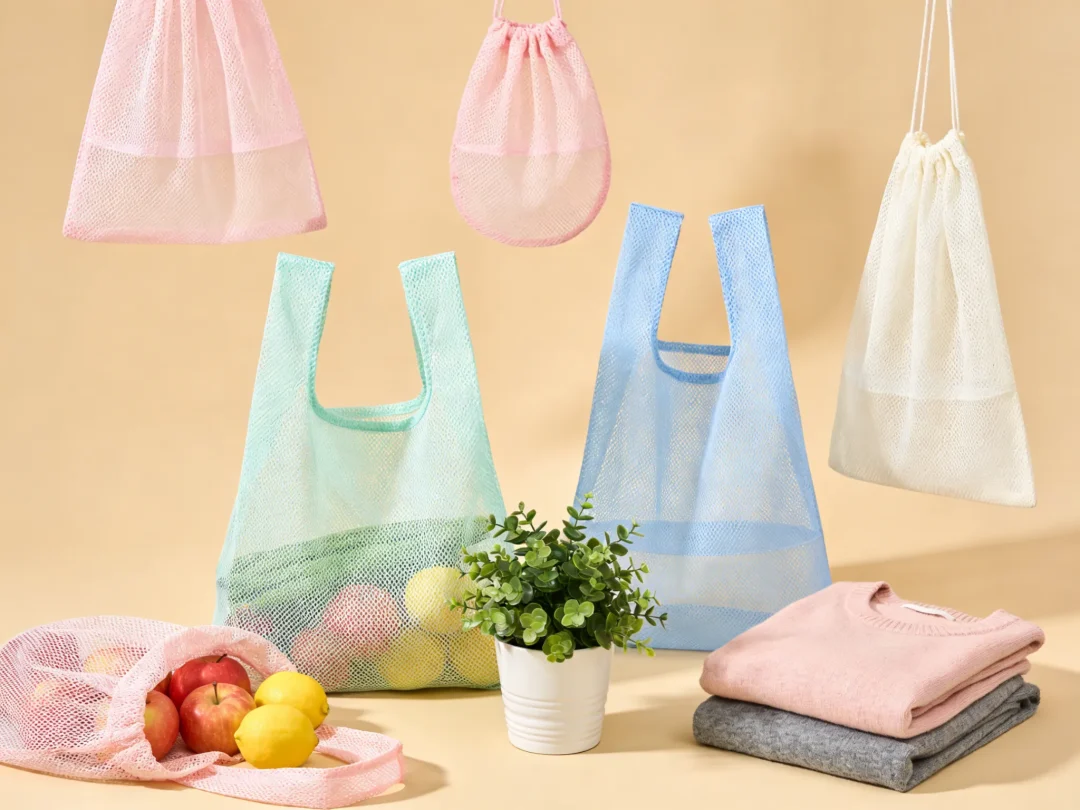
At its core, a mesh bag is a bag crafted from a material woven or knitted to create an open,(net-like) structure. This distinctive construction is characterized by numerous small, interconnected holes, which allow for unparalleled airflow and visibility. The term “mesh” refers to this specific material concept, defining a fabric that is porous and breathable, rather than a particular bag shape or design. While often confused, it’s important to note that a mesh bag is distinct from a net bag, which typically features a much larger, more open weave, often resembling traditional fishing nets.
The primary purpose of the mesh structure is to facilitate ventilation, prevent moisture buildup, and enable quick drying – features that are incredibly beneficial across a wide array of applications, explored in detail throughout this guide.
2. What Is a Mesh Bag Made Of?
The performance and suitability of a mesh bag largely depend on the material it’s constructed from. Manufacturers choose specific mesh materials to optimize for different uses, balancing factors like durability, cost, and desired properties. Here are the most common materials and their characteristics:
Common Mesh Bag Materials and Their Properties:
| ประเภทวัสดุ | Key Characteristics | Impact on Bag Performance |
|---|---|---|
| Polyester Mesh | Synthetic, strong, durable, resistant to stretching and shrinking, quick-drying, often lightweight. |
|
| Nylon Mesh | Synthetic, incredibly strong, abrasion-resistant, lightweight, excellent elasticity, often slightly more expensive than polyester. |
|
| PVC / Coated Mesh | Synthetic (often polyester or nylon base) coated with PVC (polyvinyl chloride) or other polymers. Provides increased rigidity, water resistance, and UV protection. |
|
| Cotton Mesh | Natural fiber, soft, absorbent. Less common for functional mesh bags due to slower drying times and potential for shrinkage/mildew. |
|
The choice of material directly influences a bag’s performance. For instance, a polyester or nylon mesh is preferred for items that get wet (like swimwear or sports gear) due to its quick-drying properties, while a PVC-coated mesh might be chosen for durability and easy cleaning in industrial or heavy-duty applications. Understanding these material differences is key to selecting the right mesh bag for your specific needs.
3. Why Are Mesh Bags So Popular?
The popularity of mesh bags stems from their unique combination of practical advantages, making them indispensable across various daily scenarios. They solve common problems associated with traditional opaque or non-breathable bags:
- Superior Breathability, Mold, and Odor Prevention: The open weave allows air to circulate freely, preventing the buildup of moisture that can lead to mold, mildew, and unpleasant odors, especially crucial for damp items.
- Lightweight and Foldable: Mesh bags are inherently light, adding minimal bulk to your load. Their flexible structure also means they can often be easily folded or rolled up into a compact size when not in use, making them highly portable.
- Visibility (Quick Identification of Contents): The transparent or semi-transparent nature of mesh allows users to see the bag’s contents at a glance, saving time and hassle when searching for specific items.
- Easy to Clean and Quick-Drying: Most mesh materials are inherently easy to rinse clean. Thanks to their porous structure, they dry rapidly, ready for reuse in a short amount of time.
These combined benefits make mesh bags widely adopted in diverse fields such as laundry, sports, travel, and even retail, where their functionality often triumphs over pure aesthetics.
4. Mesh Bag Pros and Cons
While mesh bags offer numerous advantages, it’s also important to understand their limitations to make an informed choice for your specific needs.
Advantages of Mesh Bags (Pros):
- Excellent Ventilation: The primary benefit. Allows air to circulate, preventing odors, mildew, and moisture buildup, especially crucial for damp items like swimwear or gym clothes.
- Quick-Drying: Their porous structure allows water to drain rapidly, making them ideal for wet items or for quick washing and drying after use.
- Visibility of Contents: You can easily see what’s inside, eliminating the need to rummage through your bag. This is great for organization and quick access to items.
- Lightweight and Portable: Mesh material is generally very light, adding minimal weight to your belongings. Many mesh bags can also be folded or compressed for easy storage when not in use.
- Durable: Modern synthetic mesh materials like polyester and nylon are surprisingly strong, resistant to tears, stretching, and abrasion.
- Easy to Clean: Most mesh bags can be rinsed under water or tossed into a washing machine, making upkeep simple.
- Versatile: Suitable for a wide range of uses, from laundry and sports to groceries and school supplies.
- Cost-Effective: Often more affordable than bags made with heavier, solid materials, especially for larger sizes.
Disadvantages of Mesh Bags (Cons):
- Lack of Privacy: The transparency that offers visibility also means a lack of privacy, as the contents are exposed to everyone.
- No Protection from Rain/Water: Mesh bags offer no waterproof protection. Items inside will get wet if exposed to rain or splashes.
- Contents Can Snag or Fall Out: Depending on the mesh size, small or sharp objects could potentially snag the mesh or even fall out through the holes.
- Less Protection for Fragile Items: While durable, mesh offers limited padding or protection for delicate or fragile items from impacts.
- Not Always Accepted by “Clear Bag” Policies: As discussed later, despite being see-through, some venues’ strict “clear bag” regulations may not accept mesh bags, generally requiring completely transparent plastic.
- Limited Aesthetic Appeal for Formal Use: The functional, utilitarian look of most mesh bags means they are less suitable for formal settings or professional environments where a more polished appearance is desired.
- Potential for Abrasive Texture: Some coarse mesh materials can be rough to the touch or potentially abrasive to very delicate clothing if not handled carefully.
Understanding these pros and cons helps in deciding if a mesh bag is the right tool for the job, balancing its undeniable functional benefits against its inherent limitations.
5. Common Types of Mesh Bags by Use Case
The versatility of mesh bags truly shines when we look at their specialized applications. Different designs and material choices optimize them for specific tasks.
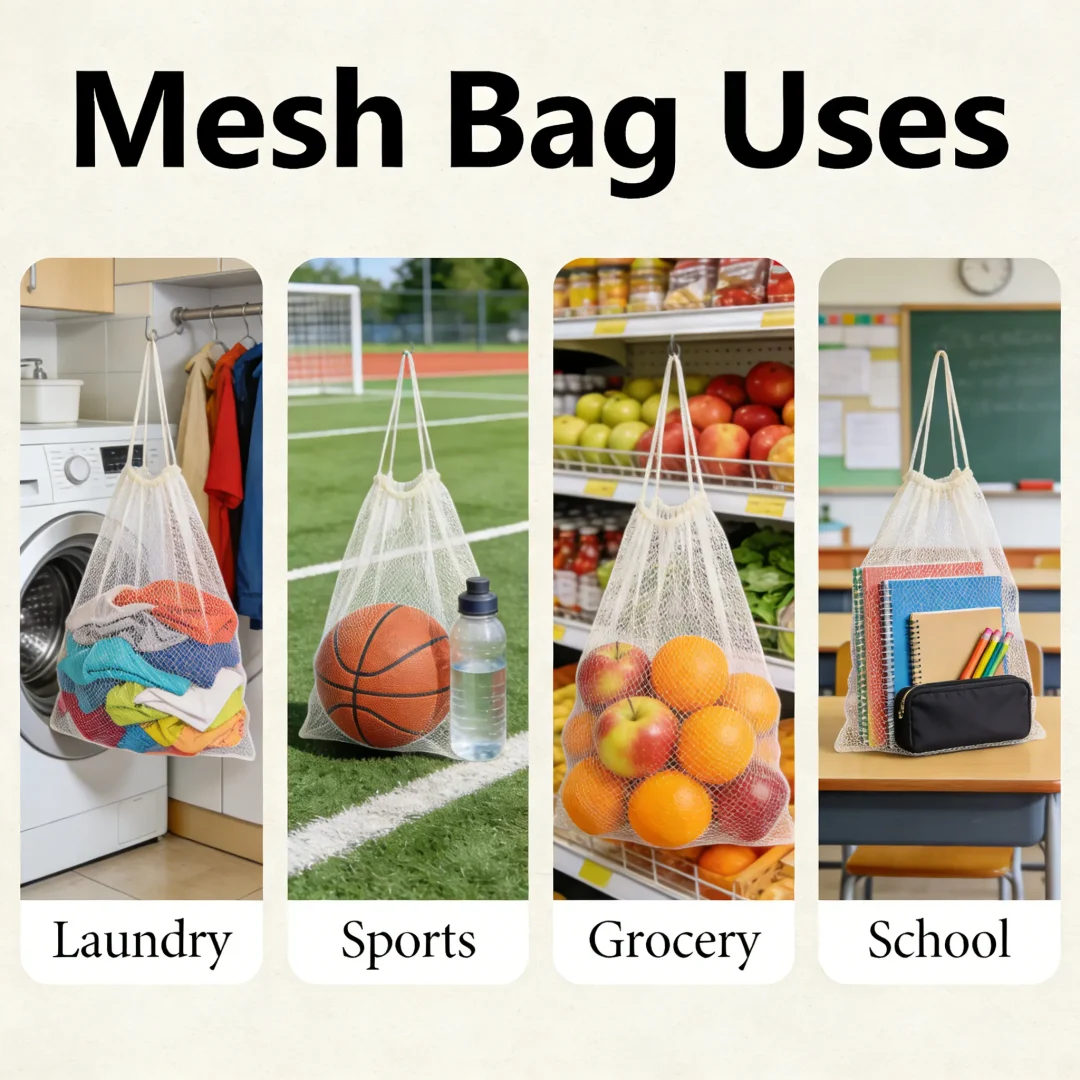
5.1 Mesh Laundry Bags
What is a mesh laundry bag? A mesh laundry bag is a specifically designed bag with a loose, net-like weave, primarily used to protect delicate garments during washing cycles or to separate clothes in shared laundry facilities. It functions as a protective barrier, preventing items from snagging, stretching, tangling, or falling apart in the washing machine.
Why mesh is ideal for laundry: The open mesh structure allows detergent and water to freely penetrate, ensuring a thorough clean, while simultaneously draining quickly during the spin cycle. This breathability is key to preventing damp, musty smells in between washes. For those asking, “what is a mesh bag for laundry used for?”, the answer is simple: protecting delicates, separating colors, keeping socks paired, and even washing shoes without damaging the machine or the item itself.
Typical features: Mesh laundry bags commonly feature a durable zipper closure to keep contents secure during agitation. They come in various sizes, from small pouches for intimates to large bags for sweaters or multiple delicate items. Shapes can vary, but rectangular and cylindrical shapes are most common.
5.2 Mesh Book Bags & School Bags
What is a mesh book bag? A mesh book bag or school bag is a backpack or tote bag primarily constructed from mesh fabric. These bags are often found in environments where security and visibility are paramount, such as schools, libraries, and correctional facilities, as well as at events with strict bag policies.
Their transparent nature addresses security concerns by making the bag’s contents visible without the need for manual inspection. In schools, they can sometimes be mandated to discourage the carrying of illicit items. They share functionality with clear bags, offering visibility, but with the added benefit of superior ventilation, which can be useful for textbooks, gym clothes, or lunchboxes.
5.3 Mesh Bags for Sports & Swimming
Athletes and swimmers highly favor mesh bags for their quick-drying and breathable qualities. A mesh swim bag, for instance, allows wet swimwear, goggles, caps, and towels to air dry quickly, preventing mildew and odors from forming. Similarly, for sports gear like cleats, shin guards, or gym clothes, a mesh bag allows moisture and smells to dissipate, making the bag fresh for the next use. Many sports mesh bags are designed with extra strength to hold bulky or heavy equipment while remaining lightweight themselves.
5.4 Mesh Bags for Food & Storage
Mesh bags are gaining popularity as an eco-friendly alternative for food storage and shopping. A mesh bag for food is commonly used for:
- Grocery Shopping: Replacing single-use plastic bags for produce, allowing fruits and vegetables to breathe and stay fresh longer.
- Pantry Storage: Storing onions, potatoes, or garlic, where airflow prevents sprouting and spoilage.
- Camping/Hiking: Storing food away from pests while allowing air circulation.
The trade-off here is between breathability and protection. While excellent for items that benefit from airflow, mesh bags offer minimal protection against bruising or contamination for delicate items, and are not suitable for liquids or very fine grains. They are ideal for sturdy produce, but not for berries or flour.
6. Mesh Bag Sizes, Closures, and Design Variations
The functional diversity of mesh bags is further enhanced by a wide range of size, closure, and structural variations, catering to virtually any need.
- Sizes: You can find mesh bag small, medium, and large options. Small mesh bags are perfect for delicates, small toys, or produce. Medium-sized bags suit laundry, gym gear, or school supplies. Large mesh bags are ideal for storing sports equipment, multiple garments, or bulk shopping.
- Closures: Common closures include:
- Zipper: Most common for laundry bags, sports bags, and secure storage, ensuring contents don’t spill out. A mesh bag with zipper provides reliable containment.
- Drawstring: Popular for produce bags, lighter items, or quick access. Simple and effective.
- Fold-over or Buckle: Less common but used for specialized outdoor or durable goods bags.
- Structural Design:
- Single-layer: Basic and lightweight, suitable for most uses.
- Reinforced Edges/Binding: Adds durability and prevents fraying, common on higher-quality bags.
- Double-layer Structure: Provides extra strength and sometimes a finer mesh on the inner layer for very delicate items.
These variations allow manufacturers to create highly specialized mesh bags, optimizing them for specific functions while maintaining their core benefits of breathability and visibility.
7. Are Mesh Bags Reusable and Easy to Maintain?
Yes, one of the significant advantages of mesh bags is their reusability and ease of maintenance, making them an eco-friendlier choice compared to single-use alternatives.
- ถุงตาข่ายสามารถใช้ซ้ำได้หรือไม่? Absolutely. Most mesh bags are designed for repeated use over extended periods. Their durability, especially those made from polyester or nylon, allows them to withstand numerous washes and daily wear and tear.
- Are mesh bags washable? Yes, the vast majority of mesh bags are machine washable. This makes cleanup effortless, as you can often wash the bag along with its contents (e.g., a laundry bag protecting delicates). For bags used for muddy sports gear or produce, a simple rinse under the tap or a quick machine wash usually suffices.
- Daily Maintenance Tips:
- Always allow the bag to fully air dry after use, especially if it contained damp items, to prevent odors or mildew.
- For stubborn smells, a gentle machine wash with a mild detergent is usually effective.
- Avoid overloading the bag, as this can strain the seams and zippers, reducing its lifespan.
- Check the care label for specific instructions, particularly for bags with special coatings or unique closures.
8. Are Mesh Bags Recyclable or Eco-Friendly?
The eco-friendliness of mesh bags is a nuanced topic. While they are often promoted as a sustainable choice, their recyclability depends heavily on the material composition. Polyester and nylon mesh are technically recyclable, but collection and processing infrastructure vary greatly by region. PVC-coated mesh is generally not recyclable.
However, the most significant environmental benefit of mesh bags comes from their reusability. By replacing countless single-use plastic bags (e.g., for produce, laundry, or shopping), a single durable mesh bag dramatically reduces waste over its lifespan. In this context, the act of repeated use (circularity) often outweighs the debate over whether the specific plastic type is recyclable at the end of its life. Choosing durable, high-quality mesh bags that will last for years is key to their eco-friendly appeal.
For more detailed information on sustainable packaging options, check out our guide on Eco-Friendly Packaging Solutions.
9. Do Mesh Bags Count as Clear Bags?
This is a highly common and important question, especially for those attending events, concerts, or entering venues with strict security policies. The answer is: “it depends on the specific venue or event policy.”
While a mesh bag allows visibility of its contents, most security protocols for “clear bag” policies are designed for bags made of entirely transparent materials like PVC or TPU. This allows security personnel to see all contents without physical manipulation of the bag. A mesh bag, though visually open, might still be considered opaque enough to obscure small items or give security a reason to conduct a more thorough check.
General Guidelines for Clear Bag Policies:
- If a policy states “clear plastic, vinyl, or PVC,” then a mesh bag will likely NOT be accepted, even if its contents are visible. These policies are very specific about the material.
- If a policy states “transparent or see-through bags are permitted,” there might be more leniency for mesh bags, but it’s still best to verify directly with the venue if you can’t find a clear statement.
- Always check the specific venue’s website or event guidelines beforehand. Assume a mesh bag does NOT count as a clear bag unless explicitly stated otherwise to avoid disappointment at security checkpoints.
- For a deeper dive into clear bag policies, refer to our comprehensive article: Clear Bags vs Mesh Bags: What’s the Difference?
10. Frequently Asked Questions About Mesh Bags
Here are quick answers to some common questions about mesh bags:
- ถุงตาข่ายสามารถใช้ซ้ำได้หรือไม่? Yes, they are highly durable and designed for multiple uses.
- ถุงตาข่ายสามารถรีไซเคิลได้หรือไม่? It depends on the specific material (e.g., polyester or nylon often are) and local recycling facilities. Check with your local waste management.
- Are mesh bags washable? Absolutely. Most can be machine washed or simply rinsed clean.
- Can mesh bags be used for different purposes? Yes, their versatility means a single mesh bag can often serve for laundry, sports, or grocery shopping, depending on its size and durability.
11. When Should You Choose a Mesh Bag?
Mesh bags are an excellent choice in scenarios where breathability, visibility, and quick drying are priorities. You should consider opting for a mesh bag when:
- You need to transport or store damp items (swimwear, gym clothes, wet towels).
- You want to prevent mold, mildew, or odors in stored items (laundry hampers, produce storage).
- You need to quickly identify contents without opening the bag (school supplies, sports gear, groceries).
- You require a lightweight and foldable bag for travel or everyday errands.
- You are looking for a reusable alternative to single-use plastic bags for shopping.
However, mesh bags might not be suitable if you need absolute waterproofing, complete privacy, or heavy protection against impact for very fragile items. In such cases, other bag types, like waterproof dry bags or padded opaque totes, would be more appropriate.
The inherent flexibility and design variations of mesh bags make them incredibly adaptable across a vast spectrum of needs and applications. From critical protection in the laundry room to eco-conscious shopping, mesh bags offer practical solutions that enhance convenience and sustainability, and are available in various designs and applications to suit almost any purpose.
 Thai
 English
 French
 German
 Japanese
 Arabic
 Vietnamese
 Russian
 Spanish
 Portuguese