
ที่จับกระเป๋ามักจะดูเหมือนรายละเอียดรอง—จนกระทั่งกระเป๋าที่เสร็จแล้วใช้ถือไม่สะดวก ยากต่อการจัดเก็บ หรือเริ่มฉีกตามจุดที่ยึด.
เรามักได้รับการสอบถามเกี่ยวกับกระเป๋าในกรณีที่วัสดุของตัวกระเป๋า ขนาด และวิธีการพิมพ์ถูกระบุไว้อย่างชัดเจน ขณะที่ความต้องการสำหรับที่จับถูกสร้างด้วยคำเพียงไม่กี่คำ:
- “ใช้ที่จับผ้าฝ้าย.”
- “ทำให้สายแข็งแรง.”
- “เราต้องการที่จับยาว.”
- “กรุณาใช้ที่จับเดียวกันกับรูปภาพอ้างอิง.”
คำบรรยายเหล่านี้เข้าใจได้ แต่ไม่เพียงพอต่อการผลิต ที่จับสองชิ้นที่ทำจากวัสดุเดียวกันสามารถทำงานได้แตกต่างกันมากขึ้นอยู่กับความกว้าง ความหนา การสร้าง และวิธีการยึด.
ทางเลือกที่ถูกต้องไม่จำเป็นต้องเป็นที่จับที่แข็งแรงที่สุดหรือมีราคาแพงที่สุด มันต้องเข้ากับตัวกระเป๋า สิ่งที่คาดว่าจะบรรทุก สไตล์การถือ การวางแบรนด์ และงบประมาณโปรเจกต์.
คู่มือนี้อธิบายประเภทหลักของที่จับกระเป๋าจากมุมมองการผลิตกระเป๋าสั่งทำ—และวิธีการเลือกระหว่างพวกเขา.
ก่อนอื่น ที่จับกระเป๋าคืออะไร?
คำว่า “หูหิ้ว” และ “สาย” มักถูกใช้แทนกัน แต่สามารถหมายถึงส่วนต่างๆ ของกระเป๋าได้.
A handle ปกติหมายถึงชิ้นส่วนที่สั้นกว่าใช้สำหรับถือกระเป๋าโดยมือหรือบนแขน. สาย โดยปกติมีความยาวมากกว่าและออกแบบมาสำหรับการถือไหล่หรือข้ามร่างกาย.
ยังมีการวัดสองอย่างที่ผู้ซื้อมักสับสน:
- Handle length ถูกวัดตามความยาวทั้งหมดของหูหิ้วจากจุดยึดหนึ่งไปยังอีกจุดหนึ่ง.
- Handle drop คือระยะทางแนวดิ่งระหว่างขอบด้านบนของกระเป๋าและจุดสูงสุดภายในหูหิ้ว.
หูหิ้วสามารถมีความยาวรวมที่ค่อนข้างยาวแต่ยังคงมีพื้นที่ว่างสำหรับไหล่ที่จำกัดเนื่องจากรูปแบบหรือจุดยึด.
หากคุณกำลังตัดสินใจว่ากระเป๋าถือจำเป็นต้องมีพื้นที่ว่างสำหรับการถือด้วยมือ, แขนหรือไหล่เท่าใด, กรุณาเข้าไปดูในคู่มือแยกต่างหากของเรา: [มือจับกระเป๋าควรยาวเท่าไหร่? ].
หูหิ้วของกระเป๋าสามารถแบ่งประเภทได้หลายวิธี:
- ตามการก่อสร้าง เช่น ผ้ารัด, ม้วน หรือรองขอบ.
- ตามวัสดุ เช่น ฝ้าย, โพลีเอสเตอร์, ไนลอน หรือ PU.
- ตามสไตล์การถือ เช่น สั้น, ยาวเท่าไหล่ หรือปรับได้.
- ตามจุดยึด เช่น การเย็บตรง, หมุด หรืออุปกรณ์ที่ถอดได้.
เพื่อหลีกเลี่ยงการผสมผสานหมวดหมู่นี้, เราจะเริ่มด้วยการสร้างหูหิ้วที่ใช้กันทั่วไปในการผลิตกระเป๋าที่กำหนดเอง.
การเปรียบเทียบทันทีของประเภทที่จับกระเป๋าทั่วไป
| Handle type | Carrying comfort | ความเหมาะสมของน้ำหนักสัมพัทธ์ | ระดับราคา | การใช้งานทั่วไป |
|---|---|---|---|---|
| หูจับผ้าเดียวกัน | กลาง | เบาไปจนถึงกลาง | Low to medium | กระเป๋าผ้าฝ้าย, ผ้าคลุมและผ้าลินิน |
| Cotton webbing | High | กลางไปจนถึงหนัก | กลาง | กระเป๋าช้อปปิ้งและไลฟ์สไตล์ที่ใช้ซ้ำได้ |
| สายผ้าโพลีเอสเตอร์หรือไนลอน | กลางไปจนถึงสูง | Heavy | Low to medium | กระเป๋าเดินทาง, กีฬ, เย็นและอุปกรณ์ |
| หูจับเชือก | สูงสำหรับการถือด้วยมือ | กลาง | กลางไปจนถึงสูง | กระเป๋าชายหาด, รีสอร์ทและของขวัญ |
| หูจับม้วน | สูงสำหรับการถือด้วยมือ | กลาง | High | กระเป๋าแฟชั่นและพรีเมี่ยม |
| หูจับบุ | High | กลางไปจนถึงหนัก | กลางไปจนถึงสูง | กระเป๋าเย็น, โน้ตบุ๊ค, เครื่องมือและกระเป๋าเดินทาง |
| หูจับตัด | Low to medium | Light | ต่ำ | กระเป๋าโปรโมชันและค้าปลีก |
| หูจับแข็ง | ขึ้นอยู่กับรูปทรง | เบาไปจนถึงกลาง | High | กระเป๋าแฟชั่น, กระเช้าและกระเป๋าพิเศษ |
| สายสะพายที่ถอดได้ | Adjustable | กลางไปจนถึงหนัก | กลางไปจนถึงสูง | กระเป๋าเดินทาง กระเป๋าโน้ตบุ๊ก และกระเป๋าหลาย用途 |
การเปรียบเทียบเหล่านี้เป็นแบบสัมพันธ์มากกว่าที่จะเป็นคะแนนน้ำหนักที่ตายตัว ความแข็งแรงของการจับต้องไม่สามารถประเมินแยกจากตัวกระเป๋าและพื้นที่ติดตั้งได้.
หูจับที่ทำจากเว็บกว้างและมีความทนทานสูงอาจฉีกออกได้หากถูกเย็บติดกับผ้าที่บางและไม่มีการสนับสนุน.
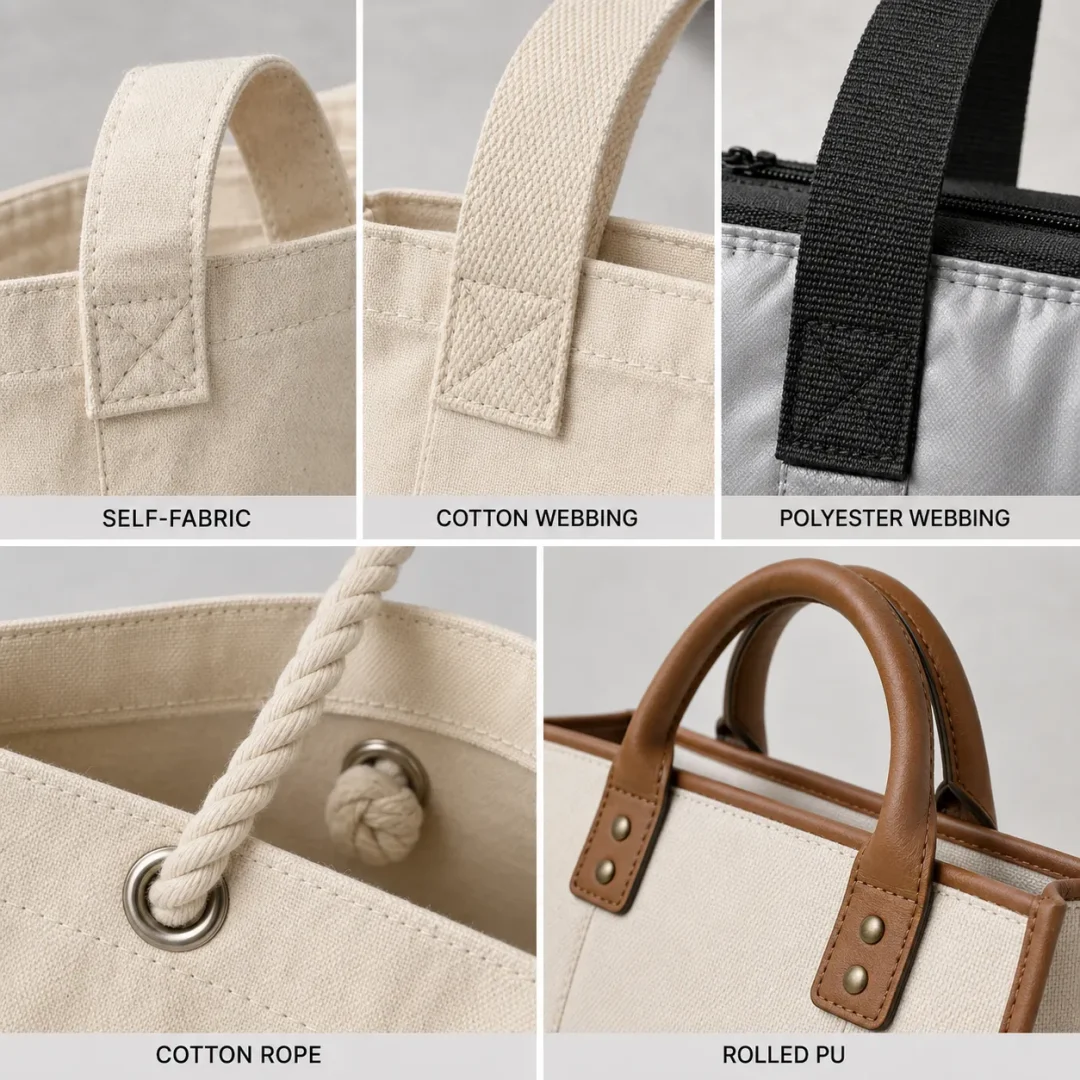
1. ที่จับผ้า
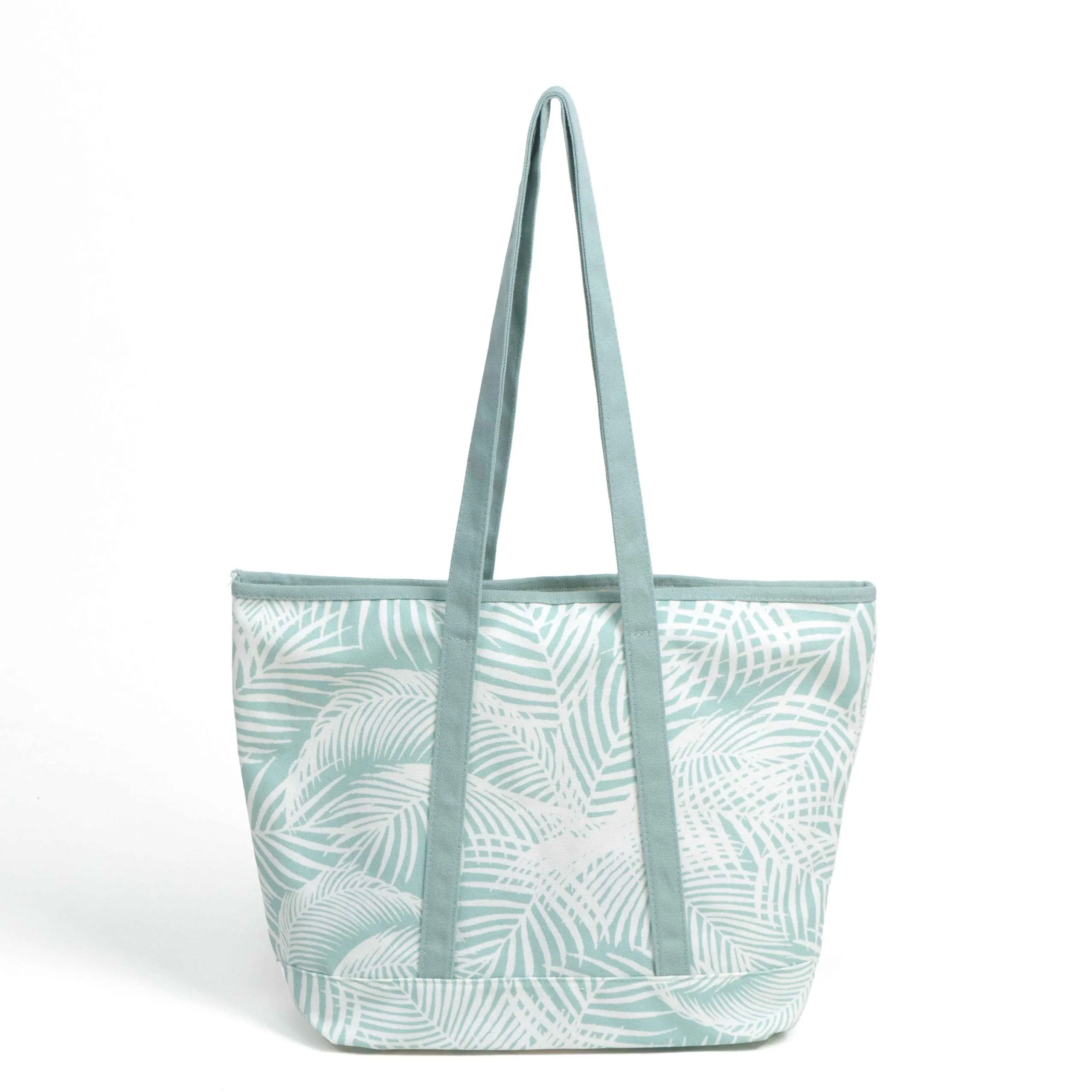
หูจับจากวัสดุเดียวกันทำจากวัสดุเดียวกัน—หรือตรงกัน—กับตัวกระเป๋า ผ้าจะถูกตัดเป็นแถบ พับและเย็บเพื่อสร้างขอบที่เรียบ.
พวกเขามักถูกใช้ใน:
- Cotton tote bags
- กระเป๋าชอปปิ้งจากผ้าใบ
- Linen bags
- กระเป๋าโฆษณาที่พิมพ์
- กระเป๋าไม่ทอที่เบา
ข้อได้เปรียบหลักของพวกเขาคือความสอดคล้องทางด้านภาพ ตัวกระเป๋าและหูจับสามารถใช้สี รูปแบบ หรือการพิมพ์ทั่วไปร่วมกัน สร้างการปรากฏที่เรียบและเป็นหนึ่งเดียว.
อย่างไรก็ตาม การใช้ผ้าเดียวกันเป๊ะไม่ได้หมายความว่าเป็นทางเลือกทางเทคนิคที่ดีที่สุดเสมอไป.
เมื่อกระเป๋าทำจากผ้าฝ้ายหนา การพับหลายชั้นของผ้าเดียวกันอาจทำให้ด้ามจับหนาเกินไป พื้นที่การยึดอาจมีขนาดใหญ่มาก ทำให้เย็บยากและดูไม่เรียบเสมอกัน ด้านในอาจจะใช้ผ้าที่เบากว่าหรือแถบเสริมที่แข็งแรงเพื่อให้ได้ผลลัพธ์ที่ดีกว่า.
ด้ามจับจากผ้าเองทำงานได้ดีสำหรับการบรรทุกสิ่งของเบาและกลางในชีวิตประจำวัน สำหรับผลิตภัณฑ์ที่หนักกว่า การยึดด้ามควรได้รับการเสริมความแข็งแรง หรือต้องการด้ามจับจากสายเว็บบ์มากกว่า.
2. ที่จับแบบแบน
สายเว็บบ์เป็นหนึ่งในตัวเลือกที่หลากหลายที่สุดสำหรับกระเป๋าสั่งทำ มันถักแยกจากตัวกระเป๋าและมีให้เลือกในวัสดุ ความกว้าง ความหนา สี และลวดลายที่แตกต่างกัน.
ตัวเลือกที่พบได้บ่อยที่สุดคือผ้าฝ้าย โพลีเอสเตอร์ ไนลอน และโพรพิลีน.
ผ้าฝ้าย
สายเว็บบ์ผ้าฝ้ายมีลักษณะที่นุ่มนวลตามธรรมชาติซึ่งทำงานได้ดีโดยเฉพาะกับกระเป๋าผ้าใบและผ้าฝ้าย.
โดยทั่วไปเลือกใช้สำหรับ:
- ถุงช้อปปิ้งแบบใช้ซ้ำคุณภาพสูง
- กระเป๋าค้าปลีกผ้าใบ
- ผลิตภัณฑ์สำหรับไลฟ์สไตล์
- ถุงของขวัญสำหรับบริษัท
- ถุงส่งเสริมการขายที่ให้ความสำคัญกับสิ่งแวดล้อม
เมื่อเปรียบเทียบกับด้ามจับจากผ้าตนเองที่แคบกว่าด้ามจับจากผ้าฝ้ายที่กว้างกว่าสามารถกระจายแรงกดได้อย่างสม่ำเสมอมากขึ้นทั่วฝ่ามือหรือไหล่.
อย่างไรก็ตาม สายเว็บบ์ผ้าฝ้ายไม่ใช่เป็นวัสดุมาตรฐานเดียวเท่านั้น สายผ้าฝ้ายที่เบาและหลวมกับสายเว็บบ์ผ้าฝ้ายที่หนาและแน่นอาจดูคล้ายกันในภาพถ่ายแต่มีความสามารถในการทำงานที่แตกต่างกันมาก.
เมื่อขอใบเสนอราคา ควรกำหนดความกว้าง ความหนา ลวดลาย สี และความรู้สึกที่ต้องการ - ไม่ใช่เพียงแค่ “ด้ามจับผ้าฝ้าย”
ผ้าโปเลสเตอร์
สายเว็บบ์โพลีเอสเตอร์มีความคงที่ในมิติ ทนต่อการสึกหรอและดูดซับน้ำน้อยกว่าผ้าฝ้าย สามารถผลิตในสีที่หลากหลายและมักใช้ในกระเป๋าที่โปรโมตและใช้งาน.
การนำไปใช้งานทั่วไปมีดังนี้:
- กระเป๋าทำความเย็น
- Sports bags
- Travel bags
- กระเป๋าแล็ปท็อป
- ถุงช้อปปิ้งแบบใช้ซ้ำ
- ถุงโปรโมชัน
โพลีเอสเตอร์ยังเหมาะสำหรับการพิมพ์ การทอ หรือการแบรนด์แนวซากราด สำหรับแบรนด์ที่ต้องการสีที่สอดคล้องกันในช่วงการผลิตใหญ่ มันมักจะให้ผลลัพธ์ที่คาดเดาได้มากกว่าตัวเลือกใยธรรมชาติบางชนิด.
ผ้าไนลอน
สายรัดไนลอนมักเกี่ยวข้องกับกระเป๋าที่ใช้งานจริงและกระเป๋าที่มีความทนทานสูง มันสามารถให้ความแข็งแกร่งต่อแรงดึงสูงและความต้านทานต่อการขัดสีที่ดีในขณะที่ยังคงพื้นผิวที่เรียบอยู่.
การใช้งานทั่วไป ได้แก่ กระเป๋าใช้งาน กระเป๋าเดินทาง กระเป๋าเดินทาง และผลิตภัณฑ์ที่มีการขนส่งทางเทคนิค.
อย่างไรก็ตาม สายรัดสังเคราะห์เรียบควรจะไม่ถูกอธิบายโดยอัตโนมัติว่าเป็นไนลอน สายรัดเชิงพาณิชย์มากมายที่ดูเหมือนจะเป็นไนลอนจริง ๆ แล้วเป็นโพลีเอสเตอร์ ส่วนประกอบของวัสดุควรได้รับการยืนยันหากมีผลต่อประสิทธิภาพ การติดฉลาก หรือการปฏิบัติตาม.
ผ้าโพลีโพรไพลีน
สายรัดโพลีโพรพิลีนนั้นเป็นตัวเลือกที่ประหยัดและทนต่อความชื้นซึ่งมักใช้สำหรับ:
- Non-woven shopping bags
- Promotional bags
- กระเป๋าใช้ซ้ำที่มีงบประมาณ
- กระเป๋าทำความเย็น
- โครงการค้าปลีกขนาดใหญ่
ลักษณะของมันมักจะมีความเป็นจริงมากกว่าระดับพรีเมียม แต่ผลลัพธ์สุดท้ายขึ้นอยู่กับความหนาของการทอและการตกแต่ง มันสามารถเป็นทางเลือกที่สมเหตุสมผลเมื่อค่าใช้จ่าย ความต้านทานต่อความชื้น และการผลิตในปริมาณมากมีความสำคัญมากกว่าความรู้สึกจากธรรมชาติ.
3. ที่จับเชือก
หูจับเชือกสร้างลักษณะที่นุ่มนวลและผ่อนคลายมากกว่าสายรัดแบบเรียบ รูปทรงโค้งของมันยังให้ความรู้สึกสบายในมือ โดยเฉพาะเมื่อเส้นผ่านศูนย์กลางของเชือกเหมาะกับน้ำหนักที่คาดหวัง.
วัสดุที่ใช้กันทั่วไป ได้แก่:
- Cotton rope
- เชือกโพลีเอสเตอร์
- เชือกโพลีโพรพิลีน
- เชือกไนลอน
- เชือกจากปอหรือเส้นใยธรรมชาติอื่น ๆ
หูจับเชือกมักถูกใช้สำหรับกระเป๋าชายหาด กระเป๋าฝากรีสอร์ต กระเป๋าผ้าใบ กระเป๋าไวน์ และบรรจุภัณฑ์ของขวัญพรีเมียม.
วัสดุเป็นเพียงส่วนหนึ่งของข้อกำหนด ผู้ซื้อควรตรวจสอบ:
- เส้นผ่านศูนย์กลางของเชือก
- โครงสร้างการทอหรือการบิด
- สี
- การรักษาสิ้นสุด
- วิธีการติดตั้ง
- ขนาดและการตกแต่งของรู
- ไม่ว่าจะเป็นเชือกผูกหรือเย็บ
เชือกจับสามารถผ่านรูตาและผูกภายในกระเป๋า วางในตะเข็บ หรือยึดด้วยป้ายแยกต่างหาก วิธีแต่ละแบบจะสร้างลักษณะและเส้นทางการโหลดที่แตกต่างกัน.
พวกเขายังอาจเพิ่มปริมาณการบรรจุ ไม่เหมือนกับที่จับแบบแบน เชือกหนาไม่สามารถนอนเรียบกับตัวกระเป๋าได้เสมอไป ซึ่งอาจส่งผลต่อจำนวนกล่องและค่าขนส่ง.
สำหรับการอ้างอิงทางสายตาที่กว้างขึ้นเกี่ยวกับผ้าฝ้าย เชือกป่าน เชือกสังเคราะห์ และสไตล์ที่จับอื่น ๆ ที่ไม่ค่อยพบเห็น ให้ดูที่ [20 ประเภทของที่จับกระเป๋า: คู่มือภาพ - ลิงก์ภายในบทความ ECOBAGFACTORY].
4. ที่จับกลม หรือท่อ
ที่จับแบบม้วนทำจากการห่อผ้า หนัง หรือ PU รอบเส้นเชือกภายในหรือวัสดุเติม สิ่งนี้สร้างที่จับที่กลมและมีสามมิติแทนที่จะเป็นสายรัดแบบแบน.
พวกเขามีการใช้งานอย่างแพร่หลายบน:
- กระเป๋าช้อปปิ้งที่มีโครงสร้าง
- กระเป๋าทำงาน
- กระเป๋าเครื่องสำอางระดับพรีเมียม
- กระเป๋าแฟชั่น
- ถุงของขวัญสำหรับบริษัท
The diameter of the internal core affects both appearance and grip. A very thin rolled handle can look refined but may become uncomfortable when the bag is heavily loaded. A thicker handle is easier to grip but may look disproportionate on a small bag.
Rolled handles require more production steps than standard webbing. Depending on the design, these may include skiving, folding, edge painting, inserting the filler and attaching metal hardware.
The attachment ends are particularly important. A visually strong rolled handle can still fail if the ends are connected to small, unsupported areas of the bag body.
5. ที่จับมีเบาะ
Padded handles contain foam, neoprene or another cushioning material inside the grip area. They are intended to reduce pressure when a bag carries heavier contents.
พวกเขามักถูกใช้ใน:
- Large cooler bags
- Tool bags
- Travel bags
- กระเป๋าแล็ปท็อป
- Gym bags
- Equipment cases
The entire handle can be padded, or padding can be limited to the central grip section.
More padding does not necessarily mean better comfort. An overly thick handle may feel bulky, resist folding and increase packaging volume. A very soft handle may roll or twist under load.
During sampling, the padding thickness, handle width and flexibility should be evaluated with the bag loaded—not only when it is empty.
For heavy bags that use two handles, another option is a wrapped grip that joins both handles in the middle. This component can be made from fabric, neoprene or PU and closed with hook-and-loop tape or snaps.
6. หูจับที่ตัดหรือรวมเป็นชิ้น
A die-cut handle is created by cutting a hand opening directly into the bag body. No separate strap is required.
This structure is commonly found on:
- Non-woven promotional bags
- Laminated woven polypropylene bags
- Plastic retail bags
- Felt bags
- Paper shopping bags
Die-cut handles keep the bag relatively flat, simplify packing and reduce the number of separate components. They are suitable for lightweight retail, exhibition and promotional applications.
Their main limitations are carrying comfort and load capacity. A narrow cut edge concentrates pressure on the fingers, and the area around the opening may stretch or tear.
Depending on the material and expected contents, the handle area can be strengthened with:
- An additional internal patch
- A thicker material layer
- Heat-sealed reinforcement
- Stitched reinforcement
- A separate plastic insert
This type of handle should not be selected only because it is economical. The size and shape of the opening must also provide enough space for the intended users.
7. หูจับแข็ง
Rigid handles include bamboo, wood, metal, acrylic, resin and molded plastic structures. Rather than disappearing into the bag design, they usually become a visible styling feature.
They are often used for:
- Straw or woven bags
- Crochet bags
- Fashion handbags
- Evening bags
- Resort products
- Specialty gift packaging
Rigid handles offer strong visual differentiation, but they also introduce additional production considerations.
The handle needs to be checked for smooth edges, surface finish, color consistency and attachment security. Wooden and bamboo handles may require attention to moisture content and natural variation, while metal handles require suitable plating and protection from scratching.
Because these handles do not fold, they can substantially increase packing volume. They are generally less suitable for projects where flat shipment, low weight and economical distribution are priorities.
8. หูจับที่ถอดออกได้และปรับได้
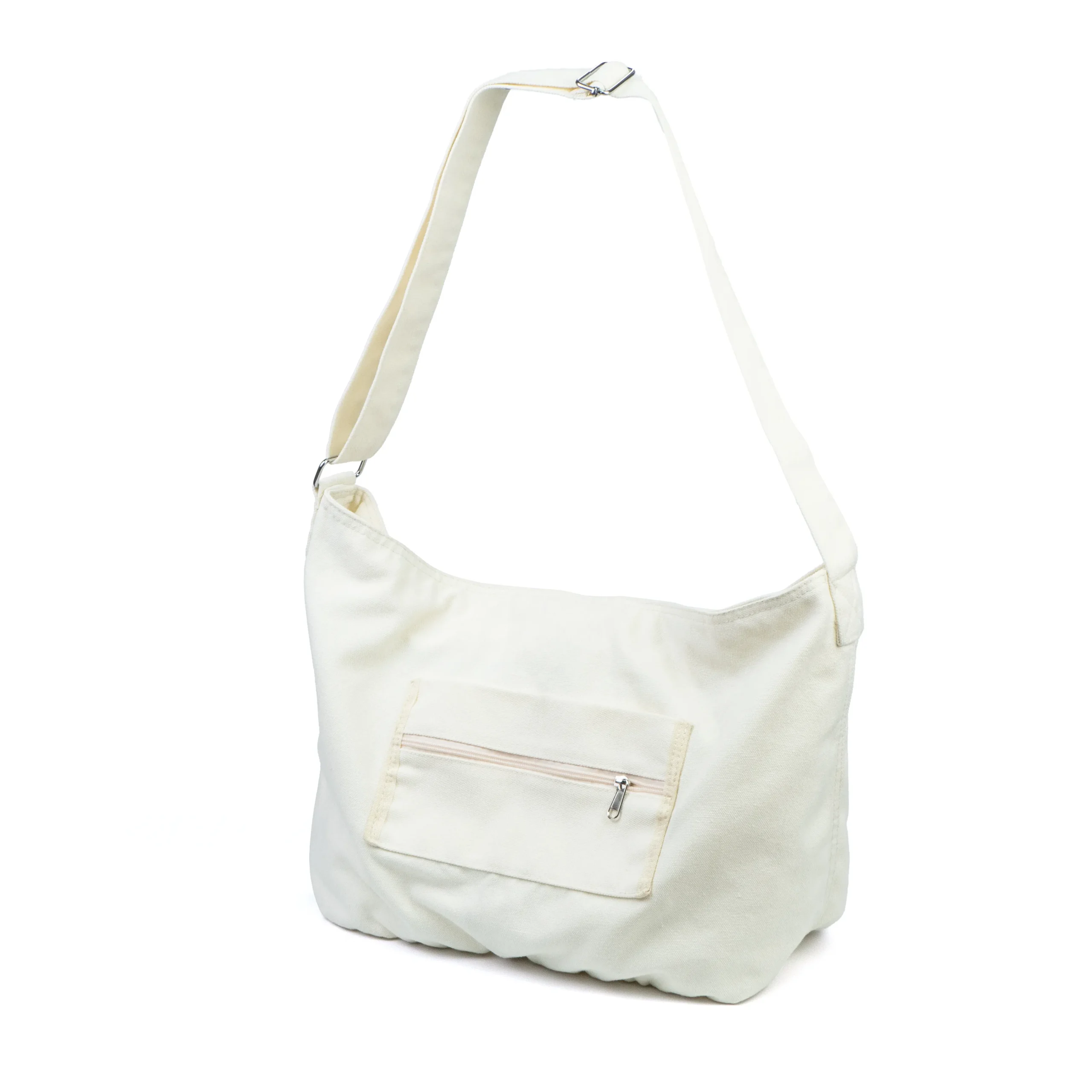
Detachable straps connect to the bag through hardware such as snap hooks, D-rings or swivel hooks. Adjustable straps normally include a slider or buckle.
These structures allow one bag to support several carrying methods:
- Hand carry
- Shoulder carry
- Crossbody carry
- Short and long handle combinations
They are commonly found on travel bags, gym bags, laptop bags, cosmetic cases and multifunctional totes.
The strap itself is not the only component that needs to be evaluated. The snap hook, ring, slider, stitching and fabric tab all form part of the load-bearing system.
In many cases, the small tab holding the D-ring becomes the weakest point. It should be reinforced internally and positioned where the bag body can distribute the load.
วัสดุหูจับมีผลต่อการใช้งานจริงอย่างไร
| วัสดุ | Feel and appearance | ความทนทาน | ความต้านทานต่อความชื้น | Branding options | Common uses |
|---|---|---|---|---|---|
| ผ้าฝ้าย | Natural and relatively soft | กลางไปจนถึงสูง | ต่ำ | Printing, woven labels, jacquard | Canvas and reusable totes |
| โพลีเอสเตอร์ | Smooth and consistent | High | High | Printing, sublimation, jacquard | Sports, cooler and travel bags |
| ไนลอน | Smooth and technical | High | High | Printing and woven branding | Utility and functional bags |
| PP | Practical and economical | กลางไปจนถึงสูง | High | Color matching and printing | Promotional and non-woven bags |
| Leather or PU | Premium and structured | Varies | Varies | Embossing, foil and stitching | Fashion and corporate gifts |
| Rope | Casual, natural or nautical | Material-dependent | Material-dependent | Color, knots and end details | กระเป๋าชายหาด, รีสอร์ทและของขวัญ |
| Wood, bamboo or metal | Decorative and rigid | Structure-dependent | Material-dependent | Engraving, printing or plating | Specialty and fashion bags |
A handle should not be described as sustainable based only on its material name.
For example, a cotton bag body combined with polyester webbing, foam padding and metal hardware may be durable, but it is more difficult to process as a single material at the end of its usable life.
When environmental requirements are important, consider:
- Whether the material is recycled or certified
- Whether it contains blended fibers
- Whether the handle can be separated
- Whether the handle and bag body use compatible materials
- Whether the design is durable enough for repeated use
An RPET webbing handle may be appropriate for an RPET bag, while recycled cotton webbing can complement a recycled cotton or canvas body. Certificates and transaction documents should be discussed before sampling if they are required for the final product claim.
หูจับสั้น, หูจับไหล่ หรือสายข้ามตัว?
After selecting the construction and material, the next decision is how the bag will be carried.
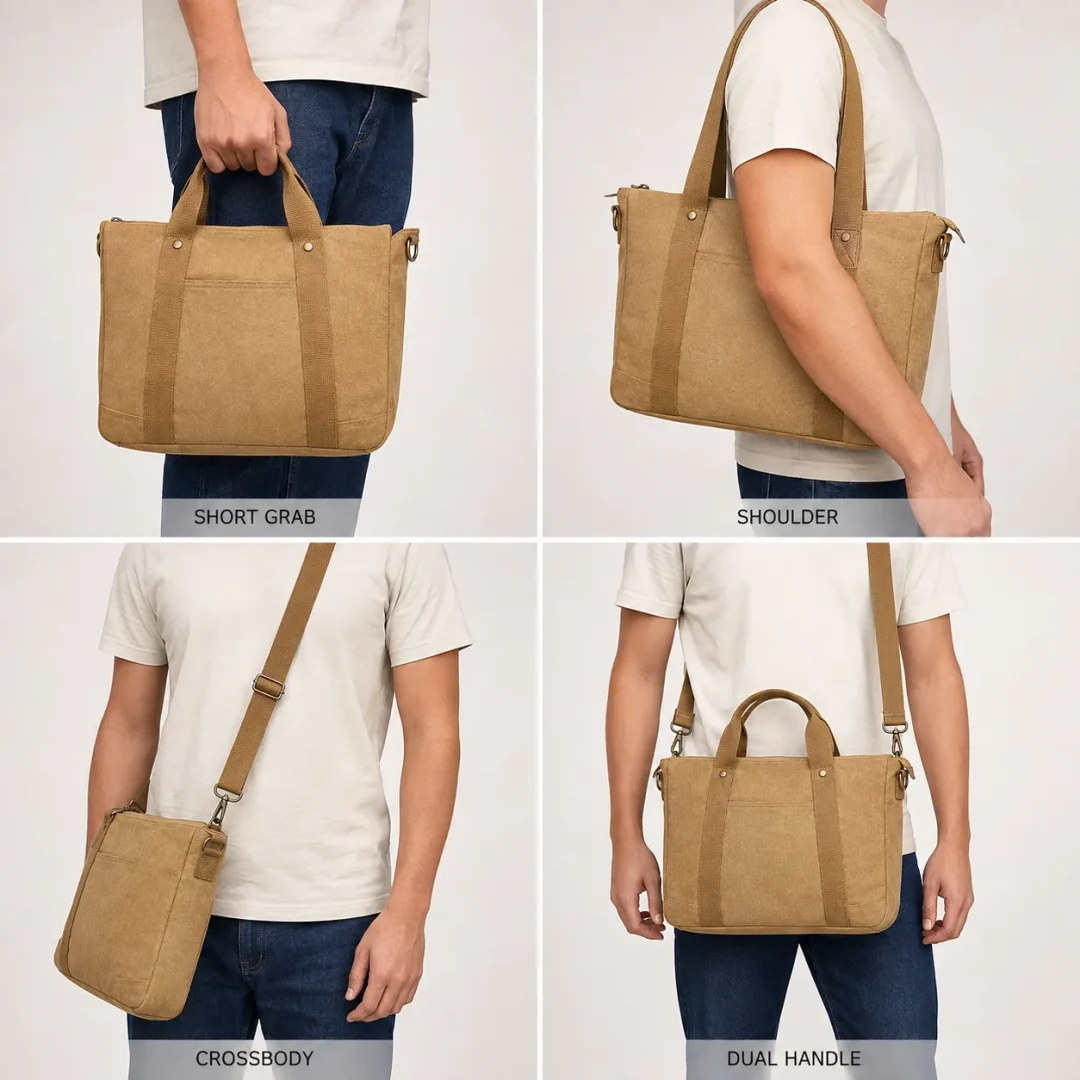
หูจับสั้น
Short handles suit quick hand carrying, gift packaging and products that need a more compact or formal appearance.
They work well for small retail bags, wine bags, lunch bags and structured cases. They are less suitable when users need to carry a loaded bag for a long distance.
หูจับความยาวไหล่
Shoulder-length handles are common on tote bags, reusable shopping bags and everyday carry products.
The required clearance depends on more than the user’s body size. Bag height, opening structure, winter clothing and the way the contents fill the bag can all change how the handle feels.
A handle that fits comfortably on an empty sample may become awkward once the bag is fully loaded.
สายข้ามตัว
Crossbody straps provide hands-free carrying and usually require an adjustable length.
They also require stronger side attachment points. The bag width and depth should be considered because a very wide bag may not sit comfortably against the body.
การออกแบบหูจับคู่
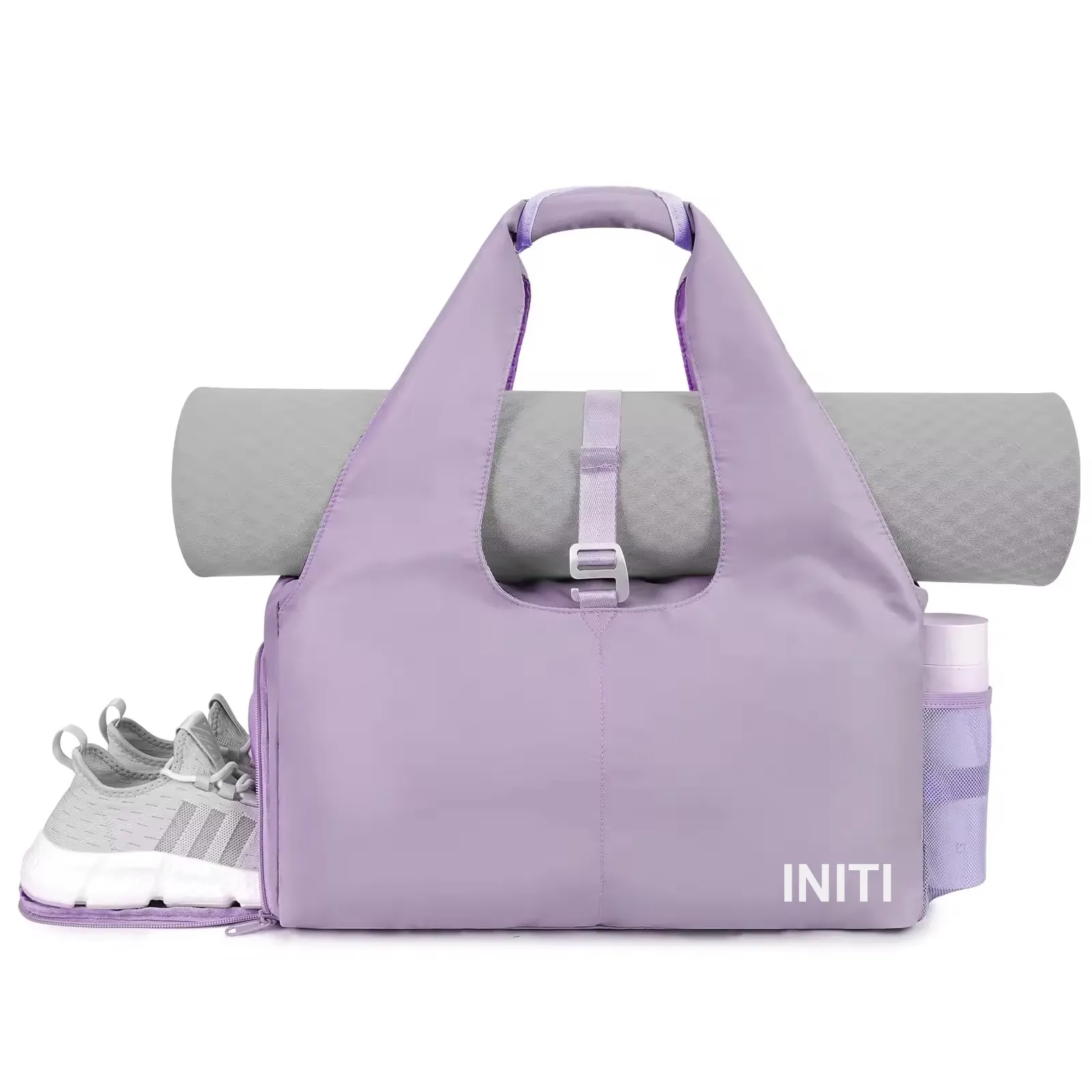
A pair of short handles combined with a detachable shoulder strap is common on travel, gym and laptop bags.
This provides greater flexibility but adds material, hardware, sewing operations and packing requirements. It should be used when the second carrying method has real value, rather than added only as a visual feature.
หูจับควรติดกับกระเป๋าอย่างไร?
The attachment structure is often more important than the apparent strength of the handle material.
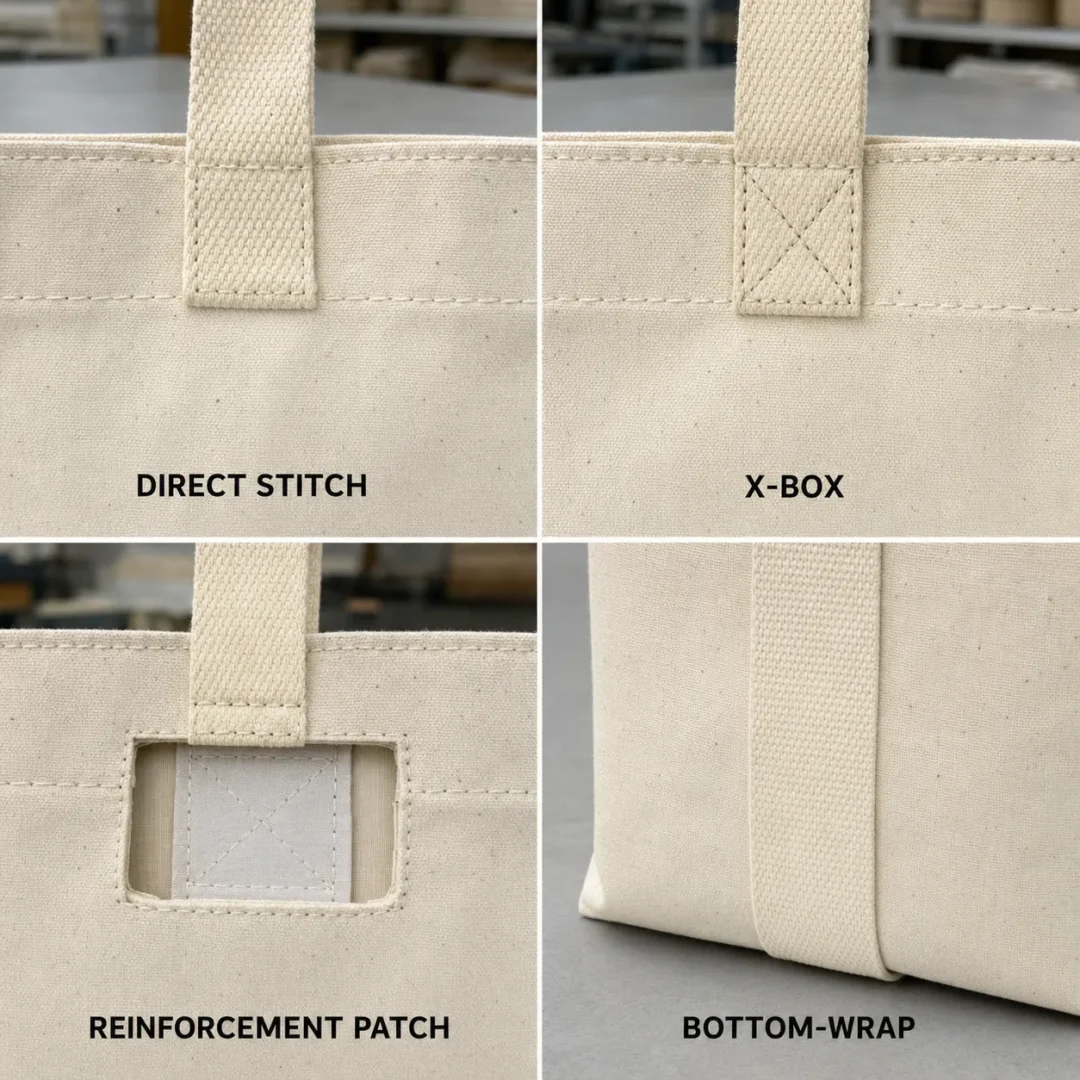
การเย็บตรง
Direct stitching is widely used for canvas totes, cotton bags and reusable shopping bags. The handle ends are positioned on the bag body and stitched in place.
A simple horizontal stitch may be sufficient for lightweight applications. Heavier use may require parallel stitching, a box stitch or an X-box pattern.
การเสริมแรงด้วยบาร์แทค
A bar tack is a short area of dense stitching added at a stress point. It is commonly used on webbing handles, backpack straps and functional bags.
It provides localized reinforcement but should still be matched to the fabric. Dense stitching placed too close to the edge of a weak material may cut or perforate the fabric rather than strengthen it.
หูจับยาวเต็มหรือห่อรอบด้านล่าง
Full-length handles extend farther down the bag body. Some continue underneath the bag and form a continuous support structure.
This construction is often used for:
- Heavy shopping bags
- Tool bags
- Large insulated bags
- Delivery bags
- Equipment carriers
It distributes weight across a larger area and reduces dependence on a small attachment point. The trade-offs are greater webbing consumption, more sewing and a stronger visual presence on the bag exterior.
หมุดย้ำและอุปกรณ์
Rivets are often used with leather, PU and structured fashion bags. They can provide a clean, premium appearance, but a rivet should not be fixed directly through thin, unsupported fabric.
An internal washer, patch or reinforcement layer may be needed to spread the force.
รูตา โดยใช้ปมและการติดด้วยความร้อน
Rope handles are often passed through metal eyelets and secured with internal knots. Plastic and non-woven handles may use heat-sealed attachment. Each method has different equipment, appearance and strength implications.
The central principle is simple:
A stronger handle does not create a stronger bag if the attachment area is not reinforced.
คุณควรเลือกหูจับแบบไหน?
| Bag or project | Recommended handle | Why it is commonly selected |
|---|---|---|
| Lightweight promotional tote | Self-fabric or PP webbing | Economical and easy to customize |
| Reusable grocery bag | Wide cotton or polyester webbing | Better pressure distribution and repeated-use performance |
| Premium canvas retail tote | Cotton webbing or reinforced self-fabric | Balances appearance, comfort and durability |
| Beach or resort bag | Cotton or synthetic rope | Comfortable grip and distinctive casual appearance |
| กระเป๋าเย็น | Reinforced polyester or PP webbing, optionally padded | Better suited to heavier contents and moisture |
| Travel or gym bag | Full-length webbing with a detachable shoulder strap | Supports load and multiple carrying methods |
| Luxury gift bag | Rope, ribbon or PU handle | Adds presentation value |
| Flat promotional bag | Reinforced die-cut handle | Compact packing and economical production |
| Fashion handbag | Rolled, rigid or detachable handle | Provides shape and visual differentiation |
| กระเป๋าอเนกประสงค์ขนาดใหญ่ | Bottom-wrap webbing | Distributes weight over a larger area |
These are starting points rather than fixed rules. A premium canvas tote may use rope for a resort collection, while a promotional bag may use cotton webbing when comfort and repeated use are more important than the lowest unit cost.
ห้าปัจจัยที่ต้องตรวจสอบก่อนอนุมัติหูจับ
1. เนื้อหาที่คาดหวังและน้ำหนัก
Do not provide only a target weight. Tell the supplier what the bag will carry, how the items are arranged and how frequently the bag will be used.
Several rigid bottles create different stress points from the same weight in clothing or soft products.
2. เวลาในการขนส่ง
A handle suitable for carrying a retail purchase from a store to a car may not be comfortable for a 30-minute commute.
Longer carrying time generally increases the importance of handle width, padding and shoulder clearance.
3. วัสดุของตัวกระเป๋า
A thick handle does not compensate for a weak body material. The handle, reinforcement and bag body need to be designed as one system.
Thin non-woven fabric, soft cotton and laminated woven PP each respond differently to concentrated pulling and dense stitching.
4. การวางตำแหน่งแบรนด์
Changing the handle can significantly change the perceived value of the same bag.
A canvas tote with self-fabric handles feels simple and coordinated. Cotton webbing creates a heavier lifestyle look. Rope suggests leisure or resort use. Rolled PU handles move the product closer to a fashion accessory.
5. ค่าใช้จ่าย, การบรรจุและการจัดส่ง
Handle cost is not limited to the raw material. Consider:
- Sewing and assembly time
- Hardware and molds
- Manual finishing
- Packing volume
- Ability to stack the bags flat
- Protective packaging
- Inspection and potential rework
A rigid or thick rope handle may add more to freight and carton volume than its unit material price suggests.
ความผิดพลาดทั่วไปเกี่ยวกับข้อมูลจำเพาะของหูจับ
Several avoidable issues appear repeatedly during bag development:
- Specifying “cotton handle” without width, thickness or weave.
- Treating handle length and handle drop as the same measurement.
- Confirming the strap material but not the attachment structure.
- Approving handle length using an empty bag only.
- Reducing handle width to save cost without adjusting the expected load.
- Folding heavy bag fabric into an unnecessarily bulky handle.
- Testing the webbing alone rather than testing the finished bag.
- Approving color from a screen instead of an actual material sample.
- Ignoring the carton volume created by rope, padded or rigid handles.
- Using heavy metal hardware with a lightweight attachment tab.
- Selecting a soft handle that twists when the bag is loaded.
Reference photos are helpful, but they should support—not replace—a written specification.
ข้อมูลจำเพาะของหูจับควรรวมอะไรบ้าง?
A clear handle specification should include:
- Handle construction
- Material composition
- Width or rope diameter
- ความหนา
- Total handle length
- Handle drop
- Number of handles
- Color or Pantone reference
- Fixed, detachable or adjustable structure
- Hardware material and finish
- ตำแหน่งการติดตั้ง
- Stitching and reinforcement method
- Intended contents or working load
- Logo method
- Reference sample or technical drawing
If the final handle measurement is not yet known, the bag dimensions, carrying method and intended contents can help the factory recommend a starting point for sampling.
เราประเมินหูจับระหว่างการสุ่มตัวอย่างและการผลิตอย่างไร
At the sampling stage, a handle should be evaluated as part of the completed bag.
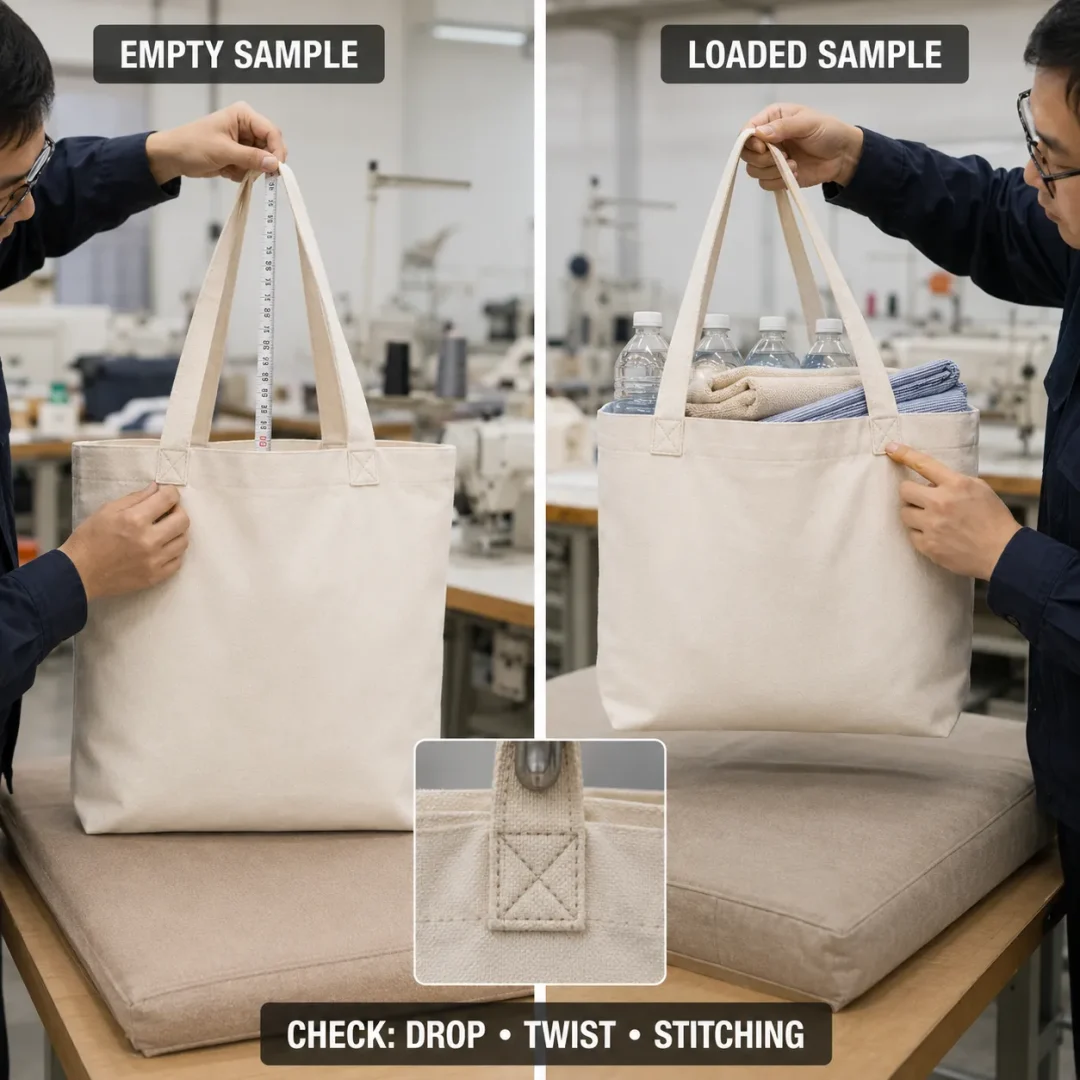
We normally review:
- Handle length and drop
- Grip and shoulder clearance
- Position and symmetry
- Proportion relative to the bag
- Twisting or rolling under load
- Stitching and reinforcement
- Hardware movement and finish
- Appearance when the bag is empty and loaded
The sample should then be filled with representative contents. This can reveal issues that are not visible on an empty bag, including handle distortion, uncomfortable pressure, unstable balance and stress around the attachment points.
During bulk production, inspection should cover handle placement, length consistency, stitching, reinforcement, hardware and color against the approved sample.
The purpose is not merely to test whether the strap itself can resist pulling. The handle, stitching, reinforcement and bag body work together as one load-bearing system.
คำแนะนำสุดท้าย
For most lightweight promotional bags, self-fabric, PP webbing or reinforced die-cut handles provide a practical balance of cost and function.
For reusable shopping and canvas bags, cotton or polyester webbing offers better comfort and repeat-use performance.
For heavier cooler, travel and utility bags, use wider reinforced webbing, bottom-wrap construction or a padded grip.
Rope handles are well suited to beach, resort and lifestyle products, while rolled, PU, leather and rigid handles are more appropriate when shape and presentation are central to the design.
For multipurpose bags, short handles combined with a detachable adjustable strap offer greater carrying flexibility—but also require more attention to hardware and attachment reinforcement.
If you are choosing between two handle options, send the factory more than a reference photo. Include the bag body material, dimensions, expected contents, carrying method and desired brand positioning. A loaded sample will usually provide a more reliable answer than comparing the handles on appearance alone.
คำถามที่พบบ่อย
ประเภทของหูจับถุงที่ทนทานที่สุดคืออะไร?
There is no single most durable handle independent of the rest of the bag. Wide polyester or nylon webbing is commonly used for heavy-duty applications, but the bag body, stitching and attachment reinforcement determine whether the completed bag can support the load.
หูจับผ้าฝ้ายแข็งแรงกว่าหูจับโพลีเอสเตอร์หรือไม่?
Not necessarily. Strength depends on yarn, width, thickness and weave density. Cotton generally offers a softer, more natural feel, while polyester usually provides better moisture resistance, abrasion resistance and dimensional stability.
ความแตกต่างระหว่างหูจับและสายสะพายคืออะไร?
A handle is usually shorter and designed for hand or forearm carrying. A strap is normally longer and intended for shoulder or crossbody use. In everyday product descriptions, however, the terms are sometimes used interchangeably.
หูจับถุงโท๊ตควรกว้างเท่าไหร่?
The correct width depends on the expected load, carrying time, bag size and desired appearance. Wider handles generally distribute pressure more comfortably, but they also use more material and can look too heavy on a small bag.
สามารถเพิ่มโลโก้ลงบนหูหิ้วของกระเป๋าได้หรือไม่?
Yes. Depending on the material, handles can be customized through screen printing, heat transfer, sublimation, jacquard weaving, embroidery, embossing, foil stamping or an attached woven label.
หูหิ้วถูกเสริมความแข็งแรงสำหรับกระเป๋าหนักอย่างไร?
Common methods include X-box stitching, bar tacks, internal reinforcement patches, extended webbing and bottom-wrap construction. The correct method depends on the bag body material and intended load.
หูหิ้วเชือกเหมาะสำหรับกระเป๋าที่ใช้ซ้ำได้หรือไม่?
Yes, particularly for beach, resort and lifestyle bags. Buyers should consider the rope material, attachment method, washing requirements and additional packing volume.
ควรใช้วัสดุเดียวกับกระเป๋าสำหรับหูหิ้วหรือไม่?
Not always. Using the same material can create a coordinated appearance and may simplify some end-of-life material considerations. A different handle material may provide better comfort, strength, moisture resistance or visual positioning.
 Thai
 English
 French
 German
 Japanese
 Arabic
 Vietnamese
 Russian
 Spanish
 Portuguese