
Linen vs. Jute Bags: The Battle of Natural Materials—Which One Suits Your Lifestyle Better?
What is the difference between linen and jute bags?
In today’s eco-conscious world, bags made from natural plant fibers have become a top choice for consumers. Linen and jute, two of the most popular natural materials, are widely used to create sustainable bags. Though they may seem similar, their differences in raw materials, properties, and usage scenarios result in distinct styles and functionalities.
I. Raw Material Origins: From Field to Fiber
Лен – The Ancient and Noble “Queen of Fibers”
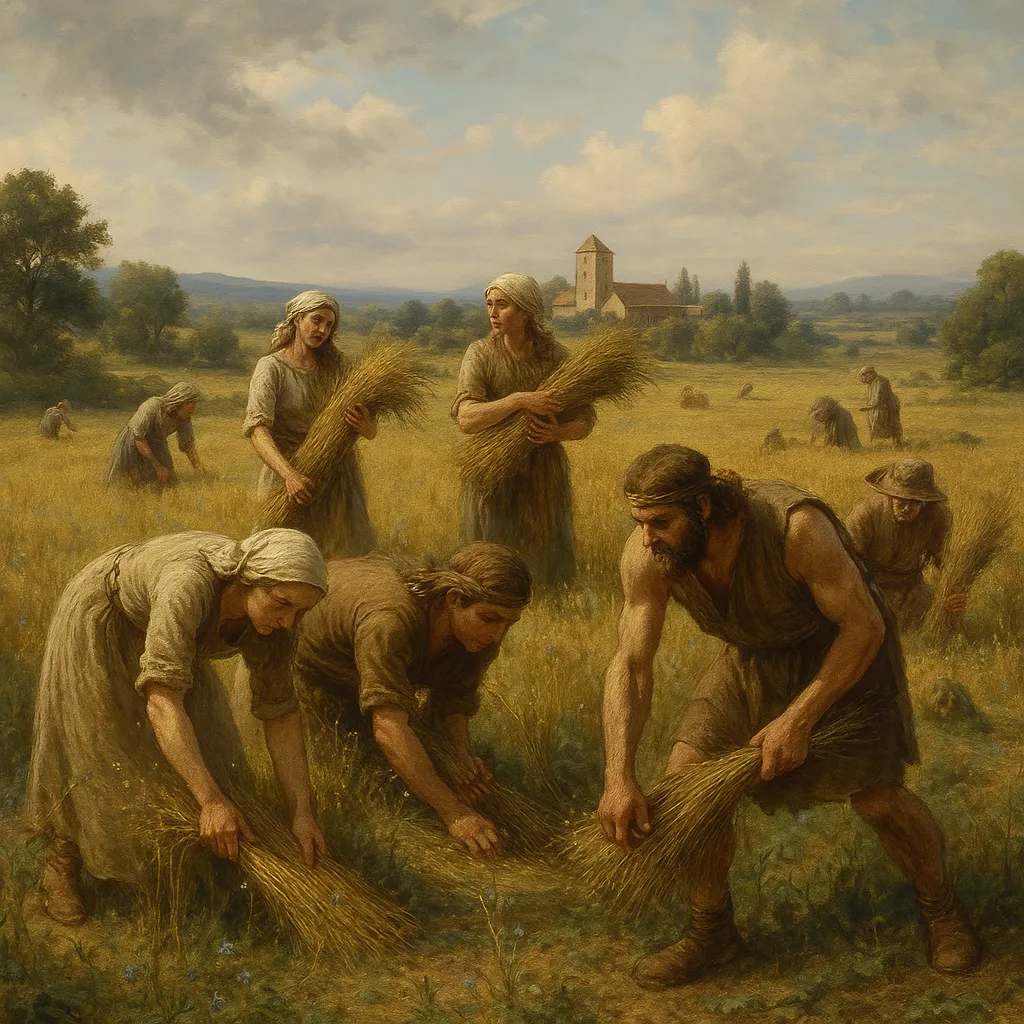
Linen, one of the oldest fibers in the world, traces its origins to the Near East and Mediterranean coasts. Europeans began cultivating flax (the plant used for linen) as early as the Neolithic period, 8,000 years ago. The stem fibers undergo soaking, drying, and combing to produce long, flexible linen threads. Woven into fabric, linen is celebrated as the “Queen of Natural Fibers” for its breathability, durability, quick-drying properties, moisture-wicking capabilities, and antibacterial benefits. Its cultivation and recycling processes form a low-carbon, eco-friendly industrial chain.
However, linen production is costly: one hectare of flax yields only about 500 kg of fiber, requiring meticulous manual labor. Historically, linen was reserved for nobility—Egyptian mummy wrappings and medieval European aristocratic garments were made from linen.
Джут – The Humble Hero’s “Golden Fiber”
Jute, a vital economic crop with over 40 varieties (primarily Corchorus capsularis и Corchorus olitorius), is nicknamed the “Golden Fiber” for its economic impact in tropical regions. Thriving in the humid climates of Bangladesh, India, and Myanmar, jute matures in 4–6 months and yields up to 2,000 kg per hectare. Its fibers are traditionally used for burlap sacks and carpets due to their excellent moisture absorption. Processing involves fermenting harvested stems to extract fibers, which are then dried. Low cost and high efficiency make jute ideal for industrial products like sacks and ropes. According to the FAO, 90% of global jute production comes from Bangladesh and India.
II. Material Characteristics: Which is More Durable?
1. Texture and Comfort
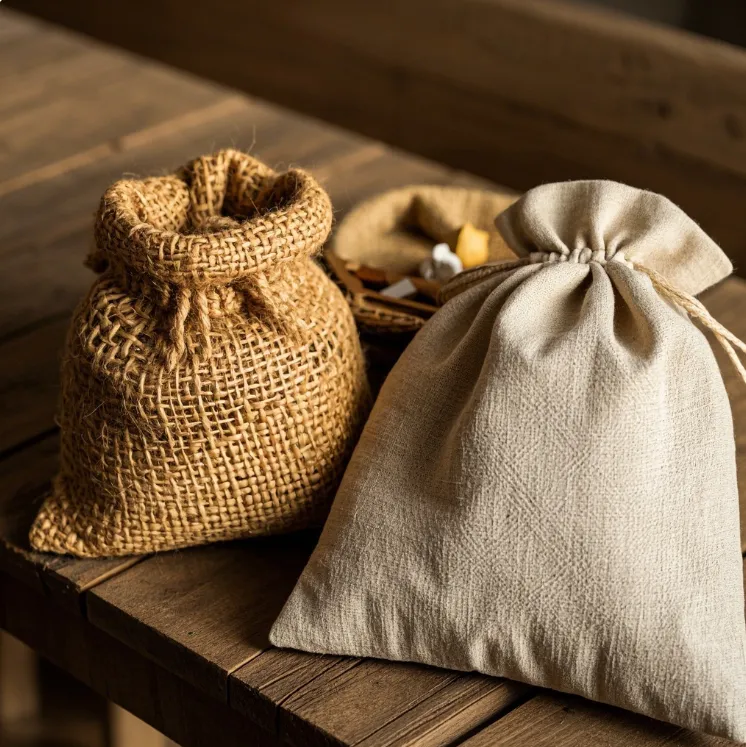
Linen: Fine as silk, with a natural luster. Linen bags are soft and skin-friendly, causing no irritation even with prolonged contact.
Jute: Coarse and firm, with a texture similar to burlap. Some users with sensitive skin may find it slightly rough, but softening treatments can significantly improve comfort.
Best Uses:
Linen bags are suitable for daily commuting, shopping, and other frequent-contact scenarios.
Jute bags are ideal for grocery shopping and storage.
2. Strength and Durability
Linen: High fiber strength and excellent abrasion resistance. It maintains its shape well over time but may develop pilling with repeated friction.
Jute: Highly tear-resistant and capable of carrying over 10 kg, but its fibers are brittle and prone to aging when exposed to excessive sunlight or humidity.
Lab Data:
The breaking strength of jute fiber: 30-35 cN/tex
The breaking strength of linen fiber: 50-55 cN/tex
Despite lower fiber strength, jute’s tight fiber structure makes it stronger in real-world applications.
3. Moisture Absorption and Breathability
Linen: Absorbs moisture 30% faster than cotton, wicks away sweat efficiently, and is often called a “natural air conditioner.”
Jute: Absorbs more moisture but dries slower and is prone to mildew if not properly aired.
Scientific Explanation:
Linen’s hollow fiber structure accelerates moisture transfer.
Jute’s higher lignin content (20%) allows it to retain water longer but reduces expansion after absorbing moisture.
| Comparison | Jute Yarn | Linen Yarn |
| Raw Material | Stem fibers of jute plants | Stem fibers of flax plants |
| Fiber Traits | Coarse, short fibers (20–40 mm) | Smooth, lustrous, long fibers (25–150 mm) |
| Текстура | Rough, ideal for heavy-duty use | Soft, ideal for skin-contact fabrics |
| Spinning Process | Coarse spinning, simpler production | Fine spinning, complex craftsmanship |
| Primary Uses | Sacks, ropes, burlap | Luxury clothing, home textiles |
| Приложения | Logistics, agriculture, industry | Fashion, bedding, high-end fabrics |
III. Design Styles and Aesthetic Differences
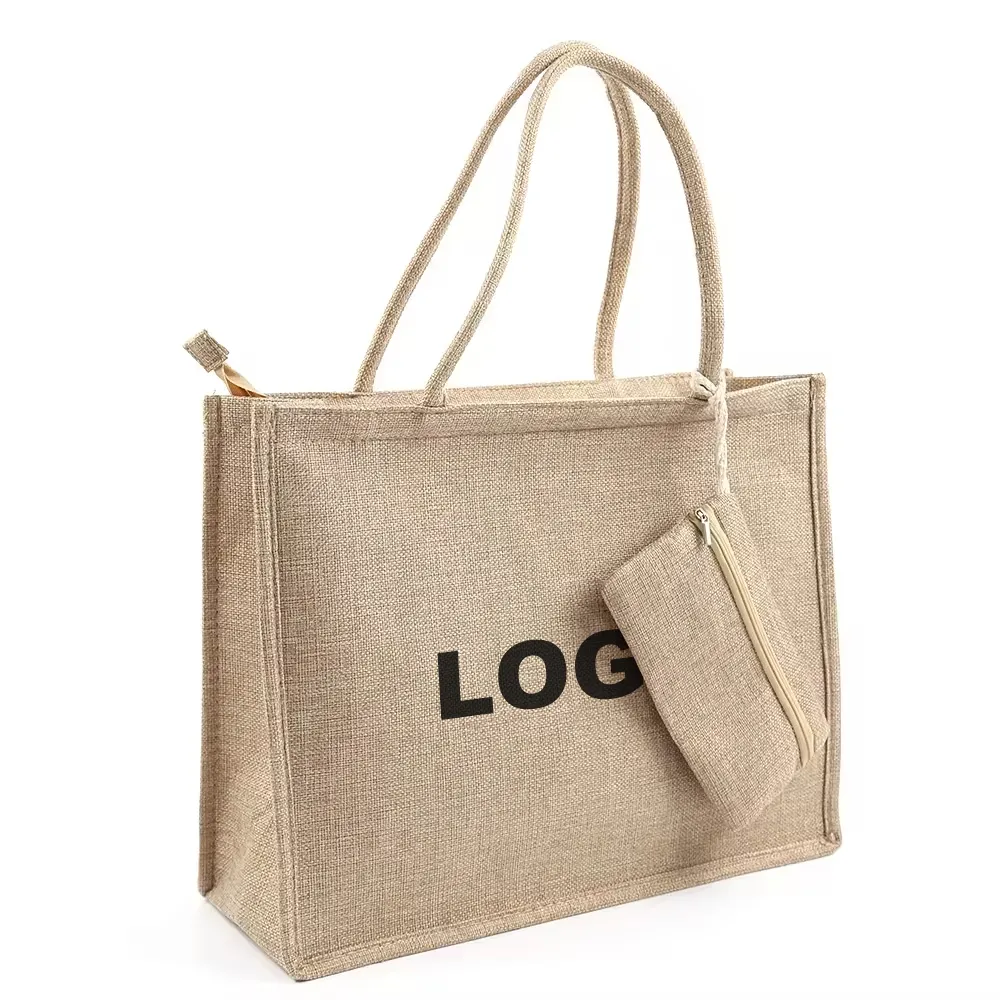
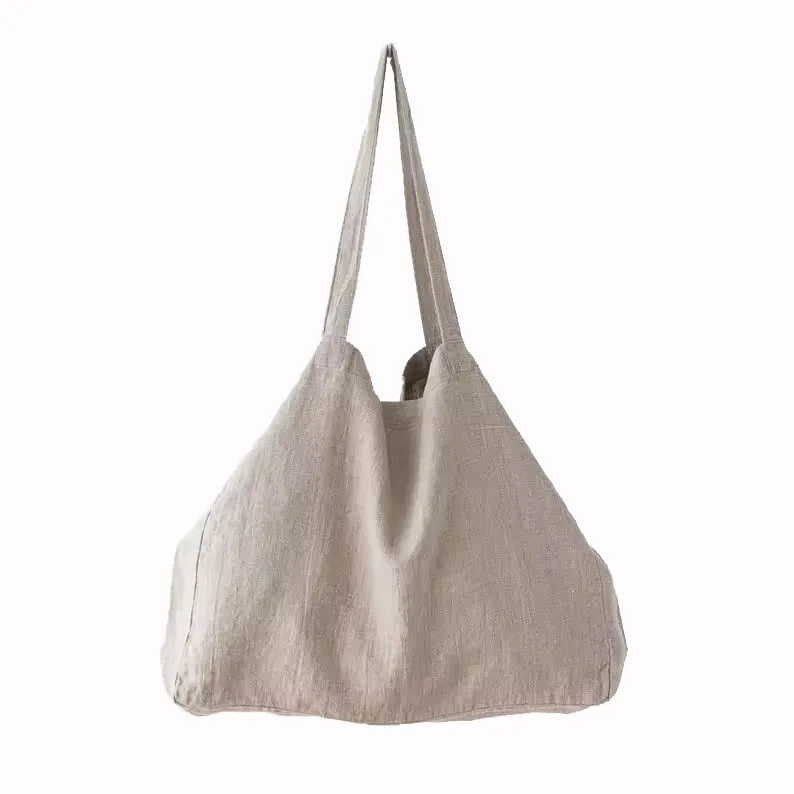
Льняные сумки – Understated Elegance
Цвета: Natural tones (beige, gray) or muted pastels. Hard to achieve vibrant hues.
Текстура: Fine cross-weave with natural wrinkles, aging into vintage charm.
Designs: Minimalist totes, French countryside satchels, Japanese-inspired crossbody bags. Luxury brands like Louis Vuitton and Celine blend linen with leather for sophistication.
Сумки из джута – Rustic Simplicity
Цвета: Natural tan or earthy dyes (deep brown, forest green).
Текстура: Coarse, grainy texture with a handmade, “unfinished” vibe.
Designs: Eco-friendly shopping totes, bohemian woven bags, gardening carriers. MUJI’s jute line epitomizes utilitarian minimalism.
Примеры кейсов:
Лен: BAGGU’s linen tote (200g, foldable) is an Instagram favorite.
Джут: Apolis’s Market Bag combines jute with waterproof lining and offers customization.
IV. Care Guidelines
Linen Bag Care Tips
Washing: Handwash in ≤30°C water. Machine wash in a laundry bag.
Drying: Air-dry flat; avoid sunlight to prevent fiber oxidation.
De-wrinkling: Steam iron on low heat.
Хранение: Hang to avoid creases.
Jute Bag Care Tips
Стирка: Brush off dust; spot-clean stains with a damp cloth.
Damp-proofing: Use desiccants in humid seasons.
Softening: Apply linseed oil to prevent brittleness.
Repairs: Patch holes with matching jute thread for a rustic look.
V. Environmental Impact: Which is Greener?
Both materials are biodegradable, but differ in eco-footprints:
Лен: Requires minimal pesticides; entire plant (including seeds for oil) is utilized. However, water-intensive (5,000 liters/kg).
Джут: Absorbs 5x more CO2 than trees and decomposes in 2 years. Bangladesh’s jute industry reduces plastic waste by ~200,000 tons annually.
Controversies:
Linen’s European production incurs high transport emissions.
Jute farms in South Asia face child labor issues. Opt for Fair Trade-certified brands.
VI. Custom Orders – Choose the Right Bag for Your Needs
When sourcing wholesale bags, material choice hinges on usage scenarios and target audiences:
Льняные сумки – Ideal for Premium, Everyday Use
Scenarios:
Upscale brands targeting comfort-conscious consumers (business commutes, shopping, dates).
Durable, versatile designs for long-term use (5+ years).
Сумки из джута – Ideal for Heavy-Duty, Economical Needs
Scenarios:
Bulk shopping, market hauling, or home storage.
Budget-friendly bulk orders (40–60% cheaper than linen).
Scenario | Льняные сумки | Сумки из джута |
For premium retail & daily use | ✅ | ✅ |
For heavy-duty shopping & storage | ❌ | ✅ |
For eco-conscious luxury brands | ✅ | ❌ |
For cost-effective bulk purchasing | ❌ | ✅ |
Заключение
Choosing between linen and jute depends on practical needs and brand identity. Linen bags, with their refined texture and breathability, cater to fashion-forward, quality-driven consumers. Jute bags, with unmatched durability and affordability, excel in industrial and bulk applications.
By aligning material properties with brand values and sustainability goals, businesses can craft natural fiber bags that resonate with eco-conscious customers.
Горячие теги:Сумка для покупок Китай, поставщики, производители, фабрика, оптовая продажа, в больших объемах, на продажу,идеи для сумок-тоут,канвасные сумки для хранения,хлопковая сумка на плечо, сумка из RPET, индивидуальные сумки для одежды,сумки на шнурке из холста,термоусадочная сумка для ланча,сумка для косметики на продажу,Сумка для продуктов и покупок,Принадлежности для пляжа,Сумка-тоут из джута/конопли/мешковины,Сумка-тоут из кордюроя,Дорожная сумка,Льняная сумка,Бумажный мешок


 Russian
 English
 French
 German
 Japanese
 Arabic
 Thai
 Vietnamese
 Spanish
 Portuguese