
Introduction
Oxford fabric and polyester fabric are frequently compared online as if they were two competing materials — but that comparison is built on a misunderstanding. Oxford is not a fiber at all; it’s a weaving method. Polyester, on the other hand, is a fiber type. They aren’t alternatives to each other in the way cotton and polyester are — they describe two completely different things, and in most bags on the market today, they actually describe the same fabric viewed from two different angles.
This distinction matters most for buyers sourcing bags at scale. A spec sheet that lists “Oxford” without naming the fiber, or “polyester” without naming the weave, is an incomplete spec — and incomplete specs lead to misaligned expectations on durability, hand-feel, coating performance, and price. This guide breaks down what each term actually means, where they overlap, how coatings and sustainability options (like recycled rPET) change the picture, and how to choose the right combination for your product line.
What Is Oxford Fabric?
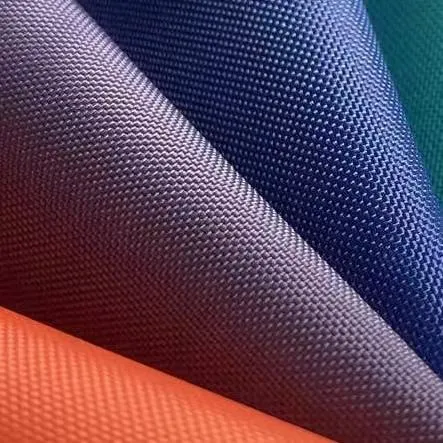
Oxford is a weaving structure, not a material. It’s defined by how the yarns are interlaced rather than what the yarns are made of. The name itself traces back to 19th-century Oxford University, where this basket-weave style was originally used for cotton shirting before synthetic yarns took over the bag and luggage industry. Three characteristics define an Oxford fabric regardless of fiber:
- Basket weave pattern — yarns are grouped and woven in small clusters (typically a 2×2 or similar interlace) rather than single threads, creating a slightly raised, textured surface
- Textured appearance — the basket weave gives Oxford a more tactile, structured feel compared to flat plain-weave fabrics
- Durable construction — the interlacing pattern distributes stress across multiple yarns, which is part of why Oxford fabrics hold up well under repeated use
Because Oxford describes a weave, it can be produced from several different fibers, each with a different cost and performance profile:
| Fiber Used in Oxford Weave | Typical Hand-Feel & Strength | Cost Position | Common Use |
|---|---|---|---|
| Полиэстер | Slightly stiffer, very wear-resistant, holds color well | Most cost-efficient | The default choice for most commercial bags |
| Нейлон | Softer hand, generally higher tear and abrasion resistance, better moisture absorption | Premium — typically priced above polyester at the same denier | High-performance outdoor, tactical, and rugged travel gear |
| Хлопок | Breathable, classic textured look, softer | Niche / specialty | Heritage-style or fashion-oriented bags rather than heavy-duty use |
This is the first point that often gets lost in fabric comparisons: Oxford fabric can be made from different fibers, and the fiber choice has a much bigger impact on weight, cost, and long-term performance than the weave name alone. Cotton Oxford looks elegant but is more prone to fading, wrinkling, and shrinkage over repeated washing; nylon Oxford generally edges out polyester Oxford on raw abrasion resistance but comes at a higher price; polyester Oxford remains the workhorse choice for most commercial bag programs because it offers the best balance of durability and cost at scale.
What Is Polyester Fabric?
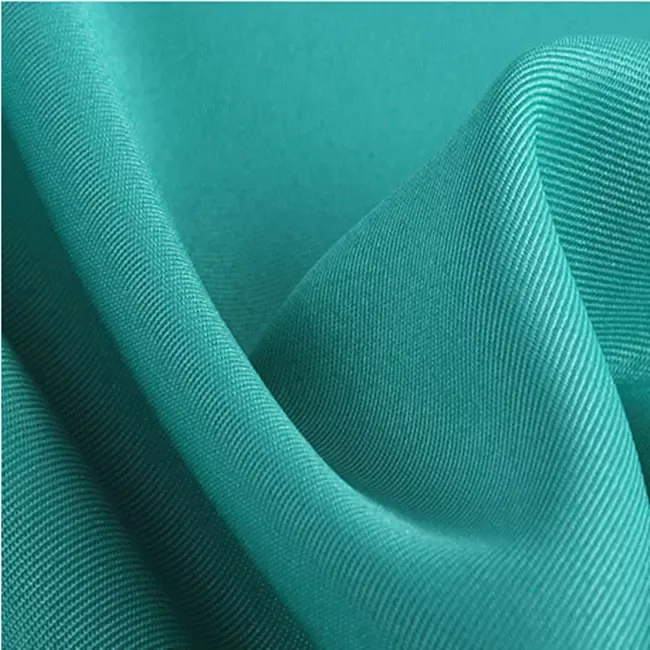
Polyester, by contrast, is a synthetic fiber — not a weave. First developed in the 1940s as a synthetic alternative to natural fibers, it has since become the most widely used textile fiber in the world. It can be woven in many different structures, of which Oxford is just one. As a fiber, polyester is valued in bag manufacturing for being:
- A synthetic, petroleum-based fiber — or, increasingly, a recycled (rPET) fiber made from post-consumer PET bottles (more on this below)
- Lightweight relative to its strength
- Durable under everyday use and repeated washing
- Naturally water-resistant compared to natural fibers like cotton
Because of these properties, polyester fabric in its various weave forms shows up across a wide range of bag categories, including:
- Эко-сумки
- Foldable bags
- Backpacks
- Холодильные сумки
Oxford Fabric vs Polyester Fabric: Why This Comparison Can Be Misleading
This is the section that matters most for procurement teams evaluating supplier spec sheets.
The reason “Oxford vs polyester” is a misleading framing is simple: a large share of the Oxford fabric used in bag manufacturing is itself made from polyester fiber. When a supplier lists “210D Oxford,” “420D Oxford,” “600D Oxford,” or “1680D Oxford” on a spec sheet, they are almost always describing a polyester (or nylon) fiber woven in the Oxford structure — not a separate material category from polyester at all.
Put simply:
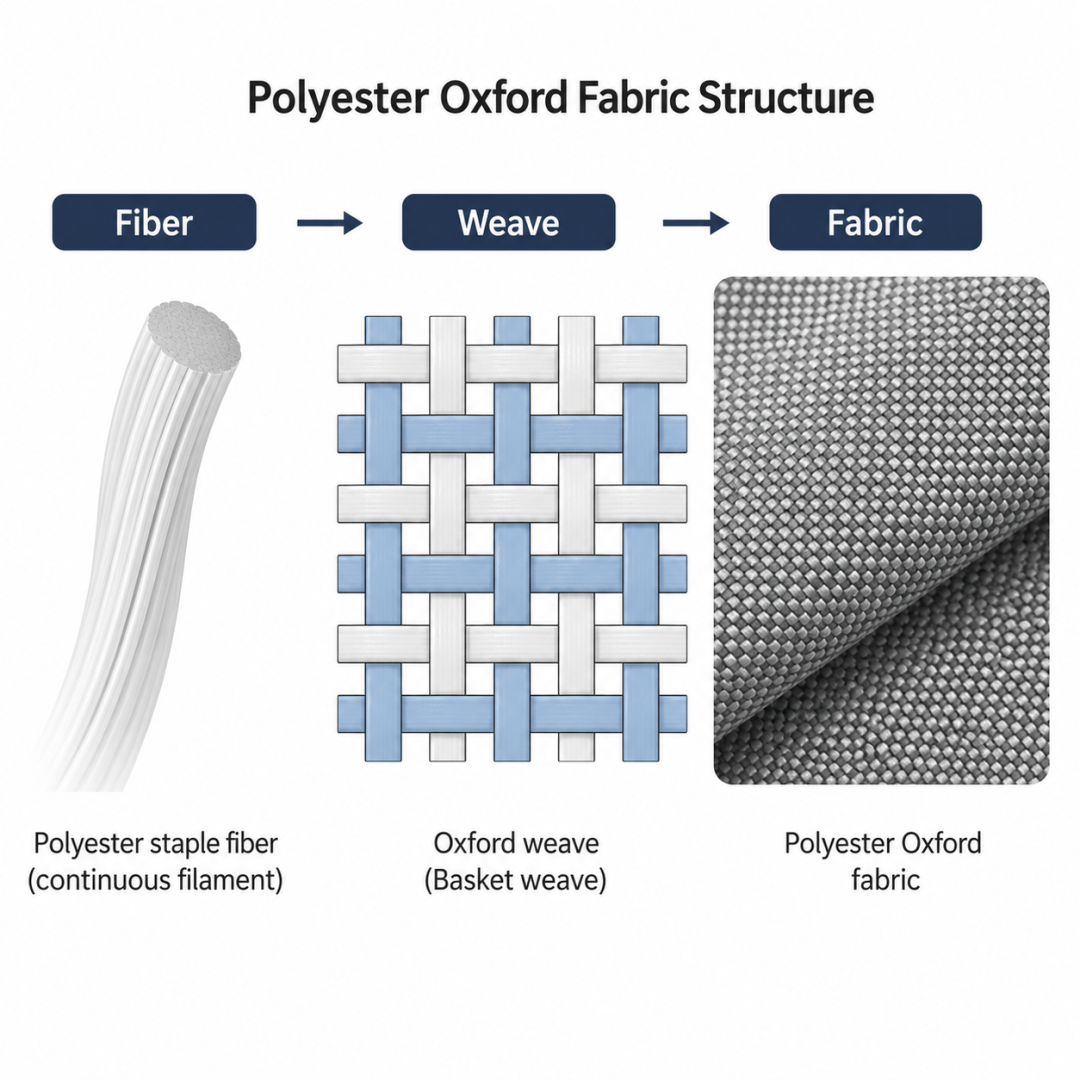
Polyester Fiber + Oxford Weave = Polyester Oxford Fabric
This single equation resolves most of the confusion buyers run into when comparing quotes or fabric swatches from different suppliers. A fabric labeled “Oxford” and a fabric labeled “polyester” are often not two different options — they may be the exact same material described at two different levels of detail (weave vs. fiber). The real differentiating questions are about fiber type, denier, coating, and finish, not whether the label says “Oxford” or “polyester.”
How Are These Fabrics Actually Made?
A quick look at the production path explains why coatings and finishing matter so much more than the raw weave or fiber name on a spec sheet.
| Stage | What Happens | Why It Matters to Buyers |
|---|---|---|
| Fiber production | Polyester (or nylon) chips are melted and extruded into continuous filament yarns; rPET starts from recycled PET bottles instead of virgin resin | Determines base strength, consistency, and sustainability credentials |
| Spinning / twisting | Filaments are spun into multi-ply yarns | Higher ply generally means better tensile strength |
| Ткачество | Yarns are interlaced — Oxford uses a basket weave, plain polyester uses a flat weave | Creates the visible texture difference between Oxford and standard polyester |
| Dyeing | Piece-dyed or solution-dyed | Solution-dyed yarns hold color and UV resistance better over time |
| Coating / finishing | PU, PVC, or TPU coating applied as needed | This step — not the weave or fiber name — is what actually delivers waterproofing |
Common Types of Oxford Fabric Used for Bags
Since most Oxford fabric in bag production is polyester-based, the differences between grades come down largely to denier (a measure of yarn thickness, abbreviated “D”). Higher denier generally means a heavier, more rugged — and typically somewhat more expensive — fabric. At an equivalent denier, a plain polyester weave is usually noticeably lighter than the same yarn woven in an Oxford structure, since the basket weave packs in more material per square inch.
| Denier Grade | Weight Class | Typical Bag Applications |
|---|---|---|
| 210D Oxford | Lightweight | Foldable bags, lightweight totes |
| 420D Oxford | Mid-weight | Sports bags, gym duffels |
| 600D Oxford | Mid-to-heavy | Backpacks, cooler bags — the most commonly specified grade |
| 1680D Oxford | Heavyweight | Travel bags, tool bags, industrial cases |

Coatings and Finishes: The Real Performance Differentiator
Once fiber and weave are settled, coating is what actually determines waterproofing, durability under outdoor exposure, and special-use compliance. This applies equally to Oxford and plain polyester fabrics.
| Coating / Finish | What It Does | Типичное применение |
|---|---|---|
| PU (Polyurethane) | Lightweight waterproofing, soft hand-feel | School bags, corporate totes, everyday backpacks |
| ПВХ | Heavier, more rugged waterproofing | Outdoor, marine, and heavy-duty industrial bags |
| TPU film lamination | Waterproofing with better recyclability than PVC | Eco-positioned outdoor and travel bags |
| FR (flame-retardant) treatment | Adds flame resistance | Industrial and safety-equipment bags |
A spec sheet that names the coating type alongside the denier gives a buyer a far more complete picture than “Oxford” or “polyester” alone.
Durability Comparison
Standard Polyester Fabric (plain weave, no Oxford structure) tends to be lightweight and flexible, which makes it easy to fold, sew, and ship in bulk — but it generally has less structural rigidity than a comparable Oxford weave.
Polyester Oxford Fabric benefits from the basket weave structure on top of the polyester fiber’s natural durability, resulting in:
- Greater abrasion resistance — Oxford fabrics generally test higher than plain weaves in standard abrasion methods such as the Martindale test, though exact results vary by mill, denier, and finishing
- Better structure and shape retention over time
- A more rugged, outdoor-oriented appearance
In general, the Oxford weave improves durability compared to a plain polyester weave at the same denier, which is why Oxford constructions dominate categories like backpacks, cooler bags, and tool bags where the fabric takes repeated physical stress. Nylon Oxford typically pushes abrasion resistance even further than polyester Oxford, at a higher cost — relevant for buyers spec’ing tactical or expedition-grade gear.
Water Resistance Comparison
Water resistance is one of the most commonly misunderstood specs in fabric sourcing. It is not determined by whether a fabric is called “Oxford” or “polyester.” It’s determined by three other factors:
- Coating (PU, PVC, TPU, or none)
- Fabric density (denier and weave tightness)
- Overall construction, including seam treatment
A PU-coated 600D polyester Oxford fabric will significantly outperform an uncoated plain polyester fabric in water resistance — even though both are technically “polyester.” Untreated Oxford is water-resistant at best, not fully waterproof; full waterproofing always requires a coating step. This is exactly why buyers should request coating type and density on every spec sheet rather than relying on the Oxford/polyester label alone to infer waterproofing.
Sustainability and Recycled Options: rPET, GRS, and OEKO-TEX
For buyers with sustainability commitments or EU/US retail compliance requirements, both Oxford and plain-weave fabrics are increasingly available in recycled polyester (rPET), made from post-consumer PET bottles rather than virgin petroleum-based resin.
A few points worth flagging for procurement teams:
- rPET can be woven into either a plain polyester structure or an Oxford basket weave — the recycled-content question and the weave-structure question are independent of each other
- GRS (Global Recycled Standard) certification verifies the recycled content and chain of custody back to the source material
- Стандарт OEKO-TEX 100 certification confirms the finished fabric is tested against harmful substances
- Coated rPET Oxford (PU or TPU) can match the water resistance of virgin-fiber equivalents, so choosing recycled content doesn’t require giving up performance
If your brand needs documentation for EU or North American retail compliance, it’s worth confirming GRS or OEKO-TEX certification (and requesting the certificate, not just the claim) before committing to a fabric.
Appearance and Texture
Procurement teams care about look and feel as much as technical performance.
Polyester Fabric (plain weave) typically reads as smooth, modern, and clean — a good fit for promotional bags and foldable bags where a sleek, minimal aesthetic supports the branding.
Oxford Fabric reads as textured, structured, and more premium or outdoor-oriented — well suited to backpacks, cooler bags, and travel bags where a rugged look reinforces the product’s positioning.
Which Fabric Is Better for Printing?
Print quality depends heavily on the surface the design is applied to.
Polyester Fabric (smooth, plain weave) is generally better suited to:
- Sublimation printing
- Термопереносная печать
Both techniques rely on a flat, even surface to render fine detail and full-color gradients accurately.
Oxford Fabric is generally a better match for:
- Шелкография
- Embroidery
Because the basket weave has a visible texture, very fine or highly detailed full-color artwork can lose sharpness on Oxford compared to a smooth polyester surface — something brand teams should account for when finalizing artwork files.
Hybrid Construction: Combining Oxford and Polyester in One Bag
Many experienced buyers don’t pick just one fabric for an entire bag — they combine them. A common approach is using a heavier Oxford fabric for high-wear structural panels (base, front face, straps) and a lighter plain polyester for interior linings or secondary panels. This balances durability where the bag takes the most abrasion against overall weight and cost across the rest of the product. If you’re sourcing for a specific bag design, it’s worth discussing a hybrid construction with your supplier rather than defaulting to a single fabric across the whole bag.
Fabric Recommendations by Bag Type
| Тип сумки | Recommended Fabric | Why |
|---|---|---|
| Foldable shopping bags | Plain polyester (210D–420D) | Lightweight, packable, cost-efficient |
| Promotional bags / event giveaways | Plain polyester | Smooth surface for full-color printing, low cost at volume |
| Reusable grocery bags | Plain polyester | Easy to fold, wash, and print |
| Corporate gift totes | Polyester Oxford or rPET polyester | Better perceived quality; rPET supports sustainability branding |
| Backpacks | Polyester or nylon Oxford (420D–600D) | Abrasion resistance and structure for daily carry |
| Cooler / insulated bags | Oxford (600D) with PU/TPU lining | Structural rigidity plus a waterproof barrier |
| Gym and sports duffels | Oxford (420D–600D) | Holds shape, withstands gym-floor abrasion |
| Travel bags / luggage | Oxford (600D–1680D) with PU/PVC coating | High abrasion resistance for baggage handling |
| Tool bags / industrial cases | Heavyweight Oxford (1680D) with PVC coating | Maximum load-bearing strength and tear resistance |
| Outdoor / tactical gear | Nylon or polyester Oxford with PU coating | Best available abrasion and weather resistance |
Oxford Fabric vs Polyester Fabric: Which One Should You Choose?
| If You Need | Recommended Choice |
|---|---|
| Foldable Bags | Полиэстер |
| Рекламные сумки | Полиэстер |
| Full-Color Printing | Полиэстер |
| Lowest Relative Cost | Полиэстер |
| Backpacks | Оксфорд |
| Cooler Bags | Оксфорд |
| Outdoor Use | Оксфорд |
| Heavy-Duty Applications | Оксфорд |
| Sustainability Documentation (GRS/OEKO-TEX) | Either — confirm rPET + certificate |
Часто задаваемые вопросы
Is Oxford fabric made of polyester? Often, yes. Many Oxford fabrics used in bag manufacturing are woven from polyester fibers — Oxford describes the weave, while polyester describes the fiber inside it. Oxford can also be made from nylon or cotton.
Is Oxford fabric stronger than polyester? It depends on the specific fiber, denier, and coating used rather than the Oxford label alone. A high-denier polyester or nylon Oxford will typically outperform a lighter plain-weave polyester, but comparing fabrics fairly means looking at fiber, denier, and finish — not just the weave name.
Is nylon Oxford better than polyester Oxford? Nylon Oxford generally offers higher abrasion resistance and a softer hand-feel than polyester Oxford at the same denier, but it comes at a higher cost. For most commercial bag programs, polyester Oxford offers the better cost-to-performance balance; nylon Oxford is more common in premium outdoor and tactical gear.
Is Oxford fabric waterproof? Only if it’s coated. The weave itself doesn’t make a fabric waterproof — a PU, PVC, or TPU coating applied to the fabric surface is what provides real water resistance.
What is 600D Oxford fabric? 600D Oxford is a mid-to-heavy weight Oxford fabric, with “600D” referring to the denier (yarn thickness). It’s one of the most commonly used grades for backpacks and cooler bags due to its balance of durability and weight, and is most often woven from polyester.
Which is better for backpacks? Oxford fabric, generally in the 420D–1680D range depending on the level of ruggedness required, is the standard choice for backpacks because of its abrasion resistance and structure retention.
Can Oxford fabric be made from recycled materials? Yes. Recycled polyester (rPET), made from post-consumer PET bottles, can be woven into an Oxford basket weave just as easily as a plain weave. Look for GRS certification to verify the recycled content claim.
Can a single bag use both Oxford and polyester fabric? Yes — and it’s a common approach. Heavier Oxford is often used for high-wear structural panels while lighter polyester covers linings or secondary panels, balancing durability against weight and cost.
Заключение
Oxford fabric and polyester fabric are not direct competitors — they answer two different questions. Oxford describes how a fabric is woven; polyester describes what fiber it’s woven from. In fact, many of the most widely used bag materials on the market are polyester Oxford fabrics, combining the structural durability of the Oxford weave with the lightweight, water-resistant versatility of polyester fiber — and increasingly, both are available in recycled (rPET) versions with GRS or OEKO-TEX certification for brands that need sustainability documentation.
For buyers evaluating suppliers, the more useful comparison isn’t “Oxford vs. polyester” — it’s fiber type, denier, coating, and certification within polyester (or nylon) Oxford options. If you’re sourcing a specific bag category and want guidance on which fabric and coating combination fits your use case, reach out to our team with your application and we’ll recommend the right specification for your order.

 Russian
 English
 French
 German
 Japanese
 Arabic
 Thai
 Vietnamese
 Spanish
 Portuguese