
Published by initipacking.com | Wholesale Felt Bags Factory & Manufacturer
Felt, canvas, and non-woven bags all look like reasonable answers to the same question: what bag should my brand put its logo on? But the similarities stop at the surface. The material you choose affects how your brand is perceived, how long the bag lasts in a customer’s hands, what customization options are available to you, and whether your sustainability claims hold up to scrutiny.
This guide puts all three materials side by side across six dimensions that actually matter to brand buyers — appearance, durability, branding capability, eco credentials, cost, and best-fit use cases. By the end, the right choice for your specific application should be clear.
1. A Quick Introduction to Each Material
Before the comparison, a brief primer on what each material actually is.
Felt Bags
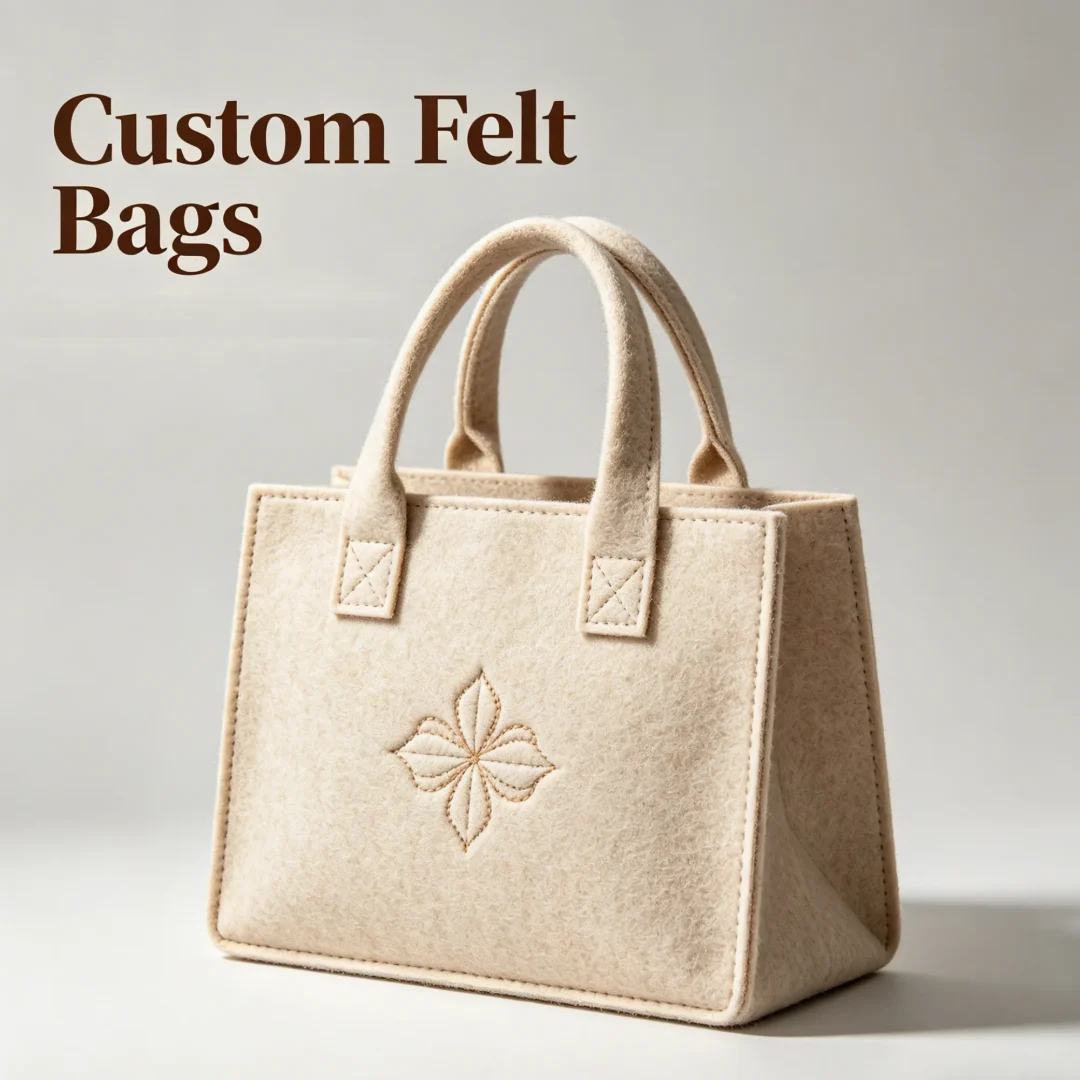
Felt is produced by compressing and matting fibers together under heat and pressure — no weaving or knitting involved. The result is a dense, non-fraying material with a distinctive soft, matte surface. The three most common felt types used in bag production are polyester felt, recycled PET felt (rPET, made from post-consumer plastic bottles), and natural wool felt. Thickness typically ranges from 2mm to 5mm depending on the application.
Bolsas de Lona
Canvas is a plain-woven fabric, most commonly made from cotton or a cotton-polyester blend. It’s the material behind the classic reusable shopping tote and has strong associations with natural, everyday, and environmentally conscious brand positioning. Canvas weight is measured in ounces per square yard — common bag weights run from 8oz to 12oz, with heavier weights offering more structure and durability.

Non-Woven Bags
Non-woven bags are made from polypropylene (PP) fibers that are bonded together thermally rather than woven. They’re lightweight, inexpensive to produce, and ubiquitous — the thin promotional bags handed out at trade shows, supermarkets, and large-scale brand events. Non-woven is the lowest-cost option in this comparison by a significant margin, which largely explains its continued prevalence despite its limitations.

2. Head-to-Head Comparison — 6 Key Dimensions
2.1 Look & Feel — First Impressions Matter
The moment a customer picks up a bag, the material communicates something about the brand behind it. That signal is difficult to override with good design or strong branding — the physical experience of the bag in hand sets the tone.
Feltro has a natural matte finish and a density that reads as premium without being ostentatious. It feels considered and deliberate — the kind of material that suggests someone made a thoughtful choice. The tactile experience is distinctive: soft but structured, lightweight but substantial.
Lona has a familiar, honest quality. The woven texture is visually warm and natural, and it carries strong associations with organic, artisanal, and everyday brand aesthetics. It doesn’t read as luxury, but it reads as genuine — which is exactly right for certain brand contexts.
Non-woven is difficult to position as anything other than functional and low-cost. The thin, smooth surface, the slight crinkle when handled, the lightweight feel — all of it signals “promotional item” to most consumers. That’s not inherently wrong, but it limits how much brand equity the bag can carry.
✅ Winner: Felt — highest perceived quality of the three, best suited to brands where the bag itself is part of the brand experience.
2.2 Durability & Lifespan
How long a bag lasts determines how many times your brand is seen in use — and, in sustainability terms, how many single-use alternatives it displaces.
Feltro is highly durable. The compressed fiber structure resists abrasion and holds its shape under repeated use. High-quality felt doesn’t pill or fray, and a well-constructed felt bag will typically last three to five years of regular use without significant deterioration. It’s also easy to spot-clean.
Lona is genuinely durable and has a long track record of surviving heavy daily use. The main caveats are washing behavior — cotton canvas can shrink or warp if machine-washed incorrectly — and the tendency to soften and lose structure over time, particularly in lighter weights.
Non-woven durability varies significantly with thickness. Thin non-woven bags (the 80gsm variety common at exhibitions) may last only a handful of uses before handles pull or seams split. Heavier non-woven bags fare better, but even the best-constructed PP bags fall well short of felt or canvas in long-term lifespan.
✅ Winner: Felt & Canvas (tied) — both significantly outperform non-woven. Felt has a marginal edge in shape retention over time; canvas has a longer track record in heavy-use everyday scenarios.
2.3 Branding & Customization
A branded bag is only as good as how well it carries the brand. Decoration method, color accuracy, and the range of structural customization available all determine whether the bag genuinely expresses the brand or just approximates it.
Feltro supports the widest range of decoration techniques of the three materials: screen printing, embroidery, leather and PU patch with debossing, heat transfer printing, and laser engraving. The dense, relatively smooth surface accepts each method well, and the matte texture provides strong contrast for most branding approaches. Structurally, felt can be cut and sewn into almost any configuration — different closure types, handle styles, lining options, and hardware finishes are all straightforward to specify.
Lona handles screen printing and embroidery well — both are well-established techniques on woven cotton, and the results are clean and durable. It’s less suited to laser engraving and leather patch applications, and the woven surface texture can affect fine-detail print reproduction. Canvas is also structurally versatile, though it lacks felt’s ability to hold firm shapes without additional stiffening.
Non-woven is primarily a screen-printing surface. The options beyond flat print are limited, fine detail reproduction is lower quality than on felt or canvas, and the material’s thinness constrains structural complexity. Customization is largely restricted to the print itself.
✅ Winner: Felt — most decoration options, best fine-detail reproduction, widest structural customization range.
2.4 Eco & Sustainability Credentials
Sustainability claims in packaging are under increasing scrutiny. Vague references to “eco-friendly” materials no longer satisfy buyers or their customers — what matters is whether the environmental claim is specific, verifiable, and defensible.
Recycled PET felt (rPET) is made from post-consumer plastic bottles and can be certified under the Global Recycled Standard (GRS), which independently verifies recycled content through the supply chain. Brands using rPET felt can make a concrete, quantifiable claim — this bag diverted X plastic bottles from landfill — rather than a generic sustainability statement. OEKO-TEX certification ensures the material is free from harmful substances.
Natural wool felt is biodegradable and made from a renewable animal fiber. GOTS (Global Organic Textile Standard) certification is available for organic wool felt. It’s the most genuinely circular option in terms of end-of-life, though wool’s supply chain has its own considerations around animal welfare and land use.
Lona de algodão is biodegradable and, in organic certified versions, produced without synthetic pesticides. However, conventional cotton is one of the most water-intensive agricultural crops in existence — producing one kilogram of cotton fiber requires an estimated 10,000 liters of water. Studies have shown that a cotton tote bag needs to be used many more times than a plastic bag to offset its production impact. That doesn’t make canvas unsustainable, but it means the eco narrative requires more nuance than it’s often given.
Polipropileno não tecido is technically recyclable but has very low real-world recycling rates. Most non-woven bags end up in landfill. For brands making genuine sustainability commitments, non-woven PP is difficult to defend.
✅ Winner: rPET Felt — verifiable recycled content, established certification frameworks, and a concrete environmental narrative that holds up to scrutiny.
2.5 Cost Considerations
Cost is rarely as simple as unit price. The more useful metric is cost-per-use — what you’re paying each time the bag is actually used — which brings durability directly into the financial calculation.
Non-woven has the lowest upfront unit cost, often significantly so. For very high-volume, low-involvement promotional applications where the bag will be used a handful of times, this can be the right call.
Lona sits in the mid-range, with pricing influenced by cotton market fluctuations and the weight of the fabric specified.
Feltro typically carries a higher unit price than non-woven and is comparable to or slightly above canvas depending on the specification. But a felt bag used 200 times over three years has a dramatically lower cost-per-use than a non-woven bag discarded after five.
The more relevant question for most brand buyers isn’t “which is cheapest?” but “what is the bag worth per use, and does that reflect the value of my brand?” A premium product presented in a low-cost bag creates a dissonance that’s difficult to undo.
💡 Recommendation: Evaluate total cost across the bag’s useful lifespan, not just the per-unit purchase price. For branded applications where the bag represents your brand beyond the moment of handover, felt and canvas consistently deliver better value over time.
2.6 Best Use Cases
Felt bags are best suited to applications where the bag itself carries brand weight: corporate gifting, retail boutique packaging, wine and spirits presentation, wedding and event favors, tech brand merchandise, and any context where the recipient is expected to keep and reuse the bag.
Canvas bags fit naturally into everyday retail, organic and natural brand applications, bookshops and cultural institutions, farmers markets, and any brand positioning that leans into the natural, unpretentious, or artisanal.
Bolsas não tecidas are appropriate for very high-volume, low-cost promotional scenarios — trade show giveaways, supermarket checkout bags, large-event handouts — where sheer quantity and minimal per-unit cost are the primary requirements.
3. The Full Comparison at a Glance
| Dimension | Felt Bags | Bolsas de Lona | Non-Woven Bags |
|---|---|---|---|
| Visual Quality | ⭐⭐⭐⭐⭐ | ⭐⭐⭐⭐ | ⭐⭐ |
| Durabilidade | ⭐⭐⭐⭐⭐ | ⭐⭐⭐⭐ | ⭐⭐ |
| Branding Options | ⭐⭐⭐⭐⭐ | ⭐⭐⭐⭐ | ⭐⭐ |
| Eco Credentials | ⭐⭐⭐⭐⭐ | ⭐⭐⭐ | ⭐ |
| Unit Cost | ⭐⭐⭐ | ⭐⭐⭐ | ⭐⭐⭐⭐⭐ |
| Premium Positioning | ⭐⭐⭐⭐⭐ | ⭐⭐⭐ | ⭐ |
| Melhor Para | Premium gifts, retail, corporate | Everyday totes, organic brands | High-volume promos |
4. Which Should You Choose?
Choose felt if:
- Your brand positioning is premium, considered, or design-led
- The bag will be presented as a gift or keepsake rather than a functional carrier
- You want the widest range of logo and customization options
- Sustainability credentials need to be specific and certifiable
- You expect customers to keep and reuse the bag over an extended period
Choose canvas if:
- Your brand aesthetic is natural, organic, or artisanal
- The bag is primarily a functional everyday carrier rather than a brand statement piece
- You have a specific preference for natural cotton fiber
- Your target market strongly associates cotton with environmental responsibility
Choose non-woven if:
- Volume is very high and budget is the overriding constraint
- The bag serves a purely functional, one-time-use purpose
- Brand presentation is secondary to logistics and cost efficiency
In one sentence: If the bag represents your brand, choose felt. If the bag just needs to carry something, non-woven will do.
5. Making the Switch — What to Expect When Upgrading to Felt
For brands currently using non-woven or canvas and considering a move to felt, the transition is more straightforward than it might appear.
On cost: The unit price increase from non-woven to felt is real, but the gap is often smaller than buyers expect — particularly at mid-to-high order volumes. The more meaningful shift is in what the bag communicates to the person receiving it, and whether that justifies the incremental investment.
On sampling: Switching materials requires a new sample run regardless of how similar the bag shape is. Felt behaves differently from canvas and non-woven in construction — seam allowances, handle attachment methods, and closure hardware all need to be validated on the new material. A reputable factory will produce a pre-production sample within 7–10 days of receiving your brief.
On brand response: Brands that have upgraded from non-woven or basic canvas to felt consistently report that the bag itself becomes a talking point — something customers comment on, keep, and reuse. That secondary brand exposure is difficult to quantify but very real.
On sustainability reporting: If your organization has ESG or sustainability reporting requirements, switching to rPET felt with GRS certification gives you a specific, auditable claim to include — something that “recycled materials where possible” language in non-woven specifications rarely provides.
Conclusão
Felt, canvas, and non-woven bags each have a legitimate role in branded packaging. The decision comes down to what you need the bag to do beyond carrying its contents — and how much of your brand identity you want it to carry with it.
For brands that treat their packaging as an extension of the product experience, felt is the strongest material across almost every dimension that matters: appearance, durability, customization depth, and sustainability credentials. Canvas is a credible choice for the right brand aesthetic. Non-woven serves a specific, volume-driven use case where cost is the primary driver.
If you’re at the point of deciding, the fastest way to make the right call is to hold a sample of each material. The difference is immediately apparent.
Ready to see what custom felt bags look like with your branding? Initipacking is a factory-direct felt bag manufacturer with full in-house production, flexible order quantities, and samples within 7–10 days. Send us your brief and we’ll respond with a quote and digital mockup within 24 hours.

 Portuguese
 English
 French
 German
 Japanese
 Arabic
 Thai
 Vietnamese
 Russian
 Spanish