
Reusable bags in Japan are no longer just grocery carriers. Over the past decade, Japanese brands have quietly transformed the humble eco bag into something far more considered — a functional object that folds down to nothing, looks good doing it, and says something about the person carrying it.
This shift didn’t happen overnight. It emerged from a specific urban culture: compact apartments, crowded subway commutes, and consumers who expect everyday objects to be both practical and beautiful. The result is a generation of foldable tote designs that have since traveled well beyond Japan — across TikTok feeds, Pinterest boards, and OEM inquiry sheets from buyers in Europe, North America, and Southeast Asia.
This article breaks down the key Japanese brands and trends that reshaped the reusable bag market, and what global buyers can learn from them.
Why Japanese Foldable Bags Became So Popular Worldwide
Compact Urban Living Shaped Japanese Bag Design
Tokyo is a city of small spaces. Apartments are compact, storage is precious, and most daily errands happen on foot or by train. A bag that can’t fold flat, slip into a pocket, or hang neatly on a hook simply doesn’t fit that life.
This constraint became a design driver. Japanese bag designers were solving real problems — and the solutions they developed turned out to be universally appealing.
Japanese Consumers Expect Better Functionality
Japanese consumer culture holds products to a high functional standard. A foldable bag isn’t just expected to fold — it should fold easily, stay folded, unfold without fuss, and hold its shape over years of use. Features like lightweight nylon, integrated storage pouches, reinforced handles, and smooth zipper closures aren’t premium add-ons in Japan. They’re baseline expectations.
This demand for thoughtful functionality pushed brands to innovate in ways that made their products stand out globally.
Eco Bags Became Fashion Accessories
Perhaps the most culturally specific shift: Japanese consumers began treating eco bags as wardrobe items. The bag you carry to the convenience store or the farmer’s market became an extension of your personal aesthetic — something to coordinate with an outfit, collect from a favorite café, or receive as a gift.
This reframing — from utility object to lifestyle accessory — is what allowed Japanese tote brands to build genuine brand loyalty, and what made their designs appealing far beyond Japan’s borders.
Shupatto: The Brand That Made One-Pull Folding Bags Viral
If one product defined the Japanese foldable bag moment internationally, it was Shupatto by Marna.
The concept sounds simple: a reusable bag that folds down with a single pull. But the engineering behind it — an accordion pleat structure that collapses along a precise axis — represented a genuine rethinking of how foldable bags work. Traditional foldable bags require users to manually fold the fabric, then stuff it into a separate pouch. Shupatto eliminates both steps. One pull, and the bag compresses into a compact roll. The storage pouch is integrated into the bag itself.
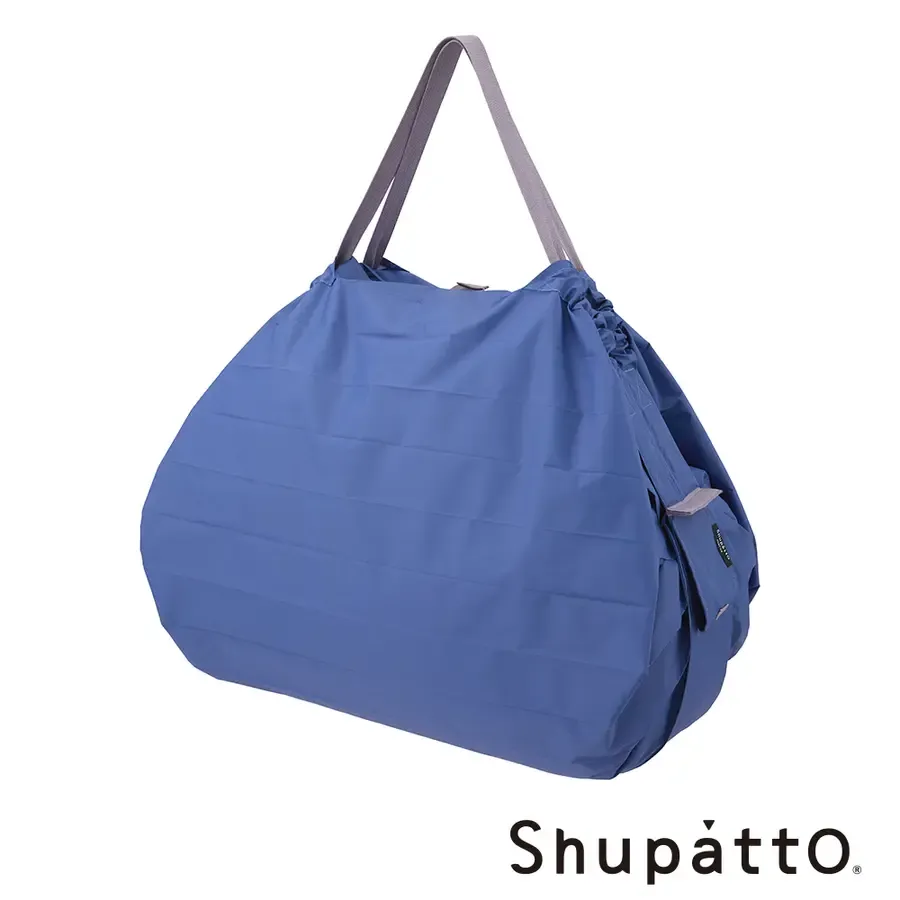
The design solved a real frustration that millions of people had never articulated: folding reusable bags is annoying. Shupatto made it satisfying.
When the folding action started appearing on TikTok, the bag’s viral potential became obvious. The smooth, repeatable motion was the kind of “oddly satisfying” content the platform amplifies naturally — and the product behind the video was genuinely useful.
| 特徴 | Traditional Foldable Bag | Shupatto |
|---|---|---|
| Folding method | Manual folding | One-pull |
| ストレージ | Separate pouch | Integrated structure |
| Packed size | Bulky | Compact roll |
| Design focus | Utility | Functional + aesthetic |
The broader trend Shupatto represents: functional products can become visual products. When the act of using something is itself elegant, it becomes shareable — and shareability drives awareness in ways no ad campaign can replicate.
Ball & Chain: When Eco Bags Became Fashion Items
Ball & Chain took a different approach. Rather than competing on folding mechanics, the brand bet on embroidery — large, colorful, hand-crafted graphics applied to simple tote and shoulder bag shapes.
The result was an eco bag that looked like it belonged in a boutique. Bold floral motifs, seasonal artwork, and artist collaboration pieces gave Ball & Chain bags a visual weight that separated them from the sea of printed canvas totes. They became gift items. They appeared in fashion styling content alongside quality outerwear and quality footwear.
Ball & Chain proved that “eco bag” didn’t have to mean minimalist or utilitarian. For a segment of Japanese consumers — and later, international buyers — the reusable bag they reached for most often was the one they found most beautiful.
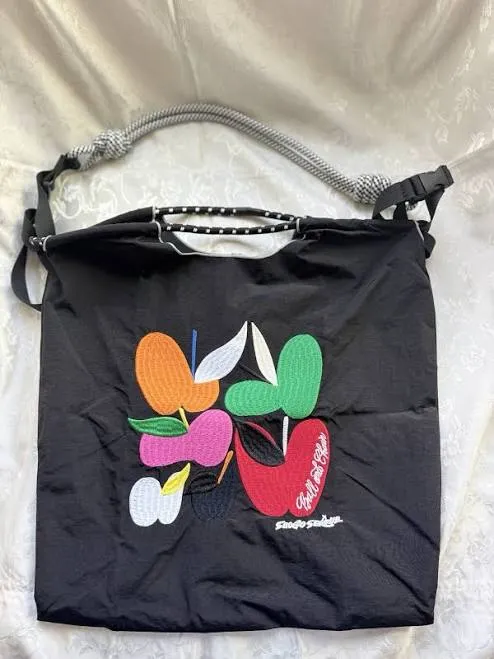
“Eco bags are no longer just practical — they became wearable accessories.”
This repositioning has had lasting influence. The embroidered tote category has grown significantly, and Ball & Chain’s aesthetic — artisan graphics on everyday carry — now appears in brand collaborations, department store exclusives, and independent boutique collections worldwide.
Motteru: The Rise of Minimalist Foldable Bags
Not every consumer wants embroidery or viral folding mechanics. A growing segment — particularly urban professionals and commuters — wants something quieter.
Motteru built a following by going in the opposite aesthetic direction: neutral colors, clean construction, no visible branding, simple silhouettes. The bags read as elevated basics — the kind of thing you might find at MUJI, or in the lifestyle section of a well-edited concept store.
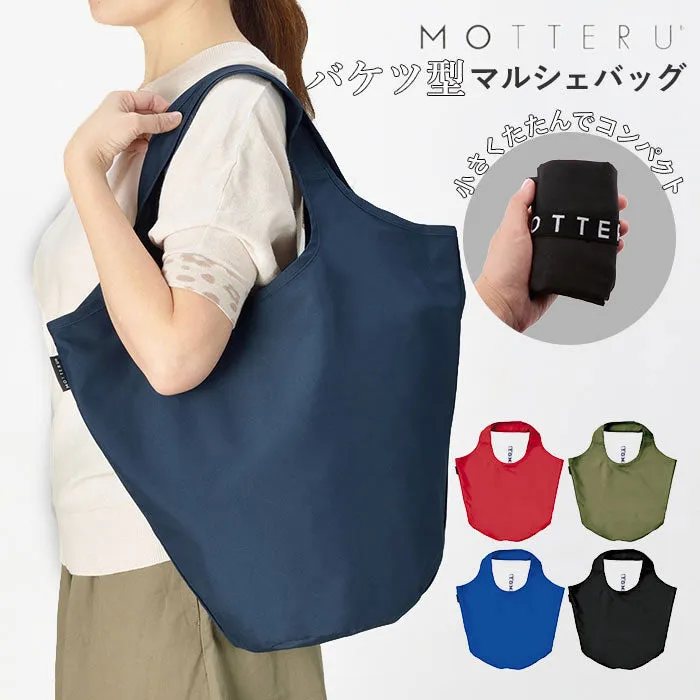
The minimalist tote trend reflects broader shifts in Japanese consumer taste toward what’s sometimes called “quiet luxury” — quality materials and refined construction over logos and graphics. Motteru’s appeal is precisely that it doesn’t demand attention. It simply works, day after day, commute after commute, without ever looking out of place.
For office commuters especially, this matters. A bag that transitions seamlessly from the subway to a meeting room to a grocery run doesn’t need to announce itself. It just needs to be good.
Japanese tote design is increasingly moving in this direction — softer materials, calmer color palettes, and visual identities that whisper rather than shout.
Dean & Deluca: Café Lifestyle and Grocery Aesthetics
Dean & Deluca’s tote bags — clean white canvas, bold black serif typography, nothing more — became cultural objects in Japan in a way that arguably exceeded their significance in their country of origin.
Japanese consumers embraced the bags as totems of a particular lifestyle: premium groceries, specialty coffee, considered food culture. Carrying a Dean & Deluca tote communicated something about taste and daily routine. The bag became a prop in a larger aesthetic — the kind of visual identity that fills certain corners of Instagram and Pinterest.
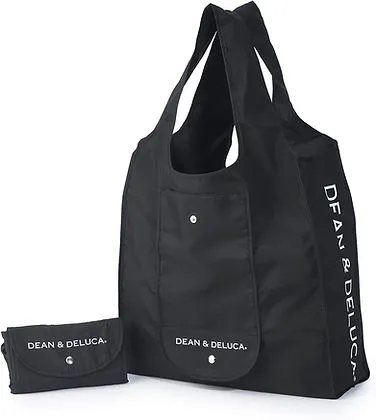
This phenomenon influenced an entire category of what might be called “destination totes”: bags associated with a specific place or experience rather than a specific function. Bookstore totes, museum gift shop bags, café merchandise, artisan bakery canvas — all of these owe something to the cultural logic that Dean & Deluca totes helped establish in Japan.
The lesson for brands: typography, restraint, and clear lifestyle positioning can turn a cotton bag into a collector’s item.
Seasonal Japanese Pattern Bags: Sakura, Art & Cultural Graphics
Japan has a deeply rooted culture of seasonal celebration — and that sensibility has found its way into bag design. Sakura-printed totes appear each spring with almost ritual regularity. Ukiyo-e-inspired graphics translate traditional woodblock aesthetics into contemporary accessories. Limited-edition seasonal bags create a sense of occasion around an everyday object.
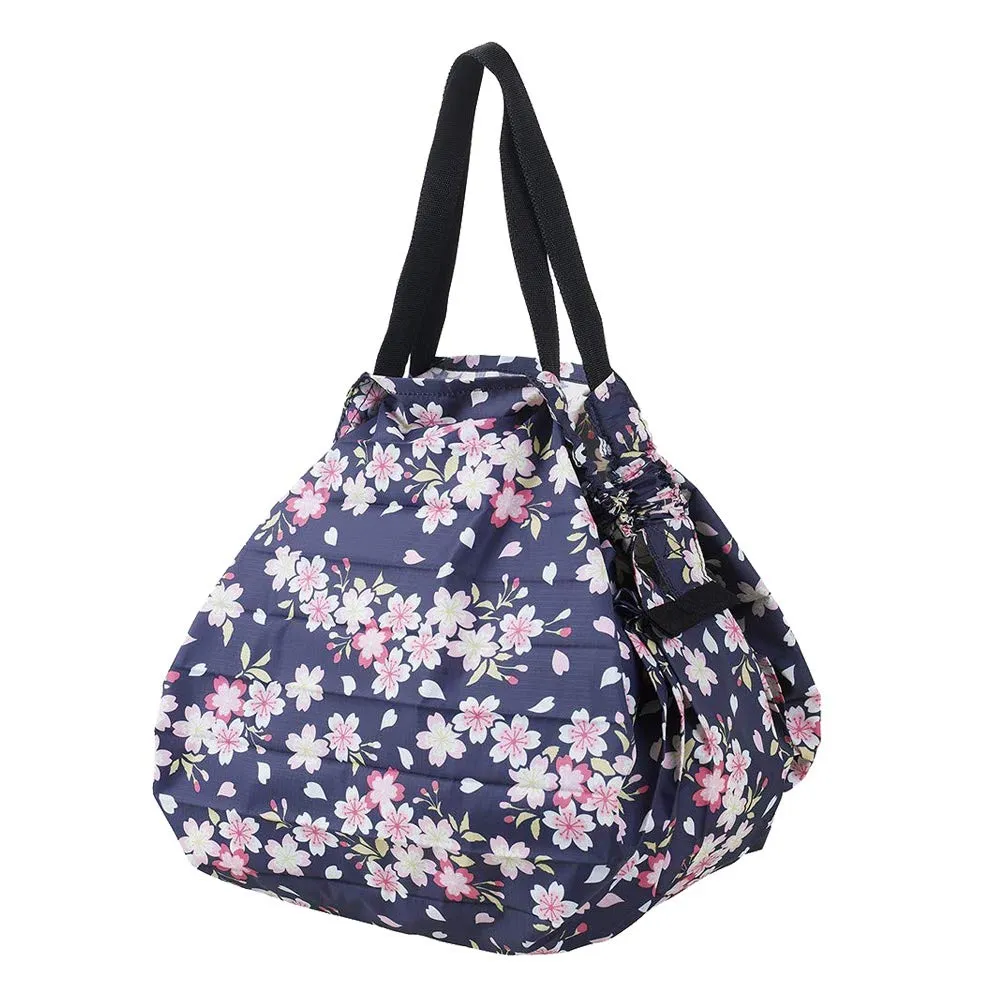
What makes Japanese pattern bags feel distinct isn’t just the imagery — it’s the emotional logic behind them. These aren’t novelty prints. They’re expressions of cultural identity, seasonal awareness, and collector instinct. A bag tied to a specific moment, place, or artistic tradition carries meaning that a generic graphic print doesn’t.
This approach — emotional design, storytelling visuals, limited-edition culture — resonates strongly with consumers who are increasingly bored by mass-produced aesthetics. The Japanese pattern bag isn’t for everyone. That’s part of its appeal.
What Overseas Buyers Can Learn From Japanese Foldable Bag Trends
Functionality Creates Viral Products
The Shupatto effect is real and reproducible. Products that solve a small but genuine friction point — and do so in a visually satisfying way — have viral potential that transcends traditional marketing. Easy folding, smart storage, and lightweight portability aren’t just features. They’re the foundation of shareable product experiences.
Consumers Want Lifestyle-Oriented Tote Bags
Across every brand profiled here, the common thread is lifestyle positioning. Japanese tote brands don’t just sell bags — they sell associations with how you want to live. Buyers in global markets are responding to the same signals. A tote that feels connected to a specific aesthetic world — café culture, minimalist commuting, seasonal celebration — will always outperform a generic reusable bag at the same price point.
Japanese Trends Influencing OEM Requests
The demand signals are already showing up in manufacturing inquiries. The most frequently requested features in Japanese-inspired OEM tote orders currently include:
- Embroidered graphics and patch details
- Compact one-pull or accordion folding systems
- Integrated storage pouches
- Premium nylon and rPET materials
- Minimalist printing and clean typography
- Neutral color palettes with quality finishes
Brands and retailers building new tote ranges would do well to study these signals carefully.
Japanese Foldable Bag Trends for 2026
The direction of travel is clear. Several converging trends will shape the Japanese-influenced tote market through 2026 and beyond:
スマートな機能設計 — one-pull systems and accordion structures will continue to evolve, with faster folding and more compact packed sizes as the benchmark.
Fashion + Utility Hybrid — the line between eco bag and fashion accessory will continue to blur. Expect more designer collaborations, boutique-exclusive colorways, and embroidery-forward collections.
Compact Everyday Carry — pocket-size totes that live permanently in a jacket or handbag are growing fast. The best ones will be indistinguishable from premium accessories.
Premium Reusable Bags — better materials, better textures, and cleaner finishing details. The era of the disposable-looking reusable bag is ending.
Lifestyle Branding Expansion — café, bookstore, grocery, and museum-inspired totes will multiply. Any brand with a distinctive aesthetic identity has an opportunity to extend it into carry goods.
結論
Japanese foldable bags changed what a reusable bag can be. Brands like Shupatto, Ball & Chain, Motteru, and Dean & Deluca demonstrated — each in their own way — that the intersection of functionality, aesthetics, compact design, and lifestyle branding can turn an everyday object into something people actively seek out, collect, and carry with pride.
The influence of these brands is already visible in global tote design trends. As consumer expectations rise and the market for premium reusable bags expands, the Japanese approach to this category will only become more relevant.
Japanese-inspired tote design will continue influencing global bag trends in 2026 and beyond — and the brands that understand why will be better positioned to meet the demand.
Looking for Japanese-Inspired Foldable Tote Manufacturing?
We offer full OEM & ODM support for Japanese-inspired tote designs, including:
- Custom embroidery and appliqué
- Foldable structure development (accordion, one-pull, roll-top)
- rPET and lightweight nylon fabric options
- Custom logo and typography printing
- Minimalist and premium finishing options
 Japanese
 English
 French
 German
 Arabic
 Thai
 Vietnamese
 Russian
 Spanish
 Portuguese