
A practical reference for a well-insulated everyday bag is around 4–8 hours of cooling with pre-chilled contents and adequate fully frozen ice packs in moderate conditions. Some heavy-duty soft-cooler setups may support 12–24 hours with substantial ice, while bags without coolant are best suited to short transport followed by refrigeration. These are broad planning ranges, not tested holding times for every bag. For perishable food, the deciding factor is whether the food stays at 40°F / approximately 4.4°C or below.
はじめに生鮮品の知られざるヒーロー
Whether you’re packing a healthy lunch for work, bringing home frozen groceries from the store, embarking on a family picnic, or keeping drinks chilled during a road trip, insulated bags are useful tools for maintaining food temperature and freshness.
These versatile bags, ranging from compact lunch totes to large, collapsible cooler bags, all share a common purpose: to slow down temperature change. They’re designed to help keep hot things hot and cold things cold. But exactly how long can food stay cold inside an insulated bag? Is it an hour, a few hours, or an entire day?
The answer isn’t a one-size-fits-all duration. A bag used indoors with chilled food and frozen packs can perform very differently from the same bag left in a hot car. We’ll explore bag quality, cooling elements, and external temperature, then explain how to interpret cold-retention estimates and make the most of your bag.
1.保冷バッグの保冷時間は何で決まるのか?断熱の科学
Before we dissect the individual factors, let’s briefly understand the basic principle behind how an insulated bag works. At its core, insulation is about slowing down heat transfer. Heat naturally moves from warmer areas to colder areas. In an insulated bag carrying chilled food, the construction reduces the rate at which outside heat reaches the contents.
Most insulated bags achieve this through a multi-layered design. Typically, they feature an outer layer, often polyester or nylon; an insulating layer, commonly polyethylene foam; and an inner lining, such as a reflective laminated film or wipe-clean PEVA. Reflective surfaces and foam serve different purposes: reflective layers can reduce radiant heat transfer, while foam slows conduction through the walls.
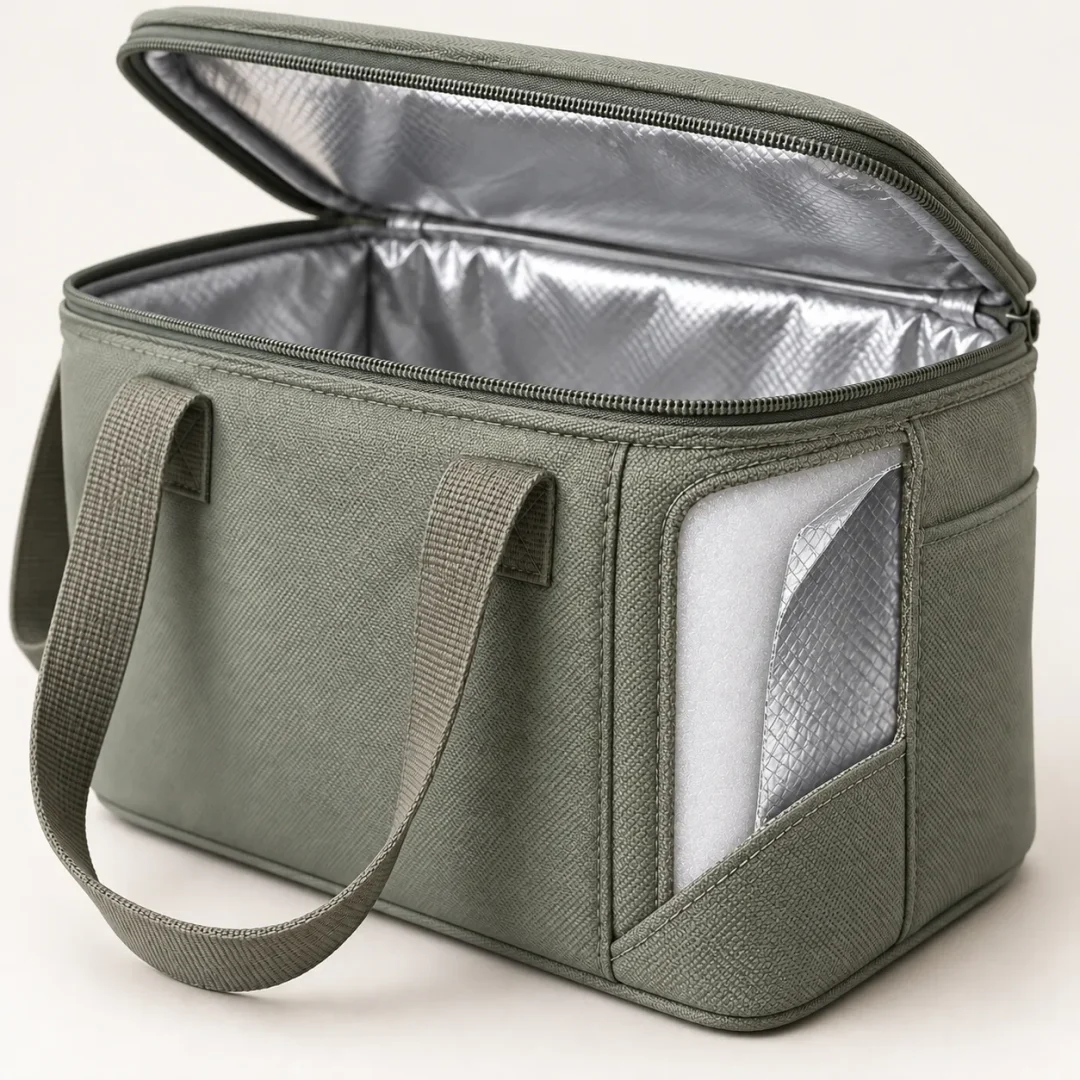
Air is a poor conductor of heat, so the small cells within the foam help reduce conductive heat transfer. The closure, lid, seams, and continuity of the insulation also influence how much heat enters the bag.
Despite this design, insulated bags are not perfect thermal barriers. They merely slow down heat exchange. The duration for which food remains cold is therefore variable and depends on both the bag and how it’s used.
An insulated bag also does not create cold. Frozen ice packs or ice absorb incoming heat as they warm and melt; insulation helps that cooling capacity last longer. Starting with warm food uses up that capacity much faster than starting with refrigerated food.
One more distinction matters: food that feels cool, food held at a safe refrigerated temperature, and food that remains frozen are three different outcomes. A claim that drinks stayed pleasantly chilled for eight hours does not prove that every perishable item stayed below 40°F for the same period.
2.ファクター1:バッグの品質 - すべての断熱材が同じというわけではない
Just like cars or appliances, insulated bags come in a wide spectrum of quality and design, each offering different levels of thermal performance. This isn’t just about brand name; it’s about insulation type and thickness, the quality of the closure, and the overall construction.
Basic Lunch Bags — The Daily Commuter
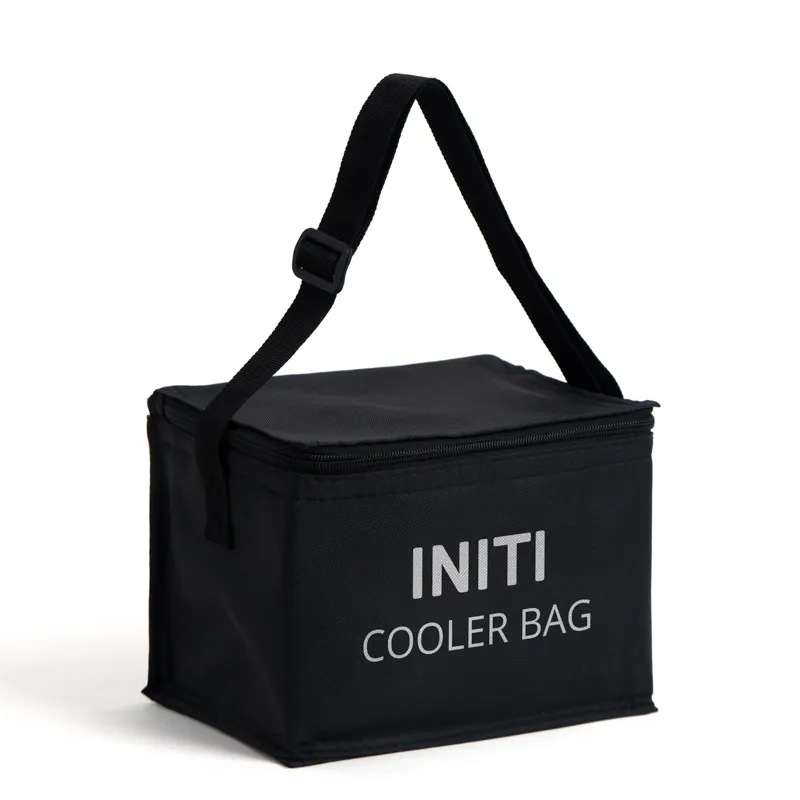
These are everyday, often thin, soft-sided lunch bags designed for a trip from home to office or school. They typically feature a relatively thin foam layer and a simple zipper closure. Their primary role is to slow warming during transport and storage before lunch.
Without ice packs, a basic lunch bag provides limited protection and should not be assumed to keep perishable food safely refrigerated for a fixed one-, two-, or three-hour period. It is better suited to a short commute followed by refrigeration, or to carrying foods that do not require refrigeration. If the lunch will sit for several hours, pack frozen cold sources and check the temperature when needed.
Mid-Range Grocery Totes & Picnic Bags — The Weekend Warrior
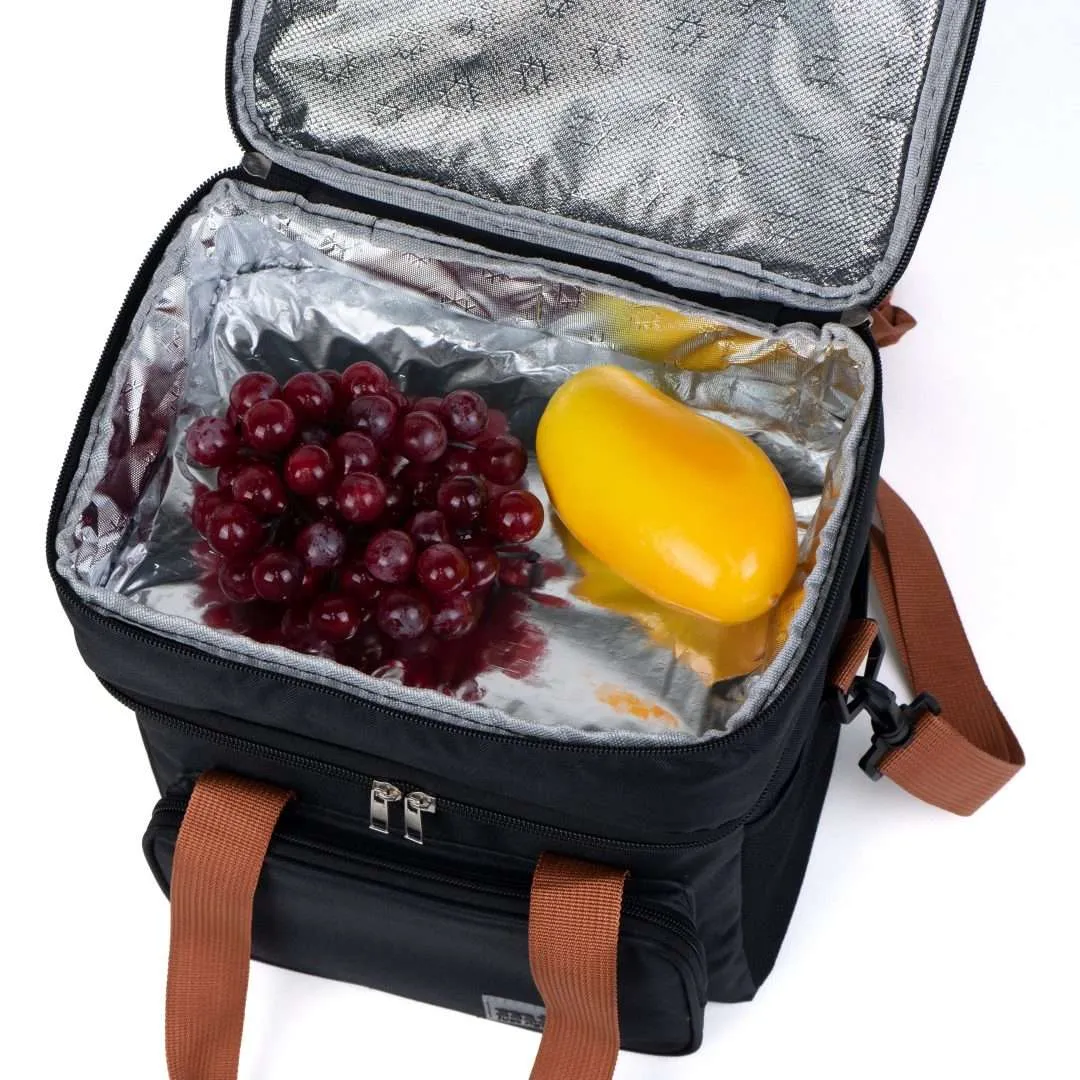
Stepping up a notch, these bags are often larger, with thicker insulation and more robust construction. They frequently feature a durable outer fabric and a better-fitting closure. They are useful for weekly grocery runs, family picnics, or short road trips.
With pre-chilled contents and adequate frozen packs, roughly four to eight hours is a useful reference range under moderate conditions. Capacity must include room for cooling elements, and a larger bag does not automatically keep food cold longer.

Heavy-Duty Cooler Bags — The Adventure Seeker
This category includes high-performance soft coolers with thicker insulation, insulated lids, and closures designed to reduce heat gain. Some models have welded, leak-resistant liners and specialized zippers. Brands such as YETI and RTIC offer products in this segment, although performance must be assessed for the particular model and setup.
With substantial ice and thoroughly chilled contents, some high-performance soft coolers may support twelve- to twenty-four-hour outings under suitable conditions. Look for model-specific performance information that matches your intended load and environment.
You wouldn’t rely on a basic lunch bag to keep salmon chilled for a ten-hour drive, just as a heavy-duty cooler may be unnecessary for a thirty-minute grocery run. Matching the bag to the duration and demands of your trip is the first step toward effective cold retention.
What Should Buyers Look for in the Insulation Structure?
From a manufacturing perspective, outer fabric, insulation, and lining should be evaluated separately. A durable polyester shell helps resist wear; it does not establish a cooling duration. Likewise, a silver lining does not reveal the thickness or continuity of the foam beneath it.
| コンポーネント | Main role | 確認すべき事項 |
|---|---|---|
| PE or EPE foam | Slows heat transfer through the bag walls | Foam specification, thickness, and coverage across the base, sides, and lid |
| Reflective laminated lining | Can reduce radiant heat transfer as part of the construction | Complete layer structure and how the reflective surface is incorporated |
| PEVAライニング | Provides a wipe-clean inner surface | Seam construction, leak resistance, and suitability for the intended use |
| Closure and insulated lid | Reduce heat gain through the opening | Gaps, lid insulation, and how securely the bag closes when packed |
| Internal capacity | Accommodates food and cooling elements | Space for the intended containers and sufficient ice packs |
私たちの custom cooler bag range includes PE and EPE insulation options, with EPE thicknesses listed from 2mm to 10mm. Choose the construction around the intended load, coolant quantity, and environment, then evaluate the finished bag against the target holding time.
3.要因2:アイスパックまたは冷却エレメントの使用-寒さのエンジン
An insulated bag, no matter how well-made, is passive. It slows heat transfer but doesn’t actively refrigerate its contents. Ice packs and other frozen cooling elements absorb incoming heat and can substantially extend cold retention.
Without Ice Packs — Limited Protection
If you rely on insulation alone, you’re slowing the rate at which already chilled food warms toward ambient temperature. How quickly that happens depends on the food quantity, initial temperature, bag construction, and surrounding heat. There is no dependable universal holding time without coolant.
This approach is best reserved for short transport followed by refrigeration, or items that do not need cold storage. Do not assume that food is safe simply because the bag is insulated or its contents still feel cool.
With Gel Packs or Reusable Ice Packs — The Standard Solution
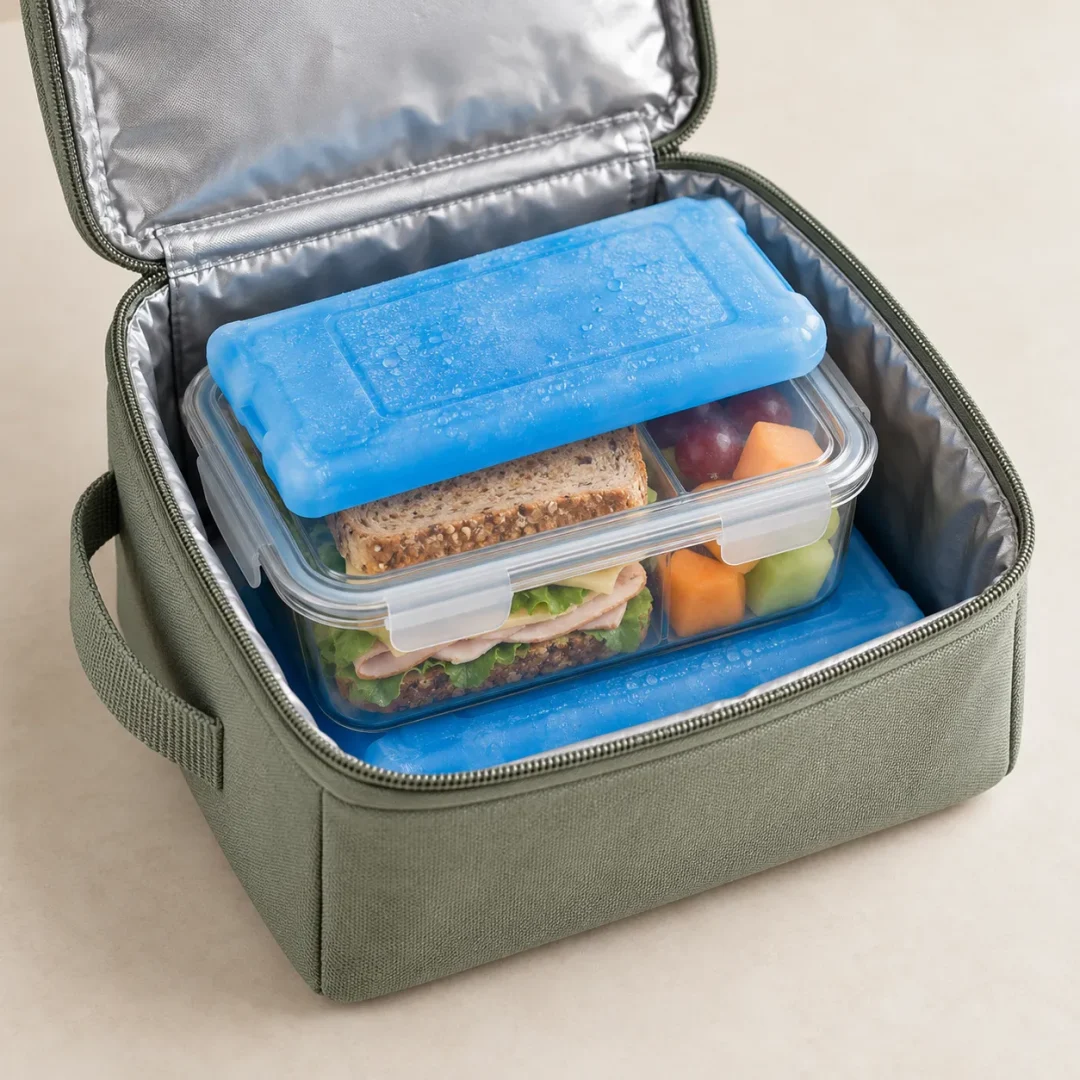
These are convenient cooling sources because they can be frozen in advance and avoid loose meltwater. Their performance depends on their mass, formulation, freezing condition, and placement—not just whether they are described as “gel packs.” One small pack cannot be expected to protect a large load for the same duration as several fully frozen packs.
For packed lunches containing perishable food, USDA recommends at least two cold sources, such as two frozen gel packs or a frozen gel pack combined with a frozen water bottle. Place the cold sources above and below the perishable items. Larger bags or hotter conditions may require more cooling capacity.
With Block Ice or Frozen Water Bottles — Additional Cooling Capacity
Larger ice blocks and frozen water bottles can be useful for longer outings, especially in bags designed to accommodate them. Frozen bottles provide cooling and can become drinking water as they thaw.
At comparable conditions, a large block generally melts more slowly than the same mass of ice broken into small pieces because less surface is exposed. However, this does not mean that every frozen bottle outperforms every gel pack. Total coolant mass, temperature, distribution, and contact with the contents all matter.
Use loose ice only if the bag is designed to contain meltwater. A wipe-clean liner is not automatically leakproof, and a leakproof liner does not necessarily mean the zipper is watertight.
Pro Tip: Pre-Chill Before Packing
Keep food and drinks refrigerated until packing, and freeze reusable packs fully according to their instructions. Pre-cooling the bag with a temporary ice pack can also reduce the initial heat load; replace that pack if necessary before departure. Refrigerating or freezing the empty bag should follow the manufacturer’s care instructions.
Starting cold allows the cooling elements to maintain the load rather than first removing heat from warm food, containers, and bag surfaces.
4.ファクター3:外部温度と環境-予測不可能な変数
No matter how good the bag is or how many ice packs you use, the environment has a profound impact on performance. A larger temperature difference between the chilled contents and their surroundings generally increases heat gain.
Indoor Air-Conditioned Setting — Approximately 20–25°C / 68–77°F
In a controlled indoor environment, the bag faces less heat than it would in summer sunshine. With adequate cooling elements and limited opening, it may approach the better end of its tested performance. If a refrigerator is available at work or school, use it on arrival rather than unnecessarily extending storage in the bag.
Moderate Outdoor Weather — Approximately 25–30°C / 77–86°F
An outdoor outing can shorten cold retention, even when the bag is kept in the shade. Direct sunlight and repeated opening add further heat. There is no fixed percentage reduction that applies to every bag, so an indoor test should not be used unchanged as an outdoor guarantee.
Hot Summer Day or Inside a Hot Car — 35–40°C+ / 95–104°F+
Direct sunlight and a parked vehicle can rapidly compromise temperature control. Conditions inside a hot car may also be substantially hotter than the outdoor air temperature. A bag that works for an office lunch may not maintain the same food temperature during a long summer drive.
Use ample frozen coolant, minimize opening, and avoid unnecessary stops with groceries in the vehicle. During travel, keep the bag in a shaded, air-conditioned area when possible. Moving it to the floor or covering it with a towel does not make a parked hot car a safe storage location.
食品安全の注意喚起危険地帯
FDA guidance advises keeping cold perishable food at 40°F / approximately 4.4°C or below. Its outdoor food-safety guidance explains the two-hour limit for food held without safe temperature control, reduced to one hour when outdoor temperatures exceed 90°F / approximately 32°C.
These limits are not insulated-bag performance ratings. Food kept continuously at a safe refrigerated temperature is different from food that has warmed outside safe temperature control. Conversely, placing food in an insulated bag does not automatically make a longer journey safe. Use a thermometer and consider the total time outside refrigeration.
5.実用的なシナリオと保冷見積もり
Let’s put the factors together with some real-world examples. The following scenarios are planning illustrations, not results from a controlled test of a particular bag.
シナリオ1:学校給食/オフィスランチ
A standard insulated lunch bag carries refrigerated food with at least two frozen cold sources, positioned around the perishable items. The bag remains closed in a predominantly indoor environment.
The practical goal is to maintain refrigerated food temperatures until lunchtime. The required duration depends on when the lunch is packed and eaten; check that the actual setup meets that interval. A design such as an insulated lunch bag with a water bottle holder can separate an accessible drink from the main compartment, but the meal still needs adequate coolant inside its insulated section.
シナリオ2:冷凍・冷蔵品で食料品を買う
A thermal grocery tote carries chilled or frozen products with appropriate ice packs. Its environment changes from an air-conditioned store to a vehicle and then home.
The goal is short transport followed by immediate refrigeration or freezing. Group cold purchases together and go home promptly. Frozen items add cooling capacity; pack temperature-sensitive groceries close to the cold sources rather than near the opening.
シナリオ3:アウトドア・ピクニック/日帰り旅行
A heavy-duty cooler bag carries thoroughly chilled food and drinks with substantial ice or frozen packs. It stays shaded and is opened as little as possible.
Longer outings need a setup validated for the expected temperature and duration. Separate frequently accessed drinks from temperature-sensitive food where practical. For overnight use, rely on suitable equipment and measured food temperatures rather than a generic “24-hour” description.
Here’s a simplified comparison of different combinations:
| Bag or setup | Cooling preparation | Use or reference duration | Key condition |
|---|---|---|---|
| Basic lunch or grocery bag without coolant | Refrigerated contents only | Short transport, then refrigerate | No fixed refrigerated holding time |
| Insulated lunch bag | Chilled meal + at least two frozen cold sources | From packing until lunch | Check the actual setup for that interval |
| Well-insulated grocery or picnic bag | Chilled contents + adequate frozen packs | Around 4–8 hours as a broad reference | Moderate temperature; mostly closed |
| Heavy-duty soft cooler | Chilled contents + substantial ice or frozen packs | Some setups may support 12–24 hours | Model and load suited to extended cooling |
| Any bag in hot conditions | Extra cooling capacity + minimal opening | Shorter than its moderate-condition result | Avoid parked vehicles and direct sun |
How to read the table: The hour ranges are planning illustrations, not INITI test results or guarantees of safe food temperatures. They assume chilled contents, sufficient frozen coolant, and moderate conditions. For perishable food, use the time the actual food stays at or below 40°F—not the time until drinks feel warm or all the ice has melted.
How Do Food Quantity and Containers Affect Cold Retention?
A bag packed with several chilled containers and enough coolant behaves differently from the same bag carrying one small meal. A larger chilled load has more thermal mass: more heat is needed to raise its temperature. But it also needs enough cooling capacity and space for packs around temperature-sensitive items. A fuller bag is helpful only when its contents start cold and the closure still fits properly.
Containers matter too. Pre-chill them where practical, and seal food to prevent leaks and cross-contamination. A vacuum-insulated container adds a thermal barrier; an ordinary single-wall metal box does not become better insulated simply because it is stainless steel. Small portions near the lid may warm differently from larger containers beside an ice pack. Check representative food temperatures, rather than assuming that every item in the bag follows the same temperature curve.
Why Do Cold-Retention Claims Give Different Numbers?
A claim of four hours and another of twelve hours may describe different bag types, coolant loads, and environments. They may also use different endpoints: the time until food exceeds 40°F, the time until bag air reaches 10°C, or the time until the last ice melts. These results cannot be compared as though they measure the same thing.
For brands, retailers, and food-service buyers, request the test conditions alongside any hours claim: finished bag size and construction, initial load temperature, load quantity, coolant type and weight, ambient temperature, opening schedule, and measurement location. Ask whether the result refers to food temperature, air temperature, or ice retention.
A practical comparison can use temperature loggers to track representative items throughout the intended journey, with additional measurements near areas likely to warm first. Keep the load, coolant, and environment consistent when comparing bags, and repeat the test to assess variation. Brief spot checks can help users understand their setup, while continuously logged product temperatures provide better evidence for a commercial holding-time claim.
6.保冷バッグの保冷力を最大化するヒント
Good preparation makes the insulation and cooling elements work together. Use these habits to improve performance:
- Always pre-chill food and drinks. Keep perishable items refrigerated until departure. Do not pack warm leftovers expecting the bag to cool them safely.
- Pre-cool the bag when practical. Use a temporary frozen pack or follow the bag’s refrigeration instructions, then load it with fully frozen cooling elements.
- Choose a suitable capacity. Group cold items together and leave enough room for coolant. Avoid a large, lightly loaded bag or overpacking that prevents proper closure. Filling gaps with a clean towel may help organize the load, but it does not replace coolant.
- Use multiple frozen cold sources. For perishable packed lunches, use at least two and position them above and below the food. Larger loads require a cooling arrangement suited to their size and conditions.
- Choose coolant by capacity, not labels alone. Consider total weight, freezing condition, pack shape, and placement. A small gel pack and a large frozen bottle are not equivalent cooling loads.
- Keep the bag closed and shaded. Secure the zipper or closure fully, and protect the bag from direct sun and other heat sources.
- Avoid frequent opening. Organize the contents so you can retrieve what you need quickly. Keep frequently accessed drinks separate if opening the main food compartment repeatedly would compromise cooling.
- Use refrigeration when available. Transfer perishable food to a refrigerator on arrival. USDA advises leaving the insulated bag open if you place it inside the refrigerator so cold air can reach the contents.
- Check temperatures for longer outings. A thermometer is more useful than judging food by touch. For demanding use cases, verify the setup before relying on it for a full-day trip.
結論コールド・リテンション戦略をマスターしよう
For a well-insulated everyday bag, around four to eight hours with chilled contents and adequate frozen packs is a useful planning reference under moderate conditions. Some heavy-duty soft-cooler setups may support twelve to twenty-four hours with substantial ice. Choose the range that matches the bag and journey, then check that the food remains at its required temperature.
Cold retention depends on three central factors:
- The quality of the insulated bag: insulation specification, coverage, closure, and capacity must match the use case.
- The use of cooling elements: fully frozen packs or ice provide cooling capacity, with their quantity and placement affecting performance.
- The external environment: ambient heat, sunlight, and opening frequency influence how quickly the contents warm.
For personal use, start with chilled food, add enough frozen coolant, and refrigerate on arrival whenever possible. For bulk sourcing, define the intended load, environment, duration, and temperature requirement before choosing a construction. Our カスタムクーラーバッグ provide different material and insulation options for discussing those requirements during product development.
A well-chosen bag helps preserve food temperature during transport. Its value comes from matching the equipment and packing method to the actual journey—and checking the conditions behind any promised number of hours.
よくある質問
How Long Do Insulated Bags Keep Food Cold Without Ice Packs?
There is no reliable universal duration. Without a cold source, an insulated bag only slows the warming of already chilled food. Use it for short transport followed by refrigeration, rather than assuming it will keep perishable food safely cold until lunch. For perishable packed lunches, USDA recommends at least two cold sources.
How Many Ice Packs Do I Need in an Insulated Bag?
For a perishable packed lunch, start with USDA’s recommendation of at least two cold sources, placed above and below the food. There is no fixed number that works for every bag: coolant weight, food quantity, ambient temperature, and holding time all matter. Larger bags and longer or hotter journeys may need more.
Can an Insulated Bag Keep Food Cold Overnight?
Some high-performance soft coolers with substantial ice may be suitable for overnight use, but a standard lunch bag should not be assumed to provide that performance. Verify the specific setup and keep perishable food at 40°F / approximately 4.4°C or below throughout storage. Remaining ice alone does not prove that every item stayed at that temperature.
Will an Insulated Bag Keep Frozen Food or Ice Cream Frozen?
An insulated bag slows thawing; it does not function as a freezer. Keeping food safely refrigerated and keeping it fully frozen are different requirements. Ice cream may soften even while a bag remains cold enough for refrigerated foods. For extended frozen transport, use equipment and coolant validated for the product’s required temperature and journey duration.
Do Insulated Bags Work in a Hot Car?
They still slow heat transfer, but a hot vehicle places a much greater heat load on the bag. Indoor cold-retention estimates should not be applied to a parked car. Use adequate frozen coolant, minimize the journey, avoid leaving food in a parked vehicle, and refrigerate promptly on arrival.
When Should You Choose a Hard Cooler Instead of an Insulated Bag?
An insulated bag is convenient for commuting, grocery trips, and outings where flexibility and light weight matter. A well-insulated hard cooler may be a better fit for longer trips, substantial ice loads, rough handling, or multi-day use without refrigeration. Compare the particular models rather than assuming every hard cooler outperforms every soft cooler. In either case, insulation, closure, coolant load, and tested conditions determine the result.

 Japanese
 English
 French
 German
 Arabic
 Thai
 Vietnamese
 Russian
 Spanish
 Portuguese