
A straight-talking guide for B2B buyers, brand managers, and anyone sourcing temperature-control bags at scale.
1. Introduction: Why Does This Confusion Even Exist?
If you’ve spent any time sourcing temperature-sensitive bags — whether for a grocery retail chain, a food delivery platform, or a corporate gift campaign — you’ve almost certainly run into both terms: insulated bags and thermal bags. And you’ve probably wondered at some point whether they’re actually different products, or just two ways of saying the same thing.
Here’s the honest answer: it depends who you’re talking to.
In the manufacturing world, the physical construction of these products overlaps heavily. Both use insulating layers to slow heat transfer. Both are designed to maintain the temperature of whatever goes inside. And in everyday conversation — including in a lot of product listings and supplier catalogs — the two terms are used interchangeably.
But here’s where it gets important for B2B buyers: the terminology you use affects your SEO, your customer targeting, and how your product is positioned in the market. A thermal bag for pharmaceutical cold-chain transport is a fundamentally different product — in specifications, certifications, and customer expectations — from an insulated shopping bag sold in a supermarket checkout line, even if both technically use “thermal insulation.”
This guide breaks down everything you need to know:
- The actual definitions (and why they differ by context)
- Materials and construction
- Real-world use cases
- Which term to use for your specific business
- How to spec the right bag for your project
Let’s get into it.
2. What Is an Insulated Bag?
The Core Idea
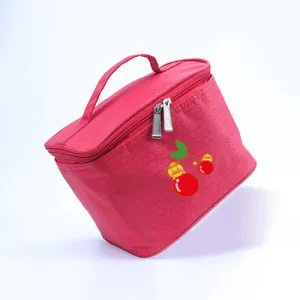
The word insulated comes from the Latin insula — island. The concept is exactly that: creating a barrier that isolates the contents from the external temperature environment. An insulated bag doesn’t generate cold or heat; it simply slows the rate at which temperature equalizes between the inside and outside.
Think of it like a well-designed thermos flask, but in bag form.
How Insulation Works Structurally
Insulated bags work by incorporating one or more layers of low-conductivity material into their construction. Heat transfer happens through three mechanisms — conduction, convection, and radiation — and good insulated bag design addresses all three:
- Conduction is slowed by using foams (PE, EPE, EVA) that are poor heat conductors
- Convection is minimized by sealing the interior air space
- Radiation is reflected by aluminum foil or metallic lining layers
The result is a bag that maintains the temperature of its contents significantly longer than an uninsulated bag would.
Typical Construction Layers
Most commercial insulated bags follow a layered sandwich structure:
| Layer | Common Material | Function |
|---|---|---|
| Outer shell | Non-woven, Oxford fabric, RPET | Durability, aesthetics, branding surface |
| Middle insulation | PE foam, EPE foam, EVA foam | Core thermal barrier — slows conduction |
| Inner lining | Aluminum foil (PEVA or pure AL) | Reflects radiant heat, easy to clean |
Higher-end insulated bags add more foam thickness, double-foil lining, or additional reflective layers.
Common Product Types
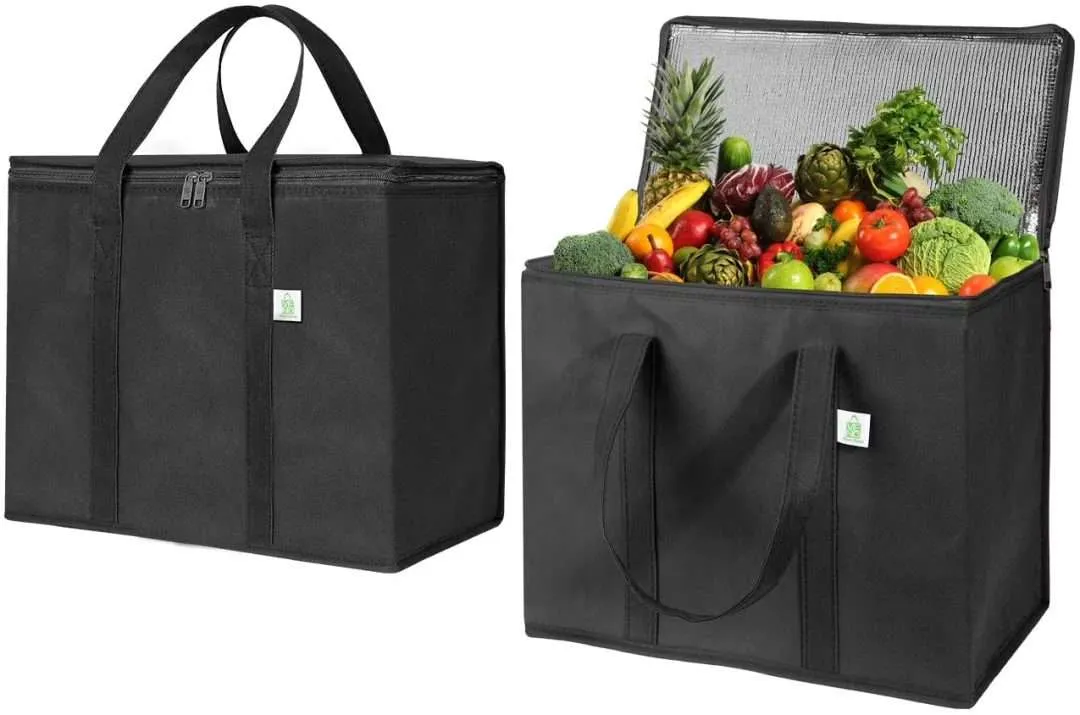
Insulated bags in the retail and promotional market cover a wide range of everyday carry formats. Insulated grocery tote bags are staples at supermarket checkouts and loyalty programs. Insulated lunch bags serve office workers, students, and kids who need food kept at temperature through the day. Insulated cooler bags — often called soft cooler bags — are the go-to for picnics, beach trips, and outdoor use. Beyond these, custom insulated bags for retail gifting (wine carriers, hamper bags) and insulated reusable shopping bags for eco-branded packaging round out the most commonly sourced formats. If you’re buying in volume, these are the product categories most wholesale suppliers will have in stock or ready to customize.
3. What Is a Thermal Bag?
The Core Idea
The word thermal comes from the Greek thermos — heat. When people in professional and industrial contexts say “thermal bag,” they’re usually emphasizing temperature performance rather than bag structure. The focus shifts from how it’s built to what temperature result it achieves — and for how long.
In practice, thermal bags tend to be specified in contexts where temperature maintenance isn’t just a convenience feature but a functional or regulatory requirement.
Where the Term “Thermal Bag” Gets Used
If someone asks for an “insulated bag,” they might be thinking about keeping their grocery haul cold on the drive home. If someone asks for a “thermal bag,” they’re more likely thinking about:
- Food delivery and restaurant logistics — keeping hot meals at temperature from kitchen to door
- Pharmaceutical and medical cold chain — vaccines, biologics, temperature-sensitive medications
- Perishable food transport — fresh produce, seafood, dairy between distribution points
- Catering and event food service — bulk transport of prepared meals
In these applications, “thermal” is often paired with performance specifications: “maintains +2°C to +8°C for 6 hours,” or “keeps hot food above 63°C for 2 hours.” The language shifts from material description to performance outcome.
Why the Distinction Matters Professionally
The practical difference shows up most clearly in:
- Specification depth — thermal bags for professional use often come with temperature performance data; insulated retail bags typically don’t
- Regulatory compliance — food delivery and pharmaceutical cold-chain bags may need to meet HACCP, FDA, or EU food contact material standards
- Construction standards — professional thermal bags often use thicker foam (15–25mm), removable hard inserts, or vacuum-panel technology that consumer insulated bags don’t
From a sourcing perspective, the vocabulary shift matters. Searching for thermal delivery bags or thermal food bags will surface a very different set of suppliers and product specs than searching for general insulated bags. If you’re procuring for a food delivery operator or a medical thermal bag application like vaccine transport, using precise terminology upfront filters out a lot of noise in the supplier conversation — and signals to manufacturers that you know what you need.
4. Insulated Bags vs. Thermal Bags: Key Differences
Here’s where we put it side by side. Keep in mind — these aren’t two completely different products. They’re often the same product, described differently depending on market context and application.
| Feature | Insulated Bags | Thermal Bags |
|---|---|---|
| Core emphasis | Structure & materials | Temperature performance & duration |
| Primary market | Retail, grocery, consumer brands | Food delivery, medical, logistics |
| Typical customer | Consumer brands, supermarkets, promotional agencies | Restaurants, delivery platforms, pharmaceutical companies |
| Common use cases | Lunch bags, grocery totes, cooler bags | Delivery bags, cold-chain transport, catering |
| Performance specs | Rarely stated | Often required (e.g., hours at temperature) |
| Price sensitivity | Higher — consumer market is cost-driven | Lower — professional market pays for performance |
| SEO search intent | Broad consumer and retail purchasing | Specific B2B/professional procurement |
| Certification needs | Typically none | May need food-grade, HACCP, pharmaceutical compliance |
| Customization focus | Branding, colors, aesthetics | Performance specs, interior dimensions, closures |
Bottom line: The physical product often overlaps. The vocabulary, specifications, and customer expectations do not.
5. What Materials Are Used in Insulated and Thermal Bags?
This is where the real procurement decisions happen. Material selection determines temperature performance, cost, weight, durability, and eco-credentials — all at once. Here’s a straightforward breakdown:
Core Insulating Materials
Aluminum Foil Lining (PEVA or Pure Aluminum) The most common inner lining for both product categories. Reflects radiant heat, is easy to wipe clean, and is relatively low cost. PEVA (polyethylene vinyl acetate) foil is the standard choice for consumer insulated bags; pure aluminum foil is used in higher-performance applications.
PE Foam (Polyethylene Foam) The most widely used mid-layer insulation. Available in 3mm, 5mm, 8mm, 10mm, and thicker. Lightweight, affordable, good thermal resistance. Standard for retail insulated bags.
EPE Foam (Expanded Polyethylene) A higher-performing variant of PE foam with a more uniform closed-cell structure. Better insulation-to-weight ratio than standard PE foam. Common in higher-grade cooler bags.
EVA (Ethylene Vinyl Acetate) Denser than PE foam, more flexible, and more durable. Often used in the base panels of bags where rigidity and impact resistance matter. Slightly higher cost.
Non-Woven Fabric The most common outer shell material for mass-market insulated bags. Cost-effective, available in all colors, easy to print on. Lightweight. Lower abrasion resistance than woven alternatives.
RPET (Recycled Polyethylene Terephthalate) Increasingly the preferred outer shell for eco-positioned insulated bags. Made from recycled plastic bottles. Comparable performance to virgin polyester, with strong sustainability credentials. Relevant for brands with environmental commitments.
Oxford Fabric (600D, 1680D) A woven polyester fabric with high durability and water resistance. Common on professional thermal delivery bags and premium cooler bags where the outer shell takes significant wear.
Material Performance Comparison
| Material | Insulation Performance | Water Resistance | Eco Profile | Relative Cost | Best For |
|---|---|---|---|---|---|
| Aluminum foil lining | ★★★★☆ | ★★★★☆ | ★★☆☆☆ | Low | Inner lining (all types) |
| PE foam (5mm) | ★★★☆☆ | ★★★☆☆ | ★★☆☆☆ | Low | Retail insulated bags |
| EPE foam (10mm) | ★★★★☆ | ★★★☆☆ | ★★☆☆☆ | Medium | Cooler bags, delivery bags |
| EVA foam | ★★★★☆ | ★★★★☆ | ★★☆☆☆ | Medium | Base panels, heavy-use bags |
| Non-woven fabric | N/A (shell) | ★★☆☆☆ | ★★★☆☆ | Low | Retail / promotional bags |
| RPET fabric | N/A (shell) | ★★★☆☆ | ★★★★★ | Medium | Eco-branded bags |
| Oxford fabric (600D) | N/A (shell) | ★★★★★ | ★★☆☆☆ | Medium-High | Delivery bags, outdoor bags |
Procurement note: For cold-chain professional applications, foam thickness matters more than almost any other single variable. A bag with 3mm PE foam will not perform the same as one with 15mm EPE foam, even with identical lining materials. Always confirm foam thickness in specs.
6. Common Applications: Where These Bags Actually Get Used
Retail & Grocery
This is the largest volume segment for insulated bags. Supermarkets, grocery delivery services, and retail brands use insulated bags as:
- Reusable shopping bag upgrades — sold or given at checkout to maintain cold chain from store to car to home
- Loyalty and promotional items — branded insulated totes as customer gifts or subscription box inclusions
- Private-label retail products — sold as standalone products in homewares or outdoor sections
For this segment, aesthetics, branding surface area, and price per unit matter most. Performance specs are secondary.
Food Delivery
The thermal bag category comes into its own here. Restaurant delivery, meal kit services, and third-party delivery platforms all need bags that:
- Keep hot food above minimum food safety temperatures (typically 63°C / 145°F)
- Are easy to wipe down between deliveries
- Are durable enough to withstand daily commercial use
- Have secure closures that prevent spills
Standard construction for delivery thermal bags: 1680D Oxford outer shell, 15–20mm EPE foam, full aluminum foil interior, Velcro or zipper closure.
Medical & Pharmaceutical Cold Chain
This is the most demanding application for thermal bags — and where the gap between “insulated” and “thermal” terminology is most meaningful. Vaccine transport, biologic samples, and temperature-sensitive pharmaceuticals require:
- Validated temperature performance (often with third-party testing data)
- Food-grade or pharmaceutical-grade interior materials
- Compliance with cold chain guidelines (WHO, GDP, etc.)
- Often: hard-shell inserts or phase-change material (PCM) integration
For this segment, you’re not buying bags — you’re buying temperature-controlled packaging systems.
Outdoor & Travel
A lighter-touch application with broad consumer appeal: picnic coolers, beach bags, camping food bags, travel bottle carriers. These sit closer to the “insulated” end of the spectrum — performance matters, but so do weight, portability, and style.
Corporate Gifting & Branded Merchandise
Insulated bags have become a popular corporate gift and promotional item, particularly for food brands, grocery retailers, and outdoor lifestyle brands. The ability to customize the outer shell with logo, color, and design makes them effective brand-building tools with practical daily utility.
7. Which Term Should You Use for Your Business?
This section is really about marketing strategy as much as product knowledge. The language you use signals who your product is for — and determines which buyers find you in search.
If Your Business Focuses On…
→ Use “Insulated Bags” when targeting:
- Retail and supermarket buyers
- Consumer-facing promotional products
- Lunch bag and everyday cooler bag markets
- Eco-friendly reusable shopping bag segments
→ Use “Thermal Bags” when targeting:
- Food delivery operators and restaurant chains
- Pharmaceutical and medical logistics buyers
- Perishable food transport and cold-chain operators
- B2B professional and industrial procurement
SEO Best Practice: Cover Both
The smartest move for most bag suppliers? Use both terms strategically. Lead with the term that matches your primary buyer, but make sure the body content signals relevance for the other.
A title like:
Custom Insulated Cooler Bags for Food Delivery & Thermal Transport
…captures broad insulated bag search traffic while clearly signaling relevance to food delivery and professional thermal applications. Both audiences land on the same page and immediately see themselves reflected in the content.
8. How to Choose the Right Bag for Your Project
Whether you’re a first-time buyer or scaling up an existing product line, here are the key variables to nail down before you spec a bag:
Temperature requirement Are you keeping things cold, hot, or both? What’s the target duration? 2 hours? 8 hours? This determines foam thickness and lining specification more than anything else.
Capacity and dimensions What goes inside — lunch boxes, grocery items, vaccine vials, pizza boxes? Interior dimensions need to match real use cases. Don’t spec a bag in the abstract; spec it around what it will actually carry.
Foam thickness The single biggest lever on performance. For retail/everyday use, 5–8mm PE foam is typically sufficient. For professional food delivery, 15–20mm EPE foam is standard. For pharmaceutical, consider 25mm+ or integrated hard inserts.
Water resistance and durability Consumer bags can work with non-woven outer shells. Any bag that takes commercial-level daily use needs Oxford fabric or coated canvas.
Printing and branding requirements Non-woven and RPET shells screen-print easily. Oxford and canvas work better with embroidery or heat transfer for logos. Full-surface printing requires specific techniques — confirm with your supplier before designing.
Minimum Order Quantity (MOQ) Retail insulated bags typically have MOQs from 500–1,000 units at a factory. Highly customized thermal bags (custom dimensions, specific foam specs) may have higher MOQs. If you need flexibility, look for suppliers who offer standard-spec bags with custom printing at lower MOQs.
Sustainable material options RPET outer shells are now standard in many eco-positioned product lines and don’t carry a significant price premium over virgin polyester at volume. If your brand has sustainability commitments, it’s worth discussing RPET and other certified materials with your supplier early in the process.
Budget Framework
| Budget Range (per unit, FOB) | Recommended Spec |
|---|---|
| Under $1.50 | Non-woven outer, 3–5mm PE foam, basic AL foil lining — suitable for single-use events or low-frequency retail |
| $1.50 – $3.50 | RPET or non-woven outer, 8–10mm EPE foam, full AL interior, zipper closure — good everyday retail insulated bag |
| $3.50 – $6.00 | Oxford outer shell, 15–20mm EPE foam, full AL interior, reinforced handles, custom dimensions — commercial food delivery standard |
| $6.00+ | Heavy Oxford or coated canvas, 20–25mm EPE or EVA foam, reinforced seams, hard base insert, validated performance — pharmaceutical / premium cold chain |
9. Custom Insulated & Thermal Bag Solutions from INITI
If you’ve read this far, you’re probably at the stage where generic information isn’t enough — you need a supplier who can actually deliver on specifications.
Here’s what we bring to the table:
OEM & ODM Manufacturing We build to your spec. Whether you’re bringing a finished design or starting from a brief, our team handles engineering, sampling, and bulk production.
Custom Printing Options Screen printing, heat transfer, embroidery, and digital print — across all outer shell materials. Your logo, your pantone colors, your placement.
Material Sourcing Flexibility Standard PE foam to pharmaceutical-grade EPE, virgin polyester to GOTS-certified RPET — we source across the full material spectrum and can advise on the right spec for your application and budget.
Low MOQ Entry Points We understand that not every order is 10,000 units. We work with brands at earlier stages and can structure sampling and initial production runs accordingly.
Food-Grade Interior Linings All inner lining materials used in food-contact applications are food-grade certified. We can provide material compliance documentation on request.
RPET and Eco-Friendly Material Programs For brands with sustainability commitments, we offer RPET-outer insulated bags and can support GRS (Global Recycled Standard) certification requirements.
Global Export Experience We’ve shipped to North America, Europe, Southeast Asia, and the Middle East. We’re familiar with regional labeling requirements, compliance standards, and logistics realities.
10. FAQ
Are insulated bags and thermal bags the same thing? Often, yes — in everyday use, the terms describe the same type of temperature-maintaining bag. The real distinction is in market context: “insulated” tends to be used in retail and consumer settings, while “thermal” is more common in professional, delivery, and industrial applications. When in doubt, describe the application and let the spec define the product.
Which is better for food delivery — insulated or thermal? For commercial food delivery, you want what the industry calls a “thermal delivery bag” — specifically, a bag with a thick foam layer (15–20mm EPE minimum), Oxford outer shell for durability, and a secure closure. The term “insulated bag” in a consumer context usually refers to thinner, lighter-duty construction that wouldn’t hold up to daily delivery use.
How long can insulated bags keep food cold? It depends heavily on foam thickness, lining quality, starting temperature, ambient temperature, and whether ice packs or dry ice are used. A basic 5mm PE foam retail bag might maintain cold for 2–3 hours. A well-constructed 15mm EPE bag with ice packs can maintain cold temperatures for 8–12 hours or more.
What is the best material for thermal bags? For professional performance, a combination of 15–20mm EPE foam insulation with full aluminum foil interior lining and a 600D–1680D Oxford outer shell is the industry standard for food delivery. For cold-chain pharmaceutical applications, thicker foam with vacuum panel inserts and phase-change materials may be required.
Can insulated bags be customized with logos? Yes — this is one of the main reasons brands order them. Non-woven and RPET outer shells are ideal for screen printing. Oxford fabric works well with embroidery or heat transfer. If you need full-coverage design printing, confirm the technique with your supplier early, as not all methods work on all materials.
Are RPET insulated bags eco-friendly? RPET (recycled polyethylene terephthalate) outer shells are made from post-consumer recycled plastic bottles, which meaningfully reduces virgin plastic consumption. For a fully eco-positioned product, pair an RPET shell with a non-foil interior lining (though this does reduce thermal performance). The most impactful eco credential is durability — a well-made insulated bag that’s used hundreds of times has a far better environmental footprint than a disposable plastic bag.
What foam thickness is best for cooler bags? For casual consumer use (picnics, beach trips): 8–10mm EPE foam is sufficient. For everyday grocery use: 10mm. For commercial food delivery: 15–20mm minimum. For specialized cold-chain applications: 25mm+ or supplemented with phase-change material inserts.
11. Conclusion
Let’s bring it home.
Insulated bags and thermal bags are, in many cases, the same physical product — a multi-layer bag designed to slow heat transfer and maintain the temperature of its contents. The materials overlap. The construction principles are identical. You’ll find suppliers using both terms for the same item in the same product catalog.
But the distinction matters — and it matters most in three areas:
Marketing terminology: “Insulated” speaks to retail consumers and brands. “Thermal” speaks to professional operators, delivery services, and industrial buyers. Use the language your customer uses.
Application focus: Consumer insulated bags are specced for convenience. Professional thermal bags are specced for performance. The foam thickness, shell material, closure type, and compliance requirements are genuinely different between these two worlds.
SEO intent: The buyer searching “custom insulated shopping bags” and the buyer searching “thermal delivery bags for restaurants” are not the same buyer, even if both products share the same factory floor. Getting your keyword strategy right means more qualified leads landing on your product pages.
If you’re sourcing bags for your brand and still not sure which direction to go — that’s exactly what we’re here for. Reach out with your application details, and we’ll recommend the right spec, material, and construction for your project.
Ready to get started? Contact the INITI team for a quote, samples, or a custom specification review.
 English
 French
 German
 Japanese
 Arabic
 Thai
 Vietnamese
 Russian
 Spanish
 Portuguese