
Whether you’re sourcing promotional giveaways, retail packaging, or branded corporate gifts, choosing the right type of tote bag can make or break your campaign. With dozens of materials, structures, and customization options available, the decision is rarely straightforward.
This guide breaks down every major type of tote bag — by material, style, handle, and size — and shows you exactly how global brands like L.L. Bean, IKEA, and Longchamp have turned the humble tote into a high-impact business asset.
Inhaltsübersicht
- Types of Tote Bags by Material
- Types of Tote Bags by Style and Structure
- Types of Tote Bags by Handle
- Tote Bag Sizes: Which One Is Right for Your Business?
- Custom Tote Bag Design: Printing, Color, and Features
- Real Brand Examples: How Industry Leaders Use Tote Bags
- How to Choose the Right Tote Bag for Your Business
Types of Tote Bags by Material
Material is the single most important decision when sourcing tote bags. It determines cost, durability, print compatibility, and the message your brand communicates. Below are the nine most widely used tote bag materials in B2B sourcing — each covered from the angle most relevant to how buyers actually evaluate and use them.
1. Canvas Tote Bags
Canvas is a thick, tightly woven cotton-based fabric and the most popular material for branded tote bags worldwide. Its dense weave creates a firm, structured surface that holds its shape, resists abrasion, and accepts virtually every printing method with exceptional results.
How to choose the right canvas weight
Canvas weight — measured in ounces per square yard — is the most important spec decision buyers overlook. It directly affects how the bag feels, how it prints, and how long it lasts:
- 8 oz canvas: Lightweight and flexible; suitable for flat totes and event giveaways where cost efficiency matters. Prints cleanly but has less structural rigidity.
- 10 oz canvas: The industry standard for branded tote bags. Balances durability, printability, and cost. Suitable for most retail and corporate applications.
- 12 oz canvas: Premium weight with a noticeably substantial hand feel. Best for flagship retail bags, high-end corporate gifts, or any context where the bag needs to convey lasting quality.
Best for: Retail brands, bookstores, trade shows, premium corporate gifts, any campaign where visual impact and longevity matter.
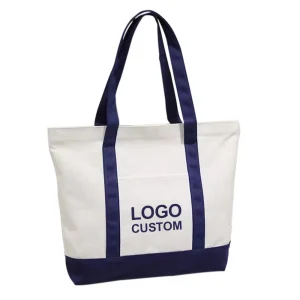
Cost range: $3–$6 per unit in bulk
Brand reference: L.L. Bean built its legacy on canvas tote bags — the original 1944 “Ice Carrier” was made from heavy canvas and designed to last a lifetime. That same durability-first philosophy continues to define the canvas tote’s appeal today.
2. Cotton Tote Bags
Cotton tote bags are made from lighter, softer woven cotton fabric — breathable, machine washable, and comfortable to carry, making them a natural fit for consumer-facing promotions. They are the most widely used material for event giveaways and lifestyle brand merchandise.
Standard cotton vs. organic cotton: which should you choose?
Both are common in B2B sourcing, but they serve different brand narratives:
| Standard Cotton | Organic Cotton (GOTS-certified) | |
|---|---|---|
| Certification | None required | GOTS or OCS certification |
| Water usage | ~2,700 liters per bag | Significantly lower |
| Cost premium | Baseline | +20–40% over standard |
| Positionierung der Marke | General use, broad appeal | Eco-conscious, premium messaging |
| Am besten für | Mass promotions, events | Sustainability-led brands, health/wellness |
If your campaign actively communicates environmental responsibility, the GOTS certification provides third-party verification that the claim is credible — not just a label.
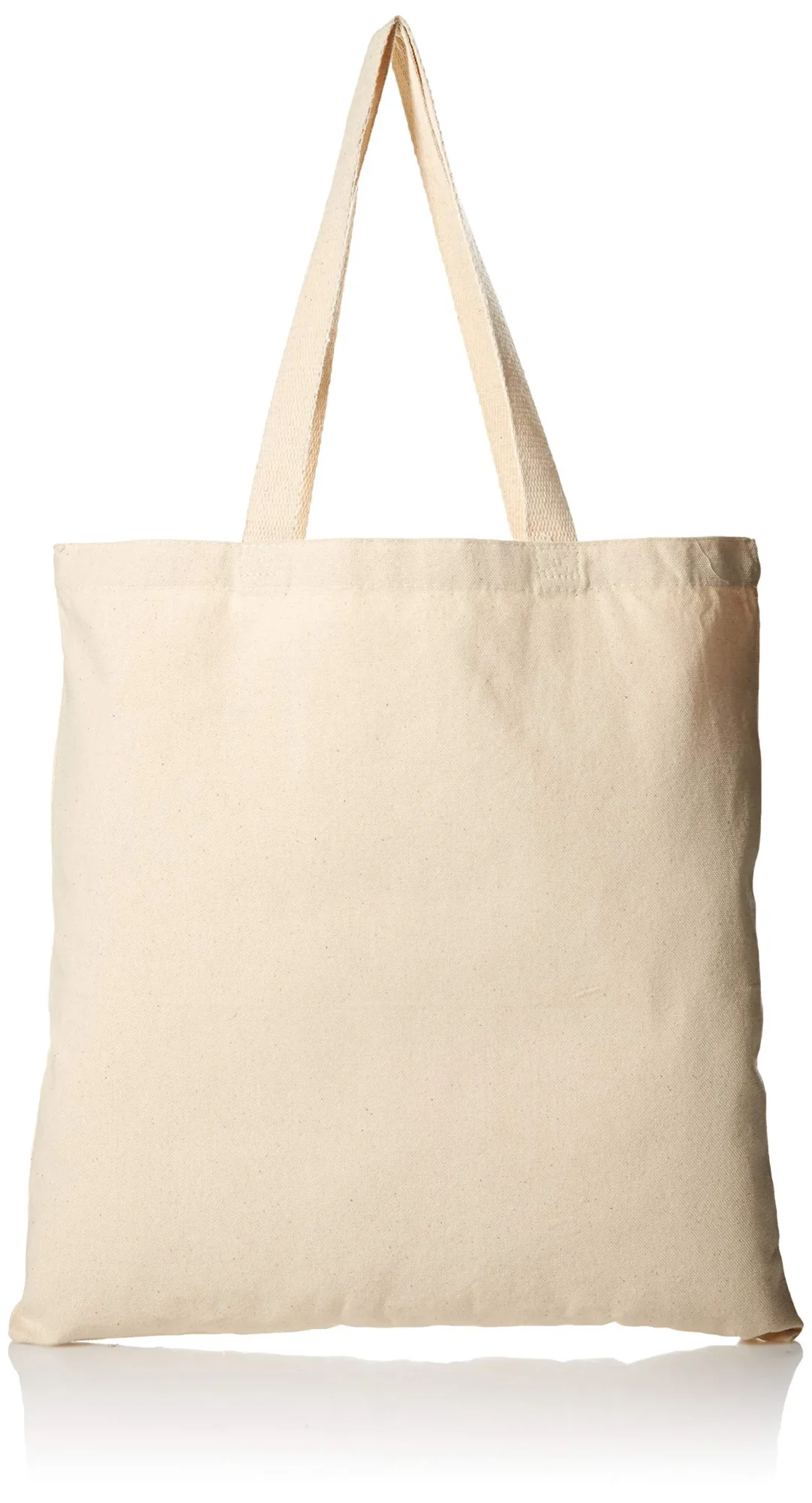
Best for: Event giveaways, retail packaging, eco-conscious brand promotions, farmers’ market and lifestyle brands.
Cost range: $2–$5 per unit in bulk
3. Non-Woven Polypropylene (PP) Tote Bags
Non-woven PP is made from bonded synthetic fibers — pressed and heat-fused rather than woven. It is the most cost-efficient material in the tote bag market and the default choice for high-volume campaigns where per-unit cost is the dominant decision factor.
Why non-woven PP dominates high-volume sourcing
The cost advantage is structural, not incidental. Three factors keep non-woven PP consistently at the bottom of the price range:
- Material cost: Polypropylene is a petroleum byproduct produced at massive industrial scale globally, keeping raw material costs extremely low.
- Production speed: Bonded fiber sheets are faster to produce than woven fabrics, reducing manufacturing time per unit.
- Shipping weight: At under 100g per bag, non-woven PP significantly reduces shipping cost per unit compared to canvas or cotton — an important factor for large international orders.
The trade-off is brand perception. Non-woven PP reads as functional, not premium. It is the right choice when volume and cost dominate the brief; it is the wrong choice when the bag itself needs to communicate quality.

Best for: High-volume promotional giveaways, supermarket reusable bags, trade show handouts, pharmacy and healthcare retail.
Cost range: $0.30–$1.00 per unit in bulk
4. Woven Polypropylene (PP) Tote Bags
Woven PP is made by interlacing polypropylene strips into a structured fabric — a fundamentally different construction from its non-woven counterpart. The result is significantly stronger, with better load-bearing capacity and a more textile-like appearance.
Load capacity and thickness specifications
For buyers sourcing grocery, hardware, or agricultural bags, woven PP specs are the critical decision point:
- 80 gsm: Standard weight; suitable for light grocery loads up to 8 kg.
- 100 gsm: Mid-weight; handles general retail loads and light industrial use up to 12 kg.
- 120+ gsm: Heavy-duty; suitable for bulk grocery, agricultural, or construction supply contexts up to 20 kg.
Laminated woven PP adds a glossy or matte coating over the woven surface, improving print quality and giving the bag a more polished, branded appearance — at a modest cost increase.
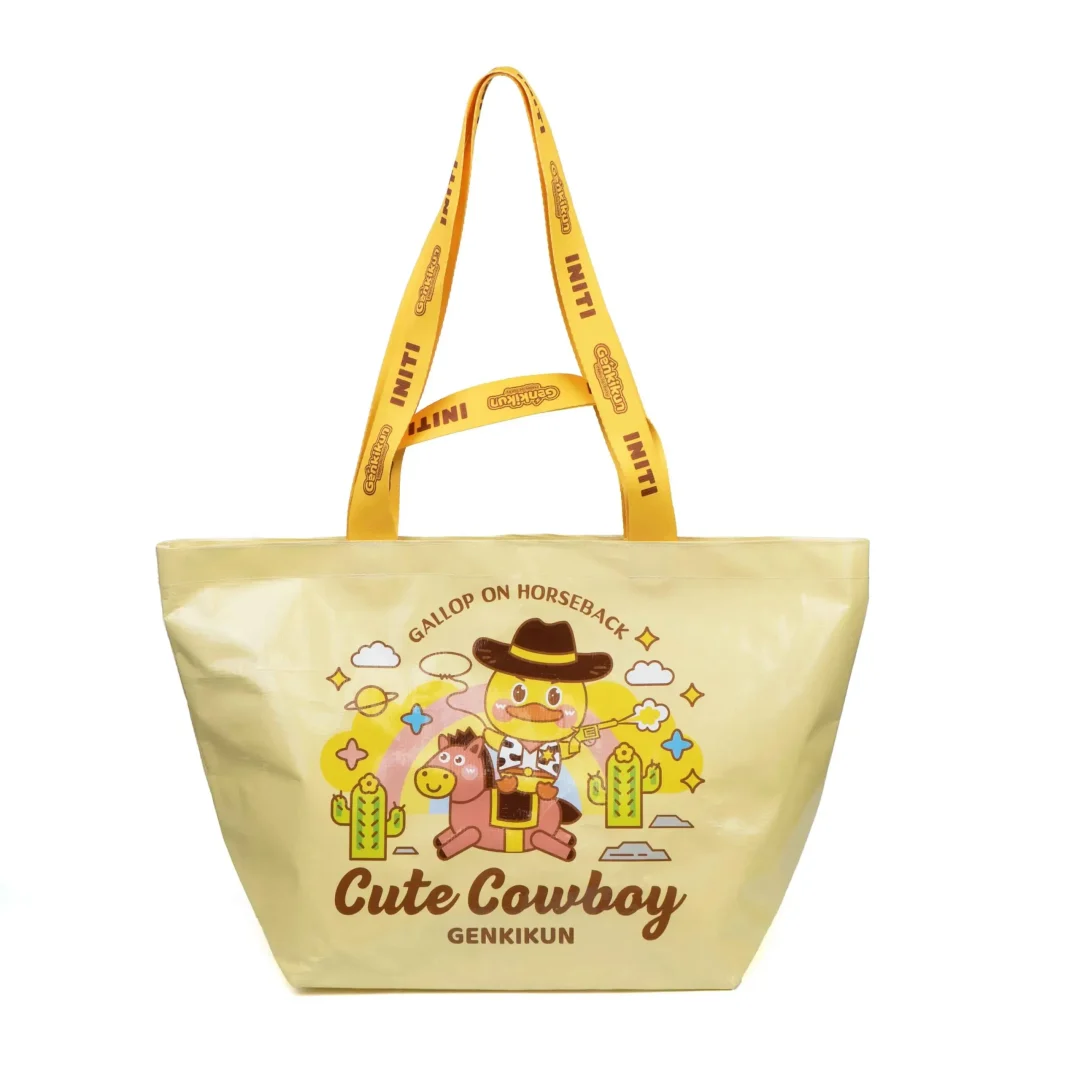
Best for: Grocery retailers, agricultural brands, hardware stores, any business that needs heavy-duty reusable bags at moderate cost.
Cost range: $0.80–$2.00 per unit in bulk
5. Jute Tote Bags
Jute — also known as burlap — is a natural plant fiber with a distinctive earthy texture and a rustic visual identity that communicates authenticity and environmental responsibility without needing to say a word. Bangladesh produces approximately 85% of the world’s jute supply.
Surface treatment and its effect on print quality
Jute’s natural rough texture is both its greatest asset and its primary print challenge. Surface treatment decisions directly affect what your branding will look like on the finished bag:
- Untreated jute: Maximum natural texture and earthy appearance. Print edges appear slightly soft due to fiber irregularity. Best for simple logos, single-color designs, or intentionally rustic aesthetics.
- Laminated jute (interior lining): A cotton or non-woven PP lining on the inside of the bag improves structural stability and prevents small items from catching on the weave — without changing the exterior appearance.
- Coated jute: A light coating on the exterior surface smooths the texture and improves print sharpness, enabling cleaner multi-color designs. Slightly reduces the natural look but significantly improves branding precision.
For brands where the jute texture is part of the story, untreated is the right call. For brands that need clean, detailed print output, a coated surface is worth the small cost premium.
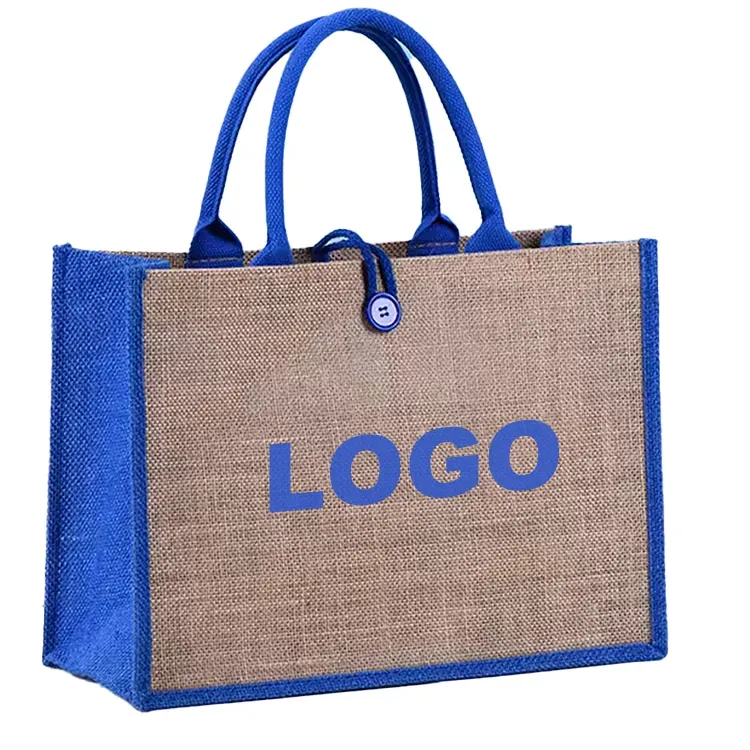
Best for: Organic food brands, eco-conscious retailers, farmers’ markets, health and wellness companies.
Cost range: $1.50–$4.00 per unit in bulk
6. Leather Tote Bags
Leather tote bags occupy the top tier of the market and carry immediate associations with craftsmanship, exclusivity, and lasting value. For B2B buyers, the most consequential decision is not color or size — it is the choice between genuine leather and PU leather.
Genuine leather vs. PU leather: a practical comparison for B2B buyers
| Echtes Leder | PU-Leder | |
|---|---|---|
| Source | Animal hide (cowhide most common) | Polyurethane-coated synthetic base |
| Dauerhaftigkeit | 10+ years with care | 3–5 years typical |
| Aging | Develops patina; improves with use | May peel or crack over time |
| Kosten | $20–$50+ per unit | $10–$20 per unit |
| Branding methods | Embossing, debossing, foil stamping | Embossing, screen print, foil |
| Am besten für | Executive gifts, luxury retail | Premium-adjacent gifts, fashion brands |
For top-tier corporate gifting where recipients will use the bag for years, genuine leather justifies its cost through longevity and perceived value. For fashion-forward campaigns with a shorter lifecycle, PU leather provides a comparable aesthetic at meaningfully lower cost.
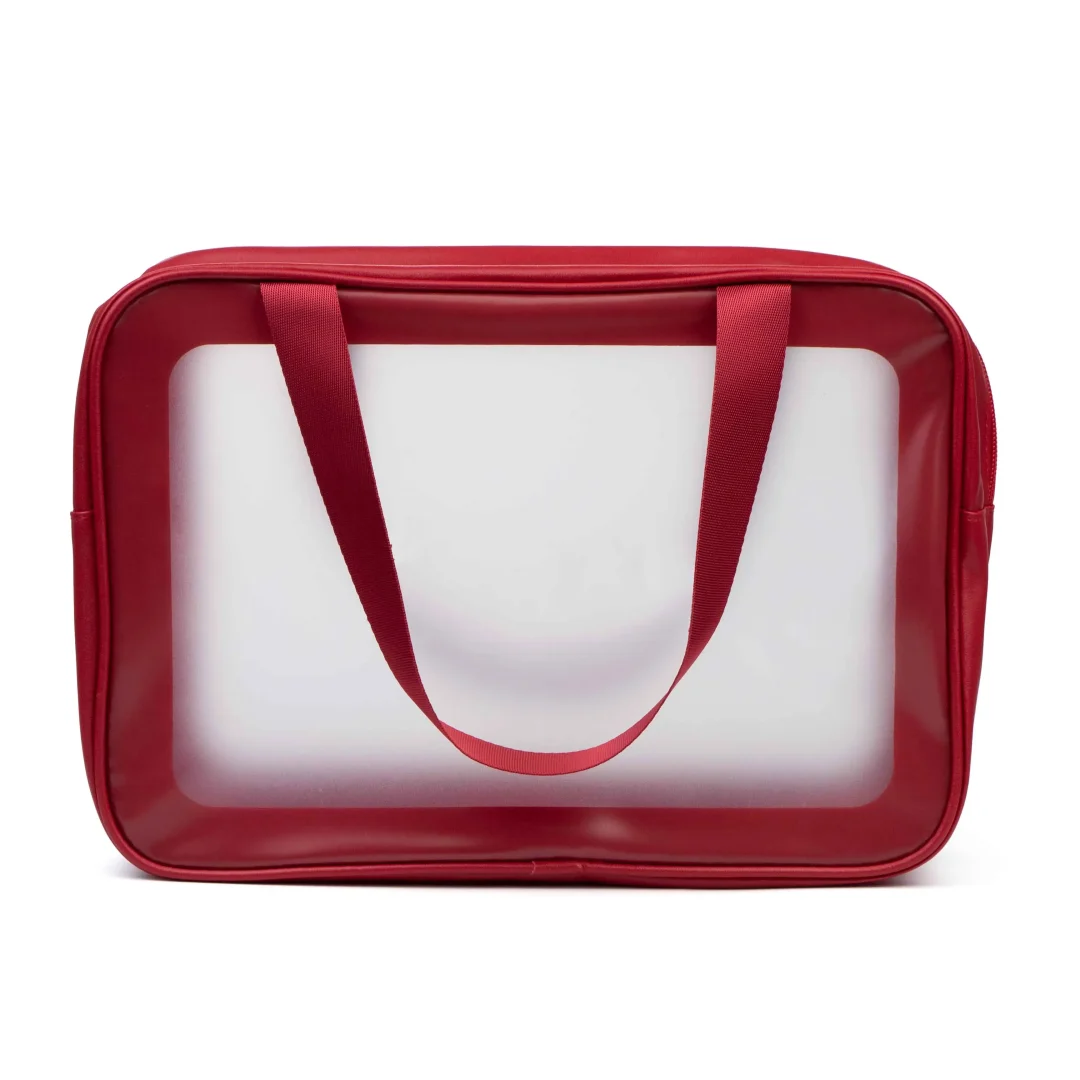
Best for: Executive corporate gifts, luxury retail packaging, VIP client appreciation, fashion brands targeting premium segments.
Cost range: $10–$50+ per unit depending on leather grade and finish
7. Nylon and Polyester Tote Bags
Nylon and polyester are lightweight, water-resistant, and virtually tear-proof synthetic materials — the natural choice for sporting goods brands, outdoor companies, and travel-focused campaigns. Their key differentiator from other materials is the breadth of fabric weight options available, each suited to different performance requirements.
Fabric weight guide: matching denier to use case
Nylon and polyester fabrics are rated in denier (D) or thread count (T) — a measure of yarn thickness and density. Choosing the right weight prevents over-specifying (paying for durability you don’t need) or under-specifying (bags that fail in use):
| Fabric Spec | Gewicht | Typische Verwendung |
|---|---|---|
| 190T polyester | Ultra-light | Foldable/packable totes, giveaway bags |
| 210D nylon | Light | Everyday carry, retail bags |
| 420D nylon/polyester | Mittel | Gym bags, commuter totes, travel bags |
| 600D polyester | Medium-heavy | Trade show bags, beach totes, tool bags |
| 1680D ballistic nylon | Hochbelastbar | Professional equipment bags, long-term corporate gifts |
For sublimation printing — which requires polyester fabric — 420D is the standard minimum for bags intended for extended use.
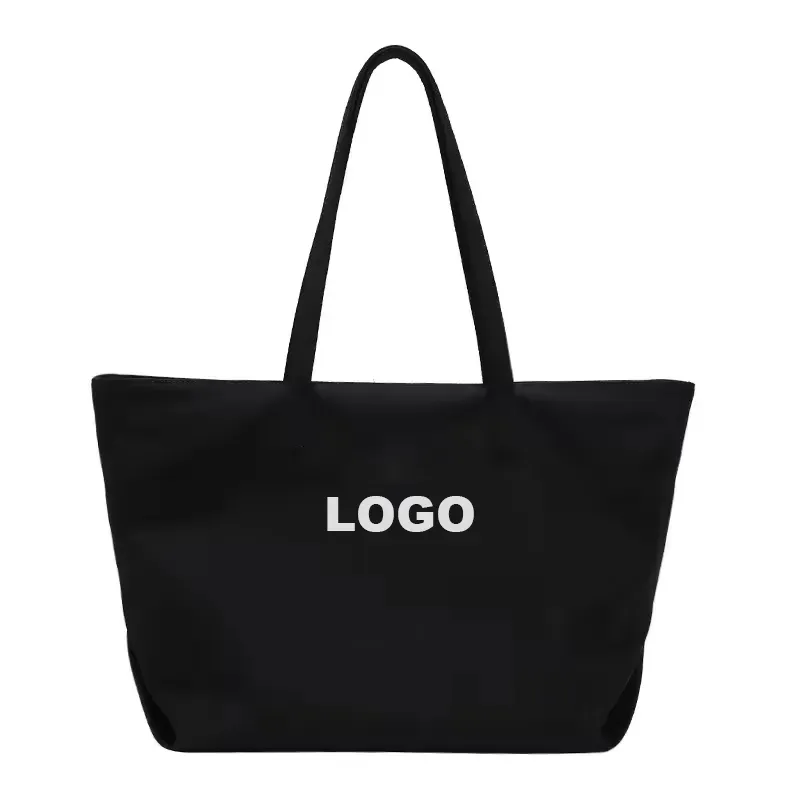
Best for: Sports brands, outdoor retailers, travel gear companies, event bags for active audiences.
Cost range: $2–$5 per unit in bulk
Brand reference: Prada’s Re-Nylon collection demonstrates how synthetic materials can be elevated to luxury status when sustainability and craftsmanship are combined — regenerated nylon totes now sit alongside the brand’s leather goods as permanent collection pieces.
8. Clear PVC Tote Bags
Clear PVC tote bags are made from transparent polyvinyl chloride, offering full visibility of bag contents. Beyond their retail applications, they have become a compliance-driven requirement in specific contexts — most notably venues and events with mandatory clear bag policies.
Where clear bag policies make PVC a non-negotiable choice
An increasing number of sports stadiums, concert venues, airports, and large-scale public events in North America and Europe now enforce clear bag policies as a security measure. For brands operating in these environments — sports teams, live event promoters, festival organizers — a clear tote is not a style choice but a functional requirement. Key specifications to verify:
- Size compliance: Most venue policies cap clear bags at 12″ × 6″ × 12″ (roughly 30 × 15 × 30 cm). Confirm current venue requirements before finalizing bag dimensions.
- PVC vs. TPU: TPU (thermoplastic polyurethane) is a softer, more flexible alternative to standard PVC. It offers similar transparency with better cold-weather performance and is considered more environmentally preferable.
- Branding placement: UV printing directly onto PVC produces clean, durable results. Keep designs to the lower corners or handle area to maintain the transparency that defines the format.
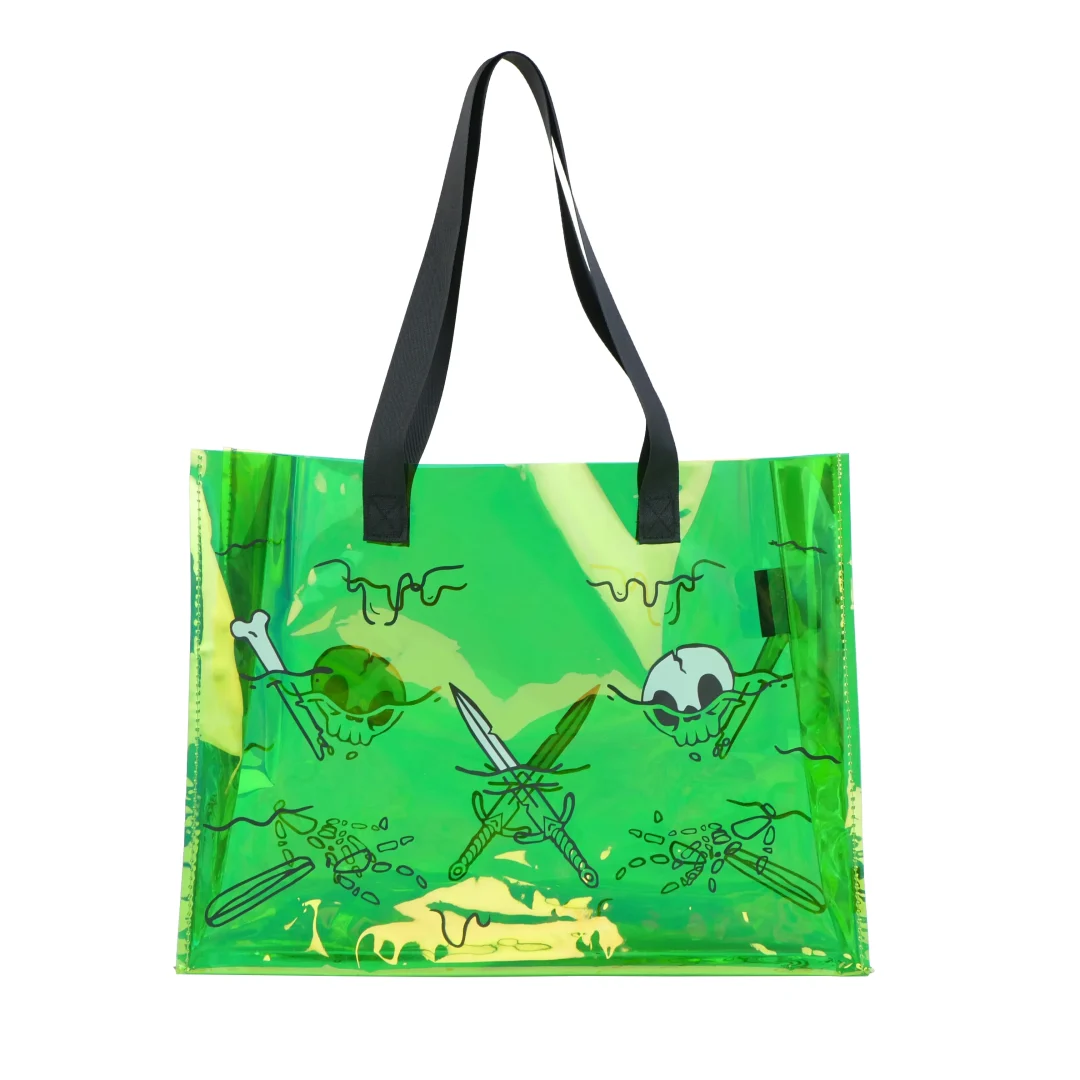
Best for: Retail gift packaging, beauty and cosmetics brands, stadium and venue merchandise, events with clear bag policies.
Cost range: $2–$4 per unit in bulk
9. rPET (Recycled PET) Tote Bags
rPET fabric is made by converting post-consumer plastic bottles into polyester fibers, which are then woven into a strong, versatile textile. It delivers performance comparable to virgin polyester while providing a sustainability story that is measurable, certifiable, and directly communicable to end users.
Quantifying the environmental impact: what the numbers actually mean
Unlike general sustainability claims, rPET offers specific, verifiable data points that brands can use in marketing communications:
- A standard medium rPET tote bag (300g fabric weight) typically incorporates 6–8 recycled 500ml PET bottles.
- Each kilogram of rPET fabric produced generates approximately 32% less CO₂ compared to virgin polyester production.
- rPET bags sourced from GRS-certified suppliers can be independently verified — meaning the recycled content claim is auditable, not just printed on a label.
For B2B buyers whose clients are required to report on Scope 3 emissions or sustainable procurement, GRS-certified rPET provides documentation that supports those reporting requirements directly.
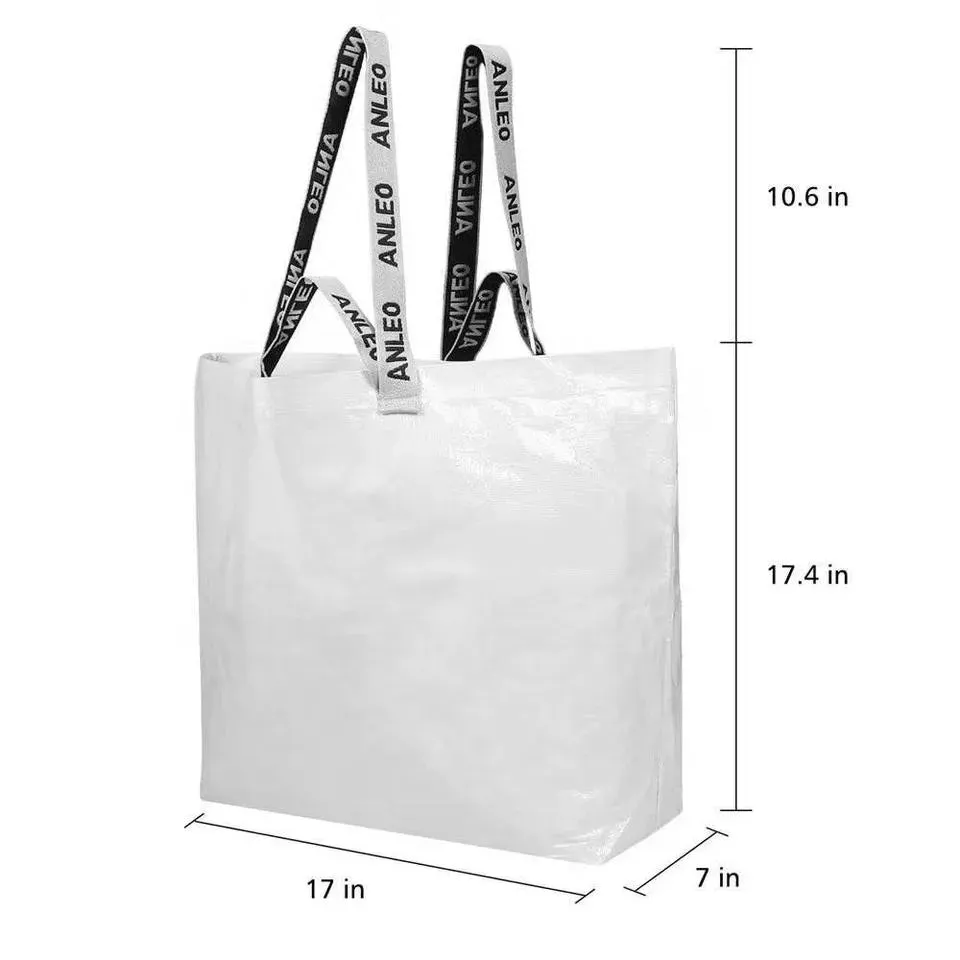
Best for: Brands with active ESG or CSR commitments, corporate sustainability campaigns, eco-conscious retail, any project where the material itself is part of the brand narrative.
Cost range: $2–$5 per unit in bulk
Material Comparison at a Glance
| Material | Print Compatibility | Dauerhaftigkeit | Eco Credentials | Cost (Bulk) | Best Use Case |
|---|---|---|---|---|---|
| Segeltuch | ★★★★★ | ★★★★★ | ★★★☆☆ | $3–$6 | Premium branding, retail |
| Baumwolle | ★★★★★ | ★★★★☆ | ★★★★☆ | $2–$5 | Events, lifestyle brands |
| Vlies-PP | ★★★☆☆ | ★★☆☆☆ | ★★☆☆☆ | $0.30–$1 | Mass promotions |
| Woven PP | ★★★☆☆ | ★★★★☆ | ★★☆☆☆ | $0.80–$2 | Grocery, heavy-duty |
| Jute | ★★★☆☆ | ★★★☆☆ | ★★★★★ | $1.50–$4 | Eco brands, organic retail |
| Leder | ★★☆☆☆ | ★★★★★ | ★★☆☆☆ | $10+ | Luxury gifts, premium retail |
| Nylon/Polyester | ★★★★☆ | ★★★★☆ | ★★★☆☆ | $2–$5 | Sports, outdoor, travel |
| Klares PVC | ★★★☆☆ | ★★★☆☆ | ★☆☆☆☆ | $2–$4 | Venue compliance, retail packaging |
| rPET | ★★★★☆ | ★★★★☆ | ★★★★★ | $2–$5 | CSR campaigns, eco retail |
Types of Tote Bags by Style and Structure
Beyond material, the structural style of a tote bag determines its capacity, usability, and the impression it makes on end users. Here are the six most common tote bag styles used in business contexts.
1. Flat Tote Bags
The flat tote is the most stripped-down version of the format — no gusset, no base expansion, just a simple front panel, back panel, and handles. This minimalism makes it the most cost-efficient style to produce and the easiest to print on, with a large, uninterrupted surface area ideal for bold branding.
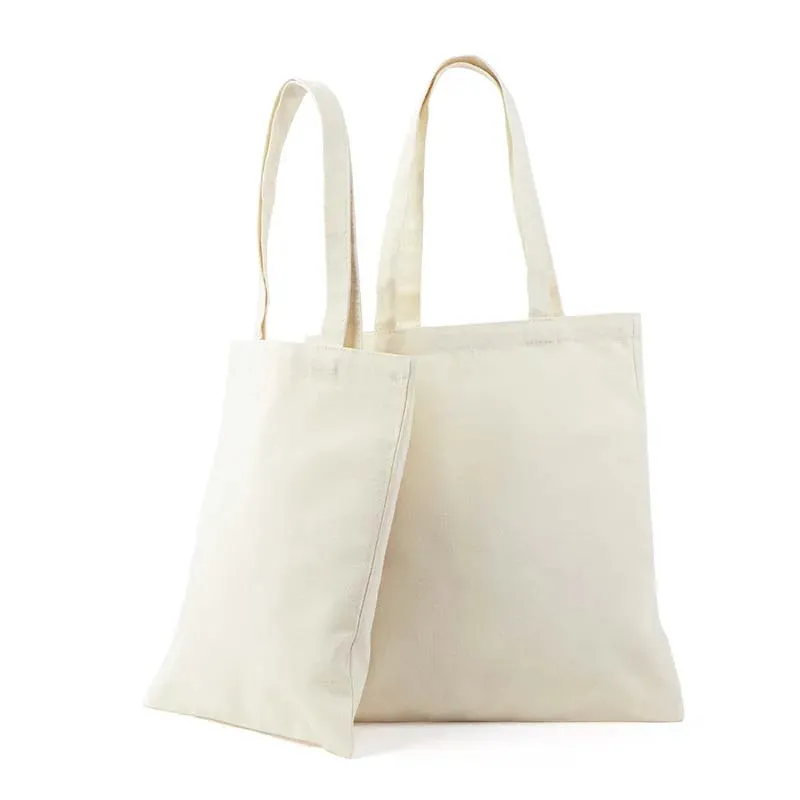
Closure options: Open top, magnetic snap Best for: Event giveaways, bookstore bags, promotional handouts Typical materials: Canvas, cotton, non-woven PP
2. Gusseted Tote Bags
A gusseted tote adds a structured bottom and/or side panels (the “gusset”) that expand the bag’s capacity and allow it to stand upright independently. This makes it significantly more practical for everyday carrying — the bag can hold more, stays organized, and is easier to pack and unpack.
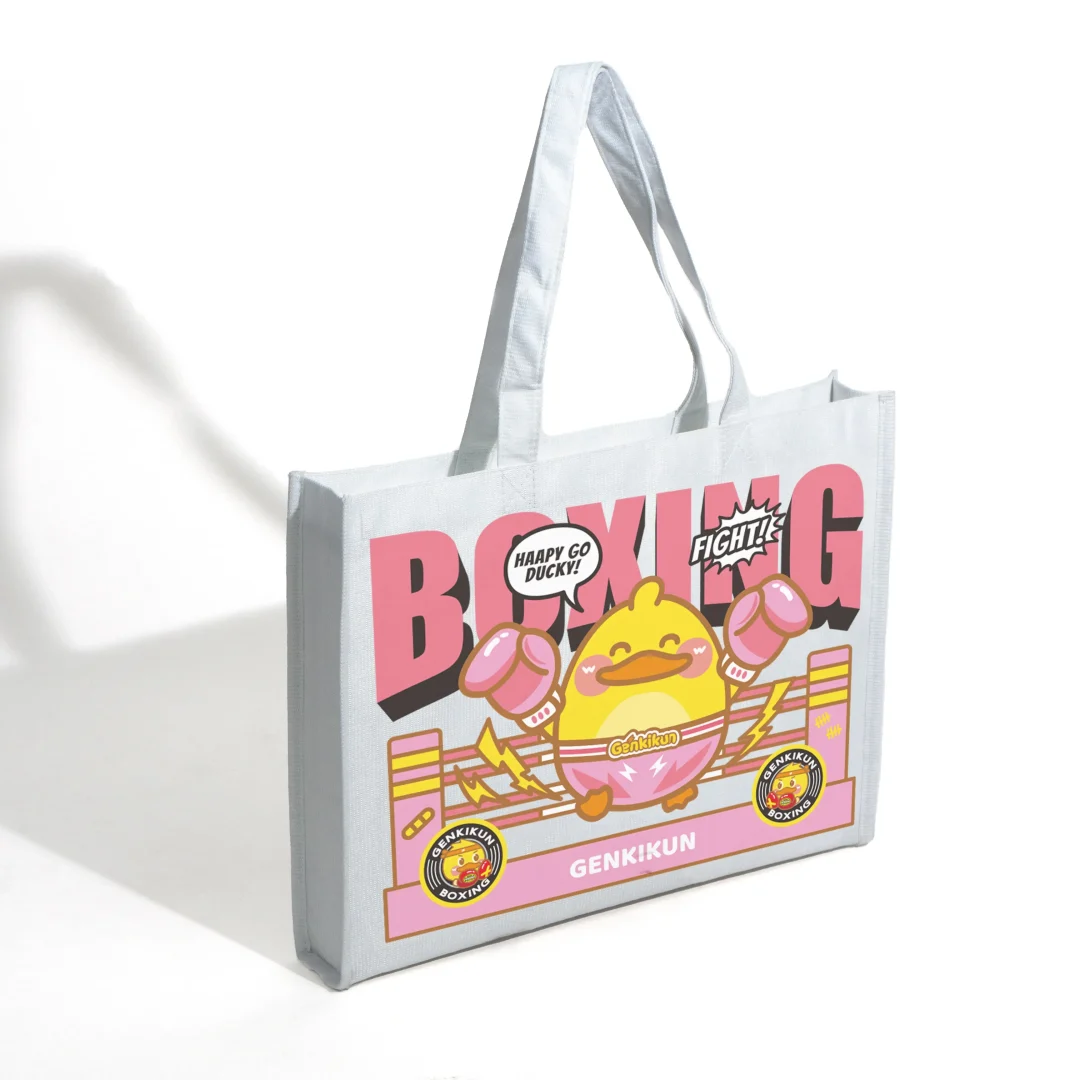
Closure options: Open top, zipper Best for: Grocery shopping, beach bags, daily-use retail bags, trade show material bags Typical materials: Canvas, woven PP, cotton, rPET
3. Zippered Tote Bags
The zippered tote adds a full-length zipper across the top opening, securing all contents inside. This transforms the tote from a casual carry-all into a more purposeful bag suited for commuting, travel, and any situation where security matters.
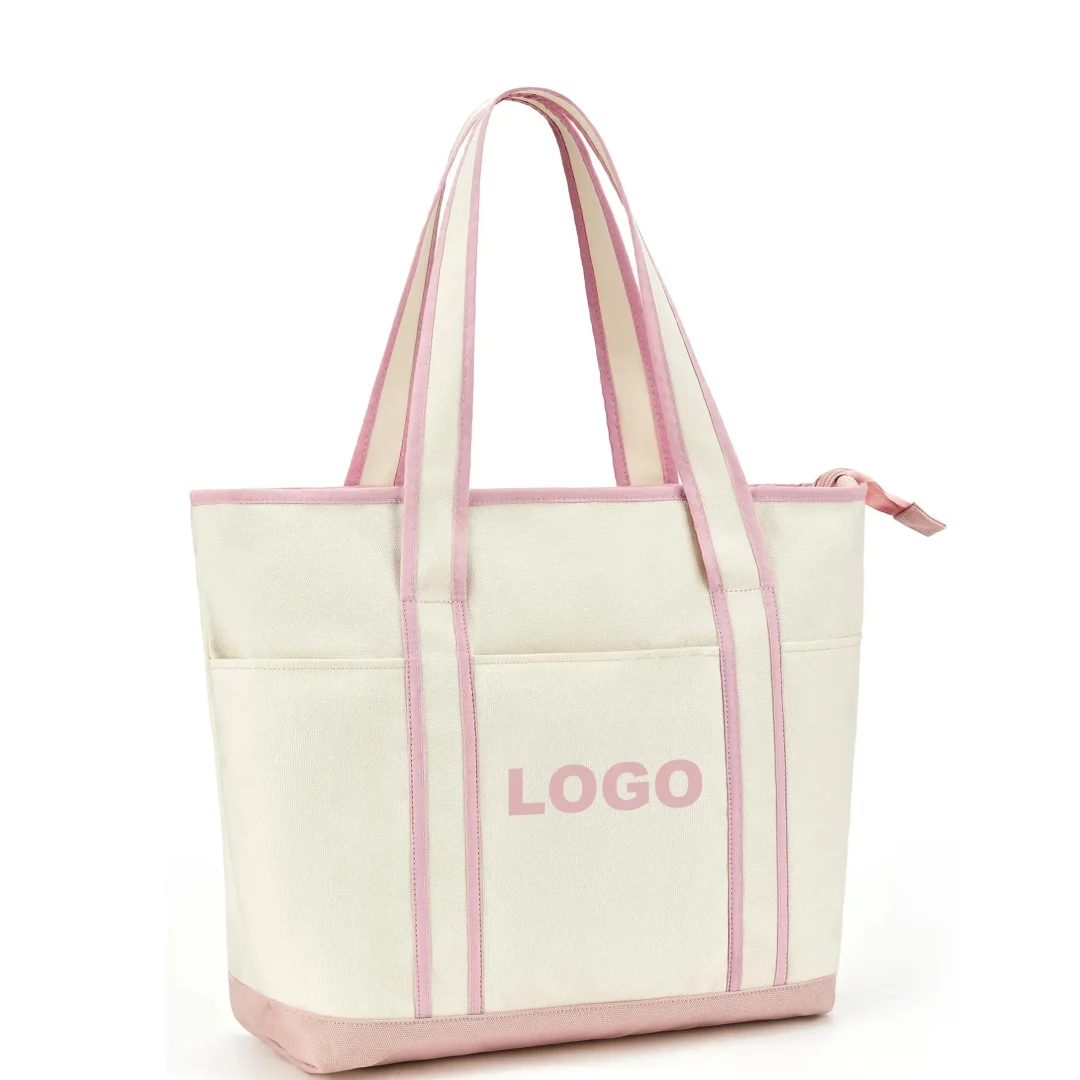
Closure options: Zipper (YKK or equivalent) Best for: Corporate employee gifts, commuter bags, travel kits, healthcare sector bags Typical materials: Canvas, nylon, polyester
4. Foldable Tote Bags
Foldable tote bags are designed to collapse into a compact, pocketable form when not in use — often folding into a built-in pouch or small rectangle. Their convenience factor is unmatched for on-the-go audiences who want a reusable bag without the bulk.
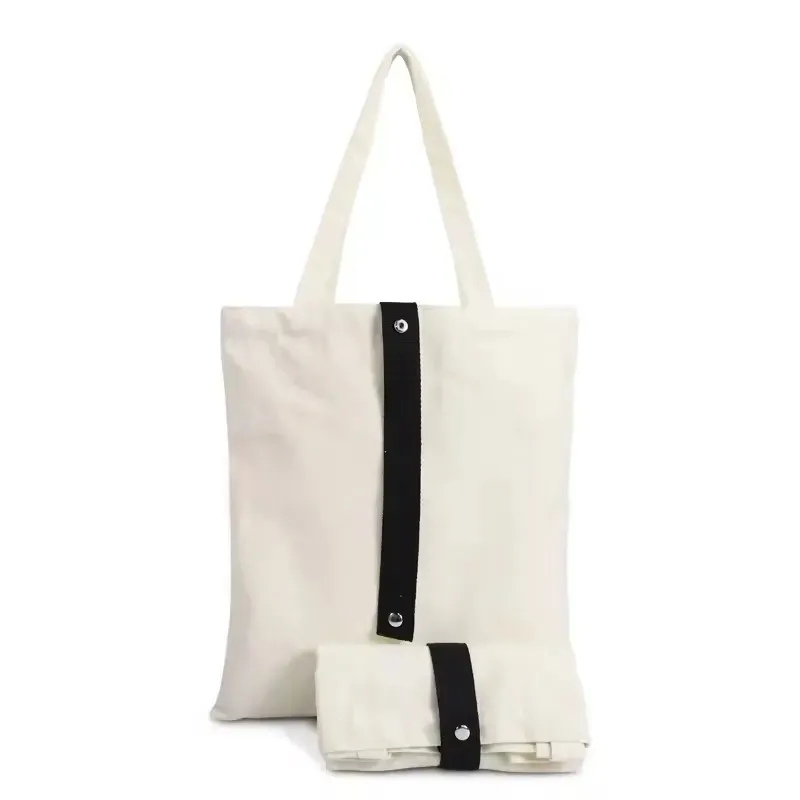
Closure options: Magnetic snap, open top Best for: Retail impulse purchases, travel brands, lifestyle giveaways, eco-conscious campaigns encouraging plastic bag replacement Typical materials: Nylon, polyester, ripstop fabric
Brand reference: Longchamp’s Le Pliage is the definitive commercial benchmark for the foldable tote. Decades after its introduction, it remains one of the world’s best-selling bag styles — proof that functional innovation and elegant design are not mutually exclusive.
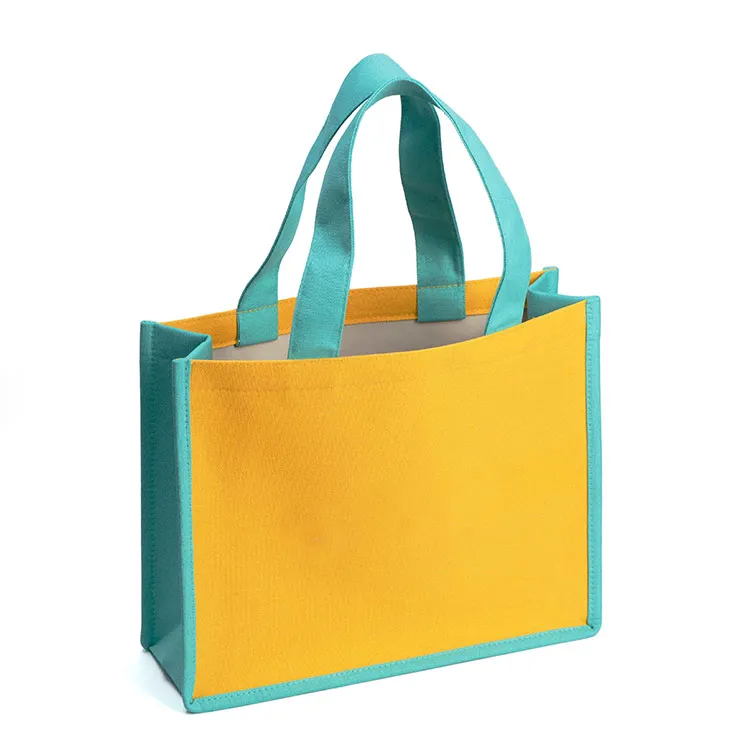
5. Box Tote Bags (Structured Tote Bags)
Box totes have a rigid, three-dimensional base structure that gives them a clean, architectural silhouette. The structured shape immediately reads as more premium and is often reinforced with cardboard inserts or thick interfacing. They are the preferred format for luxury retail packaging and high-end gift presentation.
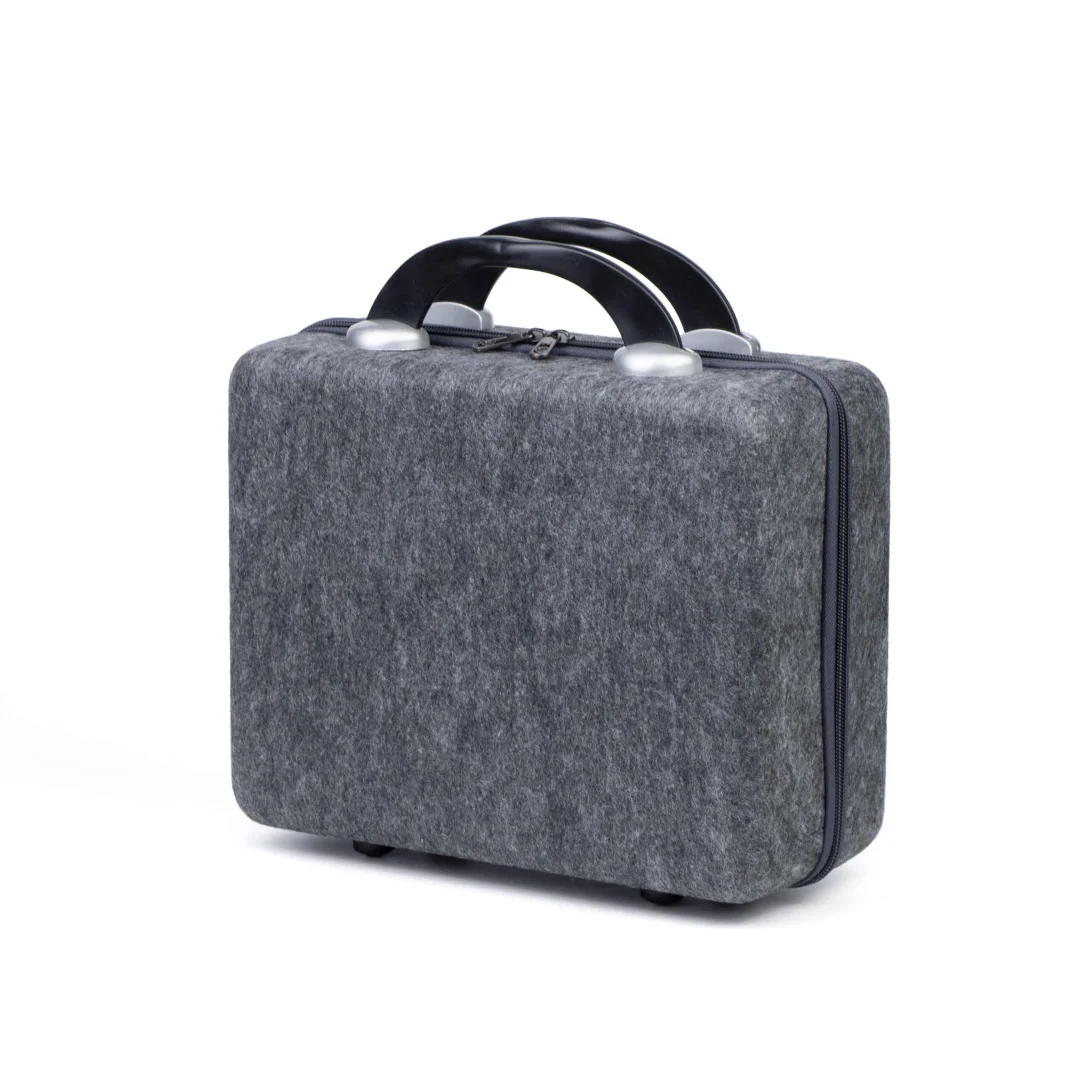
Closure options: Magnetic snap, zipper, ribbon tie Best for: Luxury retail packaging, branded gift boxes, seasonal campaign packaging, fashion brands Typical materials: Canvas, leather, laminated fabric
Closure Type Quick Reference
| Verschlussart | Security Level | Ease of Access | Best Application |
|---|---|---|---|
| Open Top | Niedrig | ★★★★★ | Shopping, casual, giveaways |
| Magnetic Snap | Mittel | ★★★★☆ | Daily use, retail, gifts |
| Reißverschluss | Hoch | ★★★☆☆ | Commuting, travel, healthcare |
| Kordelzug | Mittel | ★★★★☆ | Sports, casual, outdoor |
| Ribbon/Toggle | Low–Medium | ★★★★☆ | Gift packaging, seasonal campaigns |
Types of Tote Bags by Handle
Handle design is often overlooked in the sourcing process, but it directly affects user comfort, perceived quality, and load capacity. For B2B buyers, handle specifications also impact production cost and MOQ.
Double Short Grab Handles
The classic tote handle configuration — two parallel handles rising from the bag’s top edge, long enough to carry by hand but not over the shoulder. This is the most widely produced handle style and the default for most standard tote bag orders.
Länge des Griffs: Typically 20–28 cm Best for: Shopping bags, event giveaways, retail carry bags
Long Shoulder Strap Handles
Extended handles that allow the bag to be carried over the shoulder or across the body, leaving both hands free. This is the preferred handle style for commuter and travel contexts where extended carry time is expected.
Länge des Griffs: Typically 60–70 cm Best for: Commuter bags, book bags, daily carry bags
Dual-Function Handles (Short + Long)
Some tote bag designs incorporate both a short grab handle and a longer shoulder strap, giving users the flexibility to switch between carry styles based on load and situation. This adds modest production cost but significantly increases perceived utility.
Best for: Corporate gifts, versatile daily-use bags, any bag expected to serve multiple contexts
Wide Padded Shoulder Straps
Wide, padded, or reinforced shoulder straps are designed for heavy-load scenarios where standard handles would dig into the shoulder. They are common in book bags, gym totes, and professional equipment bags.
Best for: University bookstore bags, gym bags, professional tool bags, any application involving sustained heavy carry
Handle Material Options
| Material des Griffs | Feel | Dauerhaftigkeit | Cost Impact | Best Pairing |
|---|---|---|---|---|
| Cotton webbing | Soft, natural | ★★★★☆ | Niedrig | Canvas, jute, cotton bags |
| Leder | Premium, structured | ★★★★★ | Hoch | Canvas, box totes, luxury bags |
| Polyester webbing | Smooth, practical | ★★★★☆ | Niedrig | Non-woven PP, nylon, rPET |
| Bamboo | Distinctive, design-forward | ★★★☆☆ | Mittel | Artisan, boutique, eco bags |
| Rope/braided cotton | Casual, textured | ★★★☆☆ | Low–Medium | Beach bags, lifestyle brands |
Tote Bag Sizes: Which One Is Right for Your Business?
Size selection affects not only what the bag can carry, but also your print area, shipping cost per unit, and perceived value. Here is the standard sizing framework used across the industry.
| Größe | Typical Dimensions | Kapazität | Ideal Applications |
|---|---|---|---|
| Klein | 20×25×8 cm | Under 10L | Gift bags, boutique retail, cosmetics packaging |
| Mittel | 30×35×10 cm | 10–15L | Daily use, promotions, coffee shop merch, events |
| Groß | 40×45×12 cm | 20–30L | Grocery shopping, apparel retail, trade shows |
| Oversized | 50 cm+ | 30L+ | Exhibition materials, beach bags, travel kits |
Print area consideration: A standard medium tote (30×35 cm) provides approximately 900 cm² of printable surface per side — sufficient for a clear logo, tagline, and supplementary brand elements. Large and oversized formats support more complex full-surface designs but increase per-unit cost and shipping weight.
Custom Tote Bag Design: Printing, Color, and Features
Once you have selected a material, style, and size, the customization layer is where your brand identity is applied. Three variables matter most: color, printing method, and functional add-ons.
Farbauswahl
Pantone Matching System (PMS): For precise brand color reproduction, always specify a Pantone solid coated (C) or solid uncoated (U) reference number when placing custom orders. This eliminates ambiguity across screens, swatches, and production batches.
Stock colors vs. custom dye: Most suppliers maintain inventory in standard colors — black, white, natural/beige, navy, and red. Ordering within stock colors reduces MOQ requirements and shortens lead times by 1–2 weeks. Custom dye colors typically require a minimum of 500 units and an additional sampling cycle.
Fabric color vs. print color: High-contrast combinations deliver the strongest brand visibility. Dark fabric (black, navy, forest green) paired with white or metallic print produces clean, professional results. Light fabric (natural, white, cream) supports full-color printing with maximum vibrancy.
Druckverfahren
| Method | Best Materials | Minimum Order | Key Advantage |
|---|---|---|---|
| Siebdruck | Canvas, cotton, non-woven PP | 500+ units | Cost-effective at scale; vibrant solid colors |
| DTG (Direct to Garment) | Cotton-based fabrics | 500+ units | Full-color detail; ideal for complex artwork |
| Wärmeübertragung | Polyester, nylon | 500+ units | Durable; no fade or cracking; CMYK compatible |
| Sublimation | Polyester only (light colors) | 500+ units | All-over print; vivid color saturation |
| UV Printing | Canvas, cotton, rigid surfaces | 500+ units | High-end tactile finish; strong brand presence |
Functional Add-Ons
The right features transform a commodity bag into a genuinely useful daily object — which is exactly what drives long-term brand visibility.
Interior features:
- Zippered inner pocket — secures valuables; standard in commuter and travel bags
- Open slip pocket — quick access for phone, transit cards, or pens
- Key clip (D-ring) — prevents keys from sinking to the bottom of the bag
- Laptop sleeve — padded compartment for corporate or tech-focused gift bags
Exterior features:
- Front slip pocket — high-frequency items accessible without opening the main compartment
- Side water bottle pocket — elastic mesh holder; standard in gym and beach totes
- Badge holder or card window — useful for conference and trade show bags
Structural upgrades:
- Insulated lining — aluminum foil composite; required for food delivery, cold grocery, and catering applications
- Reinforced base panel — extends bag lifespan for heavy-load applications
- Waterproof inner lining — protects contents in beach, outdoor, and travel contexts
Real Brand Examples: How Industry Leaders Use Tote Bags
The most instructive way to understand tote bag strategy is to study brands that have turned a functional object into a business and marketing asset.
L.L. Bean — Durability as Brand Identity
Material: Heavy canvas | Stil: Gusseted tote | Größe: Groß
L.L. Bean’s tote bag story begins in 1944 with the “Ice Carrier” — a heavy canvas bag designed to haul firewood and ice blocks. Decades later, the same bag is sold as a lifestyle icon. The lesson for B2B buyers: when the product’s quality is genuinely exceptional, the tote bag becomes a permanent advertisement. L.L. Bean’s canvas tote has earned its reputation not through marketing spend, but through the simple fact that it lasts.
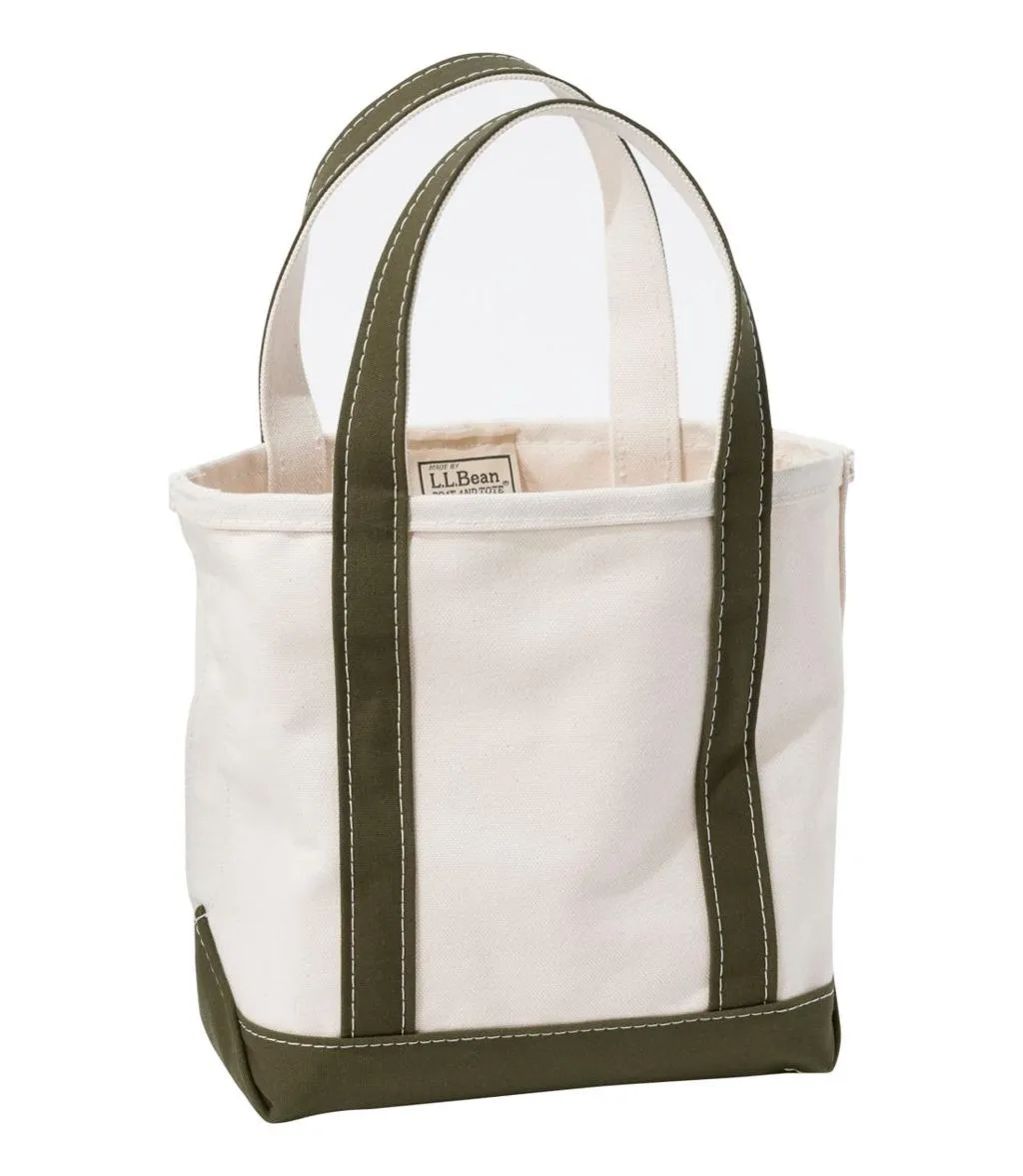
Das Wichtigste zum Mitnehmen: Investing in material quality pays compound returns. A bag that survives years of use generates hundreds more brand impressions than a bag that wears out after a season.
IKEA (FRAKTA) — Utility at Scale Creates Cultural Icons
Material: Woven PP | Stil: Oversized gusseted tote | Größe: Oversized
The FRAKTA bag — the iconic blue IKEA shopping bag — is arguably the most recognized retail tote in the world. Priced at under $1, it delivers near-unlimited capacity and near-indestructible durability. It has been the subject of high-fashion parodies, designer collaborations, and viral social media content. IKEA did not design the FRAKTA to be a cultural artifact; it designed it to be useful. The cultural status followed naturally.
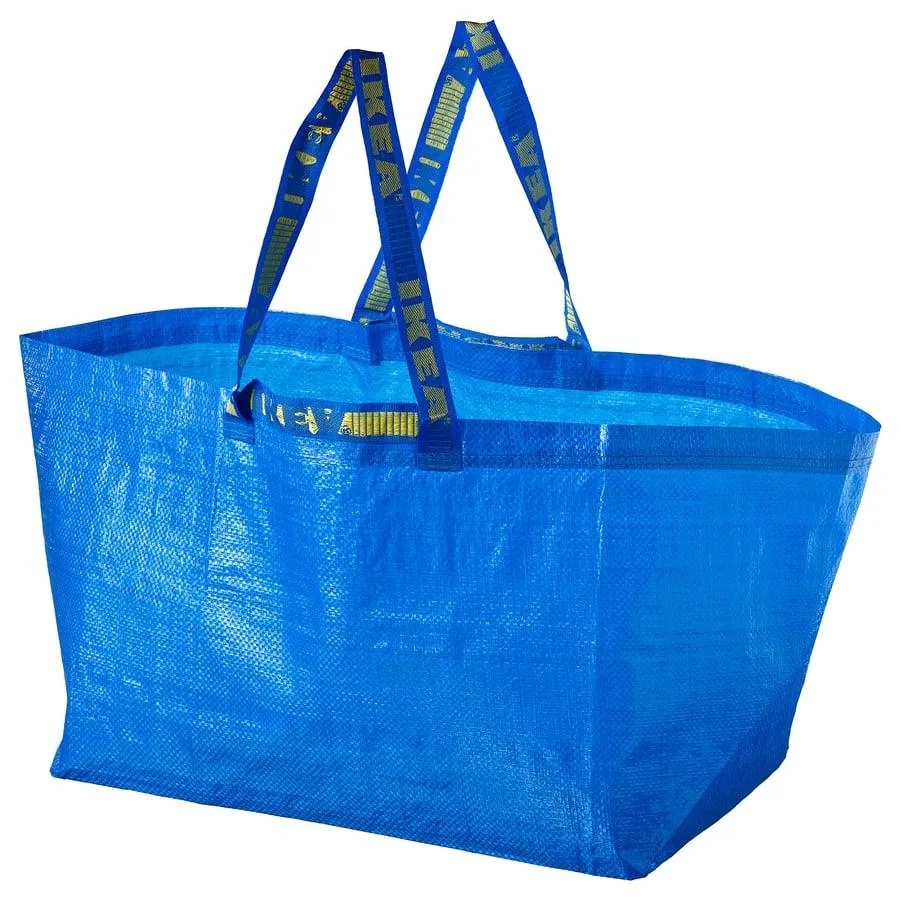
Das Wichtigste zum Mitnehmen: Functional excellence at scale creates brand recognition without requiring premium positioning. For high-volume campaigns, woven PP bags can punch far above their cost.
Trader Joe’s — Scarcity Turns a Shopping Bag into a Collectible
Material: Cotton | Stil: Flat tote | Größe: Mittel
Trader Joe’s releases limited-edition tote bag designs tied to seasons, locations, and themes. Each release sells out. Customers photograph them, trade them, and discuss them on social media — all without a single dollar spent on paid media promotion. The bag has become a form of brand social currency: carrying a Trader Joe’s tote signals membership in a particular cultural tribe.
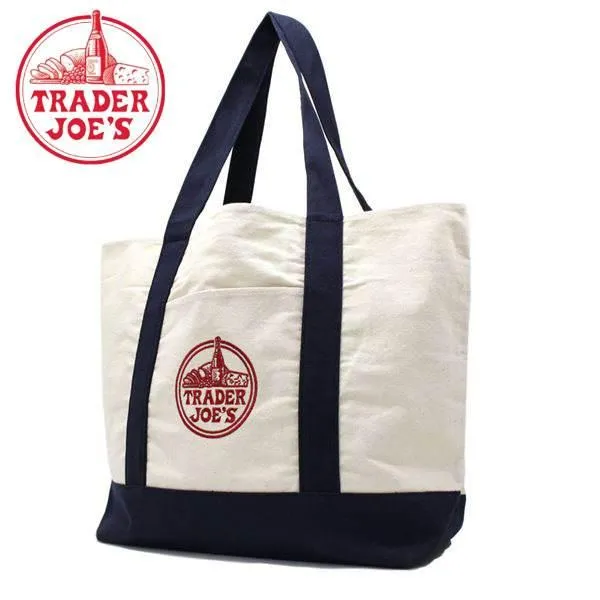
Das Wichtigste zum Mitnehmen: Design exclusivity drives organic word-of-mouth. Even a simple cotton tote can become a high-impact marketing vehicle when limited availability and strong design identity are combined.
Longchamp Le Pliage — Functional Innovation with Lasting Appeal
Material: Nylon | Stil: Foldable tote | Größe: Multiple
The Le Pliage is one of the world’s best-selling bag styles — and it is, at its core, a foldable tote bag. Its commercial longevity (spanning decades and multiple generations of customers) is built on a single insight: people want a bag that is genuinely useful and beautiful at the same time. The Le Pliage folds flat, weighs almost nothing, and holds a surprising volume. It also looks like it cost more than it did.
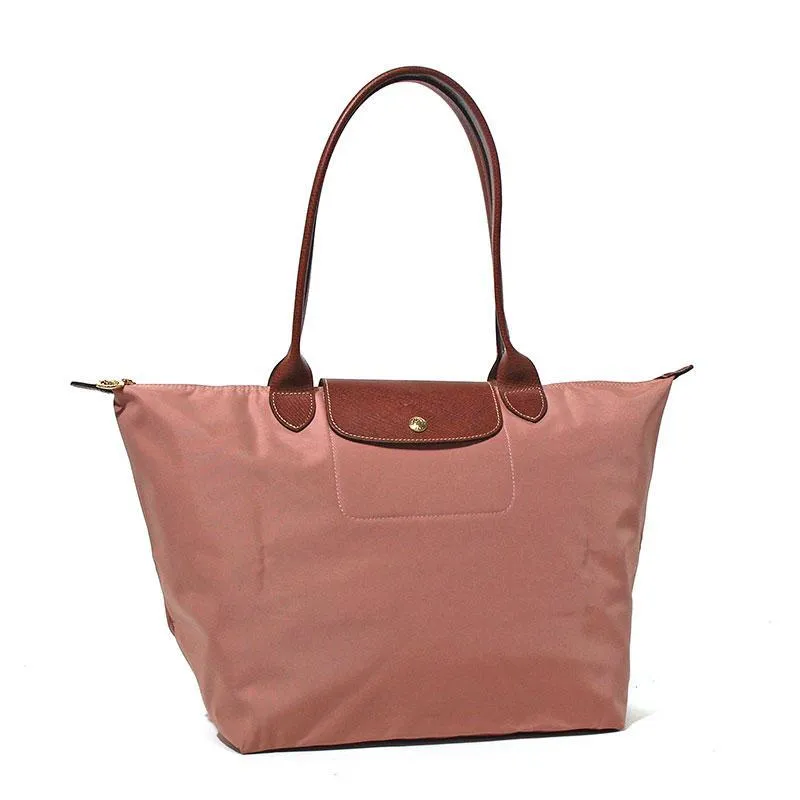
Das Wichtigste zum Mitnehmen: Solving a real usability problem — in this case, the bulkiness of reusable bags — creates enduring product loyalty. Foldable tote designs are underutilized in B2B sourcing and represent a strong opportunity for differentiation.
New York Public Library (NYPL) — Cultural IP Transforms a Tote into a Status Object
Material: Canvas | Stil: Flat tote | Größe: Mittel
The NYPL’s canvas tote bags — featuring archival imagery from the library’s vast collection — routinely sell out. A public institution with no conventional retail infrastructure has built a merchandise line that generates revenue and brand awareness simultaneously. The tote bag is not a souvenir; it is a statement of cultural affiliation.
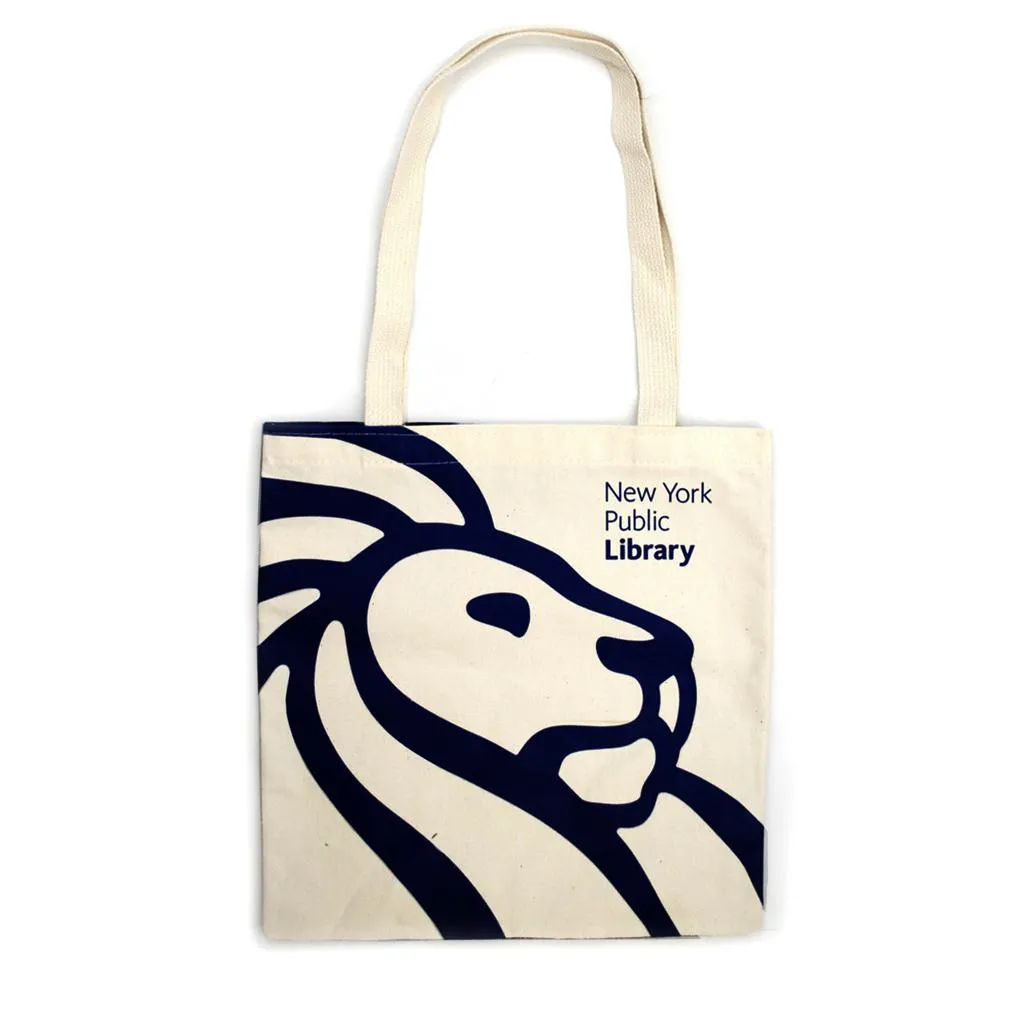
Das Wichtigste zum Mitnehmen: When brand identity is strong and design is distinctive, the tote bag becomes something people want to be seen carrying. This is the highest expression of the format’s marketing potential.
Blue Bottle Coffee — Minimalist Design as Brand Extension
Material: Canvas | Stil: Flat tote | Größe: Small to medium
Blue Bottle Coffee’s tote bags are a direct extension of its brand aesthetic: clean, precise, uncluttered. The bags typically feature a single small logo or a typographic design in one or two colors. Nothing more. In a market saturated with over-designed promotional products, this restraint communicates confidence and taste — exactly the qualities Blue Bottle wants associated with its coffee.
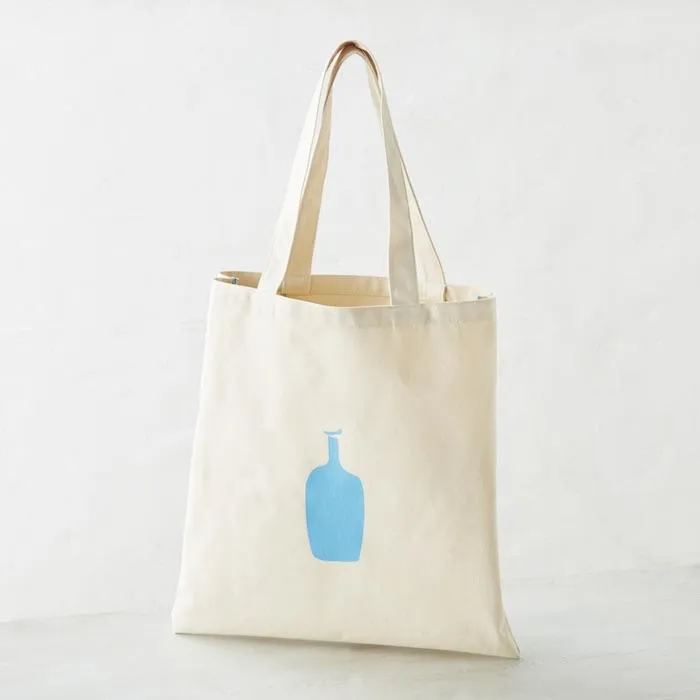
Das Wichtigste zum Mitnehmen: For lifestyle and premium consumer brands, less is more. A restrained design executed on a quality material delivers a stronger brand impression than a busy design on a cheap bag.
How to Choose the Right Tote Bag for Your Business
With material, style, size, and customization options all mapped out, the final step is matching your business objectives to the right specification.
Decision Matrix
| Business Objective | Budget Per Unit | Empfohlenes Material | Recommended Style | Recommended Size |
|---|---|---|---|---|
| Mass promotional giveaway | Under $1 | Non-woven PP | Flat tote | Small–Medium |
| Retail branded shopping bag | $2–$5 | Canvas or cotton | Gusseted tote | Medium–Large |
| Premium corporate gift | $10+ | Canvas or leather | Zippered or box tote | Mittel |
| Eco-positioned campaign | $2–$5 | Jute or rPET | Flat or gusseted tote | Mittel |
| Sports or event bag | $2–$5 | Nylon or polyester | Gusseted multi-pocket | Medium–Large |
| Luxury retail packaging | $5–$15 | Canvas or PVC | Box tote or clear tote | Small–Medium |
| Travel or commuter gift | $3–$8 | Polyester or canvas | Foldable or zippered | Mittel |
Key Sourcing Checklist
Before placing a bulk order, confirm the following with your supplier:
- MOQ: The minimum order quantity is usually adjusted flexibly according to different material styles.
- Lead time: Standard stock materials: 7–15 business days. Custom color or specialty printing: add 10–14 days for sampling
- Quality benchmarks: Minimum stitch density of 10 stitches per inch; handle load test rated to 10–15 kg; print color matched against Pantone reference
- Certifications: Request GRS certification for rPET materials; GOTS certification for organic cotton; OEKO-TEX for general chemical safety
The Long-Term ROI of a Well-Chosen Tote Bag
A quality canvas or cotton tote bag has an average usable lifespan of 8–12 months under regular use. At three uses per week, that translates to more than 100 individual brand impressions per bag over its lifetime — each impression generated at a fraction of the cost of a digital ad placement.
More importantly, the best tote bags generate impressions that their owners did not consciously choose to display. Unlike a promotional flyer that gets discarded or a digital ad that gets skipped, a tote bag that is genuinely useful and well-designed becomes a permanent fixture in someone’s daily routine. That is the compounding logic behind every brand on this list — and it is why the right tote bag investment consistently outperforms more expensive marketing formats on a cost-per-impression basis.
Looking to source custom tote bags for your business? Initipacking offers full-service customization across all major materials, styles, and print methods — with flexible MOQ, fast sampling, and global shipping. Contact our team to discuss your project.

 German
 English
 French
 Japanese
 Arabic
 Thai
 Vietnamese
 Russian
 Spanish
 Portuguese