
يمكن أن تبدو حقيبتا حمل متشابهتين تقريبًا وتؤديان وظائف مختلفة تمامًا. قد تكون واحدة قابلة للطي بسهولة في جيب، بينما تحتفظ الأخرى بشكلها تحت حمولة ثقيلة. واحدة تنتج شعارًا واضحًا ومفصلًا؛ بينما تعطي الأخرى نفس التصميم مظهرًا محكمًا وريفياً.
عادةً ما تبدأ هذه الفروقات مع المادة.
يؤثر القماش على كيف تشعر حقيبة الحمل، وكم يمكن أن تحمل، وما إذا كانت تقاوم الرطوبة، وكيف ينبغي تنظيفها، وأي طرق طباعة يمكن استخدامها، وكم يكلف إنتاجها. بالنسبة للعلامات التجارية والمشترين الذين يتطورون، حقائب القماش المخصصة, لذا، فإن اختيار المادة هو واحد من القرارات الأولى - والأكثر أهمية - التي يجب اتخاذها.
لا توجد مادة واحدة هي الأفضل لكل حقيبة حمل:
- يعمل القماش بشكل جيد مع الحقائب الهيكلية والمتينة.
- تتناسب القطن الخفيف مع الحقائب المطبعة للتجزئة والهدايا الترويجية.
- تعد البوليستر والنايلون مفيدة عندما تكون الوزن المنخفض ومقاومة الرطوبة مهمة.
- يوفر الجوت مظهرًا طبيعيًا ومتينًا.
- البولي بروبيلين غير المنسوج عملي للبرامج الاقتصادية عالية الحجم.
- تتناسب البولي بروبيلين المنسوج المغلف مع حقائب البقالة والتجزئة القابلة لإعادة الاستخدام التي تحتاج إلى رسومات ملونة.
تقارن هذه الدليل بين المواد الأكثر شيوعًا لحقائب الحمل وتشرح كيف يجب أن تؤثر بنية القماش والوزن والتغطية والطباعة والاستخدام المقصود على اختيارك.
فهرس المحتويات
تبديلمما تصنع حقائب الحمل عادة؟
Tote bags can be made from natural fibers, synthetic fibers, recycled materials or transparent plastic sheeting. However, material names are not always used consistently.
To compare fabrics correctly, it helps to separate three different concepts.
الألياف
Fiber describes the raw material from which a textile is made.
Common examples include:
- قطن
- Polyester
- نايلون
- جوت
- لينن
- ألياف القنب
- Polypropylene
A fabric can contain one fiber or a blend. For example, a canvas tote may be made from 100% cotton or from a cotton-polyester blend.
بناء القماش
Construction describes how the fibers are made into fabric.
Examples include:
- قماش
- Twill
- Oxford cloth
- Ripstop
- Mesh
- Woven polypropylene
- Non-woven polypropylene
This distinction explains why “cotton versus canvas” is not a completely direct comparison. Cotton is a fiber, while canvas is a type of woven fabric that is often—but not always—made from cotton.
التشطيب أو التغطية
A finish changes the surface or performance of the base fabric.
Common treatments include:
- PU or PVC coating
- Wax coating
- Water-repellent treatment
- BOPP or PET film lamination
- Brushing or washing
- Flame-retardant or antimicrobial finishes
A regular cotton canvas tote is not waterproof. A coated canvas bag, however, may provide much better resistance to rain and spills. The exact performance depends on the coating, seams and construction of the finished bag.
مواد حقائب الحمل في لمحة
| المادة | General structure | التحمل | مقاومة الرطوبة | Printing surface | Relative cost | الاستخدامات الشائعة |
|---|---|---|---|---|---|---|
| Lightweight cotton | Soft and flexible | متوسطة | منخفض | Excellent | Low–medium | Promotions, retail packaging and events |
| قماش القطن | Thick and structured | عالية | Low unless treated | Excellent | متوسطة | Shopping, work and branded merchandise |
| جوت | Coarse and naturally firm | متوسط–مرتفع | منخفض | Fair–good | متوسطة | Grocery, gifts and natural branding |
| Polyester | Lightweight and versatile | عالية | متوسط–مرتفع | Good | Low–medium | Travel, sports and foldable totes |
| نايلون | Light and strong | عالية | متوسط–مرتفع | Good | متوسط–مرتفع | Packable and outdoor bags |
| Non-woven PP | Light and semi-structured | Low–medium | متوسطة | Good | منخفض | Promotional and event bags |
| Woven PP | Strong and often laminated | عالية | High when laminated | Excellent when laminated | Low–medium | Grocery and retail shopping bags |
| rPET | Depends on construction | متوسط–مرتفع | يتنوع | Good | متوسطة | Recycled promotional and shopping bags |
| Linen or natural blends | Textured and refined | متوسطة | منخفض | Good | متوسط–مرتفع | Fashion, gifting and retail |
| PVC or TPU | Transparent sheet | متوسطة | عالية | Specialized | متوسطة | Stadium, cosmetic and event totes |
These ratings are general directions rather than fixed performance guarantees. Two fabrics carrying the same material name can differ significantly in weight, weave, finish and quality.
مواد حقائب الحمل الطبيعية
Cotton tote bags

Cotton is widely used for lightweight promotional totes, retail packaging and everyday shopping bags. It has a soft hand feel and a relatively smooth surface, making it suitable for many types of logo printing.
Common advantages include:
- Soft, breathable feel
- Easy folding and storage
- Good ink absorption
- Suitable for simple or detailed artwork
- Available in natural, dyed and organic options
- Washable when the fabric, print and construction allow it
Lightweight cotton is especially suitable when a project prioritizes print area, portability and quantity over a highly structured appearance.
Its limitations should also be considered. Thin cotton may wrinkle, show the outline of the contents and lose shape under a heavy load. Untreated cotton absorbs water and can shrink during washing. Dark-colored cotton may also require a white underbase before bright logo colors are printed.
Cotton is a good choice for:
- Conference bags
- Book fairs
- Retail packaging
- Museum and exhibition merchandise
- Brand giveaways
- Lightweight shopping bags
حقائب توت قماش
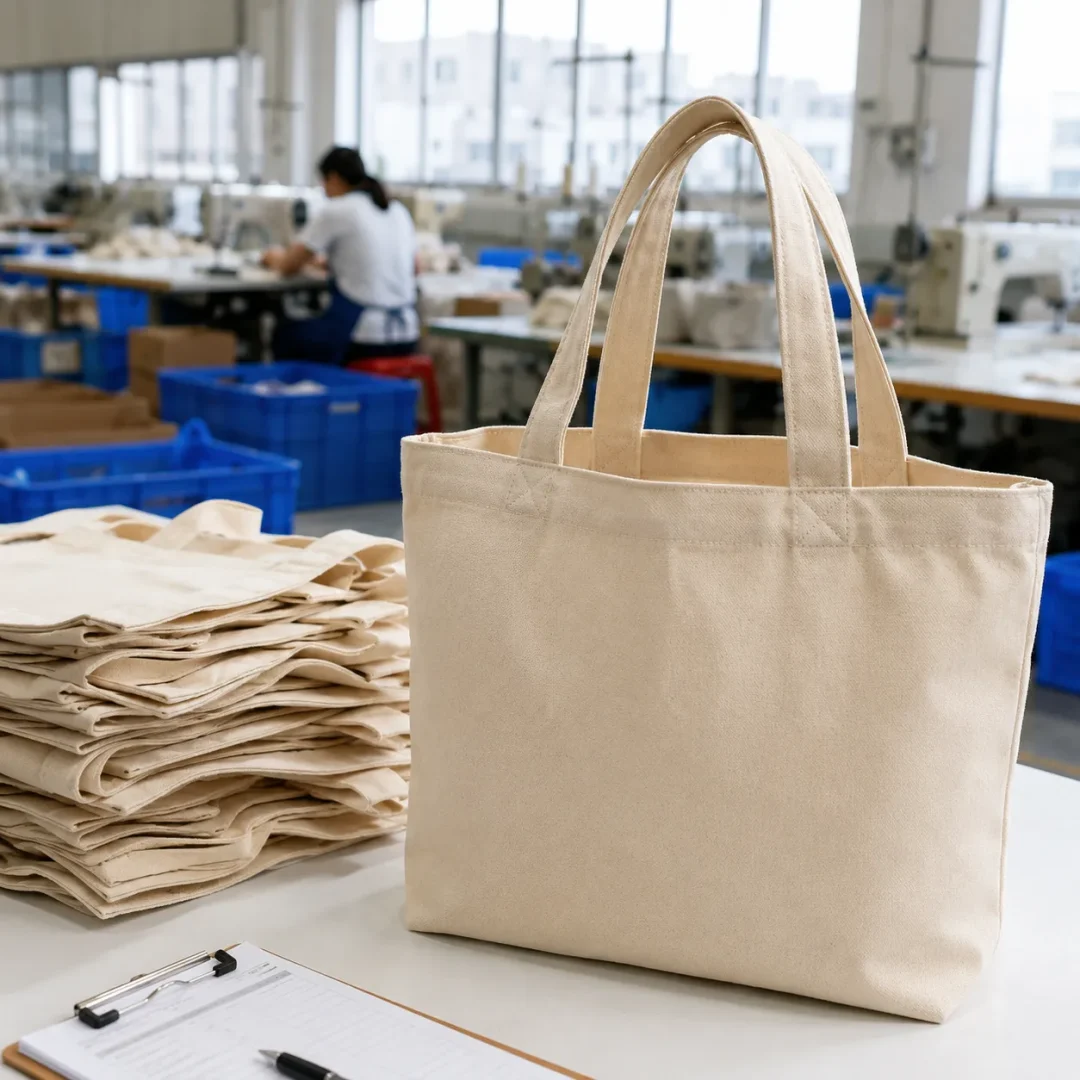
Canvas is a tightly woven fabric known for its strength and substantial feel. Most promotional canvas totes are made from cotton, although polyester canvas and blended canvas are also available.
Compared with lightweight cotton, canvas generally:
- Feels thicker and more structured
- Maintains its shape more effectively
- Supports heavier constructions and added features
- Offers a stable surface for screen printing and embroidery
- Creates a higher perceived product value
Canvas is often selected for retail merchandise, work totes, book bags, premium promotional products and reusable shopping bags.
However, the word “canvas” alone does not define quality. A light canvas tote and a heavy canvas tote may have completely different appearances and applications. Buyers should confirm the fiber composition, weave, fabric weight, color treatment and finishing method.
Regular canvas is also not waterproof. If moisture protection is required, options such as coated canvas, waxed canvas or a separate waterproof lining may be considered.
القطن مقابل القماش: ما الفرق؟
| Factor | Lightweight cotton | قماش القطن |
|---|---|---|
| Feel | Soft and flexible | Thicker and firmer |
| هيكل | Usually unstructured | Better shape retention |
| الوزن | Generally lighter | Generally heavier |
| طباعة | Excellent on a smooth surface | Excellent for printing and embroidery |
| Cost | غالبًا ما يكون أقل | Usually higher |
| Best use | Promotions and light retail use | Repeated use and premium merchandise |
Canvas is not automatically “better” than cotton. A lightweight cotton bag may be more suitable for a large event because it is easy to pack and distribute. A heavier canvas bag makes more sense when the tote will be sold as merchandise or used repeatedly.
حقائب الحمل المصنوعة من الجوت والخرق
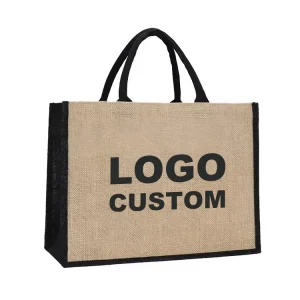
Jute is a plant-based fiber with a coarse texture and recognizable natural color. It is frequently used for grocery bags, wine bags, gift packaging and environmentally themed retail programs.
Jute has several practical and visual advantages:
- Naturally firm structure
- Strong, distinctive fiber texture
- Rustic and handcrafted appearance
- Good compatibility with cotton handles and panels
- Suitable for reusable grocery and gift bags
Its texture is also its main printing limitation. Fine lines, small lettering and photographic artwork may not reproduce clearly on an open or uneven jute weave. Simple logos and bold artwork usually perform better.
A cotton panel can be added when a design requires a smoother printing area. Lamination or an internal lining can also improve structure and help contain loose fibers, although these additions change the finished bag’s recyclability and material composition.
Jute should not normally be machine-washed. Repeated exposure to water may affect its shape, fibers and printing.
الخامات من الكتان والقنب والألياف الطبيعية
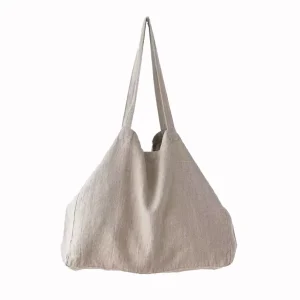
Linen offers a softer and more refined natural appearance than coarse jute. It is commonly selected for fashion totes, gift packaging, beauty brands and lifestyle products where texture is part of the visual identity.
Hemp fibers can offer good strength, but the finished feel and performance depend heavily on the weave and blend. Hemp and linen are often blended with cotton or polyester to improve consistency, softness, wrinkle resistance or cost.
Natural blends can be useful when a project wants a particular visual character without accepting all the limitations of a single fiber. Buyers should request the exact fiber ratio rather than relying on a broad label such as “linen-style” or “hemp fabric.”
مواد حقيبة التسوق الاصطناعية
Polyester tote bags

Polyester is one of the most versatile bag materials. It can be woven into smooth fabric, Oxford cloth, ripstop, mesh, felt and many other constructions.
Depending on its specification, polyester can provide:
- Low bag weight
- Good abrasion resistance
- Bright, consistent colors
- Easy cleaning
- Fast drying
- Good compatibility with coatings and lamination
- Foldable or packable construction
It is commonly used for sports totes, travel totes, foldable shopping bags, beach bags and event merchandise.
Polyester is often described as waterproof, but this is not necessarily accurate. A dense weave or water-repellent finish can resist light moisture, while a PU- or PVC-coated fabric offers stronger protection. Seams, zippers and needle holes also affect whether the completed bag can prevent water entry.
حقائب توت نيلون
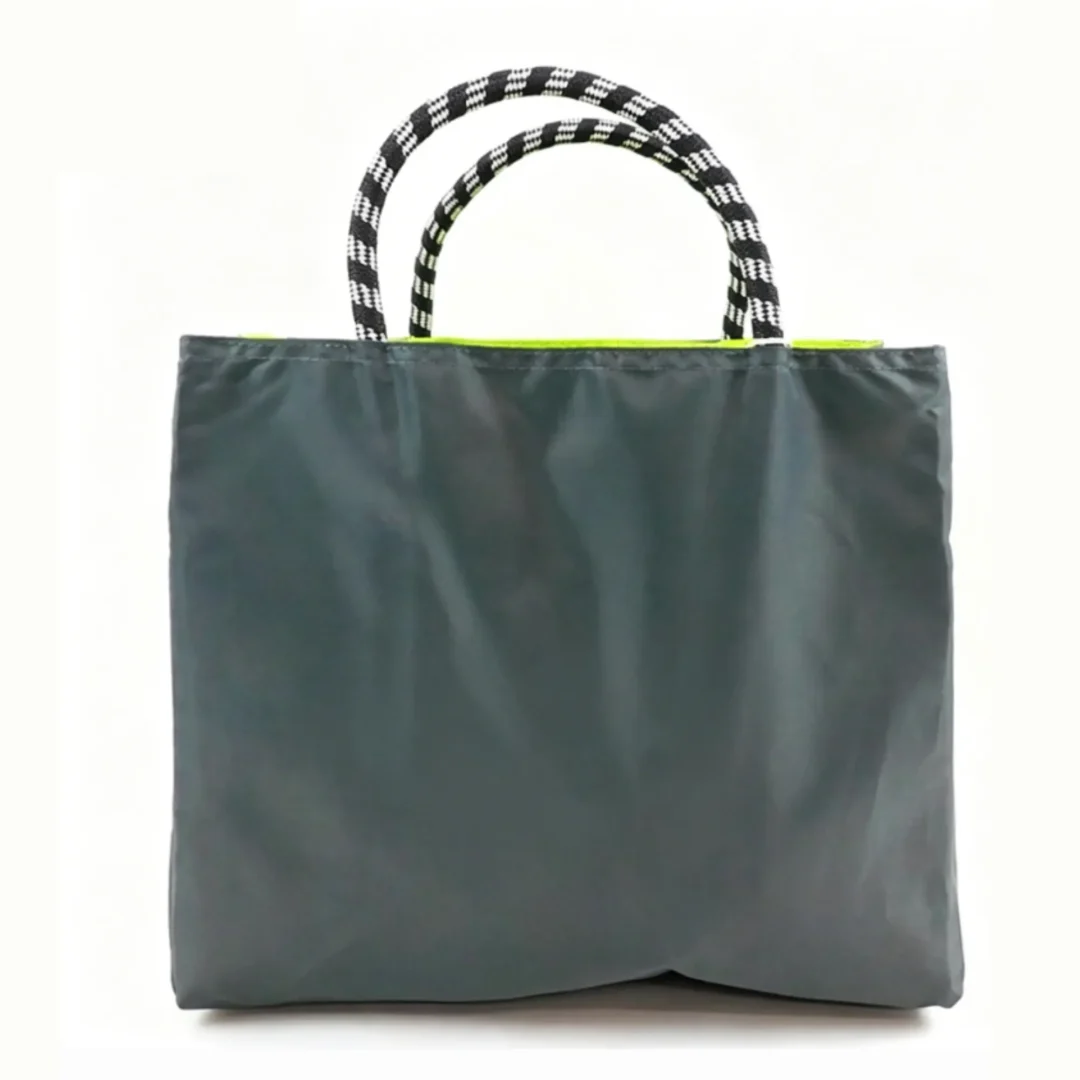
Nylon is valued for its strength-to-weight ratio and flexible hand feel. It is frequently used for lightweight shopping totes, packable travel bags and fashion-inspired everyday bags.
Compared with many basic polyester fabrics, nylon may offer:
- A smoother and softer feel
- Good resistance to tearing and abrasion
- Strong performance at a relatively low weight
- An attractive surface for lightweight premium totes
Nylon can cost more than an equivalent basic polyester fabric, and colorfastness, coating performance and printing compatibility should be checked during sampling.
حقائب التسوق من النايلون مقابل البوليستر
| Factor | نايلون | Polyester |
|---|---|---|
| الوزن | Very lightweight options available | Lightweight options widely available |
| Hand feel | Often softer and smoother | Varies from soft to structured |
| Strength | Strong for its weight | Durable and abrasion-resistant |
| اللون | Good, but depends on dyeing | Often offers strong color consistency |
| Cost | Frequently higher | Usually more economical |
| الاستخدام الشائع | Packable and lifestyle totes | Promotions, travel, sports and shopping |
Neither material is universally superior. Polyester often provides a practical balance between price, color and customization, while nylon is attractive when lightweight strength and a softer finish are priorities.
Non-woven polypropylene
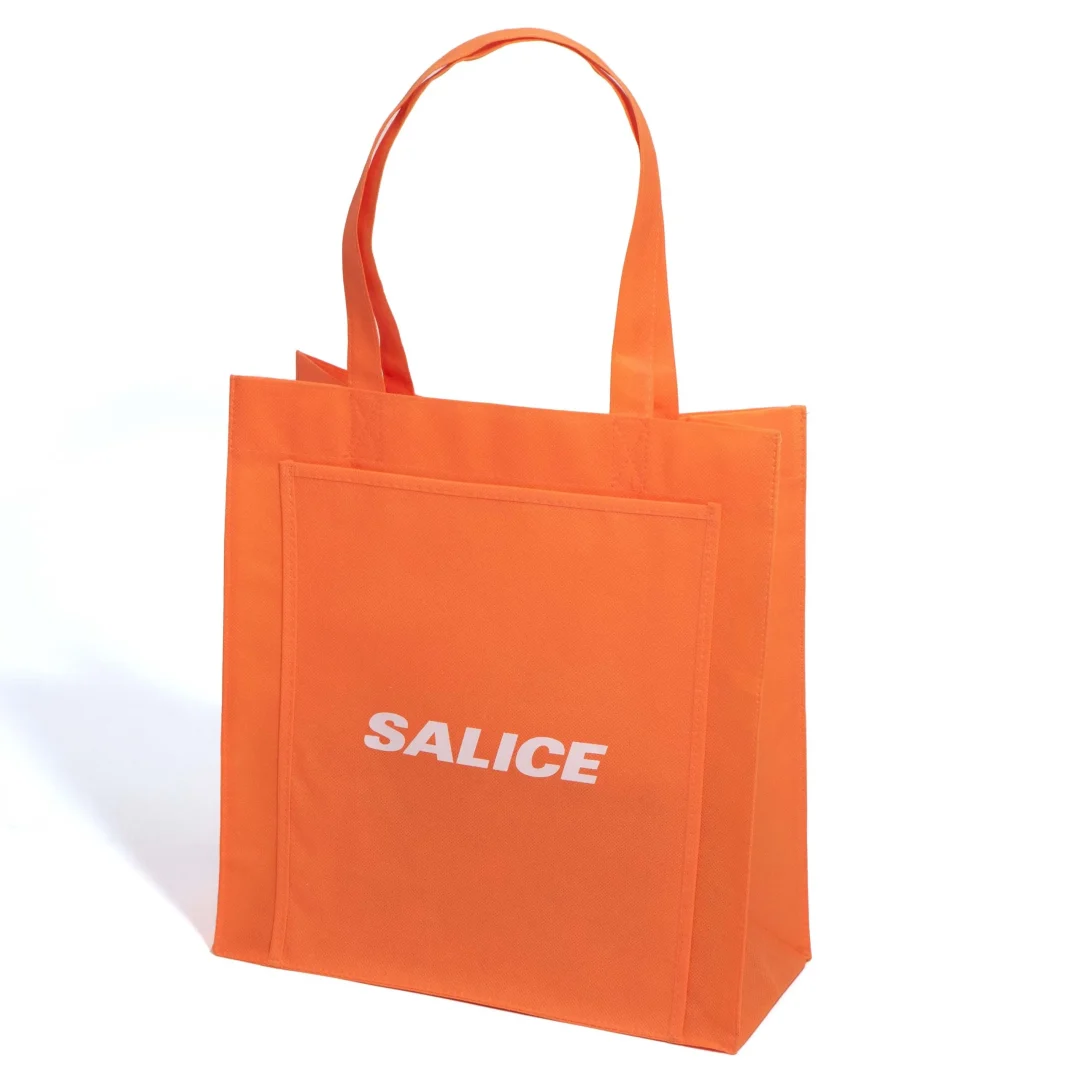
Non-woven polypropylene, commonly called non-woven PP, is made by bonding polypropylene fibers rather than weaving yarns together. It is widely used for economical shopping and promotional bags.
Its main advantages include:
- Low material cost
- Lightweight construction
- Wide range of stock colors
- Suitable surface for simple logo printing
- Easy mass production
- Moderate resistance to moisture
- Ability to be laminated for improved appearance
Non-woven PP is suitable for trade shows, store openings, exhibitions, conference materials and short- to medium-term promotional campaigns.
Fabric weight is usually expressed in GSM. A higher GSM generally produces a thicker and firmer material, but the bag’s strength still depends on handle construction, seams and reinforcement.
For a more direct comparison of these two popular promotional options, see our guide to non-woven tote bags vs. cotton tote bags.
البولي بروبيلين المنسوج والمطلي
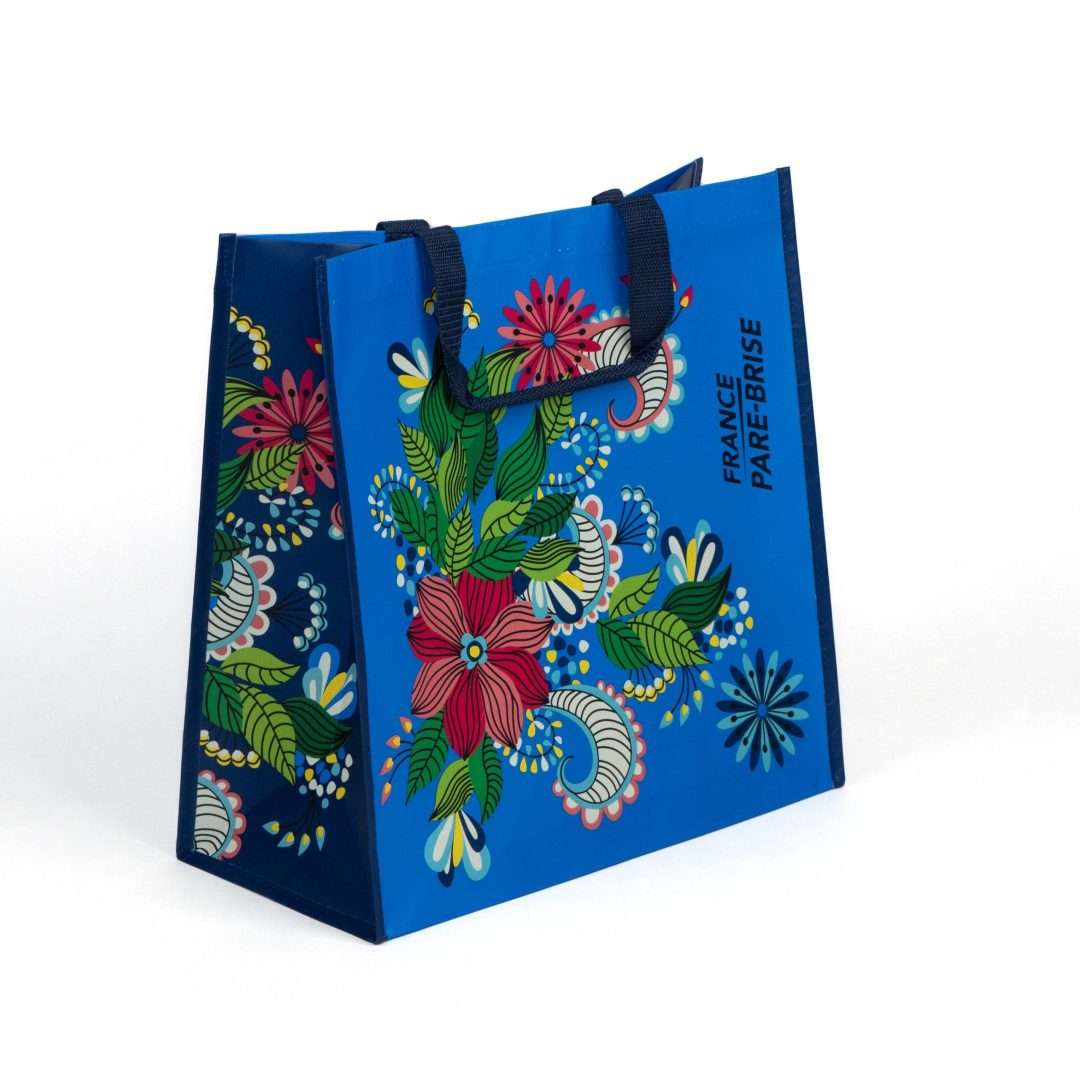
Woven polypropylene is made from interlaced PP tapes. This construction provides better resistance to tearing than a basic non-woven sheet and is commonly used for reusable supermarket and grocery bags.
A printed film can be laminated onto the woven material to create:
- Full-color graphics
- Consistent surface appearance
- Improved water and stain resistance
- Easy cleaning
- Better shape retention
- Stronger retail presentation
Laminated woven PP works particularly well for grocery chains, large retail programs, subscription services and promotional campaigns requiring large print areas.
It is important to distinguish it from non-woven PP. Although both are based on polypropylene, their construction, feel, strength, printing and typical production methods are different.
PVC و TPU وغيرها من المواد الشفافة
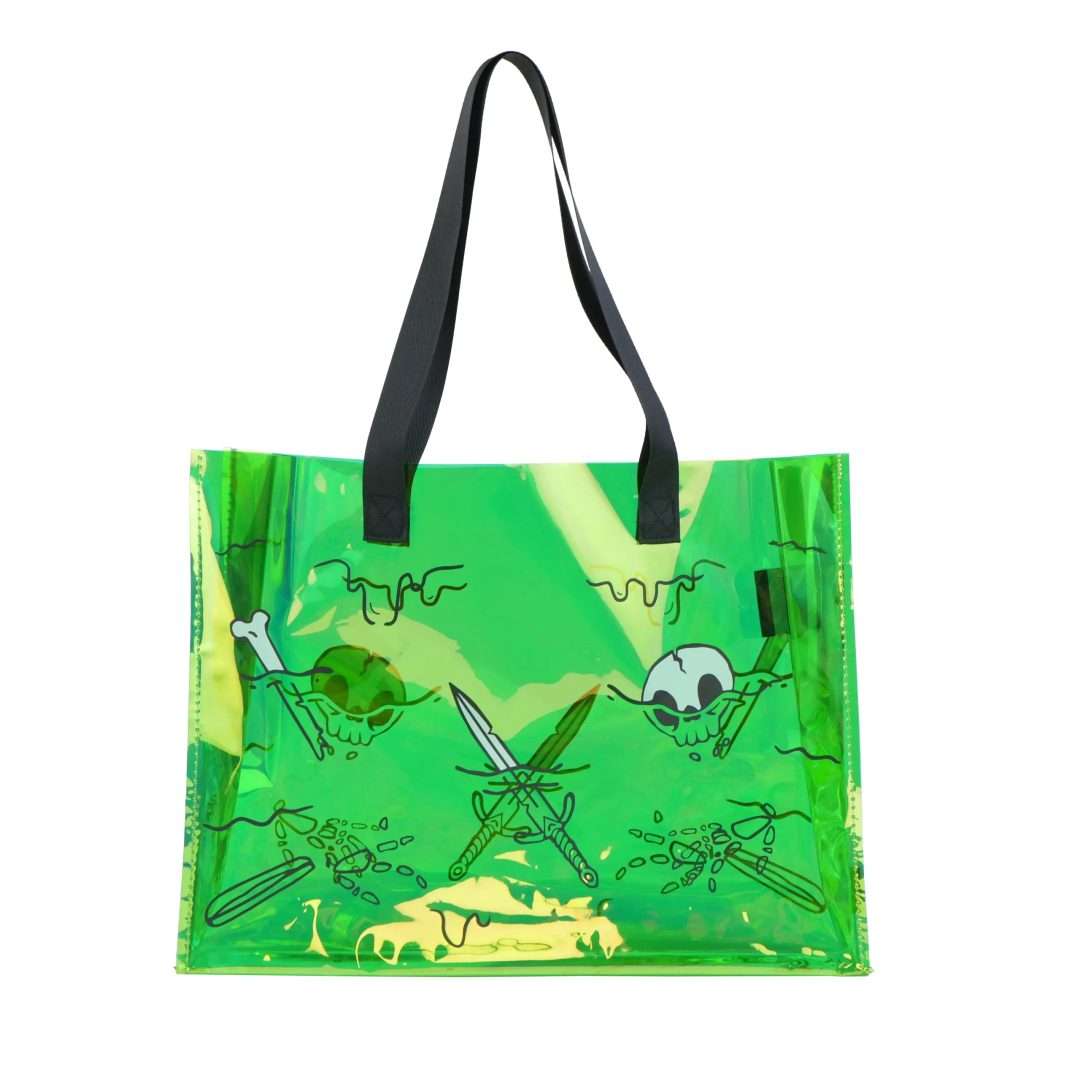
Transparent tote bags are commonly made from flexible PVC or TPU sheeting rather than woven fabric.
They are used for:
- Stadium and venue bags
- Security-compliant event bags
- Cosmetic packaging
- Retail display
- Beach and waterproof-use concepts
These materials are easy to wipe and resist water penetration through the sheet itself. However, the construction of the seams and closures still affects the performance of the whole bag.
Important specifications include:
- Sheet thickness
- Softness
- Low-temperature flexibility
- Odor requirements
- Transparency
- Color tint
- Edge finishing
- Printing or logo application
- Applicable market regulations
TPU generally offers a softer, more flexible feel, while PVC is widely available and often more economical. The appropriate option depends on the product requirements and target market.
خيارات المواد المعاد تدويرها والتي لها تأثير أقل
A material should not be labelled sustainable based on one characteristic alone. Raw material origin, production process, product lifespan, coatings and end-of-life options all matter.
القطن المعاد تدويره
Recycled cotton may come from manufacturing scraps or post-consumer textiles. Because the recycling process shortens cotton fibers, recycled cotton is often blended with virgin cotton or recycled polyester to improve yarn strength and production stability.
Compared with virgin cotton, recycled cotton may have:
- More visible fiber variation
- Slight color inconsistency
- A softer or more textured appearance
- Limitations on very light colors
- Different strength depending on the blend
These characteristics are not necessarily defects. For some brands, the visible variation supports an authentic recycled aesthetic. For others, greater color and surface consistency may be necessary.
rPET
rPET is polyester made using recycled feedstock, commonly including recovered plastic bottles. It is not a single fabric construction.
rPET can be used to produce:
- نسيج منسوج
- قماش أوكسفورد
- Ripstop
- Felt
- Mesh
- Non-woven fabric
- Webbing
Therefore, an “rPET tote bag” cannot be evaluated from the recycled label alone. Its weight, construction, coating and stitching still determine its functional performance.
Buyers making recycled-content claims should request appropriate supply-chain documentation. Textile Exchange provides standards covering recycled materials and chain-of-custody verification through its Global Recycled Standard and Recycled Claim Standard.
Organic cotton
Organic cotton is grown according to defined agricultural requirements. However, a supplier’s use of the word “organic” is not the same as third-party certification.
For projects that require verified sourcing, buyers can specify an appropriate standard such as the Global Organic Textile Standard and confirm whether certification covers the relevant stages of processing and production.
Organic cotton can provide the same general softness and print compatibility as conventional cotton, but availability, color, fabric weight and certification requirements may affect the quotation and production plan.
كيفية تقييم ادعاء الاستدامة
Instead of asking only whether a tote bag is “eco-friendly,” consider:
- What is the actual fiber composition?
- Does the material contain verified recycled or organic content?
- How many times is the bag expected to be used?
- Does it contain a coating, film, lining or mixed-material trim?
- Can the bag be repaired, washed or reused?
- Is there a realistic recycling or disposal route in the target market?
- Can the supplier provide documents supporting the claim?
A natural material is not automatically the lowest-impact choice, and a recycled material does not guarantee that the complete finished bag is recyclable.
كيف يؤثر وزن القماش على حقيبة التسوق
Fabric weight affects thickness, flexibility, opacity and perceived quality, but it should not be treated as a direct guarantee of load capacity.
GSM والأونصات
GSM means grams per square meter and is widely used for cotton, non-woven PP, felt and other materials.
Canvas is also frequently described in ounces. In most sourcing contexts, an ounce rating refers to fabric weight per square yard, although naming conventions and finished weights may differ between suppliers.
As a general direction:
| Fabric level | Typical feel | Common direction |
|---|---|---|
| خفيف الوزن | Soft, flexible and foldable | Giveaways and light packaging |
| Medium weight | Balanced flexibility and structure | Retail and daily shopping |
| Heavyweight | Firm, substantial and more opaque | Premium merchandise and structured totes |
A heavier fabric generally feels more substantial, but it can also increase shipping weight, material consumption and sewing difficulty. It may be unnecessary for a bag carrying only brochures or light gifts.
For a more detailed explanation, see What Does the Weight of a Cotton Tote Bag Mean?.
دينير للبوليستر والنايلون
Denier measures the linear mass of yarn and is commonly seen in specifications such as 210D, 420D or 600D.
A higher denier usually indicates a heavier yarn, but it does not independently tell you:
- Fabric density
- Weave type
- Finished thickness
- Coating weight
- Tear strength
- مقاومة التآكل
Two 600D polyester fabrics can perform differently if they use different yarn quality, weaving density, backing or coating.
لماذا لا يعادل وزن القماش قوة الحقيبة
The completed bag’s load capacity also depends on:
- Handle width and material
- Handle attachment method
- Seam allowance
- Stitch density
- Reinforcement at stress points
- Bottom and side gussets
- Lining structure
- Direction of the fabric
- Distribution of the load
A heavy canvas body with weak handle stitching may fail earlier than a lighter bag with properly reinforced attachment points. Our comparison of webbing handles and self-fabric handles explains how handle construction affects comfort, appearance and durability.
ما هي أفضل مادة لحقيبة التسوق للطباعة؟
The best material depends on the artwork, desired finish, quantity and production method.
| Branding requirement | Suitable materials | Common methods |
|---|---|---|
| Simple one- or two-color logo | Cotton, canvas, jute and non-woven PP | الطباعة بالشاشة |
| Detailed multicolor artwork | Smooth cotton, polyester and laminated PP | Digital print or heat transfer |
| Premium tactile logo | Heavy canvas, felt and structured polyester | Embroidery or patch |
| Edge-to-edge photographic graphics | Polyester or laminated woven PP | Sublimation or printed-film lamination |
| Repeating woven pattern | Cotton, polyester or blended fabric | Jacquard weaving |
الطباعة بالشاشة
Screen printing is widely used for solid logos and relatively simple artwork. It works well on cotton, canvas, non-woven PP and many polyester fabrics.
The surface texture affects the result. Smooth, tightly woven material produces sharper edges than coarse jute or an open weave.
نقل حراري
Heat transfer supports detailed and multicolor graphics. It can work on cotton and synthetic fabrics, but temperature and pressure must suit the base material. Excessive heat can deform some non-woven or coated fabrics.
Sublimation
Sublimation is mainly used on compatible polyester materials. It produces bright, durable graphics because the color becomes part of the material rather than forming a thick layer on the surface.
It is not a general printing method for untreated cotton, jute or standard natural canvas.
Embroidery
Embroidery provides texture and a premium appearance. It performs best when the material is stable enough to support the stitches.
Heavy canvas, felt and structured polyester are common choices. Lightweight cotton may require backing, and dense embroidery can cause puckering if the fabric and stitch design are not properly matched.
تغليف الفيلم المطبوعة
For woven or non-woven PP bags, artwork can be printed onto a film and then laminated to the base material. This allows full-color coverage, photographic designs and a clean retail finish.
It is especially useful for supermarket bags and large branded shopping programs.
Before production, suppliers should review:
- Number of colors
- Artwork dimensions
- Fine text and lines
- Pantone requirements
- Print position
- Base fabric color
- Expected rubbing and washing
- Whether the design crosses seams or gussets
أفضل مادة لحقيبة التسوق حسب الاستخدام
| تطبيق | الاتجاه الموصى به | Why |
|---|---|---|
| Promotional giveaway | Non-woven PP or lightweight cotton | Cost-effective and easy to distribute |
| Retail merchandise | Cotton canvas or structured polyester | Higher perceived value and repeated use |
| Grocery shopping | Woven PP, jute or reinforced canvas | Better volume and load handling |
| Foldable shopping tote | Polyester or nylon | Lightweight and packable |
| Beach tote | Polyester, mesh or coated material | Faster drying and easier cleaning |
| Work or laptop tote | Heavy canvas or structured synthetic fabric | Supports reinforcement and organization |
| Gift packaging | Cotton, linen, jute or soft textile | Strong visual and tactile presentation |
| Stadium or event tote | Clear PVC or TPU | Allows visibility of the contents |
| Trade show literature bag | Non-woven PP or cotton | Lightweight with a large logo area |
| Fashion tote | Canvas, nylon, corduroy or blends | More control over shape and texture |
The material should also correspond with the bag dimensions. A wide grocery tote requires different stability and handle reinforcement from a small gift tote. Our tote bag dimensions guide explains how width, height, gusset and handle length affect capacity and usability.
كيفية اختيار مادة لحقيبة تسوق مخصصة
1. تحديد ما ستحمله الحقيبة
Start with the contents, not the material name.
A tote intended for catalogs at a trade show may prioritize low weight and print area. A grocery bag needs sufficient volume, reinforced handles and resistance to repeated loading. A laptop tote requires greater structure, lining and protection.
List the typical contents and their approximate total weight before selecting the fabric.
2. اتخاذ قرار حول مدى استخدام الحقيبة
A promotional bag distributed at a one-day event has different requirements from retail merchandise intended for years of use.
Consider:
- Expected use frequency
- Required service life
- Storage conditions
- Exposure to moisture or dirt
- Cleaning requirements
- Whether the bag needs to fold flat
Longer use does not always mean choosing the heaviest possible fabric. A lightweight nylon or polyester tote may survive frequent travel more effectively than an unnecessarily bulky natural-fiber bag.
3. مطابقة المادة مع التصميم
Provide the artwork before finalizing the material whenever possible.
A coarse jute surface may be appropriate for a simple one-color logo but unsuitable for small text. Sublimation can reproduce detailed graphics on polyester, while heavy embroidery needs a stable fabric and backing.
Material and printing should be tested together rather than approved separately.
4. مقارنة البناء الكامل
Do not compare supplier quotations based only on material labels.
“Cotton canvas tote bag” could describe many different products. A useful specification should also include:
- Fiber composition
- Fabric weight
- Dyed or natural fabric
- Bag dimensions
- Gusset construction
- Handle material and size
- Handle attachment
- Lining
- الإغلاق
- Internal pockets
- Reinforcement
- Printing method
- التغليف
A lower quotation may simply use lighter fabric, narrower handles or fewer reinforcement steps.
5. اطلب عينة مادية
Color cards and fabric swatches are useful, but a completed sample reveals more about the final product.
Check:
- Hand feel and stiffness
- Color under normal lighting
- Odor
- Print clarity and adhesion
- Seam consistency
- Handle comfort
- Shape when loaded
- Shrinkage or deformation after cleaning
- Coating and lamination quality
- Overall weight and packing volume
If the bag must meet a defined load requirement, agree on the test method rather than relying on an informal “heavy-duty” description.
أخطاء اختيار مادة حقيبة القماش الشائعة
اختيار المظهر فقط
An attractive material may not suit the expected load, weather or cleaning conditions. Intended use should come before surface appearance.
افتراض أن كل قماش قماشي هو نفس الشيء
Canvas varies by fiber, weave, weight, dyeing, washing and coating. Always request a complete specification.
اعتبار القماش المقاوم للماء غير قابل للتسرب
Water-resistant material may tolerate light splashes but still allow water through seams, zippers or prolonged exposure. Waterproof performance requires a more specific construction and test standard.
استخدام أعمال فنية مفصلة على سطح خشن
Fine lines and small text can disappear on jute, open-weave canvas or heavily textured recycled fabric. Use a smoother printing panel or simplify the artwork.
تجاهل الانكماش وثبات اللون
Natural fabrics may shrink or release color during washing. These risks should be considered before approving dimensions and care instructions.
مقارنة الاقتباسات بمواصفات مختلفة
Two quotations cannot be compared fairly if fabric weight, handle structure, printing and packaging are different.
معاملة مكون معاد تدويره كدليل للحقائب بالكامل
A bag with an rPET body may still contain virgin-polyester handles, foam, coatings, metal fittings or mixed-material trims. Claims should accurately describe the component and verified recycled content.
Frequently Asked Questions
ما هي أفضل مادة لحقيبة القماش؟
There is no single best material for every tote. Canvas is suitable for durable and structured bags, lightweight cotton works well for promotions and printing, polyester and nylon suit packable or moisture-resistant designs, and woven PP is practical for reusable grocery bags.
The best choice depends on what the bag will carry, how often it will be used, the required appearance and the available budget.
Is canvas stronger than cotton?
Canvas is a fabric construction, while cotton is a fiber. Many canvas bags are made from cotton.
A medium- or heavyweight cotton canvas is generally stronger and more structured than lightweight plain cotton fabric. However, the finished bag’s strength also depends on handles, stitching and reinforcement.
What tote bag materials are waterproof?
PVC, TPU and some laminated or coated fabrics can provide strong water protection. Untreated cotton, canvas, linen and jute are not waterproof.
The seams and closures must also be considered. A waterproof body material does not automatically make the entire tote waterproof.
What is the best material for reusable shopping bags?
Common options include woven PP, canvas, jute, polyester and nylon.
Woven PP suits high-volume grocery programs; canvas provides a more natural, premium feel; polyester and nylon are light and foldable; jute offers a firm, rustic appearance.
What fabric is best for printing custom tote bags?
Smooth cotton, canvas and polyester generally provide good surfaces for custom printing. The best choice also depends on the printing method.
Screen printing works well for bold logos, heat transfer supports detailed multicolor artwork, sublimation suits compatible polyester, and embroidery performs best on stable materials.
Is rPET the same as polyester?
rPET is polyester made from recycled feedstock. It belongs to the same general material family as virgin polyester but has a different raw material source.
Its performance still depends on the yarn, fabric construction, weight and finishing.
What fabric weight should I choose for a canvas tote?
Choose the weight based on the desired hand feel, structure, contents and design—not by assuming that the highest number is always best.
Light canvas suits soft promotional bags, medium weights provide a balance for retail totes, and heavy canvas is appropriate for structured merchandise. A sample is the most reliable way to confirm the result.
Final Thoughts
Choosing a tote bag material is not simply a matter of deciding between cotton, canvas, jute or polyester. Fiber composition, fabric construction, weight, coating, printing and bag design work together to determine the final result.
Start with the intended use. Then define the required structure, moisture resistance, print result, service life and price position. Once these requirements are clear, material selection becomes much more accurate.
If you are developing a custom tote bag, provide the intended use, dimensions, target quantity, artwork and performance requirements. INITI can compare suitable material specifications and construction options before sampling, helping you avoid selecting a fabric that looks right but performs poorly in the finished bag
علامات شائعة:حقيبة تسوق الصين، الموردين، المصنعين، المصنع، بالجملة، بكميات كبيرة، للبيع،,أفكار أكياس القماش,أكياس قماش للتخزين,حقيبة كتف قطنية, كيس rpet, أكياس ملابس مخصصة,أكياس قماش ذات حبل سحب,حقيبة غداء معزولة,حقيبة مستحضرات تجميل للبيع,حقيبة تسوق وسوبر ماركت,إكسسوارات الشاطئ,حقيبة توتو من الجوت / القنب / الخيش,حقيبة توتو قطنية مضلعة,حقيبة سفر,حقيبة من الكتان,كيس ورقي
 Arabic
 English
 French
 German
 Japanese
 Thai
 Vietnamese
 Russian
 Spanish
 Portuguese