
Walk into any supermarket, trade show, or brand event and you’ll almost certainly spot them — lightweight, colorful, logo-printed bags made from what feels like a soft but papery material. Those are non woven tote bags, and they’ve quietly become one of the world’s most popular reusable packaging formats. But what exactly are they made of, and are they as eco-friendly as they look? This guide covers everything you need to know.
What Is Non Woven Fabric?
To understand the bag, you first need to understand the material. Non woven fabric is a sheet-like material made by bonding fibers together through heat, pressure, or chemical treatment — rather than weaving or knitting them into a traditional textile. The result is a flat, uniform fabric that looks and feels like a cross between paper and cloth.
The most common raw material is polypropylene (PP), a thermoplastic polymer that is inexpensive to produce, lightweight, and relatively durable. Other variants use polyethylene terephthalate (PET) or recycled PET (RPET), the latter made from post-consumer plastic bottles.
The key difference comes down to structure: woven fabric is made from threads interlaced at right angles (like denim or canvas), while non woven fabric is formed by bonding fibers directly — no weaving, no knitting required. This makes production significantly faster and cheaper.
Unlike traditional textiles, non woven materials don’t have a directional warp and weft, but modern manufacturing techniques — such as multi-layer SMS (Spunbond-Meltblown-Spunbond) construction — deliver impressive tear resistance and load-bearing capacity for everyday use.
What Is a Non Woven Tote Bag?
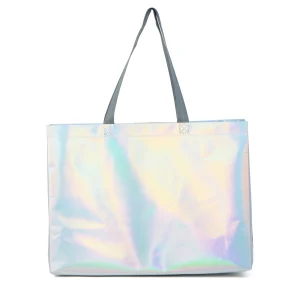
A non woven tote bag is a reusable carry bag constructed from non woven fabric — most commonly spunbond polypropylene. It typically features two parallel handles, an open top, and a rectangular base, designed to carry groceries, retail purchases, promotional materials, or everyday items.
Common specifications to know:
- GSM (grams per square meter): The fabric weight. Ranges from 70gsm (light, promotional giveaways) to 120gsm+ (heavy-duty, long-term reuse). 80gsm and 100gsm are the most common commercial choices.
- ขนาด: Standard grocery-style bags typically measure around 38 × 42 cm. Custom dimensions are widely available.
- Handle type: Sewn fabric handles (most common), die-cut punch handles, or reinforced loop handles for heavier loads.
Common bag styles:
- Flat / basic tote: Simple rectangular bag, most affordable, ideal for promotional use.
- W-bottom (side-gusset) bag: Folded side panels expand capacity — the go-to for grocery shopping.
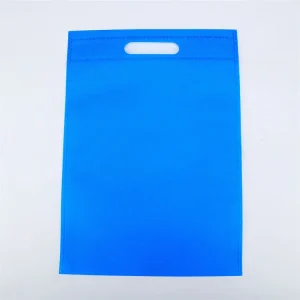
- D-cut bag: Punched hole handle in one piece with the bag — fast to produce, common in retail.
- Drawstring or zipper closure: Added security for gift bags or trade show swag bags.
How Are Non Woven Tote Bags Made?
The production process combines polymer manufacturing with garment-style assembly. Here’s the simplified flow:
- Fiber production: Polypropylene pellets are melted and extruded through fine spinnerets to produce continuous filaments.
- Web formation: Filaments are laid onto a conveyor in a random or aligned pattern to form a loose web.
- Bonding: The web passes through heated rollers (thermal bonding) or is treated chemically, fusing the fibers into a stable sheet — the finished non woven fabric.
- Cutting: Rolls of fabric are cut to panel dimensions by automated cutting machines.
- Sewing or ultrasonic welding: Panels are joined at seams. Budget bags use ultrasonic welding (fast, no thread); premium bags use reinforced stitching.
- การพิมพ์: Brand logos and artwork are applied by screen printing, heat transfer, or full-color digital printing.
The spunbond process is remarkably efficient — continuous fabric rolls can be produced at high speed, which is a key reason why non woven bags remain one of the most cost-effective custom packaging options on the market.
What Are Non Woven Tote Bags Used For?
Their combination of low cost, printability, and reusability makes non woven totes relevant across a wide range of industries:
- Retail & grocery: The most common application — reusable bags sold or given at checkout to replace single-use plastic.
- Trade shows & events: Custom-printed bags distributed at exhibition booths. High-visibility branding that travels out of the venue with attendees.
- Branded merchandise & promotions: Corporate gifting, product launches, loyalty programs, and seasonal campaigns.
- Healthcare & pharmaceuticals: Carrying patient materials, sample kits, or conference materials.
- Food delivery & meal kits: Insulated non woven variants are used for temperature-sensitive deliveries.
- Apparel & boutique retail: A step up from plain plastic bags, non woven totes give independent retailers a more premium feel at low cost.
Key Benefits of Non Woven Tote Bags
Lightweight yet strong Despite weighing only 30–60 g, a quality non woven bag can carry 5–15 kg. The high strength-to-weight ratio makes it practical for everyday shopping.
Cost-effective Among the lowest cost-per-unit options for custom printed bags. Bulk orders can go well under $0.50 per unit, making large-scale branded promotions highly affordable.
Excellent print quality The smooth, consistent surface accepts screen printing and digital printing with sharp, vibrant results — far better than most woven alternatives at the same price point.
Durable and reusable With normal use, a quality 100gsm non woven bag withstands 50–100+ uses before significant wear appears. That’s far beyond the single-use category.
กันน้ำ PP non woven doesn’t absorb water, making it practical for food shopping, outdoor events, and wet conditions.
Highly customizable Size, colour, handle type, GSM weight, and printing method are all adjustable. It’s one of the most flexible formats for custom branded packaging.
Are Non Woven Tote Bags Eco-Friendly?
This is the question most buyers eventually ask — and it deserves a nuanced answer.
Standard PP non woven bags are made from a petroleum-derived plastic. They are not biodegradable and will persist in the environment for hundreds of years if improperly disposed of. In that sense, they are not inherently eco-friendly materials.
However, the environmental picture changes significantly when you factor in reuse. Research has found that a non woven polypropylene bag needs to be reused approximately 11 times to offset the carbon footprint of a single-use plastic bag. Given that a well-made 100gsm bag can handle 50–100+ uses, the math strongly favours non woven bags over single-use alternatives when they are actively reused.
The RPET difference
If sustainability is a core priority, RPET non woven bags — made from recycled PET bottles — are a meaningful step forward. RPET production uses roughly 30–50% less energy than virgin PP, and each bag diverts post-consumer plastic from landfill. Many brands now choose RPET as part of broader ESG commitments. The look, feel, and performance are nearly identical to standard non woven.
The bottom line: non woven bags outperform single-use plastic on environmental impact, provided they are genuinely reused multiple times. For maximum sustainability, choose RPET fabric and communicate the bag’s reusability clearly to end users.
Non Woven Tote Bags vs Other Bag Types
| Bag Type | ความทนทาน | Unit Cost | Eco Profile | คุณภาพการพิมพ์ | ดีที่สุดสำหรับ |
|---|---|---|---|---|---|
| Non Woven PP | กลาง | Very low | กลาง | ยอดเยี่ยม | Promotions, retail, events |
| Non Woven RPET | กลาง | ต่ำ | ดี | ยอดเยี่ยม | Sustainability-focused brands |
| Cotton Canvas | High | High | High (if reused) | ดี | Premium gifting, long-term use |
| Paper Bag | ต่ำ | กลาง | กลาง | ยอดเยี่ยม | Retail carry-out, food service |
| Single-Use Plastic | Very low | Very low | ไม่ดี | จำกัด | Being phased out globally |
Non woven bags occupy a practical middle ground — more durable and printable than paper, significantly cheaper than cotton canvas, and far more reusable than single-use plastic.
How to Choose the Right Non Woven Tote Bag
1. Choose your GSM weight by use case
- 70–80gsm: Light promotional bags. Good for one-time trade show giveaways where cost is the primary concern.
- 90–100gsm: The most balanced option for retail, grocery shopping, and repeated use. Recommended for most commercial applications.
- 110–120gsm+: Heavy-duty bags. Best for long-term branded merchandise or premium retail where the bag is part of the product experience.
2. Select a printing method
- Screen printing: Best for 1–4 solid colors. Low setup cost, excellent durability. The most common choice for bulk orders.
- Heat transfer printing: Supports full color and photo-quality graphics. Higher per-unit cost, ideal for complex artwork.
- Digital printing: Short-run friendly with no setup fees. Suitable for variable data or low MOQ orders.
3. Consider certifications
For markets with compliance requirements, look for: OEKO-TEX Standard 100 (no harmful substances), REACH compliance (EU chemical regulation), or GRS (Global Recycled Standard) for RPET products.
4. Plan your MOQ
Most manufacturers require a minimum order quantity (MOQ) of 500–1,000 units for custom printing. For smaller quantities, look for print-on-demand services or pre-made stock bags with locally applied labels.
คำถามที่พบบ่อย
What is the difference between woven and non woven bags? Woven bags (like canvas or jute) are made from threads interlaced at right angles — the same way traditional textiles are produced. Non woven bags skip the weaving process entirely, with fibers bonded through heat or chemicals instead. Woven bags are generally more durable with a softer feel; non woven bags are lighter, cheaper to produce, and easier to print on at scale.
Are non woven bags safe to use for food? Standard PP non woven bags are generally considered safe for carrying packaged goods. For direct contact with unpackaged food, look for bags certified to food-contact standards. Avoid heavily dyed bags for fresh produce, as some pigments may not be food-grade.
How many times can a non woven bag be reused? A quality 100gsm non woven bag can typically be used 50 to 100+ times under normal conditions. Lighter 70gsm bags show wear sooner. Key factors are seam construction, handle reinforcement, and how heavily the bag is loaded.
Can non woven bags be washed? Yes — hand washing with mild detergent and air drying is recommended. Machine washing is possible for thicker bags but may cause some deformation or fading over time. Avoid tumble drying, as heat can distort the fabric structure.
What GSM is best for a non woven tote bag? For most commercial and retail applications, 90–100gsm offers the best balance of durability, cost, and print quality. For large promotional giveaways where cost is critical, 80gsm is acceptable. For premium or long-life use, go with 110–120gsm.
Are non woven bags recyclable? PP non woven bags are technically recyclable (polypropylene, #5 plastic), but many kerbside recycling programs don’t accept them. Check your local facility’s accepted materials. RPET bags can often be recycled through plastic film drop-off programs.
Looking for custom non woven tote bags for your business? Contact us for a free quote and samples
Related:Woven vs Non-Woven Polypropylene Bags ;How Long Do Non Woven Bags Last?
 Thai
 English
 French
 German
 Japanese
 Arabic
 Vietnamese
 Russian
 Spanish
 Portuguese