
When a bag specification sheet lists “600D Polyester,” many buyers accept it without question. But what does that number actually mean for the bag’s performance? And is 600D always the right choice?
The short answer: no. Denier is a design variable, not a quality score. Using a 300D fabric on a heavy-duty tool bag will produce failures at the seams within months. Using 1680D fabric on a lightweight promotional tote will inflate production costs without adding any value the end user will notice. Both are common mistakes — and both stem from treating denier as an arbitrary number rather than a functional specification.
This guide explains what denier measures, how it affects the four properties that matter most in bag performance, how different denier ranges map to specific bag applications, and — critically — how denier interacts with coatings and printing methods in ways that most sourcing guides never address. By the end, you will be able to write a precise fabric specification and make sourcing decisions grounded in performance requirements rather than convention.
What Is Denier? The Definition Behind the Number
Denier is a unit of measurement that describes the linear mass density of a fiber. Specifically: denier is the weight in grams of 9,000 meters of a single thread.

A 600D polyester fiber means that 9,000 meters of that yarn weighs 600 grams. A 210D fiber means the same length weighs 210 grams. The higher the denier number, the heavier and thicker the individual yarn — and, all else being equal, the heavier and more durable the resulting fabric.
This definition has two important implications for sourcing:
Denier measures yarn thickness, not fabric weight. Two fabrics with the same denier number can have very different weights per square meter (GSM — grams per square meter) if their weave densities differ. A 600D fabric woven loosely will be lighter and less durable than a 600D fabric with a tight, dense construction, even though both use the same yarn.
Denier measures yarn thickness, not fabric quality. A higher denier number means thicker yarn — it does not automatically mean better construction, better coating, or better sourcing. A poorly produced 1000D fabric will underperform a well-produced 600D fabric in real-world use. Denier is a starting specification, not a quality guarantee.
Denier vs GSM: Two Different Measurements
| Metric | What It Measures | What It Tells You |
|---|---|---|
| Denier (D) | Weight of individual yarn per 9,000 meters | Yarn thickness; baseline durability potential |
| GSM (g/m²) | Weight of finished fabric per square meter | Overall fabric density; affected by denier + weave + coating |
Both metrics should appear in a complete fabric specification. Denier alone is not sufficient to fully describe a fabric’s performance profile.
How Denier Affects Bag Performance: Four Key Properties
Most sourcing guides reduce the denier discussion to a single point: higher is more durable. That is technically correct but practically incomplete. Denier affects four distinct performance properties, and they do not all move in the same direction as denier increases.
1. Durability and Abrasion Resistance
Thicker yarns resist being worn through by friction more effectively than thinner yarns. In bag applications, abrasion occurs primarily at high-contact points: the base of a backpack dragged across a floor, the shoulder strap area, the exterior surface of a bag shoved into an overhead bin repeatedly.
Higher denier fabrics — 600D and above — provide meaningful abrasion resistance for bags that will experience this kind of contact regularly. For bags that will not (a one-time event giveaway, a lightweight tote used occasionally), the abrasion advantage of a high-denier fabric provides no functional benefit.
It is also worth noting that abrasion resistance depends partly on weave structure, not just denier. A ripstop construction — where reinforcing threads are woven in a grid pattern at regular intervals — can provide significantly higher tear resistance at a given denier than a standard plain weave. A 420D ripstop polyester will outperform a 600D plain-weave Oxford in tear resistance despite having a lower denier number.
2. Weight
This is the property that most directly conflicts with durability. As denier increases, fabric weight increases. A 210D fabric weighs approximately 60–100 GSM. A 600D fabric weighs approximately 220–280 GSM. A 1680D fabric can reach 500–600 GSM.
For applications where weight is a functional constraint — foldable bags, lightweight travel accessories, carry-on bags measured by airline weight limits — specifying a lower denier is not a cost-cutting compromise. It is a functional requirement. A 210D foldable shopping bag that compresses into a small pouch cannot be made from 600D fabric and still achieve its intended purpose.
3. Structural Rigidity
Higher denier fabrics are stiffer and hold their shape more consistently than lower denier fabrics. This matters for bag types that need to maintain a defined structure: a laptop backpack that should not collapse when partially loaded, a tote bag that should stand upright when set down, a tool bag that should hold its form under heavy contents.
Lower denier fabrics are more pliable and foldable, which is the correct property for bags designed to collapse, compress, or pack flat when not in use.
4. Surface Texture and Print Compatibility
This is the dimension that most sourcing guides overlook entirely — and it directly affects the quality of your brand presentation on the finished bag.
Lower denier fabrics (210D–420D) have a finer, more uniform surface texture. This creates a smoother printing substrate that allows ink and dye to bond evenly across the fabric surface, producing accurate color reproduction, sharp edge definition, and clear fine detail. These fabrics are the correct choice for sublimation printing, full-color digital printing, and any application where brand color accuracy and logo detail quality are priorities.
Higher denier fabrics — particularly 600D and above in Oxford weave construction — have a more pronounced surface texture. The characteristic basketweave appearance of Oxford fabric creates microscopic peaks and valleys across the surface. Screen printing on this surface works well for bold, simple logo designs. However, fine lines, small text, gradient effects, and complex multi-color designs will show edge irregularities on a coarse Oxford surface that would not appear on a finer fabric.
The practical implication: if your branding includes a complex, detailed logo or photographic-quality imagery, the denier you specify has a direct effect on whether the final product represents your brand accurately.
ポリエステル Denier Range Guide: From 190T to 1680D
The following profiles cover the denier ranges used across commercial bag production, with application recommendations and printing compatibility notes for each.
190T / 210D — Ultra-Lightweight
Yarn characteristics: Very fine; fabric is lightweight and has a slightly film-like texture at lower end of range.
Typical weight: 60–100 GSM
Performance profile: Limited standalone strength; relies on coating for moisture performance; folds and compresses to minimal volume; soft hand feel.
Printing compatibility: Excellent. Fine surface texture supports full-color printing methods including sublimation and digital print. Requires proper color backing for dark or saturated designs on lighter fabric.
Best applications: Foldable reusable shopping bags, rain cover accessories, lightweight drawstring pouches, event giveaway bags, inner linings.
Not suitable for: Heavy loads, sustained abrasion, long product lifespan requirements.
Typical coating pairing: DWR surface treatment or light PU backing for basic moisture resistance.
300D–420D — Light to Medium Duty
Yarn characteristics: Medium-fine; fabric has a noticeably more substantial feel than 210D while remaining light and flexible.
Typical weight: 120–180 GSM
Performance profile: Good everyday durability; handles moderate loads comfortably; retains good printability from finer yarn; balances weight and structural integrity well.
Printing compatibility: Good to excellent. Surface is relatively smooth compared to higher deniers, supporting screen printing, heat transfer, and sublimation. Better fine-detail reproduction than 600D Oxford.
Best applications: Everyday daypacks, promotional backpacks, corporate laptop bags, travel accessories, fashion totes, messenger bags.
Not suitable for: Applications requiring sustained heavy loads or extreme abrasion resistance.
Typical coating pairing: PU coating (1,500–3,000mm HH) for travel and outdoor applications.
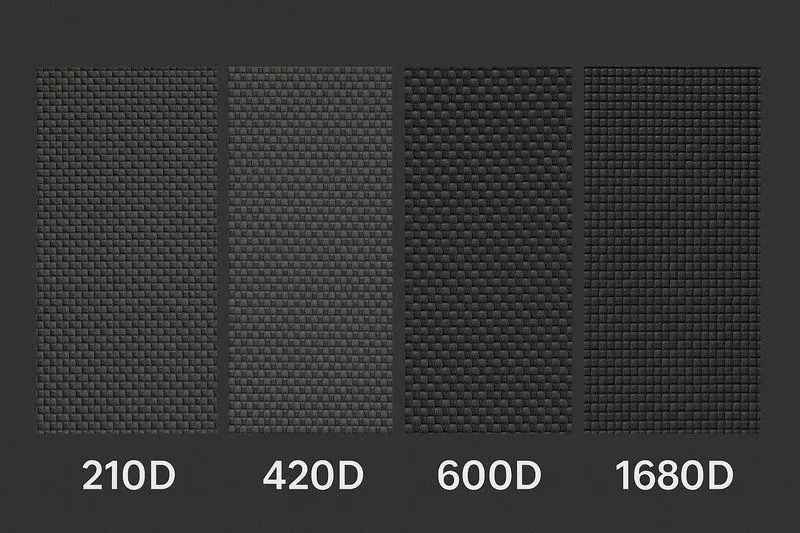
600D — The Industry Standard
Yarn characteristics: Medium-heavy; Oxford weave construction is standard at this denier, producing the characteristic textured grid surface familiar from most commercial backpacks.
Typical weight: 220–280 GSM
Performance profile: The most widely produced denier for commercial bag manufacturing. Provides genuine durability for daily-use bags, handles loads up to 10–15kg reliably, and resists the abrasion of regular use. Represents the best cost-to-performance balance across the full denier range.
Printing compatibility: Good for screen printing with bold, clear designs. The Oxford surface texture introduces slight edge irregularity on fine lines and complex graphics. Not optimal for full-color photographic-quality printing; sublimation is possible but requires surface preparation and performs better on finer fabrics.
Best applications: Everyday backpacks, travel bags, gym bags, cooler bag exteriors, laptop bags, corporate gift bags, delivery bags.
Typical coating pairing: Standard 2× PU coating; PVC coating for heavy moisture requirements; TPU for premium or eco-positioned products.
900D–1000D — Heavy Duty
Yarn characteristics: Coarse; fabric is noticeably heavier and stiffer than 600D. Provides a robust, structured feel.
Typical weight: 340–420 GSM
Performance profile: High tensile and tear strength; handles sustained heavy loads; appropriate for bags used frequently under demanding conditions. The additional weight over 600D is a real trade-off — appropriate only where the performance benefit justifies it.
Printing compatibility: Screen printing works for simple logos; surface coarseness makes fine detail and multi-color designs increasingly difficult to reproduce cleanly. Embroidery is better suited than printing for branding at this denier.
Best applications: Professional backpacks, heavy-duty travel duffel bags, outdoor gear bags, sports bags for teams and professional use.
Typical coating pairing: PU or TPU coating; reinforced base panels common.
1680D — Maximum Durability
Yarn characteristics: Very coarse; ballistic-grade yarn. This denier is more commonly used in nylon (ballistic nylon), but polyester versions are produced for cost-sensitive heavy-duty applications.
Typical weight: 500–600 GSM
Performance profile: Extreme abrasion and puncture resistance; appropriate for applications where fabric failure would have operational consequences. The weight and stiffness of 1680D fabric are significant — this is not a material for any application where portability or user comfort matters.
Printing compatibility: Poor for standard printing methods. Coarse surface texture and fabric density make screen printing and transfer printing difficult to execute cleanly. Woven labels, embroidered patches, or debossed hardware are the standard branding approaches at this denier.
Best applications: Tool bags, tactical and military-style bags, heavy logistics bags, industrial transport bags.
Not suitable for: Any application where weight, flexibility, print quality, or cost efficiency are priorities.
Denier Quick Reference
| Denier | Typical GSM | 耐久性 | 重量 | 印刷品質 | Best Use Cases |
|---|---|---|---|---|---|
| 190T–210D | 60–100 | 低い | 非常に軽い | 優れた | Foldable bags, giveaways, linings |
| 300D–420D | 120–180 | ミディアム | 軽い | 良い | Daypacks, promo bags, fashion totes |
| 600D | 220–280 | 良い | ミディアム | Moderate | Backpacks, travel bags, gym bags |
| 900D–1000D | 340–420 | 高い | 重い | 制限された | Pro packs, outdoor bags |
| 1680D | 500–600 | Very high | Very heavy | Poor | Tool bags, tactical, logistics |
Denier and Coating: How They Work Together
Denier and coating are independent variables — but they must be specified together, because each addresses a different aspect of bag performance.
Denier determines structural durability. It governs how well the fabric resists tearing, abrasion, and load stress.
Coating determines moisture performance. It governs how well the fabric repels or blocks water, and at what sustained pressure.
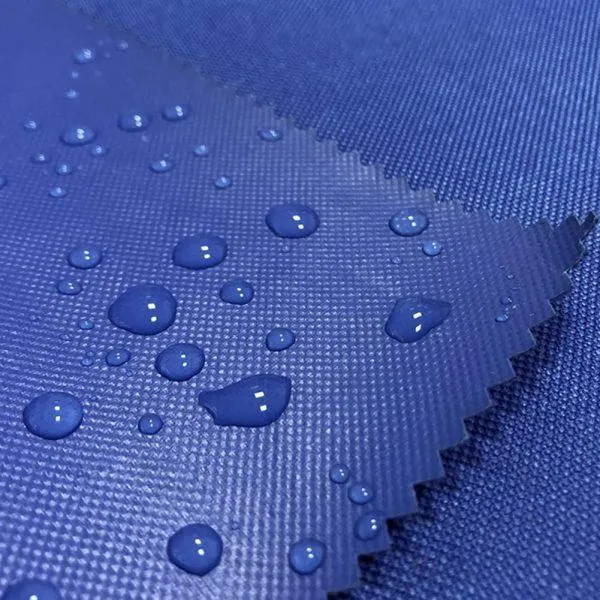
A common and costly misconception is that higher denier implies better water resistance. It does not. An uncoated 1680D polyester fabric will absorb water under sustained exposure just as an uncoated 210D fabric will. The denier determines the structural integrity of the fabric; the coating determines its waterproof rating.
The practical implication: a lightweight 210D bag with a well-specified PU coating can achieve better waterproof performance than a 600D bag with no coating or an inadequate one.
Denier × Coating Pairing Guide
| 申し込み | Recommended Denier | Recommended Coating | Performance Target |
|---|---|---|---|
| Foldable bag, light rain protection | 210D | PU coating, 1,000–2,000mm HH | Splash and light rain resistance |
| Everyday backpack, moderate weather | 600D | 2× PU coating, 2,000–3,000mm HH | Reliable rain protection |
| Cooler bag / insulated bag | 600D | Heavy PU or PVC coating | Liquid containment; condensation resistance |
| Premium outdoor pack | 420D–600D | TPU lamination | High waterproof performance; flexible |
| Corporate laptop bag | 420D–600D | PU coating, DWR finish | Light weather protection; clean appearance |
| Heavy logistics / delivery bag | 1000D+ | PVC coating | Maximum moisture and abrasion protection |
Writing the Coating Specification Correctly
When specifying coating in a production brief, denier and coating type alone are not sufficient. Include:
- Coating type: PU, PVC, or TPU
- Coating weight or specification: For example, “2× PU backing” or “0.3mm PVC lamination”
- Hydrostatic head target: The waterproof performance standard in millimeters (e.g., ≥1,500mm for everyday rain protection; ≥10,000mm for full waterproofing)
A specification that reads “600D Polyester, PU Coated” is incomplete. “600D Oxford Polyester, 2× PU Backing, ≥2,000mm Hydrostatic Head” gives a factory a precise, testable target.
Denier and Printing: Choosing the Right Fabric for Your Brand
The relationship between denier and print quality is one of the most consistently overlooked factors in bag sourcing — yet it directly determines whether your logo looks sharp and accurate on the finished product.
Why Fabric Surface Texture Affects Print Quality
Printing a logo onto fabric is a surface-contact process. The printing method — whether screen, sublimation, heat transfer, or digital — relies on consistent, even contact between the ink or transfer medium and the fabric surface.
On a low-denier fabric with a fine, uniform texture, that contact is consistent across the entire design area. Colors reproduce accurately, edges are clean, and fine details are preserved.
On a high-denier Oxford-weave fabric, the surface has a regular pattern of raised and recessed points created by the basketweave construction. Ink or transfer medium makes contact with the raised points but not the recesses — creating a micro-dotted effect on what should be a solid-color area, and producing ragged edges on what should be clean lines. For a bold, single-color logo this effect is minimal. For a complex design with gradients, fine text, or photographic elements, it is significant.
Printing Method Compatibility by Denier
| 印刷方法 | Optimal Denier Range | Key Considerations |
|---|---|---|
| Sublimation printing | 210D–420D, white or light PU-coated base | Requires polyester substrate; finest results on smooth, light-colored fabrics; not recommended on Oxford weave |
| スクリーン印刷 | 300D–1000D | Versatile across deniers; bold, simple designs work well on coarser surfaces; fine detail degrades above 600D Oxford |
| 熱転写印刷 | 210D–600D | Flat, even surface improves adhesion; coarse Oxford texture affects edge quality |
| Digital printing | 210D–420D | Similar requirements to sublimation; surface uniformity critical |
| 刺繍 | 600D–1680D | Higher denier provides stable backing structure for dense embroidery; lower deniers can pucker under stitch density |
Practical Sourcing Guidance
For complex, multi-color, or photographic logos: Specify 420D or below with a smooth PU-coated surface in white or a light base color. This substrate delivers the most accurate color reproduction and the sharpest edge definition of any polyester option.
For bold single-color or simple two-color logos: 600D Oxford is entirely appropriate and is the most cost-effective choice at this level of design complexity.
For embroidered logos on premium bags: Specify 600D or above. The denser fabric construction supports embroidery thread without puckering and gives the finished embroidery a clean, raised appearance.
For promotional bags requiring full-color branding on a budget: 210D–300D with sublimation printing delivers brand impact at lower material cost than 600D, and with better print quality.
Denier by Bag Type: Application-First Selection Guide
The most reliable approach to denier selection is to start with the bag’s end use and work backward to the specification, rather than starting with a denier number and working forward.
Promotional Bags and Event Giveaways
Recommended denier: 210D–420D
The primary requirements for promotional bags are cost efficiency, light weight for easy distribution, and print quality for accurate brand representation. High volumes mean material cost matters significantly. Usage frequency is typically low — a giveaway bag used a handful of times over a year does not require the abrasion resistance of a daily-use backpack. Full-color logo printing is often required, which favors lower denier fabrics with finer surfaces.
Typical specification: 210D Polyester, light PU or DWR coating, sublimation or screen print logo, reinforced handle attachment points.
Foldable Reusable Shopping Bags
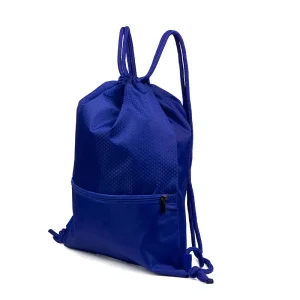
Recommended denier: 190T–210D
The defining functional requirement is compressibility to a small, pocket-sized form. This requires the lightest fabric possible. 190T and 210D fabrics meet the load requirements of a shopping bag (5–10kg of groceries) while achieving the fold-down size that makes the product useful. Anything heavier creates a bag that technically folds but does so bulkily.
Typical specification: 190T Polyester, DWR surface treatment, fold-into-integrated-pouch construction, heat transfer or screen print logo.

Everyday Backpacks
Recommended denier: 420D–600D
Daily-use backpacks handle 5–12kg of load regularly, experience regular abrasion at the base and back panel, and go through hundreds of open-close cycles over their lifespan. 600D Oxford is the industry standard for this category — it handles all of these requirements reliably at a production cost that works for mainstream retail and promotional applications. 420D is appropriate for fashion-oriented or lightweight-focused products where some abrasion resistance can be traded for a lighter, more refined appearance.
Typical specification: 600D Oxford Polyester, 2× PU backing, reinforced base panel, padded back panel, YKK or equivalent zipper, screen print or woven label logo.
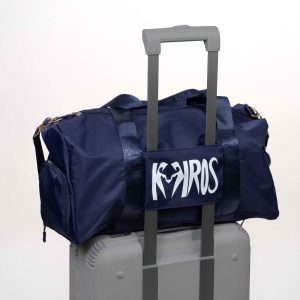
Travel Bags and Duffel Bags
Recommended denier: 600D
Travel bags face a combination of sustained load, irregular handling (overhead bins, baggage carousels, car boots), and exposure to varying weather. 600D provides the abrasion resistance and structural integrity needed for these conditions, with PU coating addressing moisture exposure. The weight of 600D is acceptable in a bag that typically is carried by hand or over the shoulder rather than worn for extended periods.
Typical specification: 600D Polyester, PU coating (≥2,000mm HH), water-resistant zipper, reinforced base corners, screen print or heat transfer logo.
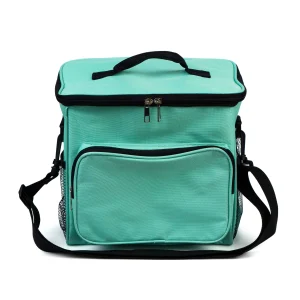
Cooler Bags and Insulated Bags
Recommended denier: 600D with heavy coating
For cooler bags, the coating specification matters more than the denier. The outer shell must resist condensation from ice packs and liquid spillage from contents. A 600D exterior provides adequate structural integrity while the coating system — typically heavy PU or PVC — provides the moisture containment the application requires. The insulating performance comes from the interior lining (aluminum foil, PEVA, or foam), not the outer fabric.
Typical specification: 600D Polyester, PVC or heavy PU coating, heat-sealed or waterproof-zipped seams, PEVA or aluminum foil interior lining.
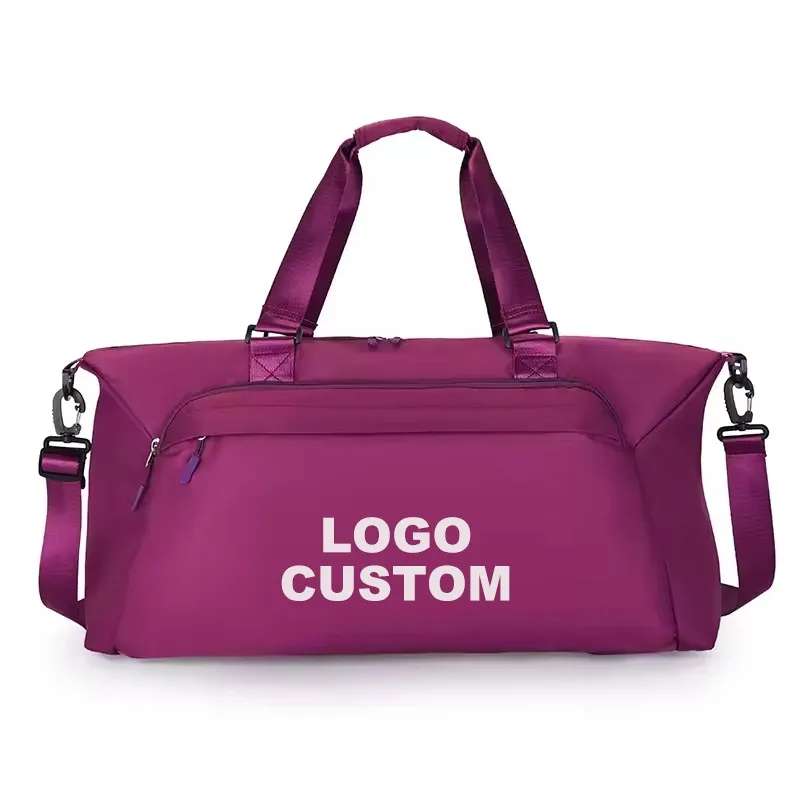
Sports and Gym Bags
Recommended denier: 420D–600D
Gym bags are exposed to sweat, wet workout gear, and damp towels. Polyester’s low moisture absorption keeps the outer fabric from becoming saturated, and a PU coating extends this protection. 600D provides adequate abrasion resistance for bags that are regularly dropped, dragged, and shoved into lockers. Ventilation panels in mesh polyester are commonly combined with the main fabric.
Typical specification: 600D Polyester outer panel, PU coating, mesh polyester ventilation panel, reinforced base, heat transfer or sublimation logo.
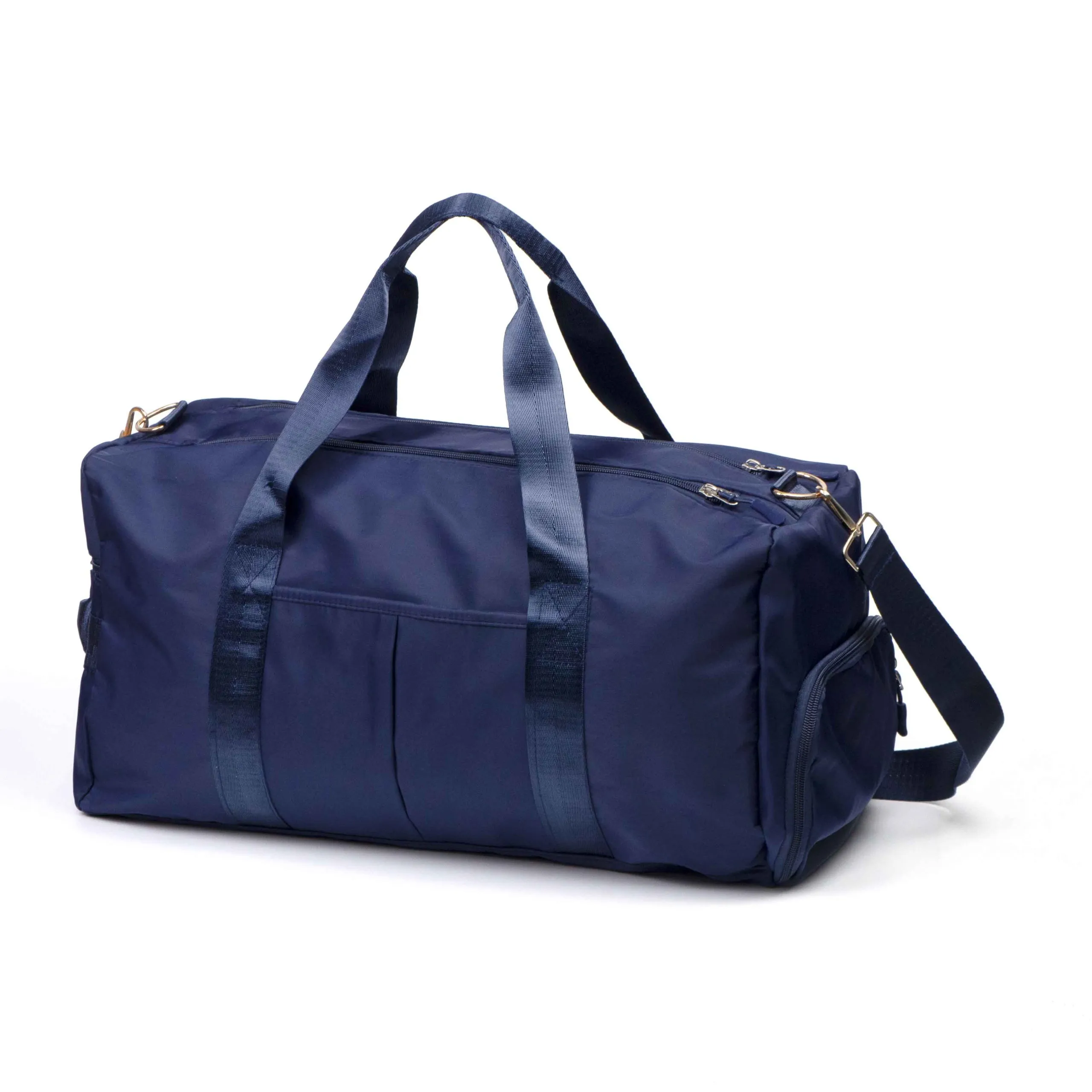
Corporate Laptop Bags and Professional Carry
Recommended denier: 420D–600D
Laptop bags require sufficient structure to protect devices from impact and a professional surface appearance that reflects brand quality. 420D provides a cleaner, more refined surface appearance than 600D Oxford and is appropriate for products positioned at the premium tier. 600D is standard for mid-range corporate gifts. Both deniers support screen printing and embroidery effectively.
Typical specification: 420D–600D Polyester, PU coating, padded laptop compartment, water-resistant zipper, embroidered or debossed logo for premium positioning.
Heavy-Duty Tool Bags and Logistics Bags
Recommended denier: 1000D–1680D
Tool bags and delivery bags operate under conditions that standard commercial bag fabrics are not designed to handle: loads of 15–25kg or more, sharp object contact, repeated rough handling, and sustained outdoor exposure. At this performance tier, 1000D represents the minimum viable specification. 1680D is appropriate where puncture resistance and extreme abrasion resistance are primary requirements.
Typical specification: 1000D–1680D Polyester, PVC coating, reinforced base and handle attachment points, bartack stitching at stress points, woven label or embroidered branding.
Common Denier Specification Mistakes — and How to Avoid Them
These are the errors that most frequently cause a finished bag to underperform its specification or a production order to require costly revision.
Mistake 1: Specifying Denier Without Weave Structure
“600D Polyester” describes the yarn. It does not describe the fabric. Oxford weave 600D and ripstop 600D have different surface textures, different print compatibility, different hand feel, and different structural behavior under load. Two factories receiving the same denier specification without weave structure can produce fabrics that look and perform differently enough to be incompatible with the same design.
Correct approach: Always specify denier and weave together. “600D Oxford Polyester” and “420D Ripstop Polyester” are complete yarn-plus-structure specifications.
Mistake 2: Treating Denier as a Quality Guarantee
Denier specifies yarn thickness. It does not specify yarn quality, weave consistency, coating uniformity, or colorfastness. A factory producing 600D fabric at the lower end of acceptable quality can deliver a product that underperforms a well-made 420D fabric in real-world use. Denier is a necessary specification parameter — it is not a substitute for sample confirmation and performance testing.
Correct approach: Specify denier as one parameter in a complete fabric brief. Require samples, specify testing standards (abrasion resistance, tensile strength, hydrostatic head), and confirm against physical samples before production approval.
Mistake 3: Specifying Denier Without Coating
Denier and coating address different performance dimensions. A high-denier specification with no coating guidance produces a bag that is structurally durable but has undefined moisture performance. A low-denier specification with an appropriate coating can achieve better waterproof performance than a high-denier specification with no coating at all.
Correct approach: Always specify denier and coating together, with a hydrostatic head target. “600D Polyester, 2× PU Backing, ≥2,000mm HH” is a complete specification. “600D Polyester” is not.
Mistake 4: Assuming rPET Underperforms Virgin Polyester
Recycled polyester (rPET) is produced from post-consumer PET plastic. Some buyers assume that recycled fiber delivers lower performance than virgin polyester at the same denier. Current manufacturing processes produce rPET fiber with strength and durability profiles that are essentially equivalent to virgin polyester at the same denier specification. GRS (Global Recycled Standard) certification provides third-party confirmation of this performance equivalence.
Correct approach: Specify rPET where sustainable sourcing is a brand requirement, with the same denier and coating parameters you would use for virgin polyester. Request GRS certification documentation from the supplier.
Complete Fabric Specification Template
A well-written fabric specification for a bag project should include all of the following elements:
Fabric:       [Denier]D [Fiber Type] [Weave Structure]
              Example: 600D Oxford Polyester
Coating:      [Type], target hydrostatic head ≥[X]mm
              Example: 2× PU Backing, ≥2,000mm HH
Color:        [Pantone reference or RAL code]
Printing:     [Method], [Location on bag], [Color count]
              Example: Screen print, front panel, 2 colors
Compliance:   [Applicable standards]
              Example: REACH compliant, Prop 65 compliant, OEKO-TEX Standard 100

Sustainability: [If applicable]
              Example: GRS-certified rPET, recycled content ≥50%
This level of specificity eliminates ambiguity in the production brief, reduces the frequency of sample rejection cycles, and gives factories a precise, testable framework for quality control.
よくある質問
Is higher denier always better for bags?
No. Higher denier means thicker yarn, heavier fabric, and — all else being equal — greater abrasion resistance. But for applications that do not require high abrasion resistance (promotional giveaways, foldable bags, lightweight travel accessories), higher denier adds weight and cost without adding functional value. The right denier is the one that matches the bag’s intended use, not the highest available specification.
What is the difference between 420D and 600D polyester?
420D is lighter (approximately 120–180 GSM vs 220–280 GSM for 600D), has a finer surface texture, and delivers better full-color printing results. It handles everyday loads effectively but has lower abrasion resistance than 600D under sustained heavy use. 600D is the industry standard for commercial backpacks and travel bags where abrasion resistance and load-bearing capacity are priorities. 420D costs slightly less and is better suited to fashion-oriented products and applications where print quality is more important than maximum durability.
Does denier affect printing quality?
Yes, directly. Lower denier fabrics have a finer, more uniform surface that allows ink and dye to bond evenly, producing accurate colors and clean edges. Higher denier Oxford-weave fabrics have a pronounced basketweave texture that can introduce edge irregularity and reduce color saturation on complex designs. For full-color branding or designs with fine detail, specify 420D or below. For bold single-color logos, 600D performs well.
Is 600D polyester waterproof?
No. 600D polyester without a coating is water-resistant at the surface level — it will repel light splashes — but it is not waterproof. Waterproof performance comes from a coating layer (PU, PVC, or TPU) applied to the fabric backing. 600D combined with a 2× PU coating and ≥2,000mm hydrostatic head specification is appropriate for everyday rain protection. For sustained heavy rain or liquid immersion scenarios, specify a heavier coating or a higher hydrostatic head target.
What denier should I use for promotional bags?
For most promotional bag applications, 210D–420D is the appropriate range. These deniers provide adequate durability for the typical use frequency of a promotional item, offer better full-color print quality than 600D, and reduce material cost — which matters at high production volumes. 300D is a practical default for promotional totes and drawstring bags. 420D is appropriate when the promotional bag needs to communicate slightly higher quality.
Is rPET polyester as durable as virgin polyester at the same denier?
Yes. Modern rPET production processes yield fiber with strength and durability profiles that are essentially equivalent to virgin polyester at the same denier. The performance difference between certified rPET and virgin polyester in commercial bag applications is not measurable in normal use. GRS (Global Recycled Standard) certification provides third-party confirmation. Specifying rPET is a way to add a credible sustainability narrative to a product without compromising performance.
What is the difference between Oxford and Ripstop weave at the same denier?
Oxford weave produces the characteristic basket-grid texture familiar from most commercial backpacks. It has good general durability and is the standard construction for 600D bag fabrics. Ripstop weave incorporates reinforcing threads in a regular grid pattern — typically every 5–8mm — that arrests tear propagation. A tear in ripstop fabric stops at the nearest reinforcing thread rather than continuing across the panel. Ripstop provides higher tear resistance at a given denier than Oxford, making it the preferred construction for outdoor and performance applications where weight savings are combined with tear resistance requirements.
Conclusion: Match Denier to Application, Then Specify Completely
Denier is one of the most important variables in a bag fabric specification — but it is only one variable. The most common sourcing errors in polyester bag production come from treating denier as a standalone quality indicator rather than one element of a complete material description.
The practical framework for denier selection is straightforward:
Start with the application. What load will the bag carry? How often will it be used? Will it be exposed to abrasion? Does it need to fold flat? These questions define the performance requirements.
Match denier to those requirements. Use the application guide above as a starting point, then adjust based on any specific performance priorities — lighter weight, better print quality, higher moisture resistance — that the application demands.
Complete the specification. Denier alone is not a fabric specification. Add weave structure, coating type and target hydrostatic head rating, color reference, printing method, and any applicable compliance standards. A complete specification eliminates ambiguity, reduces sample revision cycles, and gives your factory a precise, testable production target.
Confirm with physical samples. Before approving production, test samples against your specification — including printing quality, abrasion resistance, and coating performance. A denier specification describes what the fabric should be; a sample test confirms what it actually is.
The difference between a bag that performs well and a bag that generates returns and complaints often comes down to this level of specification detail — and getting it right starts with understanding what denier actually measures.
 Japanese
 English
 French
 German
 Arabic
 Thai
 Vietnamese
 Russian
 Spanish
 Portuguese