
Lorsque vous magasinez pour des sacs non tissés — que ce soit pour votre magasin de détail, un événement d'entreprise, ou vos courses quotidiennes — un terme revient encore et encore : GSM. Il est mentionné dans les annonces de produits, cité par les fournisseurs, et utilisé pour justifier les différences de prix entre des sacs apparemment similaires. Mais que signifie-t-il réellement et pourquoi devriez-vous vous en soucier ?
Ce guide décompose tout ce que vous devez savoir sur le GSM des sacs non tissés, de la signification du chiffre au poids qui convient le mieux à vos besoins spécifiques. À la fin, vous serez en mesure de prendre une décision confiante et éclairée à chaque fois.
Qu'est-ce que le GSM dans les sacs non tissés?
GSM signifie grammes par mètre carré.. C'est l'unité standard utilisée pour mesurer le poids — et par extension, l'épaisseur et la densité — du tissu. Plus le chiffre GSM est élevé, plus le matériau est lourd et épais. Plus le chiffre est bas, plus le tissu est léger et aéré.
Dans le contexte des sacs non tissés, le GSM détermine directement la robustesse du sac en main, combien de poids il peut supporter en toute sécurité, sa durabilité lors d'une utilisation répétée, et à quel point il reproduit clairement un design imprimé.
Pensez-y de cette façon : un sac non tissé de 60 GSM ressemble davantage à une feuille fine comme un mouchoir, tandis qu'un sac de 120 GSM semble solide, structuré, et presque comme du tissu. Les deux sont techniquement des “ sacs non tissés ”, mais ils servent des objectifs très différents et offrent des expériences utilisateur très différentes.
It is worth noting that GSM alone does not tell the full story. The quality of the polypropylene fiber, the bonding process used during manufacturing, and the stitching construction all contribute to the final durability of the bag. However, GSM is the single most reliable starting point when comparing options.
Tableau des poids GSM des sacs non tissés
Before diving into each weight category in detail, here is a quick reference table to give you an at-a-glance overview:
| GSM Range | Thickness | Load Capacity | Meilleur pour |
|---|---|---|---|
| 60–70 GSM | Lightweight | 3–5 kg | Promotional giveaways, trade shows |
| 80–90 GSM | Standard | 5–8 kg | Supermarkets, daily shopping |
| 100–110 GSM | Medium-heavy | 8–12 kg | Retail branding, gift bags |
| 120 GSM+ | Heavy-duty | 12–15 kg+ | Premium custom orders, long-term use |
Now let’s explore each category in depth.
GSM faible (60–70) : Lorsque la légèreté est la bonne option
At the lighter end of the spectrum, 60 to 70 GSM non woven bags are the go-to choice for high-volume, budget-conscious applications. These bags are thin, foldable, and economical to produce — making them a popular pick for trade show giveaways, political campaigns, charity events, and short-term promotional campaigns.
Advantages of 60–70 GSM bags:
- Low cost per unit, ideal for large order quantities
- Very lightweight and easy to fold flat
- Sufficient for carrying light items like flyers, clothing, or small food products
- Still capable of carrying basic printed branding
Limitations to keep in mind:
- Not suitable for heavy groceries or repeated daily use
- The thinner material may feel less premium to recipients
- Colors can appear slightly washed out compared to heavier GSM fabrics
- Handles may show strain when used beyond their recommended weight limit
If your goal is maximum reach at minimum cost — such as distributing thousands of branded bags at a one-day event — 60 to 70 GSM is a practical and perfectly acceptable choice. Just don’t expect these bags to become someone’s go-to shopping companion for years to come.
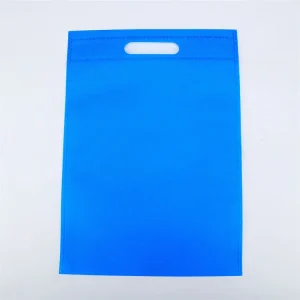
GSM standard (80–100) : Le choix le plus populaire
Walk into any supermarket, pharmacy, or retail chain that offers reusable bags, and the majority of what you’ll find falls into the 80 to 100 GSM range. This is widely considered the sweet spot for non woven bags — the point where affordability, durability, and usability intersect most effectively.
An 80 GSM bag feels noticeably more substantial than its 60 GSM counterpart. It holds its shape when filled, handles moderate weight without straining at the seams, and can be washed and reused many times before showing wear. A 100 GSM bag pushes that experience even further, offering a firmer structure and a slightly more premium feel that customers genuinely appreciate.
Why 80–100 GSM is the market standard:
- Excellent balance between cost and quality
- Handles everyday grocery shopping comfortably
- Withstands 80 to 100+ uses with proper care
- Works well for screen printing and heat transfer printing
- Widely available and easy to customize in bulk
Best suited for:
- Supermarchés et chaînes de magasins d'alimentation
- Convenience stores and pharmacies
- E-commerce brands looking for branded packaging
- Any business wanting a reusable bag that customers will actually keep using
If you are ordering non woven bags for the first time and are unsure where to start, 80 to 100 GSM is almost always the safest and most versatile choice.
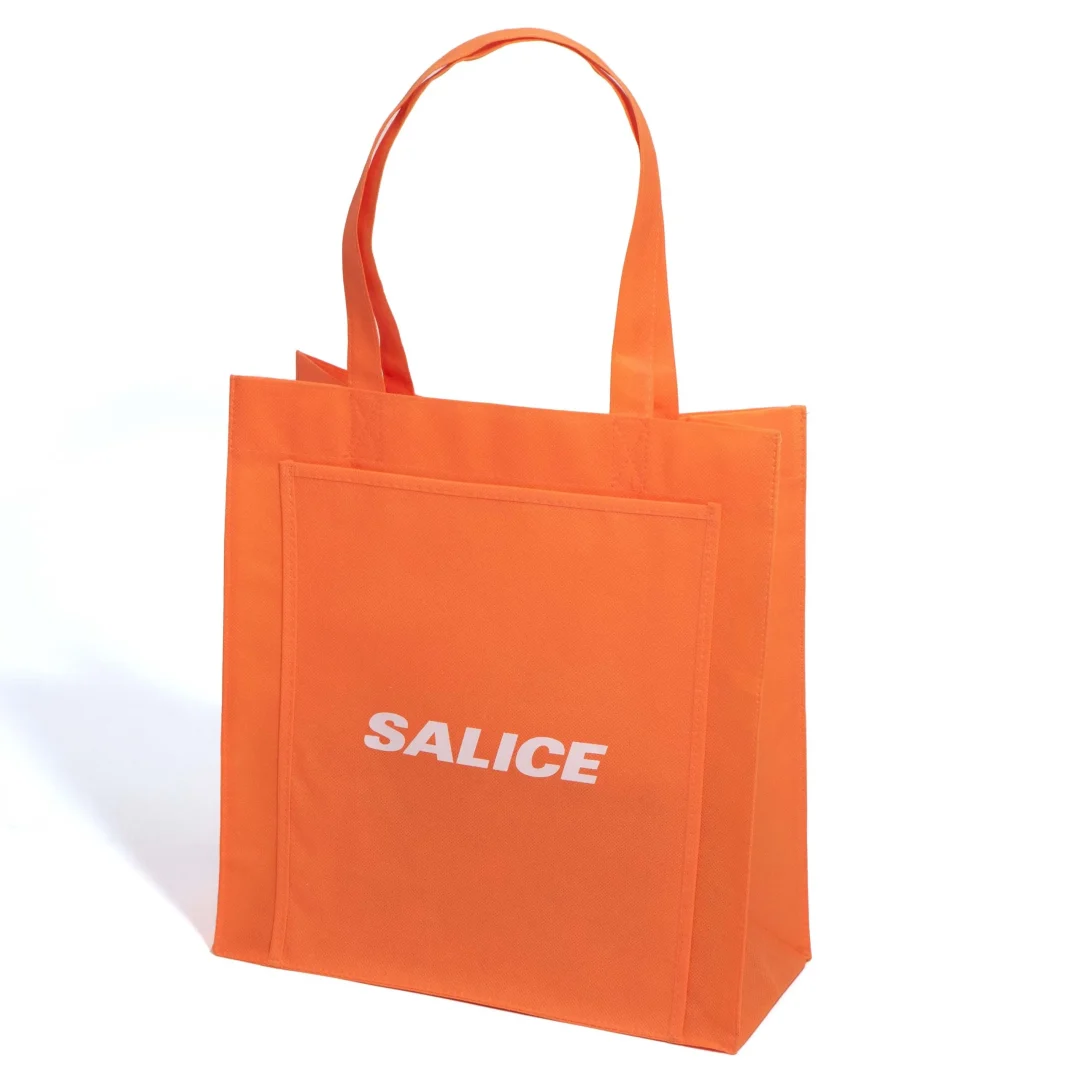
GSM lourd (110–120+) : Conçu pour durer
At the top of the range, 110 GSM and above represents the premium tier of non woven bags. These bags are noticeably thicker, more rigid, and more tactile than standard options. Picking one up, you immediately sense that it is built for serious, long-term use.
The 120 GSM and above category is especially popular among luxury retailers, high-end food brands, corporate gifting programs, and any business where the bag itself is part of the brand experience. When a customer walks out of your store carrying a well-constructed, thick non woven bag with a sharp printed logo, it communicates quality — and that impression carries value.
Advantages of 110–120+ GSM bags:
- Maximum durability and structural integrity
- Can carry 12 to 15 kg or more without handle stress
- Premium tactile feel that elevates brand perception
- Ideal for detailed, high-resolution print designs
- Significantly longer lifespan — often 3 to 5+ years with regular use
Considerations before choosing this range:
- Higher cost per unit, which may not suit large giveaway campaigns
- Slightly bulkier when folded, less pocket-friendly
- Best value when the bag is intended to be kept and reused frequently, not given away en masse
For businesses that view the bag as a long-term brand ambassador rather than a disposable promotional item, investing in 120 GSM is a decision that consistently pays off.
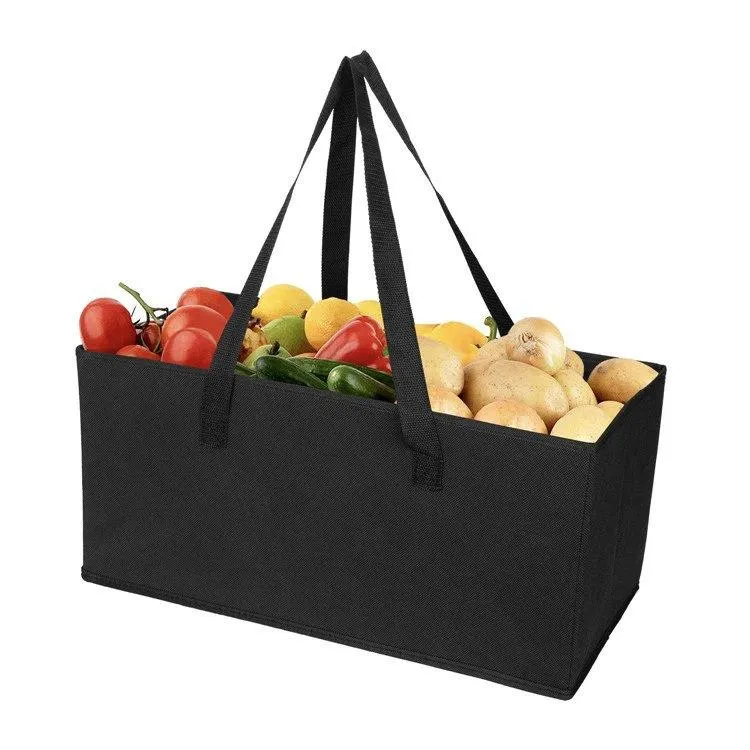
Comment le GSM affecte la qualité d'impression
One aspect of GSM that is often overlooked is its direct impact on how printed designs look on the finished bag. The fabric weight and fiber density play a significant role in color vibrancy, detail sharpness, and ink adhesion.
60–70 GSM: The thinner, looser fiber structure means ink can spread slightly, resulting in softer edges and less vibrant colors. Simple logos and single-color designs tend to work better at this weight.
80–100 GSM: The denser fabric provides a much more consistent printing surface. Colors appear fuller and more saturated, and fine details in logo designs are reproduced more accurately. This range works well with screen printing, flexographic printing, and heat transfer methods.
110–120+ GSM: The tight, heavy fiber structure delivers the best possible printing results. High-resolution artwork, gradient colors, and multi-color designs all translate exceptionally well onto this fabric weight. If your brand design involves intricate detail or bold color blocks, a higher GSM will do it justice.
The takeaway: if your branding is an important part of the bag’s purpose, don’t cut corners on GSM just to save a few cents per unit. The difference in print quality is visible, and it reflects directly on how customers perceive your brand.
Comment choisir le bon GSM pour vos besoins
Still unsure which weight to go with? Ask yourself these three questions:
1. What will the bag be used to carry? Light items like clothing, papers, or packaged snacks? A 70 to 80 GSM bag will handle that comfortably. Heavier groceries, bottles, or books? Go for 100 GSM or above to avoid handle failures and seam stress.
2. Is this a one-time use or a long-term reusable bag? If you’re handing bags out at a single event and don’t expect them to last more than a few uses, 60 to 70 GSM keeps costs low without compromising the experience. If the goal is a bag your customers will use for years, invest in 100 GSM or higher.
3. How important is the printed design? If your logo and brand colors are central to the bag’s purpose, choose at least 80 to 100 GSM to ensure the print looks clean and professional. For premium visual impact, 120 GSM is worth the extra cost.
GSM et durabilité : Pourquoi un poids plus élevé signifie souvent un impact environnemental plus faible
There is an important environmental dimension to the GSM conversation that doesn’t get discussed enough. Non woven bags are made from polypropylene, a petroleum-based plastic, which means their eco-friendliness depends almost entirely on how many times they are reused.
A 60 GSM bag that gets used five times and then discarded has a much higher environmental impact per use than a 100 GSM bag that’s used 80 times over three years. The production of a heavier bag requires more raw material, but that investment is more than recovered through its extended lifespan.
Research consistently shows that reusable bags — including non woven options — need to be used a minimum of 11 times to offset their production footprint compared to single-use plastic bags. Quality non woven bags at 80 GSM and above achieve this threshold easily. Choosing a higher GSM is therefore not just a quality decision — it is the more environmentally responsible one.
Conclusion
Choosing the right GSM for your non woven bags doesn’t have to be complicated. Match the weight to your purpose: go light for high-volume promotions, go standard for everyday retail use, and go heavy-duty when quality and longevity matter most.
To summarize:
- 60–70 GSM — Meilleur pour les grandes distributions promotionnelles où le coût est la priorité
- 80–100 GSM — Le compagnon fiable pour le commerce de détail, les supermarchés et l'utilisation quotidienne
- 110–120+ GSM — Le choix premium pour les marques qui souhaitent faire une impression durable
En cas de doute, il est presque toujours préférable d'opter pour un GSM légèrement supérieur. La différence de coût est généralement minime, mais celle de qualité, de durabilité et de perception de la marque est significative.
Vous n'êtes pas sûr du GSM adapté à votre prochaine commande ? Contactez notre équipe dès aujourd'hui pour des échantillons gratuits de toutes les gammes de poids et des conseils d'experts adaptés à vos besoins spécifiques.
 French
 English
 German
 Japanese
 Arabic
 Thai
 Vietnamese
 Russian
 Spanish
 Portuguese