
Published by initipacking.com | Wholesale Felt Bags Factory & Manufacturer
Most brands know they want a custom felt bag. Fewer know exactly what to ask for when they contact a factory. Thickness, logo method, color, structure — each decision shapes the final product, and getting them right upfront avoids costly back-and-forth during sampling.
This guide is designed to close that gap. Whether you’re briefing a supplier for the first time or refining an existing product, the sections below cover every key customization parameter — what the options are, how they compare, and which combinations work best for specific brand applications. By the end, you’ll have everything you need to submit a clear, complete brief and get an accurate quote on the first ask.
1. Felt Thickness — The First Decision You Need to Make
Thickness is the single most foundational parameter in a felt bag spec. It determines the bag’s structure, hand feel, protective performance, and — to a significant degree — its perceived quality. It also affects which decoration methods work best and what the bag can realistically be used for.
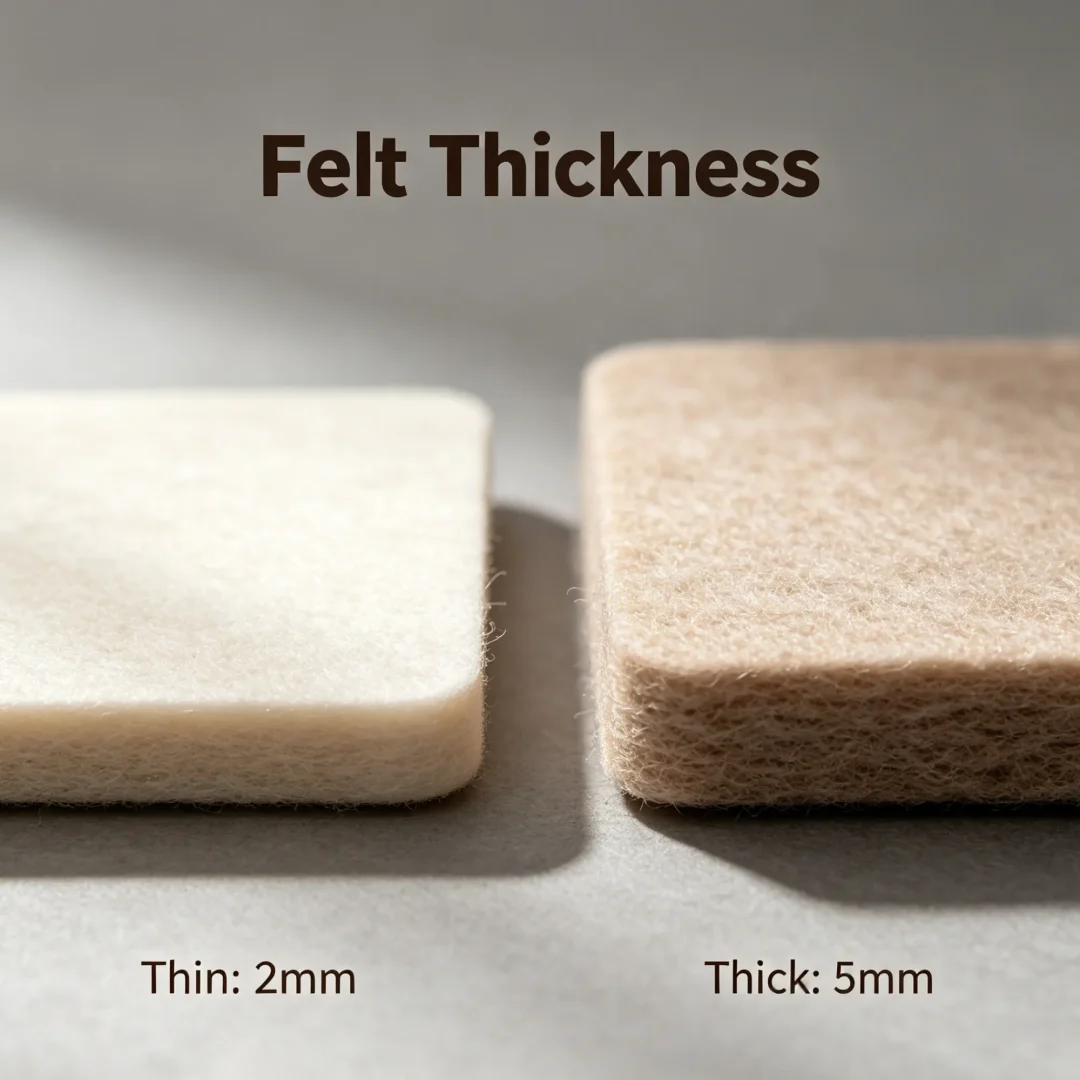
The Three Standard Thicknesses
| Thickness | Feel & Structure | Meilleur pour | Applications typiques |
|---|---|---|---|
| 2mm | Soft, lightweight, flexible | Pouches, wine bags, jewelry bags | Retail gift packaging, wedding favors |
| 3mm | Semi-structured, most versatile | Tote bags, shopping bags, gift bags | Corporate gifts, branded retail |
| 5mm | Firm, structured, protective | Laptop sleeves, insert organizers | Tech brands, premium gifting |
2mm felt is the lightest option. It drapes softly, folds flat, and keeps material costs down — making it the right call for single-use gift bags, wine totes, jewelry pouches, and any application where portability and cost efficiency matter more than rigidity. The trade-off is that it offers less structure and less surface tension for large-format printing.
3mm felt is the industry workhorse. It strikes the right balance between flexibility and body — soft enough to fold and carry comfortably, structured enough to hold its shape when filled. It’s the most commonly specified thickness across tote bags, shopping bags, and mid-range corporate gifts, and it works well with every major decoration method.
5mm felt is for applications that demand structural integrity. Laptop sleeves, insert organizers, and protective carry cases need a material that won’t collapse or buckle under load. 5mm felt provides that rigidity while maintaining the soft exterior texture that makes felt distinctive. It’s heavier and costs more per unit, but for the right product, it’s the only thickness that delivers.
Which Thickness Should You Choose?
If you’re undecided, default to 3mm — it’s the most adaptable option and produces reliable results across the widest range of bag types. Move to 2mm when weight and cost are the priority. Move to 5mm when structure and protection are non-negotiable.
2. Logo Printing Methods — Which One Is Right for Your Brand?
The decoration method is where your brand identity lands on the bag. Each technique produces a different visual and tactile result, and the right choice depends on your artwork, your brand positioning, and your order volume.
At a Glance
| Méthode | Visual Effect | Best Artwork Type | Cost Range |
|---|---|---|---|
| Sérigraphie | Flat, bold, high-contrast | Simple graphics, text, solid fills | Low–Medium |
| Broderie | Raised, textured, durable | Clean lines, defined shapes | Medium–High |
| Leather / PU Patch | Layered, artisanal, premium | Brand badges, logo marks | Medium–High |
| Transfert de chaleur | Full-color, photographic detail | Complex or multi-color artwork | Moyen |
| Laser Engraving | Precise, tonal, ink-free | Fine detail, dark felt surfaces | Medium–High |
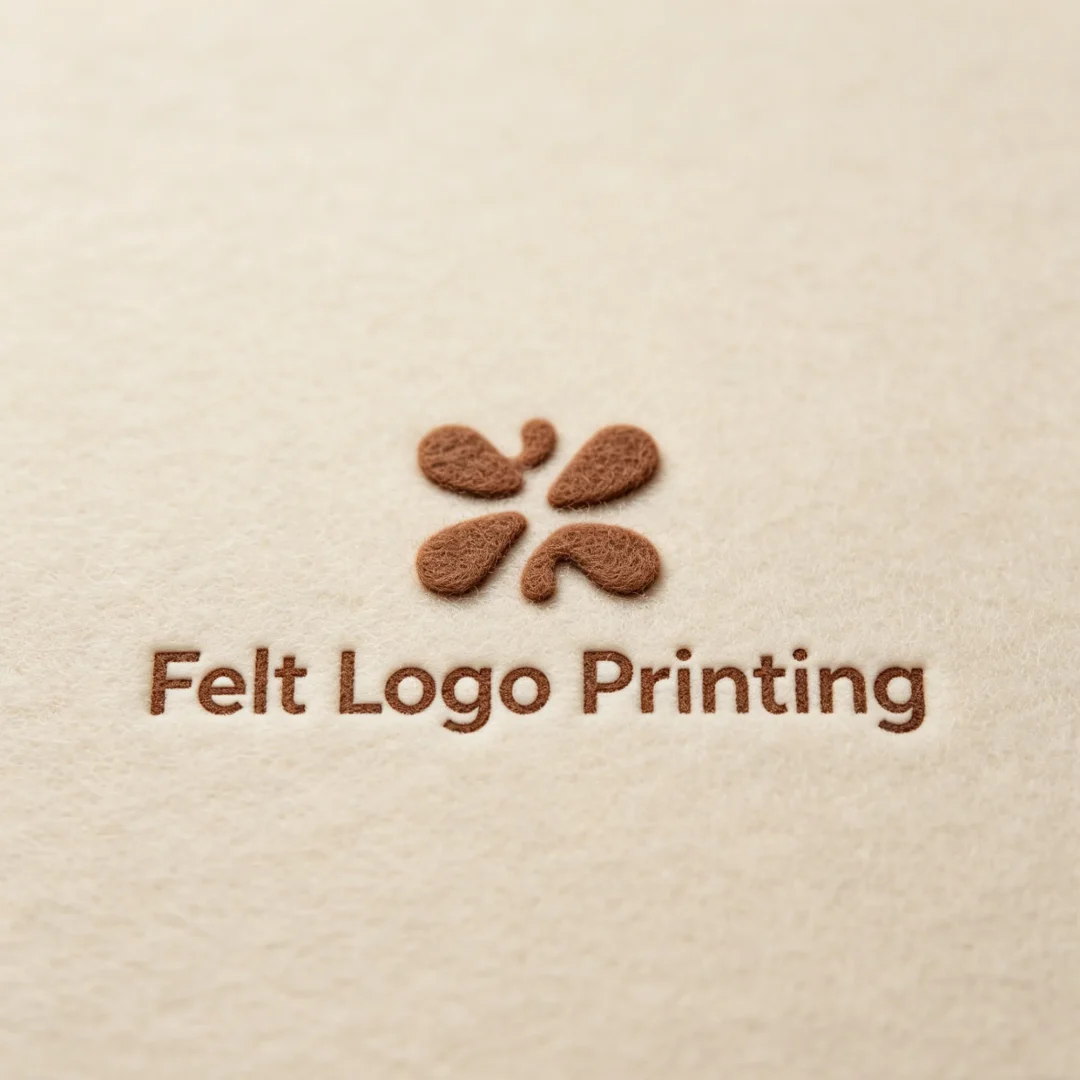
2.1 Screen Printing
Screen printing pushes ink directly onto the felt surface through a mesh stencil. It’s the most cost-efficient decoration method for large runs and produces bold, clean results when the artwork is kept simple — think flat logos, wordmarks, and two- or three-color graphics.
The limitation is color complexity. Each color requires a separate screen, so intricate multi-color designs become expensive quickly. Fine lines and gradients don’t reproduce well on felt’s textured surface. For straightforward brand logos and promotional bags at volume, screen printing is the most practical choice.
Meilleur pour : retail tote bags, promotional gifts, event merchandise, any order where per-unit cost is a primary concern.
2.2 Embroidery
Embroidery stitches your logo directly into the felt using thread, creating a raised, three-dimensional result that reads as unmistakably premium. It’s durable — the stitching won’t peel, crack, or fade the way printed inks can — and it ages well, which matters for products that will be used repeatedly.
The constraint is artwork complexity. Embroidery works best with clean, well-defined shapes and a limited thread color palette. Photographic images, fine gradients, and very small text don’t translate well into stitch form. The setup cost (digitizing the embroidery file) is higher than screen printing, but it amortizes quickly over medium and large runs.
Meilleur pour : corporate gifts, branded laptop bags, wine totes, any application where the bag needs to feel considered rather than promotional.
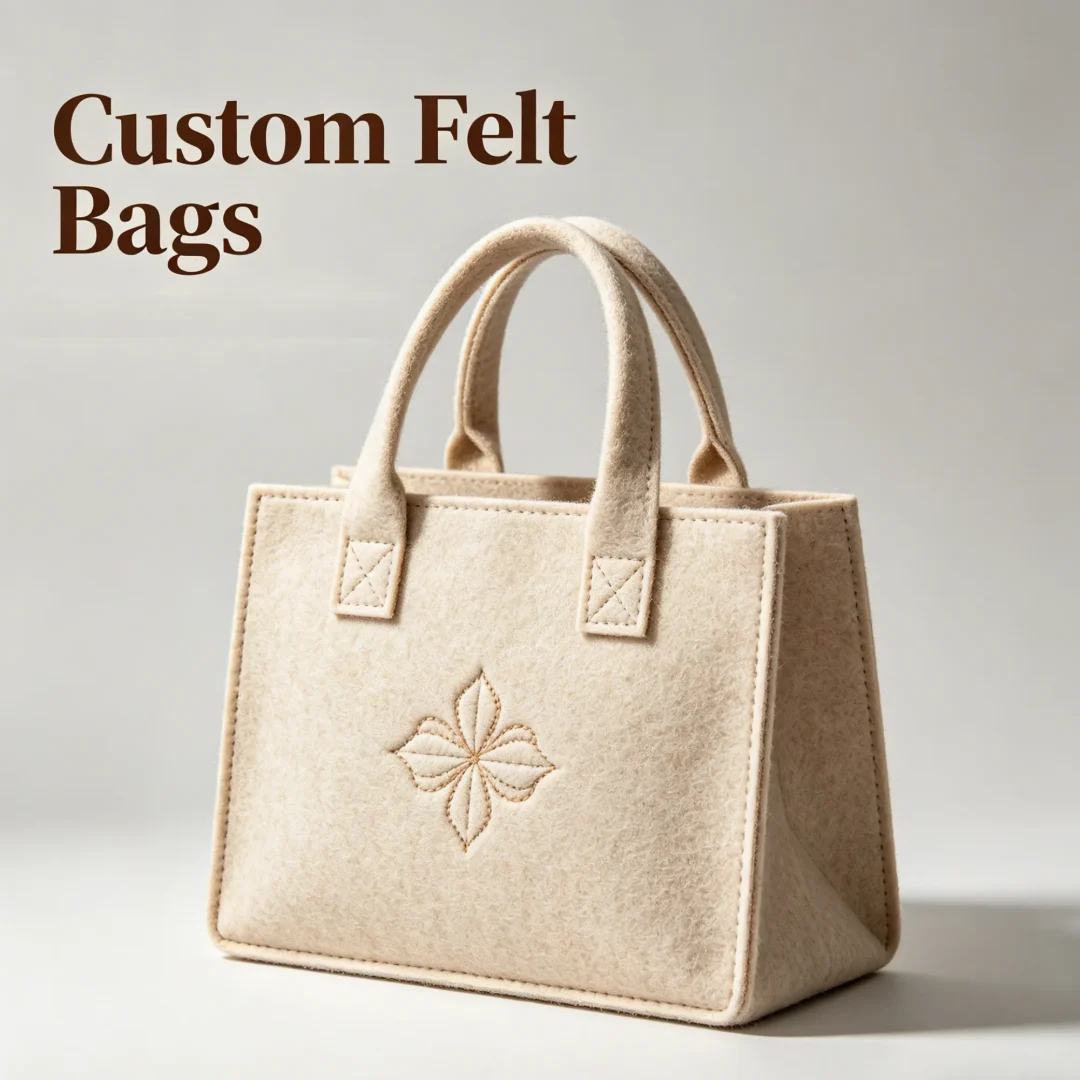
2.3 Leather or PU Patch with Debossing
A separately manufactured patch — in genuine leather or PU leather — is debossed or printed with your logo, then stitched or heat-pressed onto the felt surface. The result is a layered, textural product with a craft or artisanal quality that sits apart from printed or embroidered alternatives.
This method works particularly well for brands that want a heritage or premium feel — wine labels, craft spirits, independent retailers, boutique hotels. The patch can be cut to any shape (rectangular, shield, oval, custom die-cut) and finished in a range of leather tones and textures.
Meilleur pour : wine bags, luxury gift bags, boutique retail packaging, any brand positioning that leans into craft or heritage.
2.4 Heat Transfer Printing
Heat transfer applies a printed film to the felt surface using heat and pressure. It supports full-color artwork with photographic detail levels — gradients, complex illustrations, multi-color brand imagery — that other methods can’t reproduce on felt.
The practical limitation is durability relative to embroidery. Heat transfer prints hold up well under normal use, but heavy washing or abrasion over time can cause edge lifting. For bags that will be used occasionally — seasonal gifts, event packaging, promotional items — this is rarely an issue. For everyday carry bags used for years, embroidery or screen print will outlast heat transfer.
Meilleur pour : full-color brand artwork, event-limited designs, seasonal or campaign-specific bags.
2.5 Laser Engraving
Laser engraving burns a precise pattern into the felt surface, creating a tonal, ink-free result. The process produces exceptionally fine detail — finer than any printing method — and works particularly well on darker felt colors where the contrast between engraved and unengraved areas reads clearly.
Because no ink is involved, laser engraving has appeal for brands with clean-label or sustainability positioning. The limitation is tonal range: it produces a single-color effect and is less impactful on lighter felts where contrast is low.
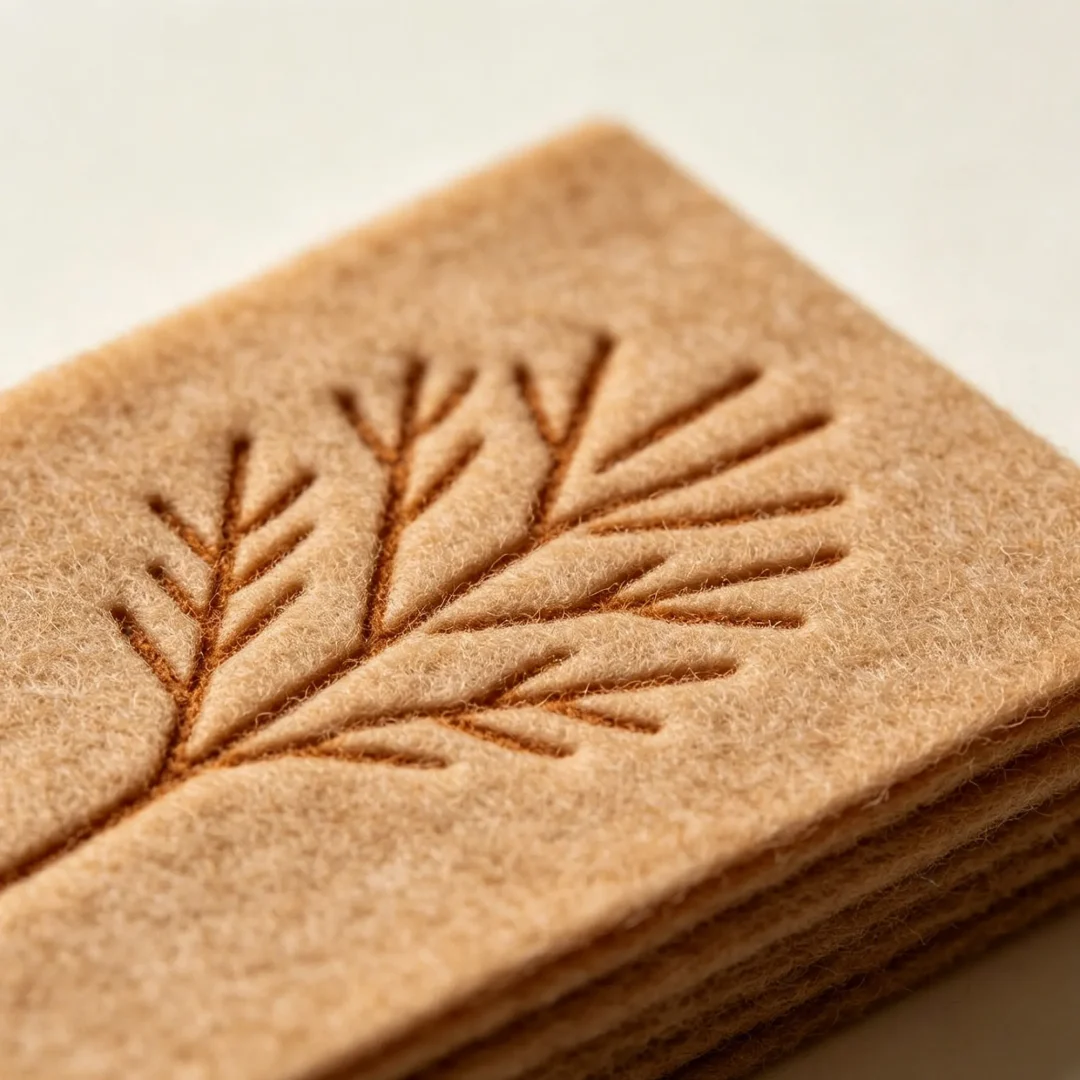
Meilleur pour : dark-colored laptop bags, premium tech accessories, brands with minimalist design language.
3. Color & Structure Design
3.1 Color Customization
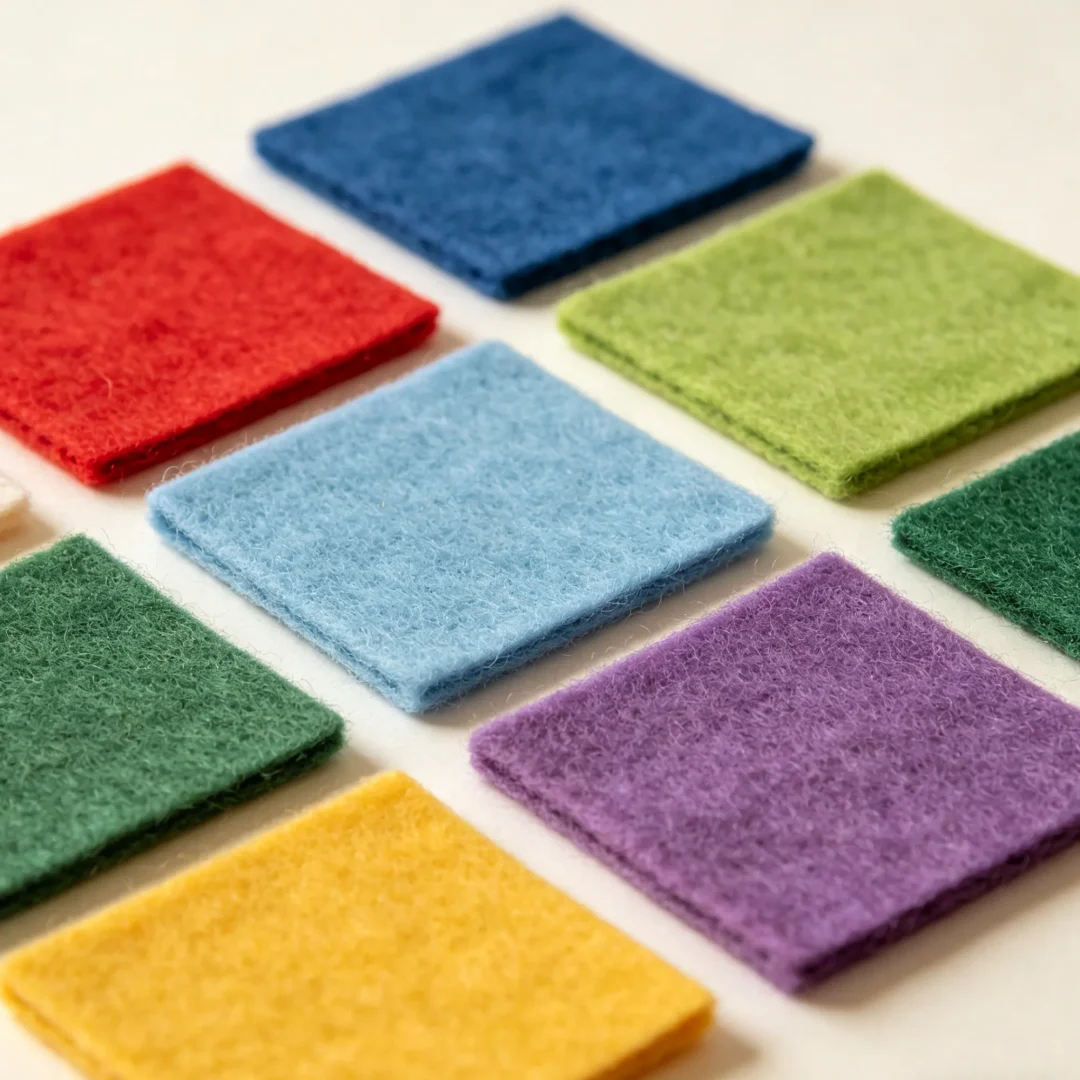
Felt is available across a broad color spectrum, with Pantone color matching available for brand-critical shades. For most standard colors — navy, black, grey, burgundy, olive, tan — production felt closely matches the reference without issue. For highly saturated, very light, or very dark custom shades, a pre-production sample is the safest way to confirm the match before committing to bulk.
A few color directions that are performing well in branded packaging in 2025–2026:
- Deep, saturated neutrals — charcoal, slate, deep forest green, and navy. Versatile across industries, strong contrast for most logo methods.
- Warm earth tones — sand, oat, terracotta, warm brown. Align naturally with sustainability positioning and craft brand aesthetics.
- Moody mid-tones — dusty rose, sage, slate blue, muted burgundy. Popular in gifting, beauty, and wellness brand applications.
One practical note: felt’s fiber structure absorbs dye differently than woven fabric, so color can read slightly differently on felt than on a Pantone swatch. When color accuracy is critical, always request a dyed felt swatch or physical sample before approving production.
3.2 Structural Design Options
The structural details of a custom felt bag are where function and brand expression intersect. Key decisions include:
Type de fermeture
- Drawstring — simple, lightweight, low-cost. Best for pouches, wine bags, and gift bags.
- Zipper — secure and practical. Best for laptop sleeves, travel accessories, and any bag where contents need to stay in place.
- Magnetic snap — clean and premium-feeling. Best for totes and gift bags where ease of access matters.
- Button snap — casual and functional. A good mid-point between drawstring simplicity and zipper security.
Type de poignée
- Cotton rope — natural feel, lightweight, popular for retail totes and gift bags.
- Leather or PU handle — elevates the bag immediately; often paired with leather patch branding.
- Webbing strap — practical and durable, common on laptop bags and structured carriers.
- No handle (clutch or pouch format) — for jewelry bags, cosmetic pouches, and insert organizers.
External features
- Front slip pocket — useful for laptop bags and everyday totes.
- Side gusset — adds capacity without changing the bag’s footprint.
- Card slot — small but practical detail for desk organizers and travel accessories.
Interior lining Adding an interior lining — typically a lightweight cotton or polyester fabric — finishes the inside of the bag, prevents direct felt contact with contents, and reinforces the bag’s structure. It’s worth specifying for higher-end retail or gifting applications where the interior is visible on opening.
Hardware finish Metal zippers, snaps, and D-rings are available in gold, silver, antique brass, and matte black. The hardware finish should align with your overall brand palette — gold hardware reads warmer and more traditional; matte black reads more contemporary and minimal.
3.3 Size Customization
Standard felt bag dimensions are designed around common use cases — a standard 750ml wine bottle, a 13-inch or 15-inch laptop, an A4 document. If your product falls within these parameters, you can work from existing templates and save time in development.
If you need a non-standard size — an oversized tote, a bag for a Magnum wine bottle, a pouch sized to a specific product — provide your dimensions as length × width × height (with gusset depth if applicable), along with the item the bag needs to fit. If you have a reference sample, sharing it directly with the factory is the fastest path to an accurate spec.
4. Best Use Cases for Custom Felt Bags by Industry
Different industries prioritize different combinations of thickness, decoration method, and structure. Here’s a quick reference by sector:
| L'industrie | Recommended Product | Recommended Method | Recommended Thickness |
|---|---|---|---|
| Tech / Corporate Gifts | Laptop sleeve, desk organizer | Embroidery, laser engraving | 5mm |
| Retail / Boutique | Tote bag, gift bag | Screen print, leather patch | 3mm |
| Wine / Spirits | Wine tote, bottle bag | Leather patch, embroidery | 2–3mm |
| Wedding / Events | Favor bag, jewelry pouch | Embroidery (name/date) | 2mm |
| Beauty / Wellness | Cosmetic pouch, gift bag | Heat transfer, screen print | 2–3mm |
| Outdoor / Lifestyle | Tote bag, carry-all | Screen print, embroidery | 3–5mm |
These are starting points, not rules. The best specification always comes from understanding your end user and the context in which the bag will be used or received.
5. How to Place a Custom Felt Bag Order — What You Need to Prepare
A well-prepared brief gets you an accurate quote faster and reduces the number of sampling rounds needed to hit the final spec. Here’s what to have ready before you reach out:
- Product type — tote, laptop sleeve, wine bag, pouch, etc.
- Target dimensions — length × width × height, or a reference sample
- Felt thickness — 2mm, 3mm, or 5mm
- Logo file — vector format preferred (AI or EPS); include color breakdown
- Brand color references — Pantone numbers if available
- Decoration method preference — or ask the factory for a recommendation based on your artwork
- Target quantity — an approximate range is fine at the quoting stage
- Required delivery date — especially important for seasonal or campaign orders
The Sampling Process
Once your brief is submitted and the quote confirmed, the factory will produce a pre-production sample — typically within 7–10 days. The sample is your opportunity to verify material, color, construction, and branding before bulk production begins. Take it seriously: review the sample against your brief line by line, and only sign off when every detail is correct. Changes after bulk production begins are costly and slow.
Conclusion
Custom felt bags are one of the most versatile branded products available — the material works across industries, the customization options are extensive, and the end result is something people keep and use. Getting the specification right is a matter of making deliberate choices at each decision point: thickness, decoration method, color, structure, and size.
The frameworks in this guide give you a solid foundation for those choices. When you’re ready to move from brief to sample, a factory with full in-house production capability and experience across all five decoration methods will move faster and more accurately than one that outsources any part of the process.
Have your logo ready? Send us your design and target quantity — we’ll respond with a quote and digital mockup within 24 hours. Initipacking is a factory-direct felt bag manufacturer with full in-house production across all decoration methods, flexible order quantities, and samples within 7–10 days.
 French
 English
 German
 Japanese
 Arabic
 Thai
 Vietnamese
 Russian
 Spanish
 Portuguese