
1. Einleitung
2. What Is Vinyl?
Definition of Vinyl Material
How “Vinyl” Serves as a Broader Material Category
Common Types of Vinyl Used in Bags
- Soft Vinyl: This is the most prevalent type used in everyday bags. It’s lightweight, pliable, and often has a smooth or slightly textured surface. Soft vinyl is made by adding plasticizers (flexibility-enhancing additives) to the polymer mix, resulting in a material that’s easy to fold, sew, and manipulate. It’s commonly used for casual bags and accessories where comfort and flexibility are priorities.
- Faux Leather Vinyl: Also known as “vinyl leather” or “pleather,” this subtype is designed to mimic the look and feel of genuine leather. It’s created by coating a fabric backing (like polyester) with a vinyl layer, which is then embossed with a leather-like grain. Faux leather vinyl is popular for fashion bags, purses, and accessories due to its aesthetic appeal, durability, and lower cost compared to real leather.
- Clear Vinyl: A transparent variant of vinyl, clear vinyl offers visibility while providing basic protection. It’s less rigid than clear PVC and has a slightly softer feel, making it ideal for bags where flexibility and see-through functionality are needed (e.g., small cosmetic pouches or accessory organizers).
Typical Vinyl Bag Applications
3. What Is PVC (Polyvinyl Chloride)?
Definition & Chemical Composition
How PVC Relates to Vinyl (PVC as a Type of Vinyl Polymer)
Types of PVC Used in Bags
- Soft Flexible PVC: This type is created by adding high levels of plasticizers to rigid PVC, resulting in a material that’s pliable and easy to work with. Soft flexible PVC is often confused with soft vinyl (non-PVC vinyl), but it tends to be slightly thicker and more durable. It’s commonly used for bags that require both flexibility and strength, such as reusable shopping bags and some travel pouches.
- Rigid PVC: Without added plasticizers, PVC is naturally stiff and rigid. Rigid PVC is thick, strong, and resistant to impact, making it ideal for structured bags that need to hold their shape. Examples include hard-shell cosmetic cases, clear stadium bags (which often require rigid construction to meet security standards), and heavy-duty storage containers.
Typical PVC Bag Applications
3. Vinyl vs. PVC: The Core Difference
If you’re looking for a simple way to remember it: All PVC is vinyl, but not all vinyl is PVC.
| Merkmal | Vinyl (General Category) | PVC (Specific Polymer) |
| Scope | Includes PVC, EVA, PEVA, etc. | A specific synthetic resin. |
| Perception | Often associated with “fashion” or “luxury” (e.g., vinyl records or vinyl leather). | Often associated with “industrial” or “utility” uses. |
| Chemistry | Broad range of chemical structures. | Specifically Chlorine + Carbon + Hydrogen. |
5. Material Properties Comparison
- Flexibility & Softness: Vinyl (non-PVC) is highly flexible and soft to the touch, with a pliable texture that folds easily. PVC varies: flexible PVC is pliable but slightly stiffer than vinyl, while rigid PVC is stiff and inflexible.
- Thickness Options: Vinyl (non-PVC) is typically available in thinner gauges (0.1–0.3 mm) for lightweight applications. PVC offers a wider range of thicknesses, from thin flexible sheets (0.2–0.5 mm) to thick rigid panels (1.0 mm+), making it suitable for both light and heavy-duty use.
- Weight & Structure: Vinyl (non-PVC) is lightweight, with a soft, unstructured feel that conforms to its contents. PVC is denser: even flexible PVC is slightly heavier than vinyl, and rigid PVC is significantly heavier with a rigid, structured shape that holds its form.
- Transparency & Clarity: Clear vinyl has a slight haze, making it semi-transparent. Clear PVC can be manufactured to be nearly crystal clear, offering superior visibility—ideal for stadium bags or packaging where product visibility is key.
- Wear Resistance: Vinyl (non-PVC) has moderate wear resistance; it may scratch or stretch with frequent use. PVC has excellent wear resistance: it’s scratch-resistant, tear-resistant, and holds up better to heavy loads and repeated use.
- Wasserbeständigkeit: Both materials are fully waterproof, making them suitable for wet environments (e.g., toiletry bags, beach bags). There is no significant difference in water resistance between the two.
- Temperature Tolerance: Vinyl (non-PVC) has a lower temperature tolerance, becoming brittle at temperatures below 0°C (32°F) and softening above 50°C (122°F). PVC has a higher temperature tolerance: flexible PVC remains pliable down to -10°C (14°F), while rigid PVC can withstand temperatures up to 60°C (140°F) without deforming.
6. Durability & Longevity
Which Material Lasts Longer in Heavy-Duty Use
Crack Resistance & Aging
UV Exposure Impact
Suitability for Outdoor / Travel / Storage Bags
7. Safety, Compliance & Environmental Considerations
Safety concerns primarily stem from additives like phthalates (plasticizers) and VOCs (volatile organic compounds), which can off-gas in poor-quality products.
Modern PVC/vinyl bags from reputable sources comply with standards like REACH (EU restrictions on chemicals), EN71 (toy safety), and CPSIA (U.S. children’s product safety), limiting phthalates and heavy metals.
Recyclability is limited—PVC is recyclable but often downcycled due to contamination. Environmental impact includes production emissions and persistence in landfills. Many brands now offer phthalate-free or recycled options, and market perception favors eco-friendlier alternatives for sustainable packaging.
8. Applications & Use Cases
Vinyl is Often Preferred for:
- Fashion Bags & Pouches: Vinyl’s soft texture, flexibility, and ability to mimic leather make it ideal for stylish purses, clutches, and evening bags. It can be dyed in vibrant colors, printed with patterns, or embossed for a luxurious look.
- Kosmetiktaschen: Soft vinyl is lightweight, waterproof, and easy to clean—perfect for toiletry kits and cosmetic pouches. Its flexibility allows it to fit easily into suitcases or handbags.
- Faux Leather Accessories: Faux leather vinyl offers the aesthetic of genuine leather at a fraction of the cost, making it popular for backpacks, wallets, and belt bags. It’s also cruelty-free, appealing to vegan consumers.
PVC is Often Preferred for:
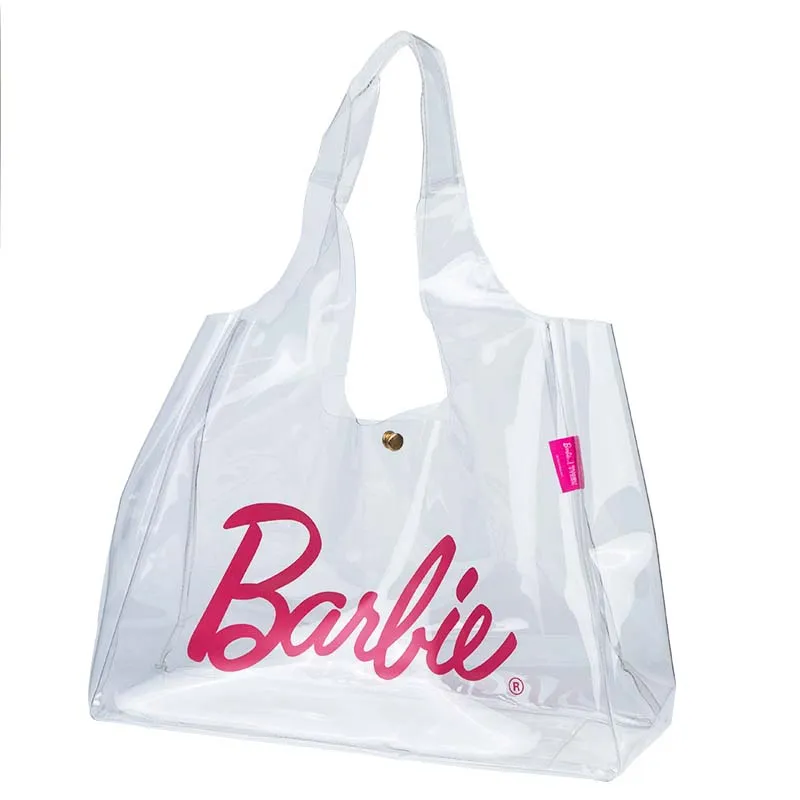
- Clear Stadium Bags: PVC’s crystal-clear transparency and rigid structure meet most stadium security requirements, allowing security personnel to easily inspect contents. It’s also durable enough to withstand frequent use at events.
- Travel Storage Bags: Flexible PVC is waterproof and tear-resistant, making it ideal for packing cubes, shoe bags, and toiletry organizers. Rigid PVC is used for hard-shell cosmetic cases that protect fragile items.
- Packaging and Promotional Bags: PVC is cost-effective to produce in bulk, making it a favorite for promotional bags (e.g., conference swag bags, retail gift bags). It can be printed with logos or brand messages easily.
9. Cost & Production Factors
PVC/vinyl is generally cost-effective, with raw materials being affordable and widely available.
Processing is straightforward (e.g., heat sealing), lowering production costs compared to fabrics. Minimum order quantities (MOQs) are flexible for wholesalers, and customization is feasible even in bulk. This makes it ideal for large wholesale orders and branding projects.
10. Design & Customization Options
Both materials support extensive customization:
- Printing compatibility: Excellent for screen printing, digital, or heat transfer logos.
- Embossing / debossing: Adds texture for premium faux leather looks.
- Heat seal vs stitching: Heat sealing creates seamless, waterproof joins; stitching for reinforced edges.
- Logo application methods: From hot stamping to embroidery overlays.
Clear options allow colorful linings or inserts for added flair.
11. Comparison Summary Table
Merkmal | Vinyl (Non-PVC) | PVC |
|---|---|---|
Definition | Broad family of vinyl polymers | Specific vinyl polymer (polyvinyl chloride) |
Flexibility & Softness | Highly flexible, soft to touch | Flexible (with plasticizers) or rigid; slightly stiffer |
Transparency | Slightly hazy (clear variants) | Crystal clear (clear variants) |
Dauerhaftigkeit | Moderate; good for light-moderate use | Excellent; good for heavy-duty use |
UV Resistance | Low; degrades faster in sunlight | Moderate; more resistant with stabilizers |
Kosten | Higher (20–30% more than PVC) | Lower; cost-effective for bulk |
Recyclability | Rarely recycled | Recyclable (rigid PVC more so than flexible) |
Common Applications | Fashion bags, cosmetic pouches, faux leather accessories | Stadium bags, travel storage, promotional packaging |
Personalisierung | Good for stitching, embossing (leather-like) | Good for heat sealing, sharp printing |
12. How to Choose: Vinyl or PVC?
In most cases, they’re the same material—choose based on needs:
- For clear storage bags: PVC for superior clarity and stadium compliance.
- For cosmetic & fashion bags: Vinyl faux leather for style and texture.
- For promotional gift bags: PVC for affordability and printing ease.
- For bulk wholesale & branding projects: PVC/vinyl for low MOQs and customization.
Consider budget, intended use, and eco-preferences.
13. FAQs
- Is vinyl the same as PVC? Not exactly—PVC is a type of vinyl, and in bag contexts, they’re often identical.
- Which material is more durable? High-quality PVC/vinyl both last well; durability depends on thickness and formulation.
- Which is better for transparent bags? PVC excels in clarity and is standard for clear designs.
- Are PVC bags allowed in stadium policies? Yes—most NFL and venue rules specify clear plastic, vinyl, or PVC bags.
Schlussfolgerung
While the terms are often used interchangeably, the choice between vinyl and PVC comes down to your specific use case, budget, and branding goals.
Whether you need a sleek faux-leather pouch for a luxury cosmetic line or a rugged clear PVC tote for a large-scale event, understanding these materials ensures you get a product that lasts.
Looking for a Custom Solution? We specialize in high-quality OEM/Wholesale bag manufacturing. Whether you need material samples or a quote for a bulk order with a custom logo, our team is here to help. [Contact us today to start your project!]

 German
 English
 French
 Japanese
 Arabic
 Thai
 Vietnamese
 Russian
 Spanish
 Portuguese