
To clean a clear backpack, check its care label, empty every compartment, and gently wipe the transparent panels with a soft cloth dampened with mild soap and lukewarm water. Remove the soap with a clean damp cloth, then leave the compartments open to air-dry. Clean straps and trim according to their own care instructions.
The important detail is that a clear backpack is more than its transparent body. Fabric straps, padded sections, printed logos, and zipper seams may need different treatment. Unless the manufacturer specifically permits soaking or machine washing, use a controlled wipe-down rather than wetting the entire bag.
What You’ll Need Before Cleaning
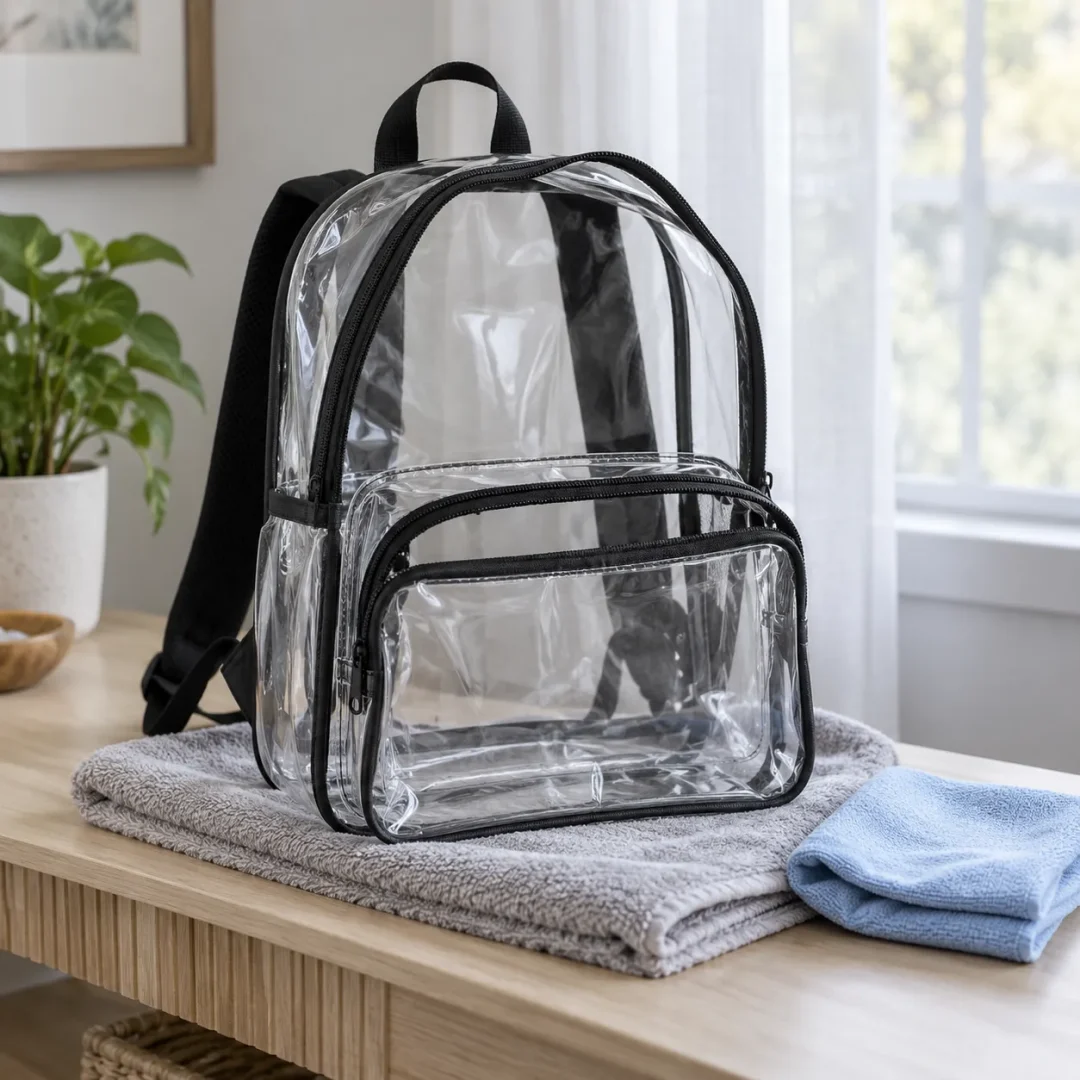
Gather a few simple supplies:
- Two clean, soft cloths, preferably microfiber.
- A small amount of mild soap.
- A bowl of lukewarm water.
- A soft, dry towel.
Check the label or product care page before choosing a cleaner. A bag described as “clear plastic” may not identify its exact material, coatings, or printing method, so appearance alone is not enough to establish what it can tolerate.
Test your diluted cleaning solution on a small, inconspicuous area first. Let that area dry and check for changes in color, clarity, or texture before continuing. Give printed areas and decorative trim particular attention.
How to Clean a Clear Backpack Step by Step
1. Empty the Backpack and Remove Loose Debris
Take out everything, including items in side pockets and smaller compartments. Open the zippers and gently tip loose crumbs into a bin.
Check the bottom corners and the edges beneath pocket openings. Lift away loose grit before wiping: dragging it across the panel can leave marks. Avoid forcing a stiff transparent backpack inside out just to reach a corner. Open it as widely as its construction comfortably allows.
2. Prepare a Mild Soap Solution
Mix a small amount of mild soap into lukewarm water. Use only enough to help lift everyday dirt; excessive soap gives you more residue to remove later.
Dampen the cloth and wring it out so it is not dripping. If the manufacturer specifies a particular cleaner or dilution, follow that instruction instead. Do not apply concentrated cleaner directly to the transparent panel.
3. Wipe the Clear Panels Inside and Out
Support the panel with your hand from the opposite side and wipe gently with the damp cloth. Work across manageable sections rather than scrubbing one spot repeatedly.
Pay attention to fingerprints around handles, marks near pocket openings, and spills at the bottom. For dried food residue, hold the damp cloth briefly against the affected area to soften it, then lift it away without scraping.
Clean the interior separately, using a fresh part of the cloth. Rinse or replace the cloth when it becomes dirty so you do not spread the same residue around the bag.
4. Spot-Clean Straps, Seams, and Zippers
Check the instructions for fabric straps and padded sections. If spot-cleaning is permitted, use a lightly dampened cloth to work on visible marks, then blot with a clean towel. Avoid saturating padding.
Around seams and zippers, use a folded corner of the cloth to reach accessible dirt. Do not force the zipper through trapped debris or use a hard brush across the adjacent clear panel.
For a removable accessory, follow its separate care instructions. Being attached to a wipe-clean backpack does not mean every component has the same washing requirements.
5. Remove Soap Residue
Use the second cloth, dampened with clean water, to wipe the areas you have washed. Rinse that cloth as needed and repeat until visible suds and slippery residue are gone.
Check the panel from different angles for streaks. If they remain after drying, try another gentle pass with a clean damp cloth before adding more cleaner.
This step does not require putting the whole backpack under a running tap. Keep water exposure consistent with the bag’s care label.
6. Let Every Part Air-Dry Completely
Blot away excess moisture with a soft towel. Leave compartments open in a ventilated place away from direct sunlight, heaters, and other heat sources.
Allow the bag to rest in its natural shape. Avoid using a hair dryer or tumble dryer to speed things up.
Before repacking, check the shoulder straps, bottom corners, seams, and padded areas. The transparent panels may feel dry while those sections still hold moisture. Drying time depends on the construction, how wet the bag became, and the surrounding conditions.
How to Handle Common Stains on a Clear Backpack
Start with the mild cleaning method above. If a mark remains, identify the likely source before trying another product.
| Stain or mark | First approach | When to stop |
|---|---|---|
| Fingerprints and light dirt | Try a clean damp cloth; add diluted mild soap if needed. | Stop rubbing once the surface is clean. |
| Food or drink residue | Lift away loose material, soften dried residue with a damp cloth, then wipe. | Do not scrape off stubborn deposits with a sharp tool. |
| Grease or sunscreen marks | Try gentle passes with diluted mild soap, using a fresh section of cloth. | Ask the manufacturer before moving to a stronger degreaser. |
| Ink or transferred dye | Test the ordinary cleaning method on a small area. | If it does not improve, avoid repeated aggressive rubbing or unapproved solvents. |
| Sticker adhesive | Ask the brand for a compatible adhesive-removal method. | Avoid blades and general-purpose adhesive removers unless approved for the bag. |
Some stains cannot be removed completely without affecting the surrounding surface. A faint mark may be preferable to a larger damaged patch caused by repeated treatment.
Can You Make a Cloudy or Yellow Clear Backpack Clear Again?
Sometimes cleaning improves clarity, but it depends on what is causing the appearance.
If cloudiness comes from soap or surface buildup, another careful wipe with clean water may help. Let the panel dry before judging the result; streaks are easier to assess on a dry surface.
Fine scratches are different from removable dirt. Cleaning may remove grime around them, but it should not be presented as a scratch-repair method. Do not assume a polish intended for rigid plastic is suitable for a flexible bag, printed panel, or coated surface.
Yellowing also needs a cautious approach. Surface staining may respond to cleaning, while discoloration within the material may remain. Avoid promising that bleach, peroxide, or another household treatment will restore the bag’s original transparency.
Persistent stickiness, cracking, or peeling deserves a manufacturer check rather than another round of scrubbing. If the bag is deteriorating at a strap attachment or seam, consider its ability to carry your belongings safely, as well as its appearance.
Cleaning Mistakes to Avoid
Machine washing without checking the label. A washing method suitable for a fabric backpack may be unsuitable for a transparent bag with different panels, trim, and attachments.
Using abrasive tools. Hard brushes, scouring pads, and abrasive powders are poor default choices for a surface where visible scratches matter.
Treating strong cleaners as universal solutions. Do not assume acetone, bleach, alcohol-based products, glass cleaners, or adhesive removers are compatible. Check both the backpack instructions and the cleaner’s intended uses.
Soaking the whole bag unnecessarily. A wipe-down offers more control over moisture around padding, seams, and mixed-material trim.
Using heat to dry it quickly. Keep the backpack away from hot appliances and direct heat.
Packing it away while damp. Inspect the less visible fabric sections before closing the compartments for storage.
How to Keep Your Clear Backpack Clean Between Uses
Deal with spills promptly and clear out crumbs before they accumulate in the corners. Secure pen caps, tighten bottle lids, and keep cosmetics in suitable containers. Where venue or workplace rules apply, check whether any additional inner pouch is permitted.
If you regularly carry meals, separating them from school or work supplies can make spills easier to manage. Choose containers with secure lids rather than relying on the backpack itself to contain leaks.
When the bag is not in use, store it clean and dry without heavy objects pressing on it. Keep sharp items away from the panels and avoid leaving it beside a heater or in a hot vehicle.
For schools, employers, and retailers sourcing custom clear bags, care requirements are worth reviewing before a bulk order. Ask for instructions covering the finished bag, including the print, straps, and trim. Cleaning an approved sample with the proposed method can help reveal appearance changes before the same guidance is supplied to users.
For event programs, review both maintenance needs and the intended venue’s current rules when comparing clear stadium bag options. Ease of cleaning and admission requirements are separate checks.
Häufig gestellte Fragen
Can you put a clear backpack in the washing machine?
Only if the manufacturer explicitly allows it for that model. When instructions are missing or unclear, use a gentle wipe-down and contact the brand before machine washing. Do not apply a general fabric-backpack washing guide to a clear backpack without checking its construction and care requirements.
Can you use disinfecting wipes on a clear backpack?
Check whether both the backpack manufacturer and wipe label permit that use. Wipes contain different ingredients, and a product suitable for one surface may not suit a transparent panel or printed logo. Ordinary cleaning and disinfection are different tasks; do not assume a quick wipe provides a validated disinfection process.
How often should you clean a clear backpack?
Base the frequency on use and visible dirt. Remove spills promptly, check regularly for crumbs, and wipe fingerprints or marks as needed. A daily school or work backpack may need attention more often than one used occasionally for events. There is no single cleaning schedule that fits every bag.
What should you do if your clear backpack still smells after cleaning?
Check for overlooked food residue and moisture in straps, corners, and padding. Let the empty bag air out with its compartments open. Avoid masking the smell with perfume or combining cleaning products. If an odor persists after cleaning and complete drying, ask the manufacturer whether it may be related to the material or deterioration.


 German
 English
 French
 Japanese
 Arabic
 Thai
 Vietnamese
 Russian
 Spanish
 Portuguese