
Short Answer: No — polyester does not shrink under normal washing and drying conditions. As a synthetic, thermoplastic fiber, polyester is engineered for dimensional stability. Unlike cotton, wool, or linen, it resists moisture-induced shrinkage and retains its original shape through repeated wash cycles. Shrinkage only becomes a concern when polyester is exposed to excessive heat beyond its thermal threshold.
This guide covers everything procurement managers, product developers, and buyers need to know about polyester shrinkage: why it resists shrinking, the exact conditions that cause it, how blends behave differently, and how to care for polyester products to maximize their lifespan.
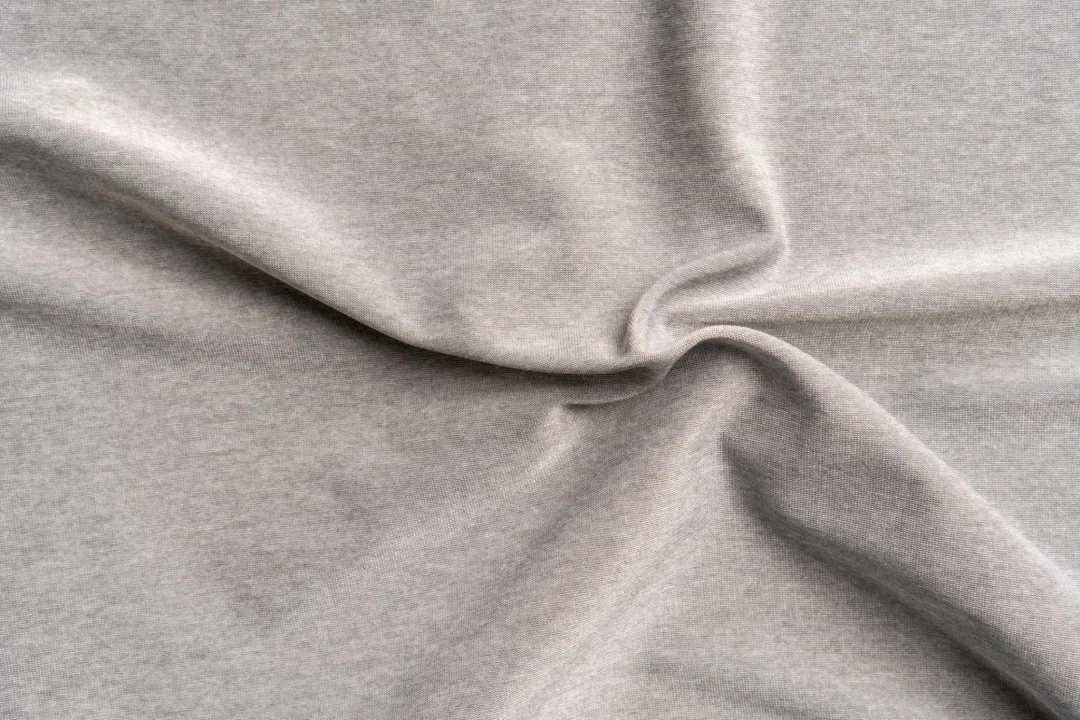
What Is Polyester Fabric?
How Polyester Is Made
Polyester — formally polyethylene terephthalate (PET) — is a synthetic polymer produced by reacting ethylene glycol with terephthalic acid under heat and pressure. The resulting polymer is melt-extruded through fine spinnerets to produce continuous filaments or staple fibers. These fibers are then drawn (stretched) to align the polymer chains, which is the process that gives polyester its characteristic strength and dimensional stability.
A critical step in production is heat-setting: the fibers or finished fabric are exposed to controlled high temperatures to lock the molecular structure in place. This thermal treatment essentially programs the fabric’s “memory” — determining how it will behave under future heat exposure. Heat-set polyester resists deformation far better than non-heat-set alternatives.
Common Applications of Polyester
Polyester’s stability and cost-efficiency make it the dominant material across a wide range of industries:
- Apparel: athletic wear, outerwear, uniforms, workwear
- Travel products: luggage, backpacks, duffel bags, packing cubes
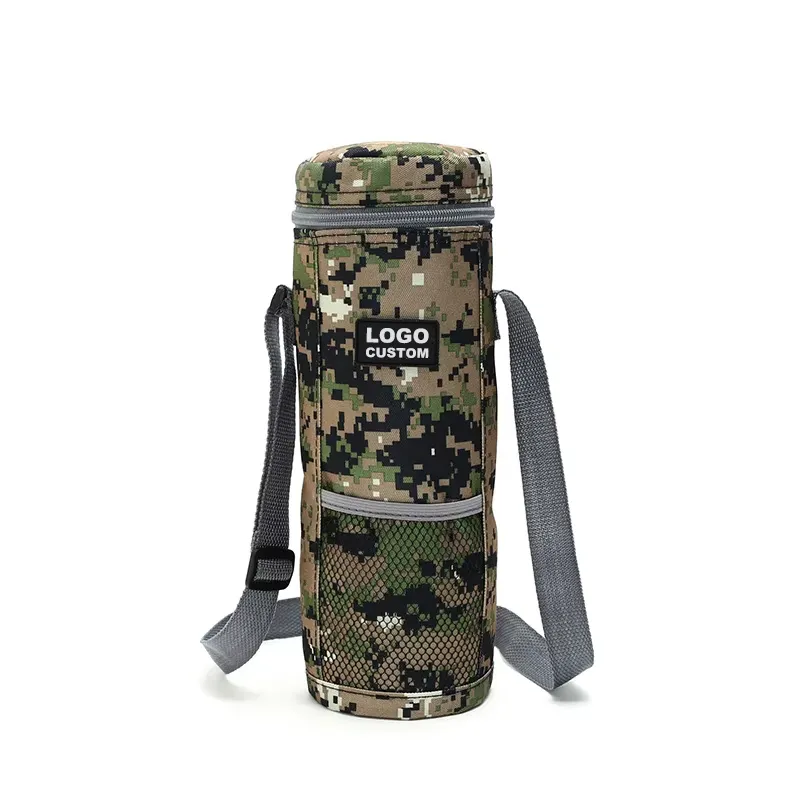
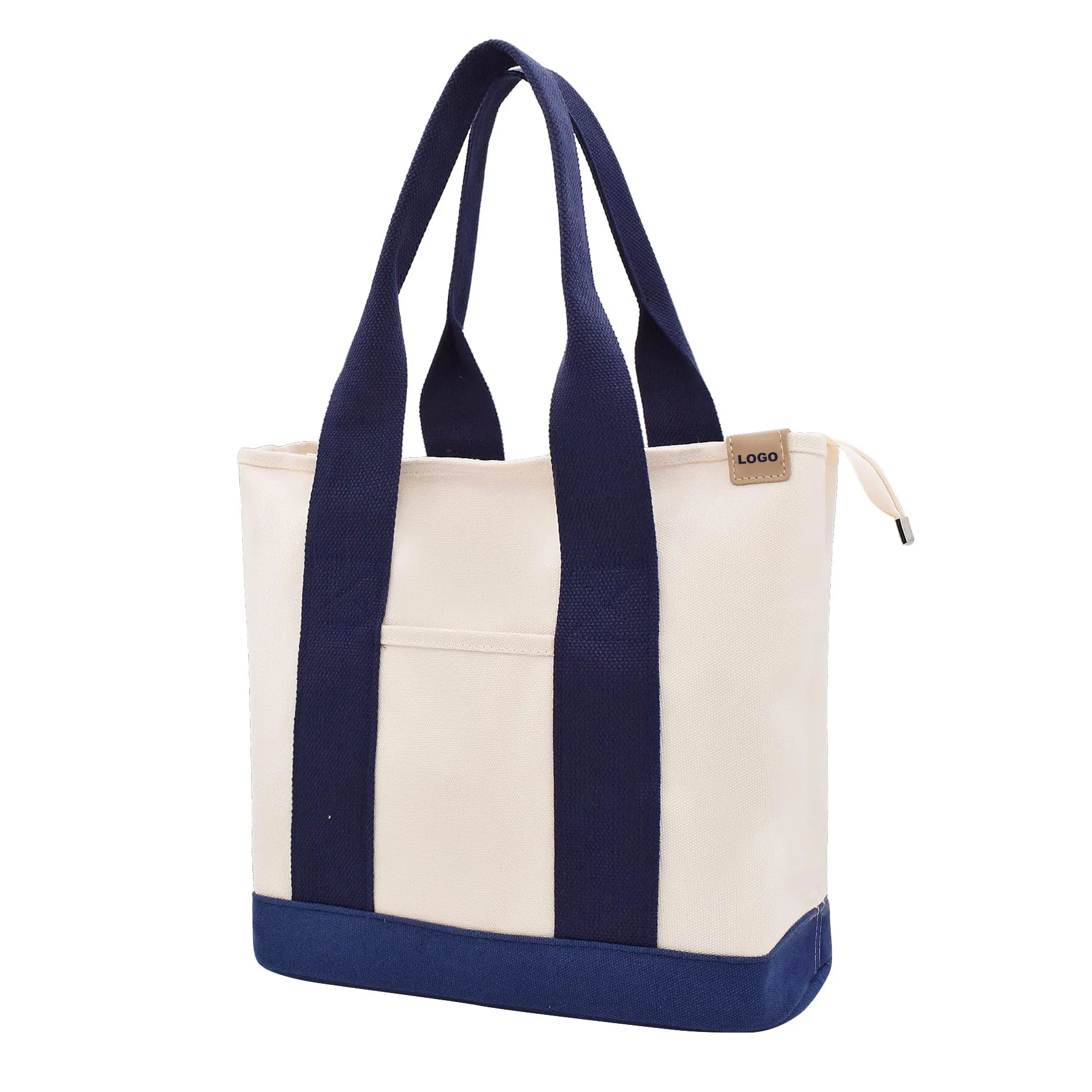
- Promotional products: tote bags, drawstring bags, cooler bags
- Home textiles: curtains, upholstery, bedding
- Industrial: filtration fabrics, geotextiles, safety vests
Why Doesn’t Polyester Shrink Easily?
Polyester Is a Thermoplastic Fiber
Polyester belongs to the thermoplastic polymer family, meaning it softens under heat rather than absorbing moisture and swelling like natural fibers. Cotton shrinks because water penetrates the fiber’s cellular structure, causing the fibers to swell and contract as they dry. Polyester fibers are hydrophobic — they repel water rather than absorbing it, so the moisture-related swelling and contraction cycle that causes cotton shrinkage simply does not occur.
Heat-Setting During Manufacturing
During production, polyester textiles undergo a heat-setting process where the fabric is stretched to its final dimensions and then stabilized at temperatures typically between 160°C and 220°C (320°F–428°F). This process crystallizes the polymer chains in their stretched configuration. Unless the fabric is subsequently exposed to temperatures close to or exceeding the original heat-setting temperature, the fibers will not relax or contract. Standard household washing temperatures (30°C–40°C) are nowhere near the threshold required to trigger dimensional change.
Dimensional Stability Compared to Natural Fibers
Industry testing consistently demonstrates polyester’s superior dimensional stability. Standardized wash tests (AATCC 135 / ISO 6330) show that high-quality 100% polyester fabrics exhibit shrinkage rates of 0–1% after multiple wash cycles. By comparison, untreated cotton can shrink 3–5% in the first wash alone, with pre-washed or ring-spun cotton typically ranging 1–3%. For bulk buyers specifying minimum size tolerances, polyester’s predictable behavior reduces waste and returns.
When Can Polyester Shrink?
Exposure to High Heat
The primary cause of polyester shrinkage is excessive heat. Three scenarios present real risk:
Hot water washing: Water temperatures above 60°C (140°F) begin to approach the lower end of polyester’s softening range. While single-exposure at this temperature may not cause visible shrinkage, repeated exposure at high temperatures can gradually relax the heat-set structure, leading to cumulative dimensional change of 1–3%.
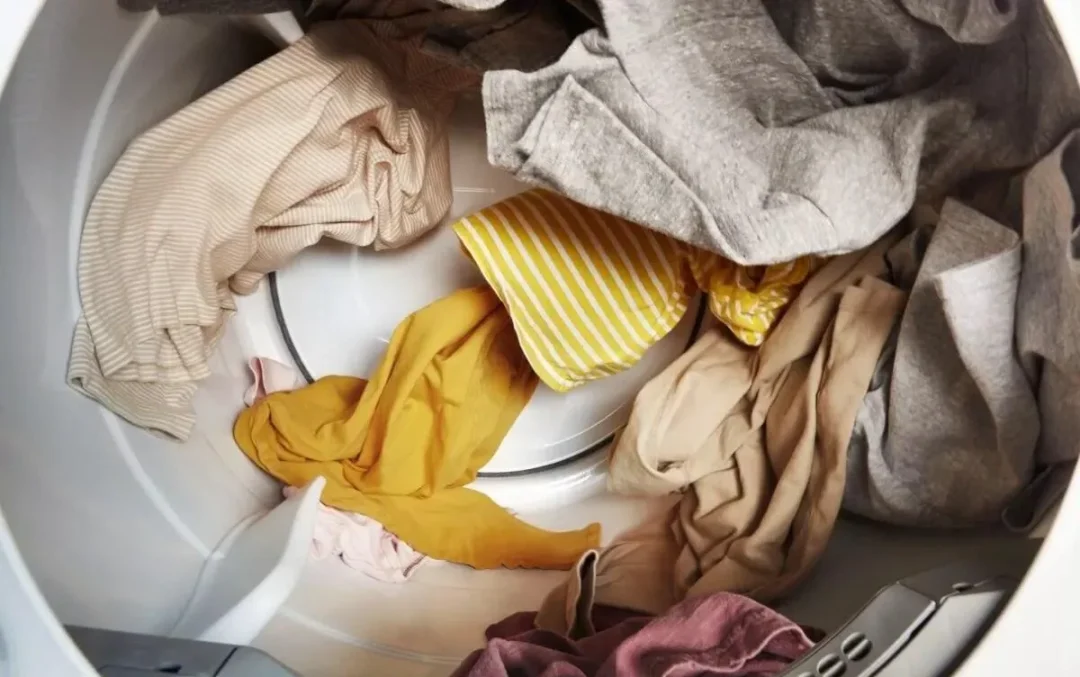
High-temperature tumble drying: This is the most common cause of polyester shrinkage in consumer and commercial laundry. Most domestic tumble dryers operate at 60°C–75°C on high heat settings, and extended drying cycles can exceed 80°C in drum temperature. At these levels, polyester fibers can begin to deform, leading to shrinkage of 1–3% and, in extreme cases, surface pilling or texture change.
Direct ironing: Ironing polyester without a pressing cloth or steam setting on too-high temperatures can cause immediate localized shrinkage and irreversible heat damage, including glazing (a shiny, stiff surface deformation).
Poor Fabric Quality or Manufacturing
Not all polyester is created equal. Key quality variables that affect shrink resistance include:
- Denier consistency: uneven fiber thickness creates stress points that distort under heat
- Heat-setting rigor: budget manufacturers may shorten heat-setting cycles to reduce production time, resulting in fibers with lower thermal stability
- Fabric construction: loosely woven or knitted structures have more room to contract than tightly woven alternatives
- Finishing chemicals: some low-cost finishes can destabilize the fiber structure over time
For bulk procurement, requesting fabric test reports (specifically AATCC 135 dimensional stability results) and specifying minimum denier counts in purchase orders provides important protection against shrinkage from low-quality material.
How Much Can Polyester Shrink?
Under normal washing conditions (cold or warm water, low-heat drying), quality polyester shrinks less than 1% — typically unmeasurable in practical use. Under adverse conditions, the following ranges apply:
| Condition | Expected Shrinkage | Anmerkungen |
| Cold wash (20–30°C) + air dry | 0–0.5% | Negligible; recommended method |
| Warm wash (40°C) + low-heat dry | 0.5–1% | Standard safe range |
| Hot wash (60°C) + medium-heat dry | 1–2% | Approaching risk threshold |
| Hot wash (60°C+) + high-heat dry | 2–3% | Noticeable shrinkage possible |
| Boiling water or industrial steam | 3–5%+ | Structural fiber damage likely |
Does 100% Polyester Shrink?
Polyester’s Performance in Everyday Washing
Under standard household washing conditions — a 30°C or 40°C wash cycle using a normal detergent — 100% polyester fabric will not shrink in any measurable way. This is true for both woven polyester (used in bags, outerwear, and workwear) and knitted polyester (used in sportswear and activewear). The hydrophobic nature of polyester means water moves around and off the fiber rather than penetrating and swelling the fiber structure.
Polyester in the Dryer
Polyester can be machine-dried safely on a low or medium heat setting. At these temperatures (typically 40°C–55°C), the fabric dries quickly — often in 20–30 minutes — without approaching the thermal threshold for dimensional change. High heat or extended drying cycles present the primary risk. As a practical rule: remove polyester items from the dryer promptly once dry to avoid prolonged heat exposure.
What to Expect After Repeated Washes
Long-term wear studies and industrial testing consistently show that 100% polyester retains more than 98–99% of its original dimensions after 50+ standard wash cycles. For commercial applications such as uniforms, promotional bags, and travel accessories, this predictability is a key procurement advantage. Unlike cotton, polyester garments do not need to be washed in cold water to prevent long-term size creep.
Do Polyester Blends Shrink?
Blended fabrics introduce additional variables. The behavior of a polyester blend depends on the fiber composition, the dominant fiber by percentage, and the construction method. As a general rule, the natural fiber component is responsible for most of the shrinkage risk.
Polyester-Cotton Blends (Poly-Cotton)
The most common blend in apparel and promotional products. A 65/35 polyester-cotton blend (the standard for t-shirts and workwear) typically shrinks 1–2% in the first wash — primarily driven by the cotton component. The polyester fiber essentially acts as a stabilizing matrix, limiting the degree of shrinkage relative to 100% cotton. A 50/50 blend behaves similarly but with slightly higher shrinkage potential.
Key procurement note: pre-shrunk poly-cotton blends are widely available and reduce first-wash shrinkage to under 1%. Specifying “pre-shrunk” in purchase orders is advisable when consistent sizing is critical.
Polyester-Rayon Blends
Rayon (viscose) is one of the most shrink-prone fibers available, capable of shrinking 3–5% in hot water. Polyester-rayon blends are used in fashion garments and soft accessories for their drape and texture. Shrinkage behavior tracks closely with the rayon content: a 50/50 polyester-rayon blend should be treated with the same care precautions as pure rayon. Cold washing and air drying are strongly recommended.
Polyester-Spandex Blends (Polyester-Elastane)
Spandex (elastane/Lycra) is a highly elastic synthetic fiber that is itself heat-sensitive. At high temperatures, spandex loses elasticity and may cause the fabric to pucker or distort. In polyester-spandex blends (common in activewear, swimwear, and stretch bags), shrinkage is less of a concern than heat-induced elasticity loss, but the practical effect — a garment that no longer fits correctly — is similar. Low-temperature washing and air drying are essential.
Which Fiber Usually Causes the Shrinkage?
| Blend | Shrink Risk | Dominant Cause | Recommended Care |
| 100% Polyester | Very Low (0–1%) | Heat only | Warm wash, low-heat dry |
| 65/35 Poly-Cotton | Low–Moderate (1–2%) | Cotton fiber | Cold/warm wash, low-heat dry |
| 50/50 Poly-Cotton | Moderate (1.5–2.5%) | Cotton fiber | Cold wash, air dry preferred |
| Poly-Rayon | Moderate–High (2–4%) | Rayon fiber | Cold wash only, air dry |
| Poly-Spandex | Low (0–1.5%) | Heat on spandex | Cold wash, air dry |
Polyester vs Cotton: Which Shrinks More?
This is the most common fabric comparison in apparel and bag manufacturing. The answer is unambiguous: cotton shrinks significantly more than polyester in almost all washing conditions.
| Merkmal | Polyester | Baumwolle |
| Shrink Resistance | Excellent (0–1%) | Moderate–Low (3–5% first wash) |
| Shape Retention | Ausgezeichnet | Moderate (degrades over time) |
| Moisture Absorption | Very Low (hydrophobic) | High (hydrophilic) |
| Wrinkle Resistance | Hoch | Niedrig |
| Drying Speed | Fast (1–2 hrs air dry) | Slow (3–5 hrs air dry) |
| Heat Sensitivity | Moderate (>60°C) | Low (shrinks even at 40°C) |
| Nachhaltigkeit | Recyclable (RPET) | Biodegradable (organic cotton) |
| Print Compatibility | Excellent (sublimation) | Good (screen print, DTG) |
| Cost (bulk) | Lower | Higher (esp. organic) |
Key Differences Buyers Should Know
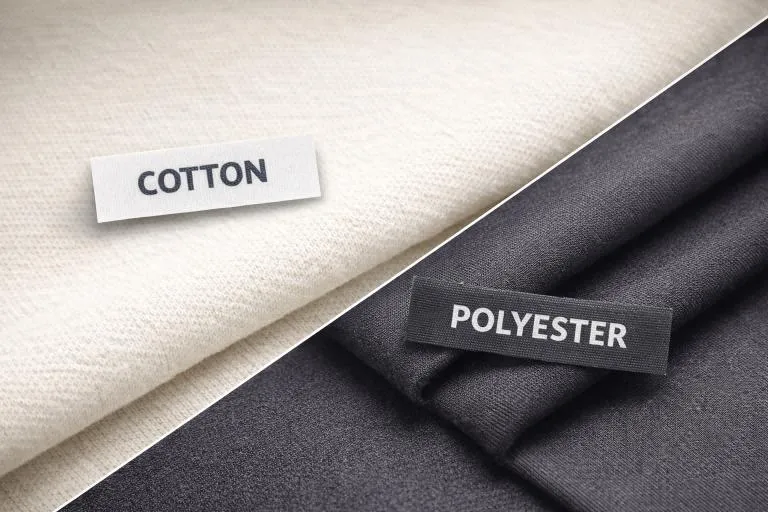
For buyers specifying material requirements, the practical implications are:
- Polyester is the preferred material where consistent sizing across large orders is critical (uniforms, promotional bags, travel accessories)
- Cotton commands a premium for comfort and natural fiber preference, but pre-shrinking is essential for size-sensitive applications
- For print-heavy promotional products, polyester’s compatibility with dye sublimation printing enables full-bleed photo-quality graphics unavailable on cotton
- RPET (recycled polyester) offers the same shrink resistance as virgin polyester with improved sustainability credentials
How to Wash Polyester Without Causing Shrinkage
Best Water Temperature
The ideal wash temperature for polyester is 30°C (86°F). Cold water is also acceptable. Warm water up to 40°C (104°F) is safe for most polyester items. Avoid temperatures above 60°C (140ðF) for repeated washing. Hot water washing of polyester is a processing technique used in certain textile manufacturing steps; it is not appropriate for finished consumer products.
Recommended Dryer Settings
When machine drying polyester:
- Use the lowest heat setting available (often labeled “Delicate” or “Permanent Press”)
- Remove items promptly once dry — do not leave polyester tumbling on residual heat
- Air drying is always the safest option; polyester dries quickly and is not prone to odor retention when air-dried
- Avoid high-heat settings used for cotton towels or heavy denim
Ironing Polyester Safely
If ironing is necessary (most polyester is wrinkle-resistant and does not require it):
- Use the polyester or synthetic setting (typically 110°C / 230°F or below)
- Always iron on the reverse side of the fabric
- Use a pressing cloth between the iron and the fabric
- Never use steam directly on coated or laminated polyester fabrics
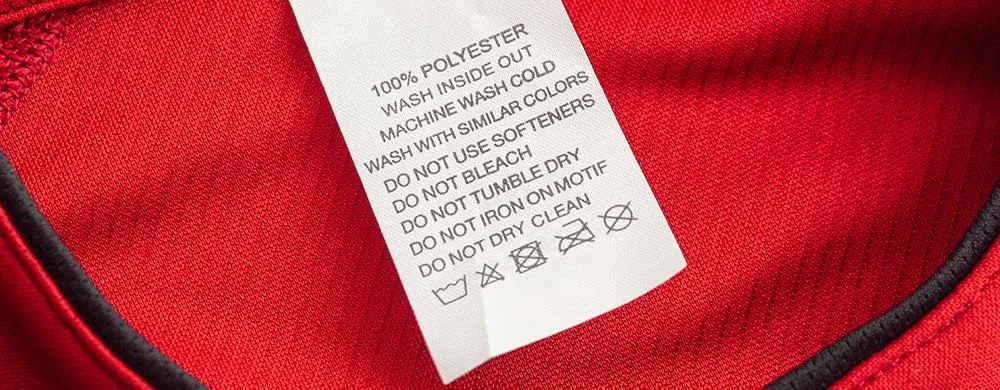
Reading Care Labels
ISO care labeling symbols provide standardized guidance. For polyester products, key symbols to communicate to end users include:
- ▽ with 30 or 40: wash at that maximum temperature
- □ with one dot: tumble dry on low heat
- □ with X: do not tumble dry
- Iron symbol with one dot: iron at low temperature only
Why Polyester Is a Popular Choice for Bags and Promotional Products
Excellent Shape Retention
For bag manufacturers and promotional product buyers, polyester’s dimensional stability means bags maintain their original shape through the supply chain, distribution, and extended use. Unlike cotton canvas, which can warp or stretch under load, polyester bags retain their structure. This is particularly important for structured tote bags, backpacks, and travel accessories where form is part of the product specification.
Lightweight and Durable
High-tenacity polyester yarns deliver exceptional tensile strength at low weight. A 600D polyester bag weighs significantly less than an equivalent canvas bag while offering comparable or superior tear and abrasion resistance. The combination of light weight and durability is a key differentiator for travel products and reusable retail bags.
Cost-Effective for Bulk Orders
Polyester is among the most cost-efficient technical fabrics available at commercial scale. Raw material costs, processing efficiency, and global supply chain availability make polyester the standard choice for MOQ-sensitive promotional product orders. For orders of 500–5,000+ units, polyester typically offers the best cost-per-unit without compromising quality or durability.
Ideal for Custom Printing and Branding
Polyester’s smooth fiber surface accepts a wide range of print technologies:
- Dye sublimation: produces full-color, photographic-quality prints with no hand-feel; ideal for all-over printing on promotional bags
- Screen printing: cost-effective for large runs with limited color counts; excellent adhesion on polyester
- Heat transfer: versatile for short runs and complex designs; bonds effectively to polyester surfaces
- Embroidery: works well on structured polyester fabrics; adds premium look-and-feel to corporate gifts
Common Polyester Bag Applications
The following product categories are predominantly manufactured in polyester due to its combination of functional and commercial advantages:
| Produkttyp | Typical Polyester Spec | Hauptvorteil |
| Tote bags (promotional) | 80–120 GSM non-woven or 600D woven | Lightweight, cost-effective, printable |
| Beutel mit Kordelzug | 210D or 420D ripstop | Compact, durable, easy to brand |
| Cooler / insulated bags | 600D Oxford + PEVA lining | Shape retention, easy-clean surface |
| Travel duffel bags | 1680D or 1200D ballistic nylon weave | High abrasion resistance |
| Grocery / reusable bags | 80–100 GSM non-woven PP or RPET | Recyclable, stable after repeated use |
| Rucksäcke | 600D–1200D polyester | Structural integrity, water-resistant options |
Common Myths About Polyester Shrinkage
Myth #1: Polyester Shrinks Like Cotton
False. Cotton shrinks because water penetrates and swells its natural fiber structure. Polyester is hydrophobic and does not absorb moisture the same way. This fundamental difference in fiber chemistry means polyester behaves very differently in the wash. Comparing polyester to cotton shrinkage without accounting for fiber type is a common consumer misconception.
Myth #2: Every Dryer Cycle Causes Shrinkage
False. Low-heat dryer cycles at 40°C–55°C are well within the safe operating range for polyester. Many commercial laundries routinely machine-dry polyester uniforms and promotional garments with no dimensional change over hundreds of cycles. The issue arises specifically with high-heat settings, not drying itself.
Myth #3: Polyester Always Keeps Its Shape Regardless of Heat
Also false. Polyester’s stability has thermal limits. Exposure to temperatures above 60°C–70°C in repeated washing, or above 130°C–150°C in direct heat application, can cause shrinkage and permanent fiber deformation. Polyester is highly resistant to shrinkage, not immune to it. Quality products and proper care are both required to maintain long-term dimensional integrity.
Häufig gestellte Fragen
Does polyester shrink in hot water?
Hot water above 60°C (140ðF) can cause minor shrinkage of 1–2% in polyester, particularly with repeated exposure. For standard washing at 30°C–40°C, no measurable shrinkage should occur. For products requiring color fastness and dimensional stability over time, cold or warm water washing is always recommended.
Does polyester shrink in the dryer?
On a low or medium-heat setting, polyester does not shrink in the dryer. High-heat dryer settings (above 60°C) are the most common cause of polyester shrinkage in everyday use. Always use the lowest effective heat setting and remove polyester items promptly when dry.
Can you intentionally shrink polyester?
It is difficult to intentionally shrink 100% polyester significantly. Minor shrinkage of 1–2% can be induced through repeated high-heat washing and drying, but polyester resists the dramatic size reduction possible with cotton. For blended fabrics, the natural fiber component can be shrunk more easily. Intentional shrinking is not recommended as it may cause uneven distortion or permanent texture damage.
Does recycled polyester (RPET) shrink?
RPET (recycled polyethylene terephthalate, made from recycled plastic bottles) shares the same molecular structure and thermal properties as virgin polyester. It exhibits the same low shrinkage characteristics and responds to heat in the same way. RPET is an increasingly popular choice for eco-conscious buyers seeking sustainable bags and promotional products without sacrificing performance.
Is polyester more shrink-resistant than cotton?
Yes, significantly. High-quality polyester has a shrinkage rate of 0–1% under standard conditions. Untreated cotton can shrink 3–5% in the first wash alone. For applications where size consistency is important — uniforms, branded merchandise, fitted bags — polyester offers a substantial practical advantage.
How long does polyester maintain its original size?
With proper care, high-quality polyester products can maintain their original dimensions for years of regular use. Industrial testing demonstrates less than 1–2% total dimensional change after 50+ wash cycles under recommended conditions. Low-quality polyester or poly-blend products exposed to repeated high heat will degrade faster, underscoring the importance of material specification in procurement.
Schlussfolgerung
Polyester is one of the most dimensionally stable materials available for bags, apparel, and promotional products. Its hydrophobic fiber structure and heat-setting manufacturing process give it an inherent resistance to the moisture-driven shrinkage that affects natural fibers like cotton and wool.
Key takeaways for buyers and product teams:
- 100% polyester shrinks less than 1% under normal household washing and low-heat drying conditions
- Shrinkage risk is primarily heat-driven: temperatures above 60°C in washing or drying are the main trigger
- Polyester blends behave according to their natural fiber content; poly-cotton and poly-rayon blends require more conservative care
- RPET performs identically to virgin polyester in terms of shrink resistance
- Specifying fabric quality standards (denier, GSM, AATCC test compliance) in purchase orders protects against shrinkage from low-quality material
- Proper care — cold or warm wash, low-heat drying, prompt removal from the dryer — maintains polyester products in original dimensions for years
For bulk orders of polyester bags, promotional products, or branded merchandise, polyester’s combination of dimensional stability, printability, durability, and cost-efficiency makes it the material of choice across industries.
Related:
How to Choose the Right Polyester Denier for Bags?
Polyester vs Cotton Bags: Which Material Is Better for Your Brand?
 German
 English
 French
 Japanese
 Arabic
 Thai
 Vietnamese
 Russian
 Spanish
 Portuguese