
A bag’s closure is never an afterthought — at least, not for anyone who has watched their laptop slide across a cafe floor because the magnetic snap on their tote failed to hold.
Most buyers approach bag sourcing with intense focus on fabric weight, handle construction, and print quality. The closure, by contrast, is often treated as a commodity checkbox: “does it close?” The reality is far more nuanced. The closure is the most mechanically stressed component on any bag. It is touched, pulled, yanked, and twisted hundreds of times over a product’s lifespan. It is also the component that most directly governs a user’s daily experience — determining whether retrieving a wallet is a smooth, one-handed motion or a two-handed wrestling match.
A poorly chosen closure creates downstream problems that no amount of fabric weight can compensate for: zipper teeth that separate after three months, magnetic snaps that lose their hold, drawstrings that fray into uselessness. A well-chosen closure, conversely, becomes an invisible feature — so reliable that no one notices it.
This guide is written for brands, importers, and product developers sourcing custom canvas bags. It covers every mainstream closure type, a deep dive into zipper categories and sizing, and the factory-level decisions that separate durable bags from warranty claims. By the end, you will be able to specify closures with the same precision you bring to fabric selection.
At-a-Glance: Closure Selection Quick Reference
*Velcro grip degrades with lint accumulation; sew-on Velcro outlasts adhesive-backed.
Quick Decision Rule: For high-value protection → Zipper or Buckle. For luxury/branding flair → Turn Lock or Push Lock. For artisanal/eco vibes → Sewing Button. For budget volume → Snap Button or Drawstring.
Why Is the Closure Important for a Canvas Bag?
Before comparing hardware types, it is worth understanding exactly what a closure does — because it is never just one thing.
Security
The most obvious function: a closure keeps contents inside the bag. But the standard varies dramatically by use case. A grocery tote needs to prevent a carton of eggs from tumbling out when the bag tips sideways in a car trunk. A laptop tote needs to survive being grabbed by a thief on public transit. A travel bag needs to keep passports and wallets contained through airport security. The required security level should be the first filter in closure selection, not the last.
Convenience
Security creates tension with convenience. A zipper is more secure than a magnetic snap, but it takes longer to operate. This trade-off matters acutely for bags that are opened and closed dozens of times per day — think retail shopping totes or commuter bags. The closure should match the user’s access frequency, not just the bag’s target price point.
Appearance
Hardware visibility signals quality in ways fabric alone cannot. A brushed-metal YKK zipper with a leather pull tab communicates a different brand position than a bare nylon coil with no puller at all. Magnetic snaps create a cleaner, more minimalist silhouette than a zipper’s visible track. For fashion-oriented brands, the closure is a design element; for utility-focused brands, it is an engineering decision. The best manufacturers guide clients toward options that serve both.
Durability
Canvas is famously tough — 10 oz to 24 oz cotton canvas can last decades with proper care. But a bag is only as durable as its weakest component, and closures are stress concentrators by design. Every time a zipper is pulled, force channels through the teeth and the slider. Every time a magnetic snap is opened, the prongs experience mechanical fatigue. Closure failure is the leading cause of bag retirement in products that otherwise remain structurally sound. Specifying the right closure — with the right reinforcement — extends product lifespan far more cost-effectively than upsizing the fabric.
Types of Closures Used on Canvas Bags
This section compares the primary closure categories found in canvas bag manufacturing, with notes on when each performs well and when it becomes a liability.
Zipper Closure
The zipper is the default choice for security-critical applications, and for good reason: it is the only closure type that seals the entire bag opening without gaps.
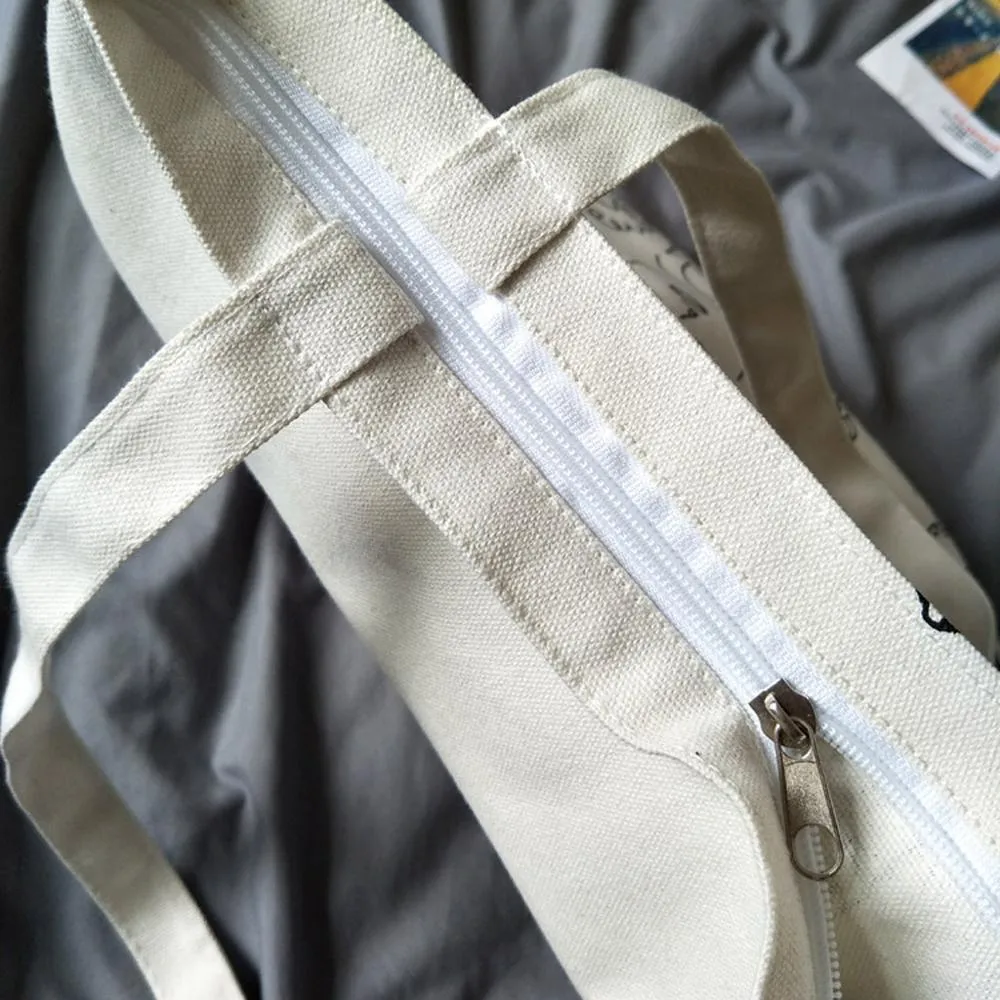
Advantages
- Maximum content security — nothing falls out, nothing reaches in
- Dust and light moisture protection
- Suitable for travel and commuting where bags are jostled and tipped
- Wide availability in colors, sizes, and material grades
Disadvantages
- Higher production cost than snap or drawstring alternatives
- Adds weight — metal zippers especially
- Slower sewing process; requires more operator skill to install straight
Best for: laptop bags, commuter totes, travel bags, cosmetic bags, any bag where a dropped phone means a cracked screen
Magnetic Snap Closure
Magnetic snaps deliver the best tactile experience of any closure: a satisfying snap that closes itself the moment the two halves are within range. They are the preferred choice for fashion-forward bags where clean lines and quick access matter more than absolute security.
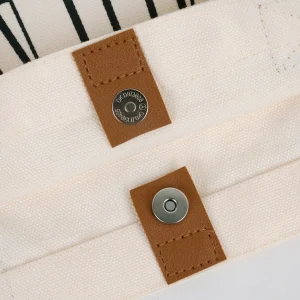
Advantages
- Elegant, minimalist appearance — no visible track or hardware gusset
- One-handed operation; the magnet pulls the closure shut automatically
- Premium feel that elevates perceived bag quality
Disadvantages
- Less secure — a sharp tug or heavy load can pull the snap apart
- Magnet strength degrades slowly over years of use
- Not suitable for heavy or valuable cargo
Best for: fashion tote bags, retail shopping bags, gift bags, lightweight daily totes
Turn Lock / Twist Lock Closure
Often associated with luxury fashion, the turn lock is a mechanical clasp where a flat metal piece is rotated to secure a plate.
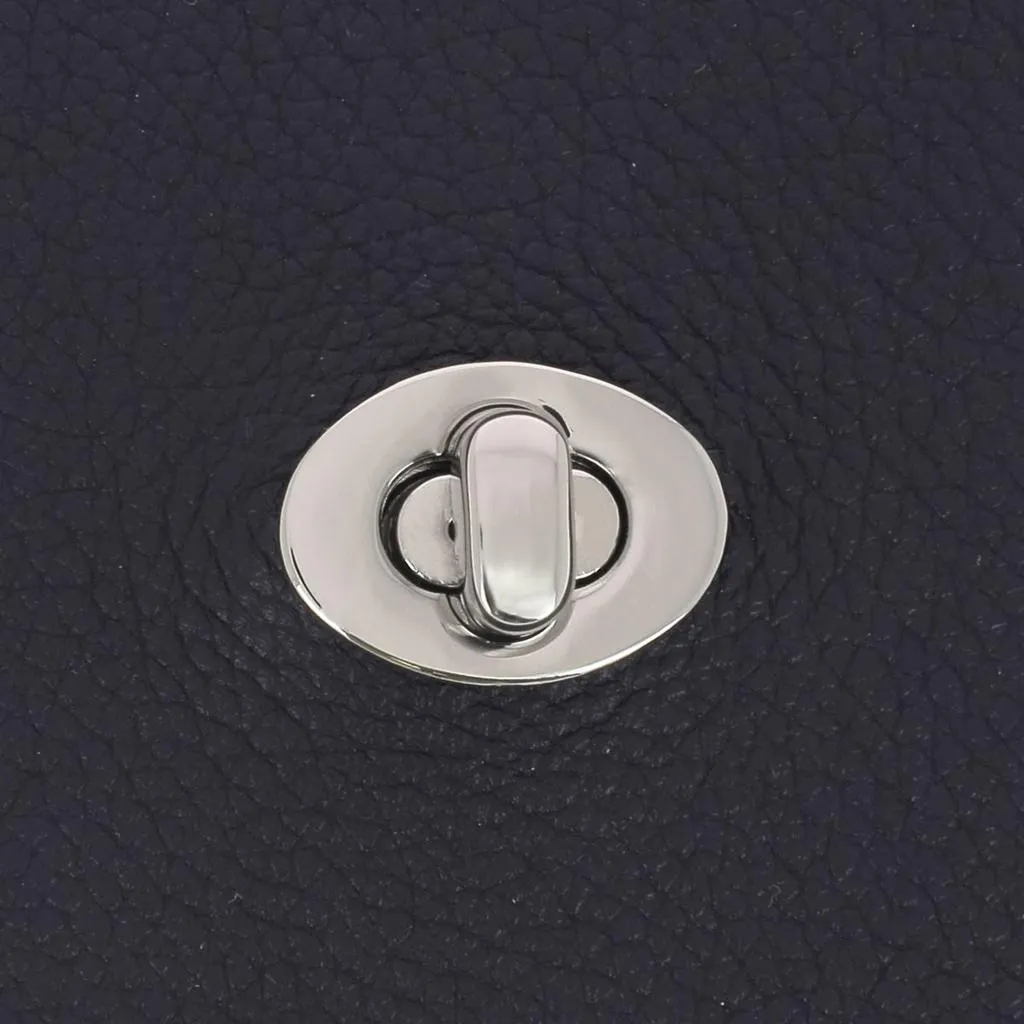
Advantages
- Iconic “designer” look; signals high brand value
- Extremely secure; cannot be pulled open by accident
- Durable metal construction
Disadvantages
- Most expensive hardware option
- Requires precision installation and reinforced backing
- Slower to open/close compared to snaps
Best for: high-end business totes, luxury gift bags, formal handbags
Tuck Lock / Push Lock Closure
A spring-loaded metal mechanism that clicks into place and is released by pressing a button or lever.
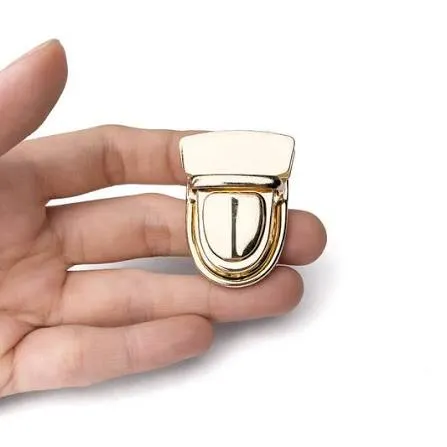
Advantages
- Quick, smooth “one-click” operation
- High mechanical security for valuables
- Professional, technical aesthetic
Disadvantages
- Complex installation; internal spring can wear out over decades
- Adds significant weight to lightweight canvas
Best for: messenger bags, camera bags, laptop briefcases
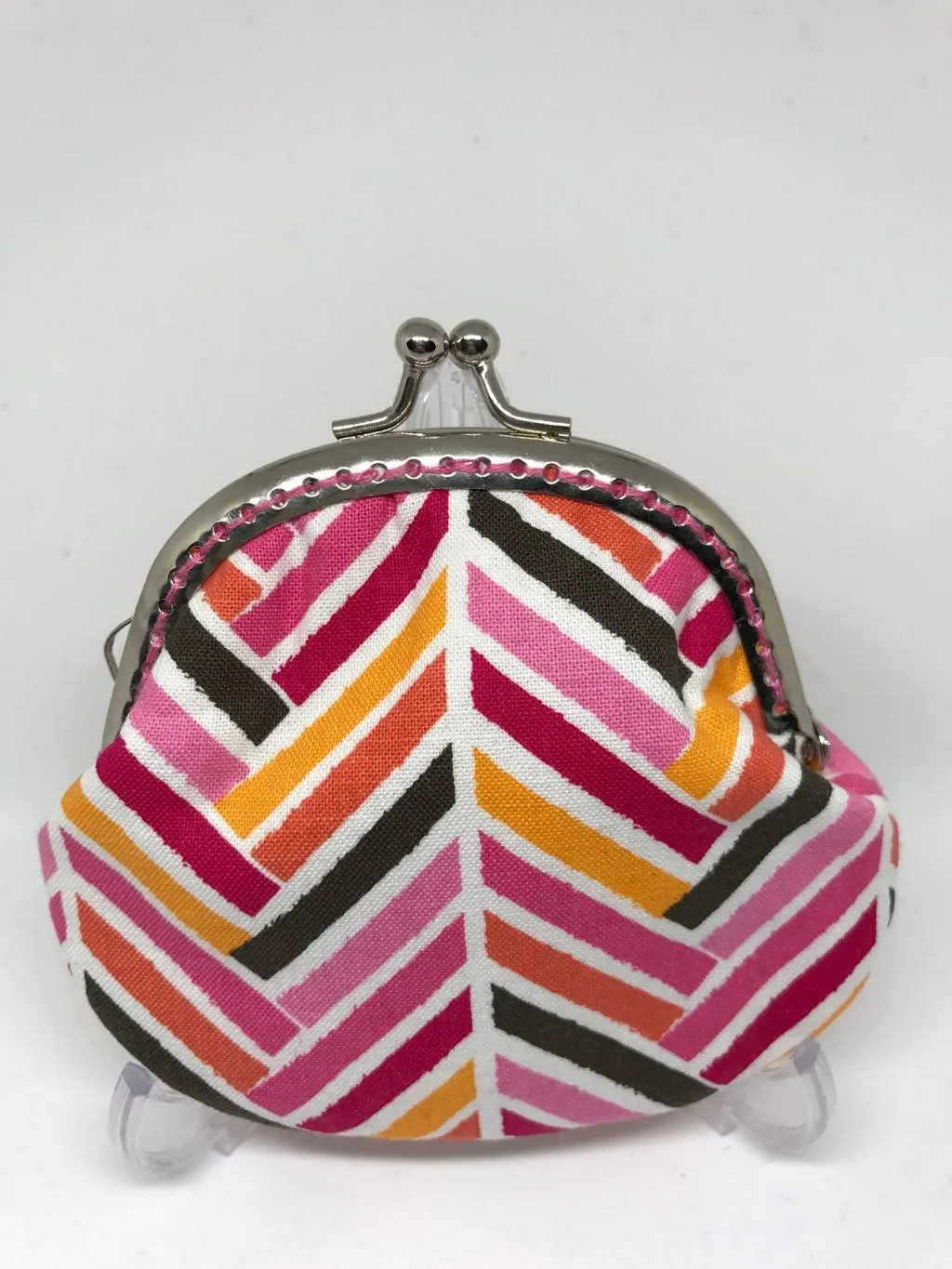
Kiss-Lock Clasp
A retro-style closure featuring two interlocking metal spheres or knobs on a metal frame.
Advantages
- Perfect for vintage or “hand-made” artisanal aesthetics
- Seals the mouth of the bag completely
- Durable metal frame adds structure to the bag
Disadvantages
- Rigid opening size; limits how wide the bag can open
- Heavier than other closure types
Best for: small cosmetic pouches, coin purses, evening clutches, crochet/artisan canvas bags
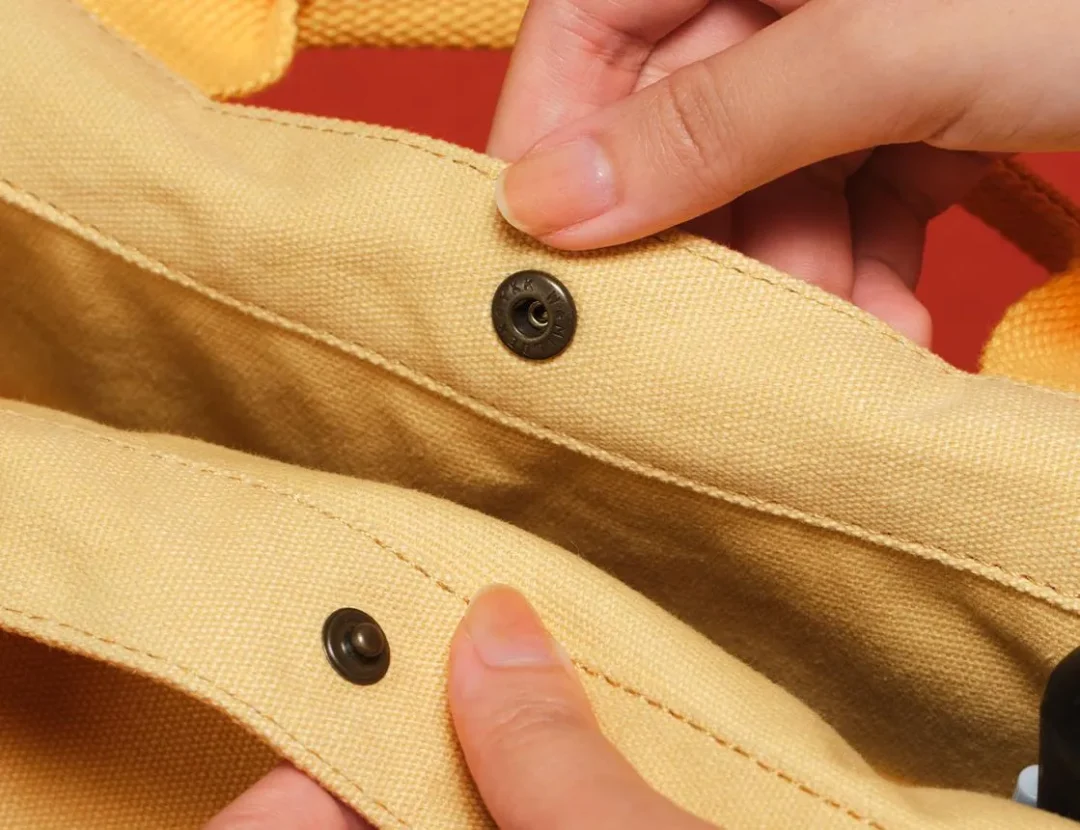
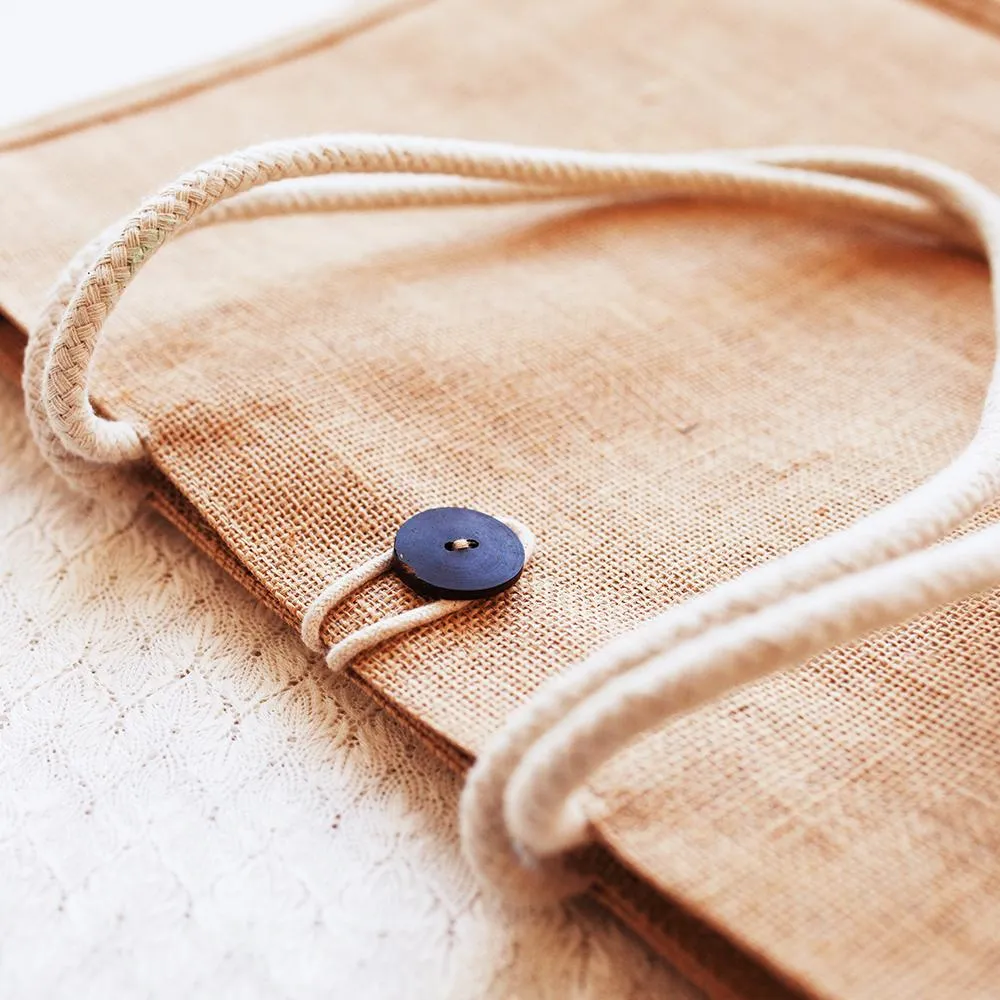
Button Closure (Snap Button & Sewing Button)
Snap Buttons: Metal or plastic interlocking fasteners that click when pressed. Sewing Buttons: Traditional buttons used with a thread loop or fabric slit.
Advantages
- Extremely low cost; vast variety of materials (wood, horn, coconut shell, metal)
- Sewing buttons offer a “crafty” or organic look for eco-brands
Disadvantages
- Only secures a single point, leaving sides open
- Sewing buttons are the slowest to operate
Best for: promotional totes, eco-friendly grocery bags, artisanal canvas crafts
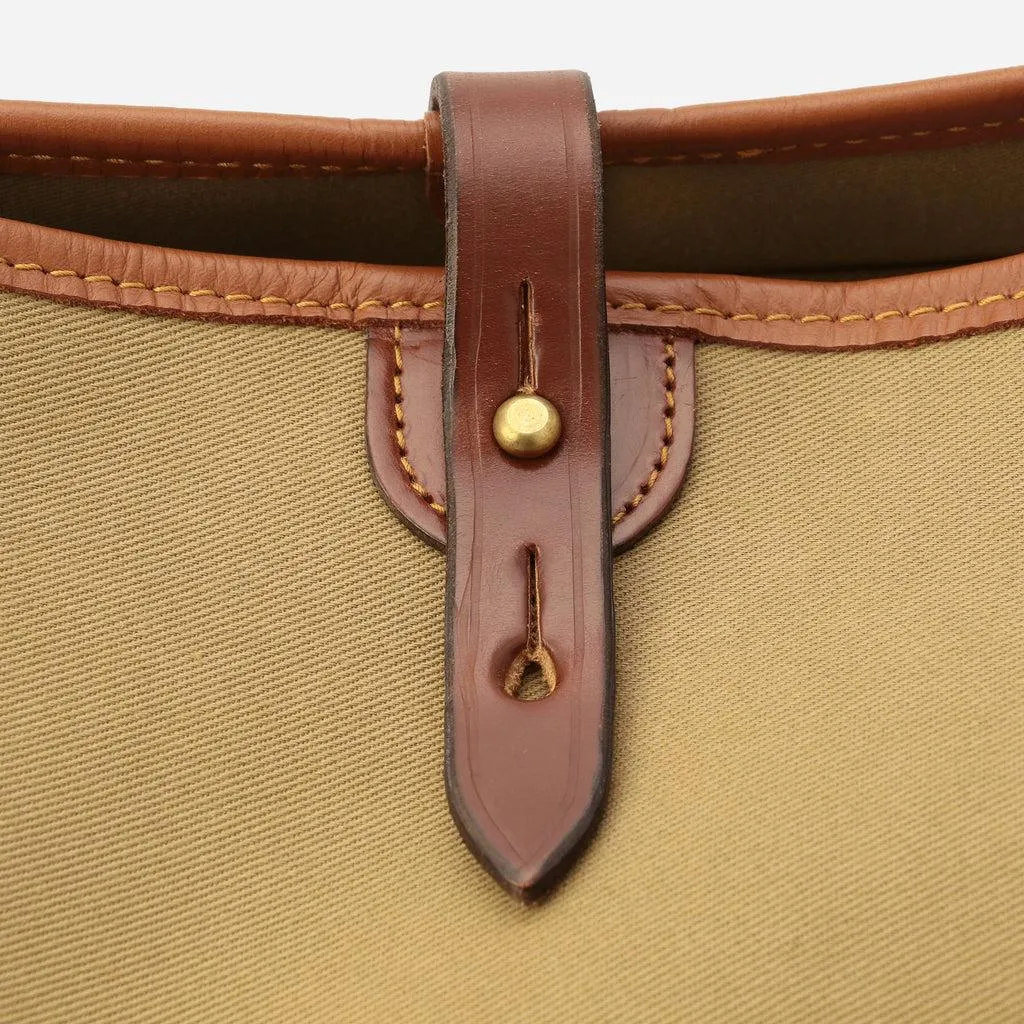
Collar Stud (Collar Nail) Closure
A simple metal stud that fits through a small slit in a leather or canvas tab.
Advantages
- Rugged, heritage appearance; no moving parts to break
- Extremely durable; preferred for work-wear styles
Disadvantages
- Can be difficult to operate with one hand
- Slit can stretch over time if fabric isn’t reinforced
Best for: heavy-duty work bags, heritage-style totes, tool carriers
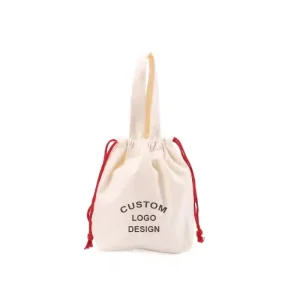
Drawstring Closure
A cord threaded through the top of the bag, allowing users to pull it tight.
Advantages
- Lightweight and flexible
- Low manufacturing complexity
Disadvantages
- Minimal security; can loosen during transport
- Cord friction can wear out the canvas over time
Best for: laundry bags, shoe bags, gift pouches, wine bottle bags
Velcro (Hook-and-Loop) Closure
Velcro is divisive. It is fast, it is cheap, and it is unmistakably utilitarian. For some applications, that is exactly the right combination. For others, it drags down the perceived value of an otherwise premium bag.

Advantages
- Fastest operation — rip and press, no alignment required
- Child-friendly and accessible for users with limited dexterity
- Very low cost
Disadvantages
- Distinctive tearing noise that some users find unpleasant
- Loop side collects lint, hair, and debris over time, reducing grip
- Lower-end aesthetic that conflicts with premium positioning
Best for: tool bags, utility bags, kids’ bags, equipment cases
Buckle Closure
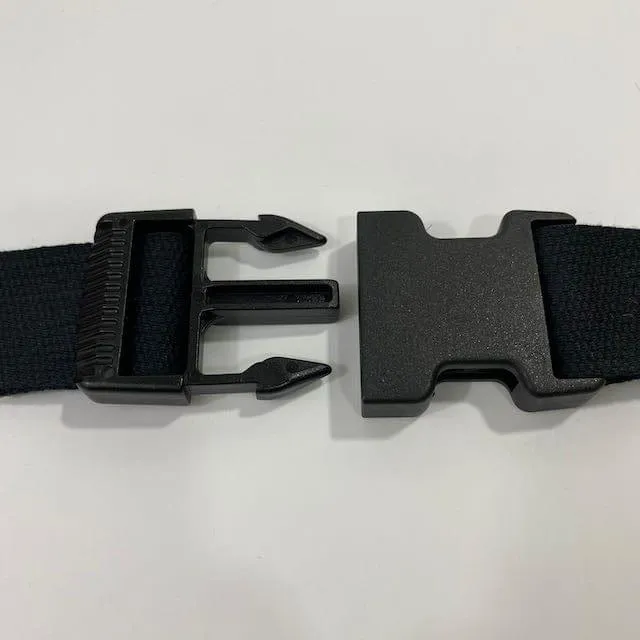
Buckles — whether plastic side-release, metal tension, or traditional pin-and-hole — provide the highest mechanical strength of any closure type. They are the standard for bags that carry heavy loads in demanding environments.
Subtypes:
- Plastic side-release buckles (most common): light, strong, one-handed operation
- Metal buckles: heavier, more durable, premium look but higher cost
- Traditional pin buckles: classic aesthetic, slower to operate
Advantages
- Highest load-bearing capacity — properly spec’d buckles hold hundreds of pounds
- Visible, unambiguous locked/unlocked state
- Failsafe: even if the buckle breaks, the webbing still holds
Disadvantages
- Highest hardware cost in the category
- Bulkier than other closure types
- Can be overkill for lightweight bags
Best for: outdoor bags, tactical bags, messenger bags, oversized totes, cooler bags
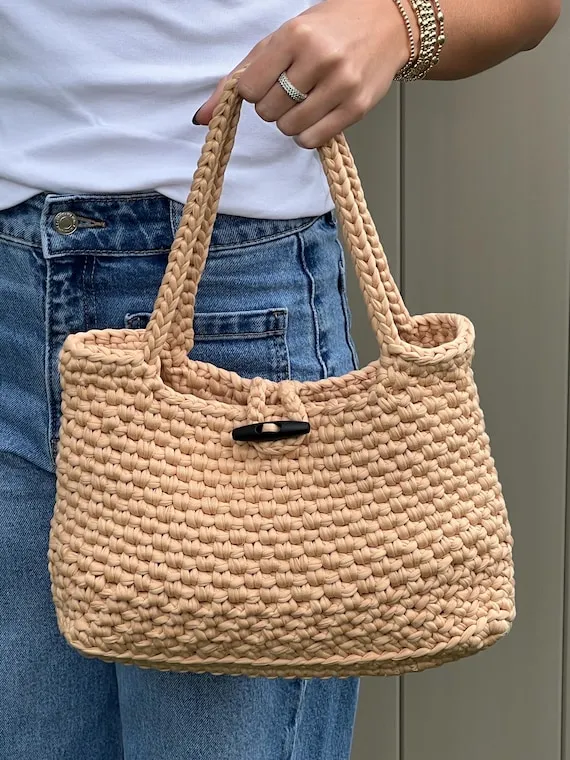
Toggle Closure (Barrel Toggle / Duffle Toggle)
A toggle closure uses a short bar-shaped piece — typically wood, horn, resin, or metal — that slides horizontally through a fixed loop or cord to lock the bag shut. It is one of the most visually distinctive closure types and has a long history in nautical and heritage canvas bag design.
Advantages
- Instantly recognizable “classic canvas” aesthetic; particularly popular in navy, military, and Americana styles
- Extremely simple — zero moving parts to wear out
- Wide material options: wooden toggles add natural warmth, metal toggles add industrial edge, horn toggles signal artisanal quality
- Very low manufacturing cost; no tooling required
Disadvantages
- Moderate security only — a forceful pull can slide the toggle out of the loop
- Slower to operate than snaps or magnetic closures
- Not suitable for bags requiring dust or moisture protection
Best for: canvas duffle bags, nautical totes, children’s gym bags, heritage-brand promotional bags, scout/outdoor lifestyle bags
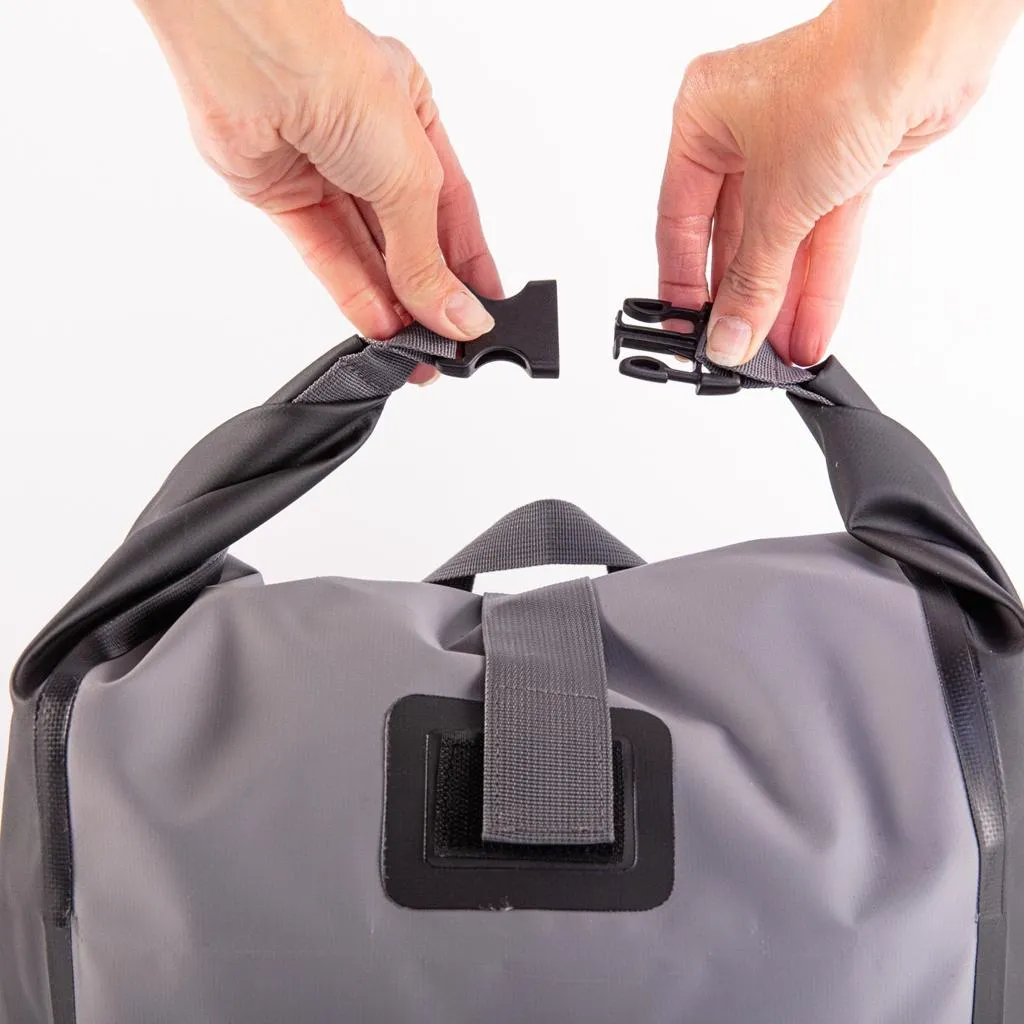
Roll-Top Closure
A roll-top closure requires no hardware at all. The excess fabric at the bag’s opening is folded over multiple times and then secured — typically by a buckle, clip, or strap — creating a watertight seal. It is the standard closure for technical canvas dry bags and waxed canvas backpacks designed for rain exposure.
Advantages
- Variable capacity: more rolls = smaller interior; fewer rolls = expanded interior for oversized loads
- Excellent water resistance when combined with waterproof or waxed canvas — the rolled seal is tighter than any zipper at the fabric level
- No metal or plastic hardware at the opening means nothing to corrode, jam, or break
- Highly adjustable; works equally well with a half-full or fully stuffed bag
Disadvantages
- Slowest closure to operate — requires two hands and deliberate rolling
- Not suitable for bags that are opened and closed frequently throughout the day
- Aesthetic is distinctly utilitarian; does not suit fashion or retail positioning
Best for: waxed canvas roll-top backpacks, dry bags, cooler bags, cycling commuter bags, outdoor technical bags
Comparison Table of Different Canvas Bag Closures
Types of Zippers for Canvas Bags
Not all zippers are created equal. The material, coil type, and construction method determine everything from the zipper’s visual character to its mechanical lifespan.
Nylon Coil Zipper
The nylon coil zipper is the most widely used zipper type in the soft goods industry, and for the majority of canvas bags, it is the correct choice.
Construction: A continuous nylon monofilament is coiled into a spiral and stitched or woven onto a fabric tape. The result is a flexible, lightweight chain that bends easily around curves.
Advantages:
- Most flexible zipper type — conforms to curved bag openings without puckering
- Lightest weight — adds minimal mass to the finished bag
- Wide color availability; the coil can be dyed to match or contrast with the tape
- Self-healing: if a coil element bends out of place, running the slider back over it often restores function
- Lower cost than metal or molded resin
Disadvantages:
- Less abrasion-resistant than metal — repeated heavy use on coarse canvas can wear the coil
- Lower perceived value than metal for luxury applications
Applications: cosmetic bags, pencil cases, internal pockets, lightweight totes, garment bags
Resin (Plastic / Molded) Zipper
Resin zippers — sometimes called Vislon zippers, after the YKK brand name — use individually molded plastic teeth locked onto the zipper tape. They occupy the middle ground between nylon coils and metal in both cost and performance.
Features:
- Individual teeth rather than a continuous coil
- Teeth are wider and more visible than nylon coils
- Available in a wide range of colors, including transparent options
Advantages:
- Smoother operation than nylon coils, especially under lateral tension
- More abrasion-resistant than nylon — better for heavy canvas applications
- The wider teeth create a more substantial, sporty aesthetic
- Resistant to corrosion; suitable for beach and marine environments
Disadvantages:
- Less flexible than nylon — not ideal for tight curves
- Slightly heavier than nylon coil of the same size
- Higher unit cost than nylon coil
Applications: heavy canvas totes, outdoor bags, sports bags, luggage
Metal Zipper
Metal zippers are the premium option. The weight, the sound, the visible heft — all of it signals quality before the user even touches the slider.
Construction: Individual metal teeth (made from brass, aluminum, or nickel alloy) are clamped onto a sturdy fabric tape. Each tooth is a discrete element, which means a damaged tooth can sometimes be replaced rather than requiring a full zipper swap.
Common metals:
- Brass: The classic choice. Develops a patina over time. Strong and corrosion-resistant. Most expensive.
- Aluminum: Lighter than brass, with a matte silver appearance. Less expensive but also less durable under heavy load.
- Nickel / nickel alloy: Bright silver finish, good strength, moderate cost. Common in mid-tier fashion bags.
Advantages:
- Luxury appearance — the visual weight communicates premium quality instantly
- Highest tensile strength of all zipper types (size for size)
- Classic aesthetic that pairs well with heritage canvas brands
Disadvantages:
- Heaviest zipper type — adds noticeable weight to large bags
- Highest cost — roughly 2-5x nylon coil depending on metal and size
- Can be stiff to operate, especially on curved openings
- Potential for metal-on-metal noise
Applications: premium tote bags, fashion bags, heritage brands, luxury packaging, bags marketed at price points above $50 retail
Waterproof Zipper
Waterproof zippers use a polyurethane (PU) or thermoplastic polyurethane (TPU) laminated tape combined with a gasket-style coil design. When closed, the zipper forms a seal that blocks water penetration.
Key characteristics:
- PU/TPU coating on the zipper tape prevents water wicking through the fabric
- Interlocking coil design creates a physical barrier against water entry
- Typically tested to specific water column pressure ratings (e.g., 2000mm, 5000mm)
Suitable for: cooler bags, beach bags, outdoor technical bags, dry bags, marine equipment cases
Invisible Zipper
Invisible zippers are designed to disappear into the seam when closed — only the slider pull tab remains visible. They are a design choice, not a performance one.
When to use:
- When the closure should not interrupt the visual flow of the bag design
- For lined bags where the zipper tape can be concealed between the outer canvas and the inner lining
- Fashion-forward designs that prioritize clean lines
Limitations:
- Narrower coil is inherently less durable than standard exposed zippers
- More complex to sew correctly; requires experienced operators
- Not suitable for heavy canvas or high-stress applications
How to Choose the Right Zipper for Different Canvas Bags
The table below provides a starting point, but the final decision should account for bag dimensions, expected load weight, and target retail price.
Factors to Consider When Choosing a Closure
Closure selection is not a matter of picking the highest-rated option from a comparison table. The right choice depends on variables specific to your product, your market, and your manufacturing partner.
Budget
Hardware cost scales dramatically across closure types. A #3 nylon coil zipper with a basic metal slider might cost 0.15–0.30 per unit at factory pricing, while a #10 brass YKK zipper with custom logo puller can exceed 3.00. Multiply that by an order of 5,000 bags and the difference is $14,250 — enough to fund an entire marketing campaign. The question is not “what is the best closure” but “what closure maximizes perceived value at my target retail price.”
Target Market
European and North American markets tend to prefer zippers for everyday bags and will pay a premium for YKK-branded hardware. Southeast Asian and African markets may prioritize cost and lightweight construction, making drawstrings and snap buttons more competitive. Selling on Amazon creates different expectations than selling through independent boutiques. Know your channel.
Brand Positioning
A brand that positions itself as sustainable and natural should avoid glossy plastic zippers and favor matte metal or natural-tone nylon coils. A brand that competes on technical performance needs waterproof zippers and buckle systems. Hardware choices are brand language — they speak as loudly as logos.
Bag Size
Larger bags place more tension on closures because they hold more weight. A #3 nylon zipper that works perfectly on a 10-inch cosmetic pouch will fail rapidly on a 24-inch weekender bag. As a rule of thumb:
- Bags under 12 inches: #3 zipper
- Bags 12–18 inches: #5 zipper
- Bags over 18 inches: #8 or #10 zipper
Weight Capacity
Canvas bags are frequently overloaded beyond their design spec. A shopping tote rated for 15 lbs will routinely carry 25 lbs of groceries. If your target users include parents, students, or travelers — all of whom overload bags by default — spec the closure for the overload scenario, not the nominal capacity.
Frequency of Use
A daily commuter bag undergoes roughly 1,000 open-close cycles per year (two trips, open at each end, ~250 commuting days). A promotional tote might see 20 cycles in its entire life. The closure should be tested to match.
Indoor vs. Outdoor Use
Outdoor bags face UV exposure (which degrades nylon and polyester zipper tape), temperature extremes (which make plastic snaps brittle), and moisture (which corrodes unprotected metal hardware). Indoor bags face none of these. A closure that works beautifully indoors can fail catastrophically outdoors within a single season.
Water Resistance
If the bag is likely to encounter rain — beach bags, boat bags, camping duffels — standard zippers become a liability. Water seeps through the zipper teeth and wicks along the tape, soaking the interior within minutes. Waterproof zippers with sealed tape are the only reliable solution for wet environments.
Customization Options for Zippers & Closures
Custom hardware is one of the highest-ROI investments in bag branding. A logo-engraved metal zipper puller costs pennies per unit but creates a tactile brand touchpoint that users interact with every single day.
Custom Zipper Colors
Nylon coil and resin zippers can be color-matched to canvas fabric using Pantone references. The zipper tape (the fabric strip the teeth attach to) can be dyed independently from the coil, enabling two-tone effects. Custom dye lots typically require a minimum of 1,000–2,000 meters of zipper tape, depending on the supplier.
Logo Zipper Pullers
The pull tab is the most visible zipper component and the easiest to customize:
- Metal logo pulls: Die-cast zinc alloy with enamel fill. Most premium option. MOQ typically 2,000–5,000 pieces depending on complexity.
- Rubber/TPU zipper pulls: Molded silicone or TPU with embossed or debossed logos. Softer feel, lower cost than metal, available in any Pantone color. MOQ around 1,000–3,000 pieces.
- Engraved pull tabs: Laser engraving on flat metal pulls. Best for small-batch customization where mold costs are prohibitive.
- Leather zipper tabs: Real or PU leather tabs riveted to the slider. Adds warmth and a natural material contrast. Very low MOQ — can be done at the factory level without specialized tooling.
Custom Toggle Hardware
Wooden toggles and horn buttons can be custom-engraved or laser-branded with logos, making them ideal for heritage and eco-brand differentiation. MOQs for custom wooden toggles typically start at 500 pieces.
Turn Lock and Metal Clasp Branding
Turn locks, push locks, and kiss-lock frames can be electroplated in custom finishes (matte gold, rose gold, gunmetal, antique brass) to align with brand color palettes. Some suppliers offer laser engraving directly onto the metal plate of turn locks for subtle logo placement.
Zipper Tape Branding
For maximum subtlety, the brand name can be woven or printed directly onto the zipper tape. This is common in luxury fashion where overt hardware logos are avoided. MOQ is higher than puller customization — typically 5,000+ meters of zipper tape.
Waterproof Zipper Options
Custom waterproof zippers can be produced with color-matched PU tape in both matte and gloss finishes. Some manufacturers offer printed patterns on the tape for distinctive visual branding.
Zipper Configuration Options
- Double zipper (two sliders): Allows opening from either end — essential for travel bags and large totes.
- Reverse zipper: The slider and pull tab face inward, leaving only the clean tape line visible from the outside. Used in premium minimalist designs.
- Locking zipper: The slider includes a small loop that can be secured with a padlock. Common in travel bags.
YKK vs. SBS vs. Generic Zippers
YKK is the global gold standard, manufactured in Japan with exceptionally tight quality tolerances. SBS is the leading Chinese domestic brand, offering 80–90% of YKK’s quality at roughly 60% of the cost. Generic zippers are the cheapest option but carry unpredictable quality — they are not recommended for bags intended for Western markets where return rates directly impact profitability.
For Amazon sellers and brands selling at $30+ retail, the YKK logo on a zipper puller is itself a trust signal that justifies the cost. For promotional products or developing markets, SBS is a perfectly adequate compromise.
MOQ considerations: Custom hardware requires minimum order quantities that vary by supplier. Plan on 2,000–5,000 pieces for molded pulls, 500–1,000 pieces for engraved pulls, and 1,000+ meters for custom zipper tape. Discuss MOQ with your manufacturer early in the design process to avoid surprises.
Common Problems with Canvas Bag Closures (and How to Avoid Them)
Even properly specified closures can fail if quality control and construction details are overlooked. Here are the most common failure modes and their prevention strategies.
A Note on Testing
Reputable manufacturers perform cycle testing on closures — typically 5,000 to 10,000 open-close repetitions — to verify durability before bulk production. Ask your factory for their testing protocol. If they do not have one, that is a red flag.
Manufacturing Tips from a Custom Canvas Bag Factory
Factory-floor experience reveals details that specification sheets never capture. These are the practical rules that separate bags built to last from bags built to a price.
Match Zipper Size to Bag Dimensions
The zipper size number — #3, #5, #8, #10 — refers to the width of the closed teeth in millimeters (approximately). Choosing the wrong size is the single most common sourcing mistake:
- #3: Lightweight bags, cosmetic pouches, internal pockets. Maximum bag length ~12 inches.
- #5: Standard tote bags, laptop sleeves, backpacks. Maximum bag length ~20 inches.
- #8: Large totes, duffel bags, cooler bags. Maximum bag length ~28 inches.
- #10: Oversized bags, heavy-duty equipment cases, bags carrying 30+ lbs regularly.
When in doubt, go one size up. An oversized zipper costs slightly more and looks slightly heavier. An undersized zipper fails.
Reinforce Zipper Ends
The first and last three teeth of any zipper experience disproportionate stress because that is where the slider stops and the tape bears the full tension of the pulled-closed bag. Always:
- Fold the zipper tape ends back on themselves before sewing
- Add a bar-tack stitch (a dense zigzag reinforcement) across the folded section
- Use metal top and bottom stops rather than relying on fabric stops alone
Bar-Tack at High-Tension Points
A bar-tack is a short, dense stitch pattern — typically 10–15 stitches packed into a 2–3mm length — that distributes force across a wider area. Every closure attachment point should be bar-tacked: buckle webbing anchors, magnetic snap prongs, button thread anchors, toggle loops, and zipper tape endpoints.
Match Zipper Tape to Canvas Weight
Zipper tape comes in different weights and weaves. A lightweight polyester tape works fine with 8 oz canvas but frays and tears against 20 oz canvas. Heavier canvas requires heavier tape — cotton or cotton-blend tapes hold up better under abrasion from coarse canvas fibers than pure polyester.
Environmental Considerations for Hardware
Metal hardware in coastal or tropical markets needs corrosion protection:
- Brass is naturally corrosion-resistant and needs minimal treatment
- Nickel-plated steel requires a clear lacquer coating to prevent rust
- Aluminum is corrosion-resistant but can pit in saltwater environments
- Salt-spray testing (ASTM B117 standard) should be specified for marine-use bags
Cycle Testing Before Bulk Production
A simple in-factory test: attach a weight equal to 150% of the bag’s rated capacity, then cycle the closure open and closed 5,000 times. Any failure before the 5,000-cycle mark indicates a quality issue that must be resolved before bulk production begins. This is not an expensive test — it takes one worker roughly three hours to complete — and it prevents warranty claims that cost far more.
Frequently Asked Questions
Can a canvas tote bag have a zipper?
Yes. Adding a zipper to a canvas tote is one of the most common customization requests. The zipper is typically sewn into a gusset or directly into the top hem. For totes over 18 inches wide, a #5 nylon coil zipper is the standard choice. The key construction detail is adding a zipper guard — a fabric flap that sits behind the zipper to prevent the canvas from catching in the teeth during operation.
What is the best zipper for heavy canvas bags?
For canvas bags 16 oz and heavier, we recommend #8 or #10 resin or metal zippers. The wider tooth profile distributes stress more evenly, and the heavier tape resists fraying against coarse canvas edges. YKK Vislon (#8 resin) is the most common specification for heavy-duty canvas duffels and tool bags. If the bag carries loads above 25 lbs, step up to a #10 metal zipper with a locking slider.
Are metal zippers better than nylon zippers?
“Better” depends on the application. Metal zippers are stronger, more durable under abrasion, and convey higher perceived value. Nylon coil zippers are lighter, more flexible, quieter, and cost less. For a premium fashion tote, metal is the right choice. For a lightweight cosmetic pouch being shipped in volume, nylon coil is both more practical and more profitable. The two materials serve different product tiers — neither is universally superior.
Do magnetic closures damage electronics?
Quality magnetic closures use ceramic or ferrite magnets with relatively weak field strength — typically insufficient to damage modern electronics. Credit card magnetic stripes can theoretically be affected by prolonged direct contact with a strong magnet, but the magnetic field of a bag snap drops to negligible levels within 1–2 inches. As a practical matter, laptops, phones, and tablets are not at risk from bag magnetic closures. If this is a concern for your customers, specify snaps with magnetic shielding plates.
Can I customize zipper pullers with my logo?
Yes, and this is one of the most cost-effective branding investments you can make. The three main methods are: die-cast metal pulls with enamel fill (premium), molded silicone/rubber pulls (mid-range), and laser-engraved flat metal pulls (budget). MOQs range from 500 pieces for engraving to 2,000–5,000 pieces for custom molding. Lead time is typically 15–30 days for custom tooling plus production.
Which closure is best for promotional tote bags?
Snap buttons are the standard for promotional totes because they achieve the lowest unit cost — typically $0.05–0.15 per bag in hardware cost. They are fast to install and adequate for the light-duty, low-frequency use that promotional bags typically see. If the promotional bag is intended as a higher-value gift (e.g., for VIP clients or premium events), a nylon coil zipper with a basic metal slider elevates perceived value at a modest cost increase.
What zipper size should I choose?
Use bag length as your primary guide: under 12 inches → #3; 12–18 inches → #5; 18–24 inches → #8; over 24 inches or heavy loads → #10. If your bag carries laptops, cameras, or other heavy valuables, step up one size from the length-based recommendation.
How long do canvas bag zippers last?
A quality nylon coil zipper (YKK or SBS) installed correctly on a canvas bag should survive 10,000+ open-close cycles without failure — roughly 5–7 years of daily use. Metal zippers can exceed 20,000 cycles. The more common failure point is not the zipper itself but the attachment: zipper tape separating from the canvas at the ends. This is a construction quality issue, not a zipper quality issue, and it is prevented by the reinforcement techniques described in the manufacturing tips section above.
Can waterproof zippers be used on canvas bags?
Yes. Waterproof zippers can be sewn into canvas bags, but the seam must be sealed separately — the waterproof zipper tape prevents water penetration through the zipper itself, but the stitch holes where the zipper meets the canvas remain vulnerable. For genuine water resistance, the zipper attachment seam should be taped or sealed with waterproof seam tape on the interior side. Full waterproof performance also requires waterproof canvas (waxed or coated), not untreated cotton canvas.
What is the minimum order quantity for custom zipper options?
MOQs vary by customization type and supplier:
Always confirm MOQ with your manufacturer before finalizing designs, as MOQs can shift based on current production schedules and supplier relationships.
What is the most durable metal lock for canvas bags?
The Turn Lock (Twist Lock) is widely considered the most durable metal clasp for canvas bags. Its mechanism relies on simple mechanical rotation — a flat metal bar turning into a fixed catch plate — with no internal springs to fatigue or fail. Unlike push locks, which depend on a small internal spring that can wear out over decades, a quality brass or zinc-alloy turn lock can outlast the bag itself. For bags intended to be heirloom pieces or passed down, the turn lock is the safest long-term choice.
Which closure is best for an eco-friendly or sustainable brand?
A Sewing Button made from natural materials — wood, coconut shell, horn, or recycled paper composite — is the strongest choice for eco-positioned brands. It avoids the industrial aesthetic of injection-molded plastic and the mining footprint of metal hardware. Paired with organic cotton canvas and natural fiber thread, a wooden button closure creates a fully biodegradable hardware set that aligns with zero-waste and circular-economy brand values. For brands that still need more security than a single button provides, a wooden toggle with a cotton cord loop is the next-best alternative.
What is the difference between a roll-top closure and a regular drawstring?
Though both involve cinching, the mechanics are fundamentally different. A drawstring uses a cord threaded through a channel — pulling it gathers the fabric like a pouch, but the opening is never truly sealed, and the cord itself is the only barrier. A roll-top closure folds the actual body fabric over itself multiple times before securing the bundle with external straps or buckles. The rolled layers of fabric create a physical barrier against water and dust that no drawstring can match. In short: drawstrings are for casual containment; roll-tops are for waterproof sealing and load compression.
Conclusion
There is no universal “best” closure for a canvas bag — only the right closure for a specific product, market, and budget. The magnetic snap that elevates a fashion tote would be a liability on a travel duffel. The #10 metal zipper that secures a tool bag would be absurd overkill on a promotional giveaway. The drawstring that elegantly closes a wine bag would be useless on a laptop tote. The wooden toggle that builds heritage brand identity would fail to seal out sand on a beach bag.
The decision framework is straightforward: define the bag’s primary use case, weight capacity, and target price point; then select the closure that optimizes the intersection of security, convenience, aesthetics, and cost. When in doubt, prioritize durability — a closure that outlasts the bag is always better than a bag that outlasts its closure.
Working with an experienced manufacturer streamlines this process. A factory that has produced bags for multiple markets, price tiers, and use cases brings pattern-making knowledge that prevents costly sampling rounds. They can recommend zipper sizes, reinforcement techniques, and hardware suppliers matched to your specific requirements — and they can catch specification conflicts before the first sample is sewn.
Need guidance on zipper and closure selection for your custom canvas bag project? Our team provides expert recommendations on zipper types and sizing, closure hardware, logo zipper pullers, material matching, and OEM customization. We help optimize both product performance and production cost based on your intended application, target market, and volume requirements. Contact us to discuss your project.
 English
 French
 German
 Japanese
 Arabic
 Thai
 Vietnamese
 Russian
 Spanish
 Portuguese