
The best drawstring bag for most everyday, gym, school, and event use is a medium-sized polyester drawstring backpack with reinforced bottom corners, smooth cords, and at least one secure pocket. It offers a practical balance of low weight, durability, quick drying, and cost.
However, there is no single design that is best for every situation. Cotton provides a softer, more natural appearance. Mesh improves ventilation. Nylon works well for lightweight travel, while satin and velvet are better suited to gift and product packaging.
The right choice depends on what you plan to carry, how long you will carry it, and how often the bag needs to be reused.
Table of Contents
ToggleThe Best Drawstring Bag for Each Use
If you want a quick recommendation, start with the bag’s primary purpose.
| Intended use | Best drawstring bag | Recommended material | Feature to prioritize |
|---|---|---|---|
| Everyday carry | Reinforced drawstring backpack | Polyester or nylon | Zipper pocket and top handle |
| Gym and sports | Ventilated gym sack | Polyester with mesh | Quick-drying construction |
| Swimming and wet gear | Water-resistant cinch bag | Coated polyester or nylon | Protected lining and seams |
| School activities | Lightweight cinch backpack | Polyester | Reinforced lower corners |
| Travel organization | Packable drawstring pouch | Nylon or polyester | Low weight and compact storage |
| Laundry and shoes | Large drawstring sack | Polyester, nylon or mesh | Washability and ventilation |
| Gifts and packaging | Small drawstring pouch | Cotton, satin or velvet | Soft cord and neat finishing |
| Promotional events | Printable drawstring backpack | Polyester, RPET or non-woven PP | Useful life and print area |
These recommendations are starting points rather than fixed rules. The expected load, carrying time, climate, cleaning requirements, and budget can all change the final choice.
What Makes a Good Drawstring Bag?
A drawstring bag may appear simple, but its usability depends on more than the outer fabric. The size, cord system, seams, reinforcement and pocket layout all affect how the bag performs.
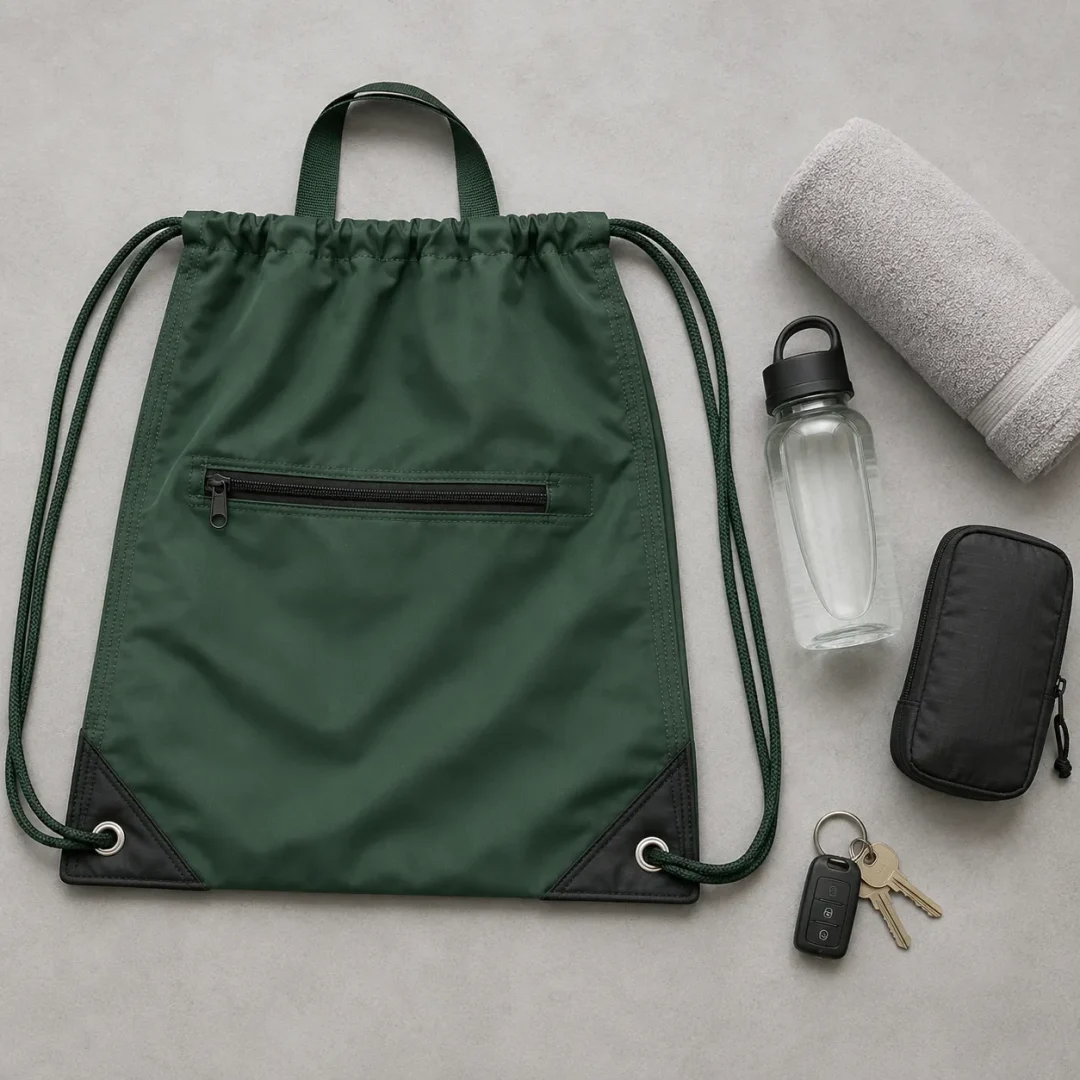
It fits the intended contents
A bag should have enough room for its contents without being packed tightly to the opening. The upper section needs some free space so that the drawcord can gather the fabric and close the bag properly.
A flat gym sack may be enough for a towel, shirt and small personal items. Shoes, laundry, balls or bulky clothing benefit from a larger body, side gussets or a wider base. Small packaging pouches should fit the product more closely so that the presentation does not look loose or unfinished.
Do not judge capacity from the exterior dimensions alone. Thick items, internal dividers and the space required for closing can all reduce usable volume.
The material matches the environment
The thickest fabric is not automatically the best fabric.
A lightweight synthetic material may perform better at the gym because it dries quickly. Cotton may be preferable for retail packaging because it feels softer and offers a natural appearance. Mesh is useful when airflow matters, but it provides little privacy or protection from dust and rain.
The environment should determine the material—not the other way around.
The cords are smooth and comfortable
The drawcord serves as both the closure and, on many cinch backpacks, the shoulder straps. It should move smoothly through the top channel without catching or twisting.
Very thin cords can press into the shoulders when the bag is loaded. Rough cords may also rub against clothing or skin. Wider, softer cords or webbing-style straps are usually more comfortable if the bag will be carried regularly.
The cord length also matters. It must be long enough to open the bag fully and fit the intended user, but not so long that loose sections drag or become tangled.
The stress points are reinforced
Drawstring bags commonly fail at the lower corners, cord attachment points, side seams and top channel. These areas receive repeated pulling force every time the bag is opened, closed or worn.
Look for:
- Reinforced fabric patches at the bottom corners
- Securely installed eyelets or stitched fabric loops
- Dense, even stitching around cord attachment points
- Finished internal seams
- A top channel that does not distort when pulled
- Pocket edges that are stitched securely
A strong fabric cannot compensate for weak seams or poorly attached cords.
It provides the right amount of organization
A simple one-compartment bag is ideal when packability and low weight are the priorities. For everyday or gym use, however, a small zipper pocket is helpful for keys, cards or a phone.
Shoe compartments, mesh pockets and wet-item sections add functionality, but they also increase weight, manufacturing complexity and cost. More pockets do not always make a better bag. The best design includes only the organization the user will actually need.
It is easy to clean and reuse
Sports, school and travel bags are likely to come into contact with sweat, dirt, food or damp clothing. Quick-drying polyester and nylon are generally easier to maintain than absorbent natural fabrics.
Cotton bags may be washable, but washing can affect shrinkage, color and printed decoration. Velvet and satin packaging pouches usually require gentler care.
Always check the care instructions for the finished bag rather than assuming that every bag made from a particular material can be washed in the same way.
Which Drawstring Bag Material Is Best?
Material affects weight, texture, durability, breathability, print quality and cleaning. The following comparison covers the most common choices.
| Material | Main advantages | Main limitations | Best applications |
|---|---|---|---|
| Polyester | Lightweight, durable, quick-drying and printable | Limited natural breathability | Gym, school, events and everyday use |
| Nylon | Lightweight and abrasion-resistant | Can cost more and look technical | Travel and frequent use |
| Cotton | Soft, breathable and natural-looking | Absorbs moisture and dries slowly | Retail, gifts and light storage |
| Canvas | Strong, structured and substantial | Heavier and less packable | Merchandise and heavier products |
| Mesh | Excellent ventilation and visibility | Limited privacy and protection | Sports, laundry, toys and beach gear |
| Satin or velvet | Soft and visually premium | Unsuitable for rough everyday use | Jewelry, beauty products and gifts |
| Non-woven PP | Lightweight and economical | Shorter expected usable life | Large events and lightweight giveaways |
Polyester: the best all-around option
Polyester is the most balanced choice for a general-purpose drawstring backpack. It is light, relatively durable, easy to print and quicker to dry than cotton. Different fabric specifications can be used for lightweight giveaways or more durable sports bags.
Nevertheless, “polyester” alone does not guarantee quality. Fabric density, coating, stitching, cord attachments and reinforcement must be considered together.
Recycled polyester, commonly called RPET, can provide similar practical characteristics when properly specified. Businesses making recycled-content claims should also confirm the material documentation rather than relying only on a supplier’s product name.
Nylon: best for lightweight, frequent use
Nylon is known for its favorable strength-to-weight ratio and abrasion resistance. It works well for packable travel bags and products expected to experience frequent handling.
Its technical appearance may not suit every retail or promotional program, and the performance difference between nylon and polyester depends on the actual fabric specification and construction.
Cotton: best for softness and a natural appearance
Cotton drawstring bags are popular for retail packaging, light storage, events and brand merchandise. The surface is comfortable to handle and works with several decoration methods.
Cotton absorbs water, however, so it is not the most practical option for wet swimwear or sweaty gym clothing. Fabric weight and weave also influence how durable and structured the finished bag feels.
Canvas: best for a substantial, reusable design
Canvas is heavier and more structured than lightweight cotton. It can give branded merchandise and product packaging a higher perceived value while supporting heavier contents.
The trade-off is additional weight and bulk. A thick canvas bag is less convenient as a compact backup bag and may take longer to dry after washing.
For a more detailed fabric comparison, see our guide to the most common drawstring bag fabrics.
Mesh: best for ventilation
Mesh allows air to circulate around sports gear, shoes, beach items and laundry. It can reduce trapped moisture and makes the contents easy to identify.
It does not protect private items from view and cannot keep out rain, sand or fine dirt. Some designs combine a solid polyester body with mesh panels to balance ventilation and protection.
Satin and velvet: best for gift packaging
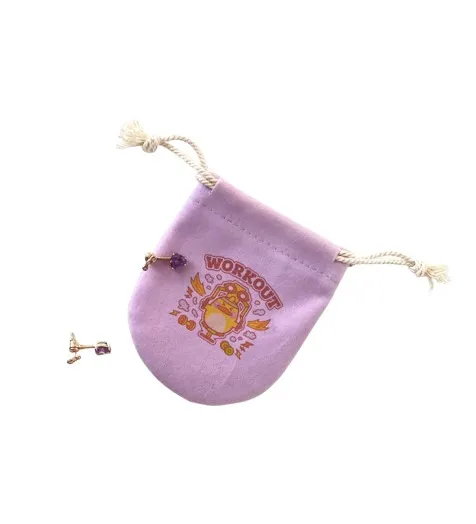
Satin and velvet drawstring pouches are intended primarily for presentation rather than heavy carrying. They are commonly used for jewelry, cosmetics, accessories and special gifts.
The cord, lining, seam finish and pouch dimensions are especially important in this category because small finishing defects are more noticeable on premium packaging.
What Is the Best Drawstring Bag for the Gym?
The best gym drawstring bag uses quick-drying polyester or nylon, reinforced cord attachments, and enough capacity for clothing, a towel and small essentials. A mesh section can improve airflow, while a zipper pocket keeps keys and cards separate from clothing.
Useful gym features include:
- A wipe-clean or quick-drying interior
- A ventilated section for shoes or clothing
- A separate pocket for valuables
- Reinforced bottom corners
- A top handle for carrying or hanging
- Cords that remain comfortable under a light load
A basic single-layer polyester gym sack may be adequate for short trips. If it regularly holds damp clothing, shoes and toiletries, some separation and ventilation will make it easier to use.
A drawstring bag is not ideal for carrying heavy weights, large bottles or rigid equipment for long periods. A structured gym backpack or duffel bag will distribute that weight more comfortably.
What Is the Best Drawstring Bag for School?
For sports classes, clubs, field trips and spare clothing, choose a lightweight polyester bag with reinforced corners and an easy-to-operate closure.
A suitable children’s design may also include:
- Adjustable cord length
- Smooth components without sharp edges
- A name label or identification area
- Washable or wipe-clean fabric
- Bright colors or reflective details
- A simple pocket for small belongings
A lightweight drawstring backpack should not replace a structured school backpack when a child needs to carry textbooks, a laptop or other heavy items. Thin cords and the lack of back support make it less suitable for sustained heavy loads.
What Is the Best Drawstring Bag for Travel?
For travel, nylon and lightweight polyester provide a useful combination of packability and durability. The bag can be folded into a suitcase and used later for sightseeing, footwear, laundry or small accessories.
There are two different travel applications:
- A packable day bag: Choose reinforced corners, a secure pocket and a top handle.
- An internal organizer: Choose lightweight pouches in several sizes or colors so different items are easy to identify.
A drawstring bag works best as an auxiliary travel bag. For long walking days, valuable electronics or heavy loads, a backpack with padded straps, stronger security and better internal organization is usually more appropriate.
What Is the Best Drawstring Bag for Wet Items?
A coated polyester or nylon bag can resist splashes and provide a practical option for swimwear or damp gym clothes. But a water-resistant fabric does not automatically make the completed bag waterproof or leakproof.
Moisture can still pass through:
- Standard stitched seams
- Needle holes
- The gathered opening
- Uncoated pocket sections
- Fabric areas where the coating has worn
If the contents are very wet or the bag must prevent leakage, look for a dedicated wet bag construction with a suitable lining and protected seams. Our explanation of whether polyester is waterproof covers the difference between ordinary fabric, coated fabric and completed bag construction.
What Is the Best Drawstring Bag for Gifts and Packaging?
The best packaging pouch should match the size, value and visual identity of the product inside.
Cotton works well for natural, minimalist and reusable packaging. Satin creates a smooth, elegant presentation for beauty products and accessories. Velvet offers more cushioning and a premium tactile quality for jewelry and small luxury items. Jute can support a rustic or artisanal presentation.
When choosing a packaging pouch, examine:
- Whether the product fits without excessive empty space
- Whether the top closes neatly around the contents
- Whether the cord complements the fabric
- Whether internal seams could scratch the product
- Whether the logo remains visible after the pouch is filled
- Whether the material supports the intended printing method
The smallest possible pouch is not always the correct size. Additional space is required above the product so that the top can gather and close.
When Is a Drawstring Bag Not the Best Choice?
Drawstring bags are designed for lightweight, flexible and convenient carrying. Their simplicity becomes a limitation in certain situations.
Consider a structured backpack, duffel or dry bag instead when you need to:
- Carry heavy items for a long time
- Protect a laptop or fragile equipment
- Prevent unauthorized access
- Distribute weight across padded shoulder straps
- Organize many small items
- Keep the contents dry in sustained rain or immersion
- Maintain a rigid bag shape
A drawstring bag should not be treated as a universal replacement for every backpack. Its strongest advantages are low weight, easy access, compact storage and straightforward construction.
How to Check Drawstring Bag Quality
Before buying a bag, carry out a few simple checks.
- Open and close the top several times. The cord should move smoothly without catching.
- Inspect the lower corners and cord attachments for reinforcement.
- Pull the side seams gently and check whether the stitching opens.
- Look inside for loose threads, raw edges or missed stitches.
- Confirm that the cord length fits the intended user.
- Test the bag with the items it is expected to carry.
- Check whether the pocket and zipper remain easy to access when the bag is full.
- Review the care instructions and any water-resistance claims.
- Wear the loaded bag briefly to evaluate cord comfort.
- Make sure the top still closes correctly when the bag reaches its intended capacity.
These checks reveal more about real quality than fabric thickness or product photos alone.
Choosing Custom Drawstring Bags for a Brand or Event
For a custom order, the best specification starts with the end user rather than the lowest unit price.
A conference giveaway used for one day has different requirements from a gym membership bag intended for weekly reuse. Retail packaging also requires a different appearance and construction from a school sports sack.
Before selecting a material, determine:
- Who will receive the bag
- What they are expected to carry
- How often the bag should be reused
- Whether it will be used indoors or outdoors
- Whether it needs to be washed
- How much weight it must handle
- What visual impression the bag should create
These answers make it easier to choose the material weight, dimensions, cord style, reinforcement and decoration.
Match durability to the campaign
A simple non-woven or lightweight polyester bag may be sufficient for distributing brochures and small promotional items. If the bag represents a fitness program, retail collection or long-term membership, stronger fabric and reinforced attachments can support more frequent reuse.
Durability should match the intended service life. An unnecessarily heavy specification increases cost and shipping weight, while an underspecified bag may fail before it delivers useful brand exposure.
Test the complete sample
A custom sample should be evaluated as a working bag—not only as a color and logo sample.
Fill it with the intended contents and test:
- Actual capacity
- Drawcord movement
- Shoulder comfort
- Bottom-corner strength
- Pocket accessibility
- Logo placement when filled
- Fabric behavior around the print
- Cleaning or wiping performance
If several constructions are under consideration, test them with the same load. This makes the comparison more meaningful.
Select printing for the material
Screen printing is commonly used for simple artwork and larger quantities. Heat transfer can reproduce more detailed, multicolor graphics. Embroidery may add texture and perceived value to heavier cotton, canvas or premium pouches.
The final method should account for the fabric surface, artwork, order quantity and expected use. A detailed explanation of available structures and materials can be found in our complete guide to drawstring bags.
Final Verdict
For the widest range of everyday applications, the best drawstring bag is a medium-sized polyester backpack with reinforced lower corners, smooth cords, finished seams and a secure pocket. It is light enough to carry or pack away while providing better durability than the simplest promotional sack.
Other applications require different choices:
- Choose nylon for lightweight travel and frequent handling.
- Choose cotton for a soft, natural retail presentation.
- Choose canvas for a more substantial and structured product.
- Choose mesh when ventilation is the priority.
- Choose satin or velvet for small premium gifts.
- Choose a simple polyester or non-woven design for lightweight event distribution.
Ultimately, the best drawstring bag is the simplest bag that can carry its intended contents safely and comfortably for the expected number of uses.
Frequently Asked Questions
What is the most durable material for a drawstring bag?
Nylon and suitable grades of polyester are commonly used for durable lightweight drawstring bags. Heavy canvas can also be strong, although it is less packable. Overall durability still depends on the seams, cord attachments and bottom reinforcement.
Are polyester or cotton drawstring bags better?
Polyester is generally better for sports, outdoor events and frequent use because it is lightweight and quick-drying. Cotton is better when softness, breathability and a natural appearance are more important.
Are drawstring bags good for the gym?
Yes. A drawstring bag works well for light gym clothing, a towel and small essentials. Look for quick-drying material, reinforced corners, ventilation and a secure pocket. A duffel or structured backpack is better for shoes, large bottles and heavier equipment.
Can a drawstring bag carry heavy items?
Some reinforced bags can handle moderate loads, but thin cords may become uncomfortable before the fabric reaches its limit. Avoid using an ordinary gym sack for prolonged heavy carrying.
Are drawstring bags waterproof?
Most are not fully waterproof. Polyester and nylon may resist light splashes, especially when coated, but water can still enter through stitched seams and the gathered opening. Complete waterproofing requires specialized construction.
What size drawstring bag is best?
The correct size depends on the contents. A gym bag must hold clothing while leaving enough upper space to close. A packaging pouch should fit the product more closely. Dimensions should be tested with the actual contents whenever possible.
What should a business check before ordering custom drawstring bags?
Check the fabric specification, finished dimensions, actual capacity, seams, cord attachments, reinforcement, printing sample and cleaning performance. Testing a complete sample with its intended contents is more reliable than approving the material and logo separately.
 English
 French
 German
 Japanese
 Arabic
 Thai
 Vietnamese
 Russian
 Spanish
 Portuguese